NFC vs QR vs Engraved: The Honest 2026 Guide to Smart Pet Tags
 Shiloh’s House Team
·
·
4 min read
Shiloh’s House Team
·
·
4 min read
“Smart pet tag” has become a crowded, hype-heavy category. NFC, QR codes, GPS, subscriptions, apps, real-time alerts — every brand frames its own technology as the only one that matters. So here’s an honest, no-spin breakdown of how each type of pet ID tag actually works, where each one genuinely fails, and what combination we think actually gets a lost pet home fastest. We sell tags, so we’ll be upfront about our point of view — but the goal here is to help you choose well, even if that means understanding the limits of our own product.
The classic engraved tag
How it works: Your pet’s name and your phone number are physically rendered into the tag. A finder reads it and calls you. That’s the entire system — and its simplicity is its strength.
Where it wins: It works for everyone. No smartphone required, no app, no scanning know-how, no internet. An eight-year-old or an eighty-year-old can read a tag and dial a number. It never has downtime. It doesn’t depend on a company staying in business.
Where it fails: It depends on the lettering staying legible — and cheap tags fade fast (we wrote a whole piece on why pet ID tags fade and how to avoid it). It also carries limited information: a name and a number, not medical needs or a backup contact. And it relies on the finder having a moment, a pen, and the willingness to write down and call a number.
The QR code tag
How it works: The tag has a printed QR code. A finder opens their phone camera, scans it, and lands on a web profile with your contact info and whatever else you choose to share.
Where it wins: It can hold much more than a metal tag — photos, medical notes, multiple emergency contacts, care instructions. Profiles are usually editable, so you can update your number without buying a new tag. We rank the current options in our guides to the best smart pet tags and the best pet tags for dogs and cats. Most phones scan QR codes natively now.
Where it fails: A QR code is still printed ink on a surface — it can scuff, scratch, or wear until it won’t scan, which puts it in the same durability conversation as engraving. It requires the finder to actively scan, and not everyone will, or knows how. And the profile lives on someone’s server: if that company folds or the subscription lapses, the code can lead nowhere.
The NFC tag

How it works: A tiny chip is embedded in the tag. A finder taps their phone to it — no app, no camera, no scanning — and your contact info or profile opens instantly.
Where it wins: It’s the lowest-friction interaction of any smart option. Tap, done. There’s nothing for the finder to figure out and nothing to aim at. The chip is sealed inside the tag, so unlike printed ink or codes it doesn’t degrade with surface wear. Modern smartphones broadly support NFC tap-to-read.
Where it fails: The finder needs a reasonably modern smartphone (most are, but not all). Some people are wary of tapping their phone to an unknown object. And — exactly as with QR — if the profile depends on a subscription or a company that disappears, the convenience evaporates. This is why how an NFC tag is implemented matters as much as the fact that it has NFC.
What about GPS trackers?
Worth a quick, honest mention because people lump them in: GPS trackers are a different product solving a different problem. They actively report location, which is powerful — but they need charging, usually a monthly subscription, and are bulkier. They’re a great complement to an ID tag for some owners, not a replacement. An ID tag works at zero power, forever, the instant a person finds your pet. We think most pets should have a great ID tag first; a GPS tracker is an optional add-on, not a substitute.
The honest verdict: it’s not either/or
Here’s the conclusion the marketing usually buries: the failure modes of these technologies don’t overlap, which means the smart move isn’t picking one — it’s layering the ones that fail differently.
A visible printed name and number works for the person who won’t scan, won’t tap, or has no smartphone. NFC works for the person who’d rather not type or hunt for a pen — a single tap and they’ve reached you. Each one covers the other’s blind spot. Industry guidance consistently lands here too: a smart tag is best understood as a supplement to a clearly visible phone number, never a replacement for one, because plenty of finders — especially older adults or anyone in a hurry — simply won’t scan a code.
That’s deliberately how every Shiloh’s House tag is built. Your pet’s name, phone, and address stay visible and laser-clean on a premium acrylic, no-fade surface — and built-in NFC lets a finder tap their phone to reach you instantly, with no app and no subscription that can lapse or disappear. You get the universal reliability of a classic tag and the zero-friction speed of a smart one, with no single point of failure.
Want to see the combination in person? Browse the Shiloh’s House collection, or read our take on where pet tag design is heading in 2026.
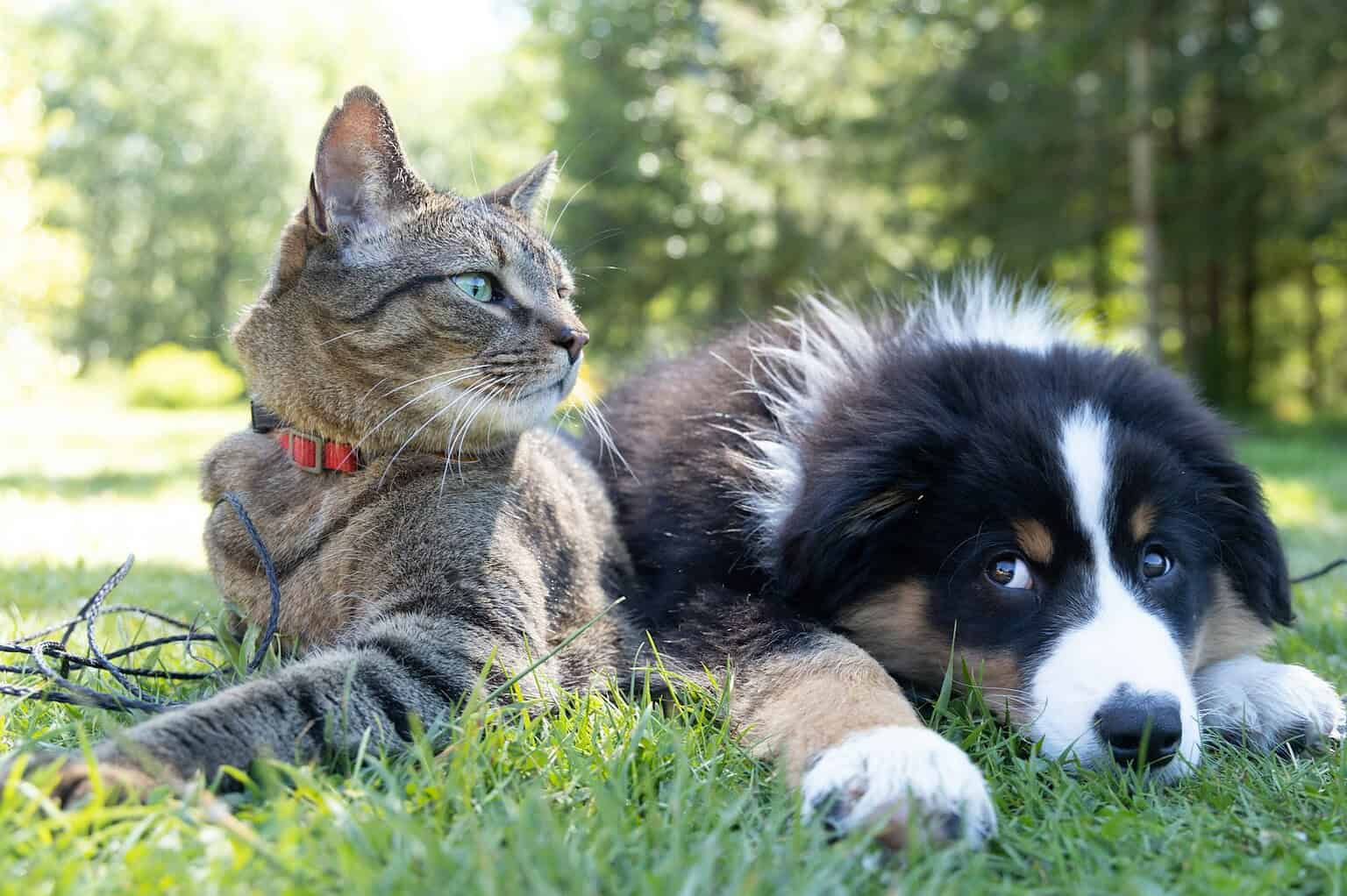
Featured photo by Andrew S on Unsplash.
Get Your Tag
Give your pet a safety net that actually brings them home — a personalized NFC smart pet ID tag paired with the free Lohji™ app.
Shop Smart Pet Tags →