Pet Emergency Preparedness Plan: ID, Records & Disaster Readiness Guide
 Shiloh’s House Team
·
·
8 min read
Shiloh’s House Team
·
·
8 min read
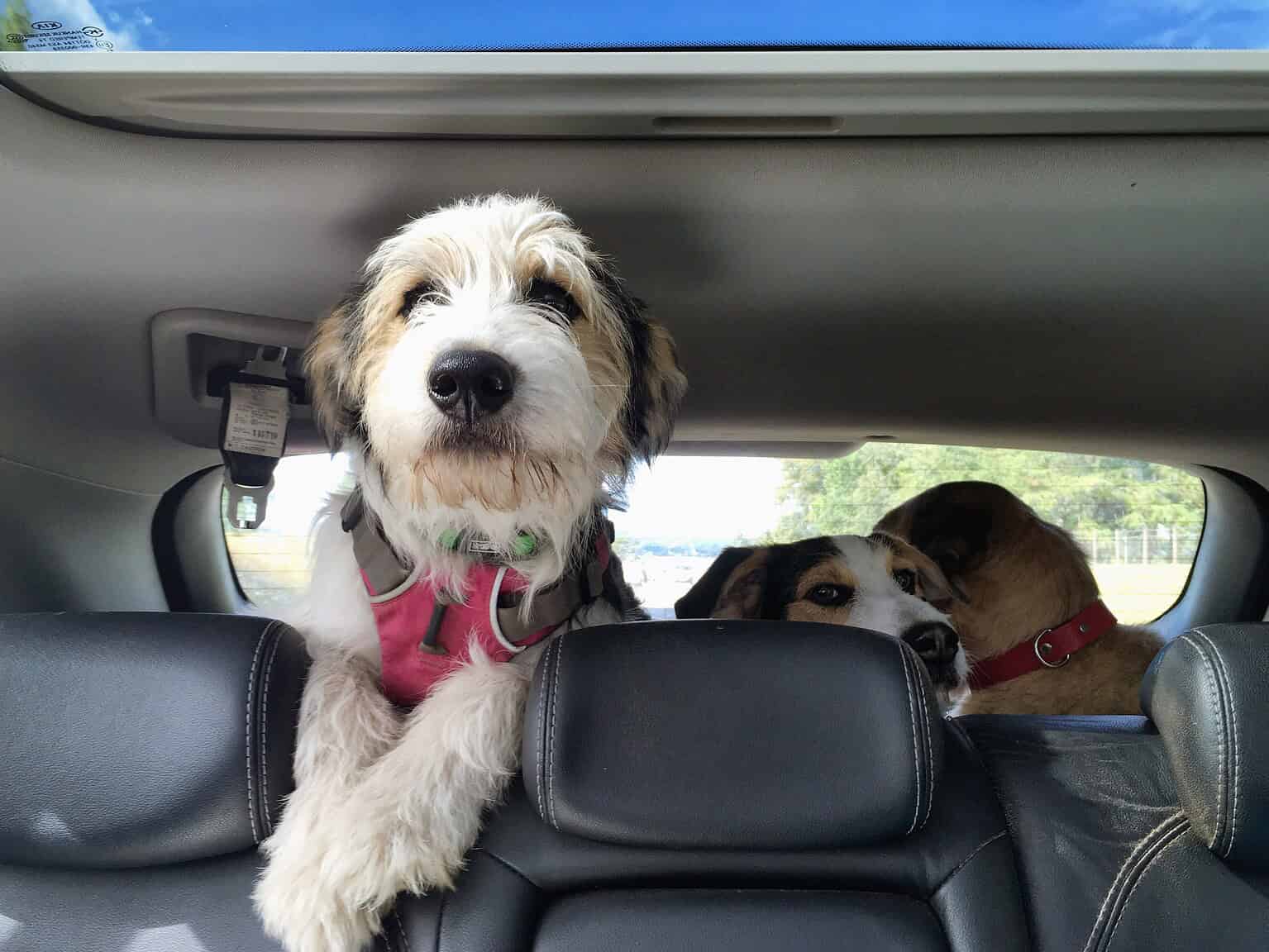
A complete pet emergency preparedness plan covers four pillars: (1) identification that works without your phone or power, (2) a “go bag” with 7+ days of food, water, and meds, (3) digital and printed records stored in multiple places, and (4) a written family plan for evacuations, sheltering, and reunification. Most emergency vets and Red Cross disaster relief teams cite missing or outdated ID as the #1 reason pets get permanently separated from their families during wildfires, hurricanes, floods, and earthquakes.
When the worst happens — a wildfire evacuation order at midnight, a hurricane forecast turning category 4, an earthquake at 4 a.m. — you will have minutes to act, not hours. Your pet’s chance of staying with you, or finding you again if you’re separated, depends almost entirely on what you’ve already done before the emergency.
This is the complete, vet- and rescue-organization-aligned plan for protecting your pet during disasters and emergencies. Build it once. Review it twice a year.
Pillar 1: Identification that works in any scenario
FEMA, the AVMA, and the ASPCA all agree on this: your pet should never be without visible ID, and that ID should have multiple layers of redundancy. In a disaster, your phone may be dead, cell towers may be down, you may be separated from your wallet, and rescue volunteers may not have access to microchip scanners.
The gold standard for emergency-ready pet ID:
- A registered microchip with current owner information in the registry. Verify yours after every move and every phone number change. Most chip companies let you log in and confirm in under a minute.
- A visible collar tag with at least your cell number, an out-of-state emergency contact, and ideally your home address. The out-of-state contact matters: during regional disasters, local cell service often fails while long-distance lines stay up.
- A modern NFC smart tag that can be tapped with any smartphone. NFC tags work without an internet connection (the contact info is stored on the chip itself in many implementations), without an app, and without a microchip scanner. A finder just taps and reads. (Read: How NFC pet tags actually work.)
- A temporary “disaster tag” on the collar with the address of where you’re evacuating to — especially important if you’re sheltering with friends or at a hotel out of area.
Why all four? Because in a real emergency, redundancy saves pets. A collar can break. A microchip is invisible. A phone number on a tag can be outdated. A digital tag depends on a phone. Together, they cover every scenario.
Pillar 2: The pet emergency “go bag”
Every household with a pet should have a ready-to-grab kit. The American Red Cross and FEMA recommend enough supplies for at least 7 days:
Food and water
- 7+ days of dry food, rotated every 3 months to keep it fresh
- A manual can opener if you feed wet food
- 7+ days of bottled water (one gallon per medium dog per day; less for cats and small dogs)
- Collapsible food and water bowls
Medication and medical
- 2-week supply of any prescription medication, rotated
- A printed list of all medications, dosages, and your vet’s contact info
- Flea/tick prevention (one extra dose)
- Basic pet first aid kit (gauze, vet wrap, saline, tweezers, blunt scissors, hydrogen peroxide for inducing vomiting only on a vet’s instruction)
- Recent vaccination records (printed) — many shelters and hotels require proof
Containment and comfort
- A sturdy leash and a backup leash
- A well-fitted harness (less likely to slip in panic situations than a collar alone)
- A hard-sided carrier labeled with your name, phone, address, and emergency contact
- A familiar blanket, toy, or piece of clothing with your scent
- Disposable litter pans and a few pounds of litter for cats
- Poop bags and paper towels
Documents (printed and in a waterproof bag)
- Current photo of your pet (and one of you with your pet — critical for reunification)
- Vaccination records
- Microchip number and registry login info
- Recent vet records and any medical conditions
- Proof of ownership (adoption papers, purchase receipt, vet bills with the pet’s name)
Pillar 3: Records that survive your phone
One of the most common emergency scenarios pet owners describe is this: my phone died, the photos were on the cloud, and I had no way to prove this was my pet. Don’t let that be you.
Maintain three layers of records:
- Cloud backup — keep photos, vet records, and your microchip info in a shared folder (Google Drive, iCloud, Dropbox) that you and a family member can access.
- Printed binder — kept with the go bag, in a waterproof sleeve. Include the same info plus a “lost pet flyer” template already filled out, so all you’d need to do is add the date and circumstances.
- Out-of-area contact — a trusted friend or relative outside your region who has copies of everything. If you’re displaced, they can post lost pet alerts, contact shelters, and verify ownership on your behalf.
Pillar 4: The written family plan

Most pet emergencies aren’t handled by one person — they’re handled by whoever is home when the alert sounds. A written plan removes the guesswork:
Evacuation roles
Who grabs the pet? Who grabs the go bag? Who loads the car? Assign each pet to a specific family member so no one is left behind in confusion.
Carrier and crate practice
Practice loading your pet into their carrier or the car at least twice a year. Pets that have never been in a carrier are dramatically harder to evacuate. Make it positive: short drives, treats, calm voices.
Pre-identified pet-friendly destinations
Public emergency shelters in the U.S. are not required to accept pets (except service animals). Before disaster strikes, identify and write down:
- Pet-friendly hotels along major evacuation routes (BringFido and PetsWelcome both maintain searchable databases)
- Friends or relatives outside your immediate area who can take you and your pets
- Boarding facilities and veterinary clinics in your destination area
- The locations of any pet-friendly Red Cross shelters in your county (the Red Cross has expanded these significantly since Hurricane Katrina)
Reunification protocol
If you and your pet get separated, you and every family member should know:
- Which local shelters and animal control offices to call (numbers in the go bag)
- Which lost-pet platforms to post on (PawBoost, Petco Love Lost, Pet FBI, Nextdoor, local Facebook groups)
- Who your out-of-area contact is
- The microchip number and registry login
Disaster-specific considerations
Wildfire
Smoke kills more pets than flames in wildfire zones. Keep go bags accessible without entering the most fire-prone parts of your home (garages, sheds). If air quality alerts are issued, bring outdoor pets in early. Have a way to evacuate cats quickly — cats often hide when stressed, so a pre-emptive carrier-up is smart at the first warning, not the last.
Hurricane and flood
Never leave pets behind to “ride out” a storm. Floodwaters rise faster than expected, contamination is severe, and post-storm rescue access can be cut off for days. Most hurricane-affected pets that don’t make it home were never identified after rescue.
Earthquake
Most pet earthquake injuries happen from falling objects, broken glass, and structural debris. Keep carriers, leashes, and the go bag in a low, accessible spot — not a high shelf or a closed garage. After a quake, scan for broken glass before letting any pet walk around the house.
Power outage and extreme weather
For multi-day outages, your phone-based pet tech (smart feeders, Wi-Fi cameras, app-based ID systems) may fail. This is exactly why physical, visible ID remains the foundation of pet safety. A tap-readable NFC tag works whether your home internet is down or not.
The 6-month checklist
Twice a year — pick spring and fall, or daylight savings shifts — run through this:
- ☐ Microchip registry contact info is current
- ☐ Collar tag info is current (phone, address, emergency contact)
- ☐ NFC smart tag info is up to date
- ☐ Go bag food has been rotated
- ☐ Medications in the go bag are not expired
- ☐ Printed records reflect any recent vet visits or vaccinations
- ☐ Family members all know the evacuation plan
- ☐ Carrier practice run completed
- ☐ At least one updated photo of you with your pet on every family member’s phone
Frequently asked questions about pet emergency preparedness
What is the most important thing to do before a disaster to protect my pet?
Make sure your pet has current, redundant identification. Verify your microchip registry, keep a visible collar tag with your cell and an out-of-state emergency contact, and consider adding a tap-readable NFC smart tag that works without an app or scanner. Identification is what separates “missing for hours” from “missing forever” during disasters.
Are public emergency shelters required to accept pets?
No. Under the federal PETS Act of 2006, state and local emergency plans must consider pets and service animals, but public shelters are not universally required to house them. Identify pet-friendly hotels, boarding facilities, and Red Cross pet-inclusive shelters along your likely evacuation routes before an emergency.
How much food and water should I keep in a pet emergency kit?
At least 7 days’ worth, with FEMA recommending up to 14 days where possible. Rotate every 3 months to keep food fresh and medications in date.
What if I have to leave my pet behind in an evacuation?
Don’t, if it’s at all avoidable. If it’s genuinely impossible, leave your pet indoors with abundant food, multiple sources of water (filled tubs, bowls), and a clearly visible note on the door for first responders with the pet’s name, your phone number, your microchip info, and instructions. Never tie a pet outside or in a yard during a disaster.
Why are NFC tags useful in emergencies specifically?
NFC tags work offline. A rescue volunteer or Good Samaritan only needs to tap a smartphone to the tag — no app, no internet, no microchip scanner, no shelter visit. In disaster zones where cell service is degraded but smartphones still function locally, that simplicity can be the difference between minutes and days for a reunion.
Disaster preparedness for pets is one of the highest-leverage things any pet parent can do. The vast majority of pet-disaster horror stories trace back to a single missing detail: ID that wasn’t current, a go bag that wasn’t packed, a family member who didn’t know the plan.
If you’re ready to upgrade the identification layer of your plan, explore Shiloh’s House NFC Smart Pet ID Tags — designed to work the moment your pet needs them, whether they’ve slipped the fence or you’ve been evacuated three states away.
Get Your Tag
Give your pet a safety net that actually brings them home — a personalized NFC smart pet ID tag paired with the free Lohji™ app.
Shop Smart Pet Tags →