Best Puppy Food of 2026: Purina Pro Plan, Royal Canin, Hill’s & The Farmer’s Dog Compared
 Shiloh’s House Team
·
·
6 min read
Shiloh’s House Team
·
·
6 min read

The best puppy food in 2026 for most puppies is Purina Pro Plan Puppy or Royal Canin Puppy — both come from companies that employ board-certified veterinary nutritionists, run AAFCO feeding trials rather than formulating on paper alone, and manufacture in plants they own. Hill’s Science Diet Puppy is the third name in that tier and the one many vets hand out first. If you want fresh food, The Farmer’s Dog and Ollie both make puppy-appropriate plans. And if you have a large-breed puppy, one line on the bag matters more than the brand on the front — we explain it below.
The one label line that matters most
Foods without that phrase can carry calcium levels high enough to push too-fast skeletal growth in a big puppy, which is associated with developmental orthopedic disease. For a small or medium puppy the phrase is optional. For a Great Dane, a Labrador or a Bernese, it is not.
Best puppy foods of 2026: comparison table
| Food | Format | Large-breed formula? | Best for | Price tier |
|---|---|---|---|---|
| Purina Pro Plan Puppy | Dry + wet | Yes | Best overall, widest availability | $$ |
| Royal Canin Puppy | Dry + wet | Yes, plus size-specific lines | Picky eaters, tiny breeds, sensitive stomachs | $$$ |
| Hill’s Science Diet Puppy | Dry + wet | Yes | Vet-recommended default, easy transitions | $$ |
| The Farmer’s Dog | Fresh, subscription | Portioned by growth plan | Fresh feeding with portion control | $$$$ |
| Ollie | Fresh + baked, subscription | Portioned by growth plan | Fresh feeding with a cheaper baked option | $$$$ |
| Store-brand puppy kibble | Dry | Varies — check the label | Tight budgets, small and medium breeds | $ |
Price tiers are relative. Fresh subscriptions are priced per dog per day and scale hard with size — get a current quote for your puppy projected adult weight.
Best overall: Purina Pro Plan Puppy
The chicken-and-rice formula is the one most breeders and sporting-dog people default to, the large-breed version carries the correct AAFCO statement, and it is stocked in enough places that you will never be stranded at 9 p.m. on a Sunday. It is also mid-priced, which matters when you are feeding a growing dog three times a day. We put the three big kibble names head to head in Purina Pro Plan vs Royal Canin vs Hill’s Science Diet.
Best for picky eaters and tiny breeds: Royal Canin Puppy
Royal Canin’s edge is kibble engineering — size, shape and density tuned to specific jaws. That sounds like marketing until you watch a Yorkie puppy who has ignored two other foods eat the X-Small Puppy formula without hesitating. The breed-specific lines are a nice-to-have rather than a must; the size-specific lines are the genuinely useful part. It is the priciest of the three big names.
The one most vets hand you: Hill’s Science Diet Puppy
Hill’s is the default recommendation in a large share of American clinics, and there is nothing wrong with taking it. Same nutritionist-and-feeding-trial credentials, often gentler on sensitive stomachs, and widely available. If your vet gave you a sample bag and your puppy is thriving on it, the correct move is to keep feeding it.
Best fresh food: The Farmer’s Dog vs Ollie
Both work for puppies, and the real difference is portioning philosophy and price. The Farmer’s Dog builds a growth plan and ships pre-portioned packs, which removes the single biggest fresh-feeding error — overfeeding a puppy into a fast growth curve. Ollie offers a baked line that costs meaningfully less than fresh while keeping better ingredient quality than most kibble. We put them side by side in The Farmer’s Dog vs Ollie. Neither is necessary; both are good if the budget is there.
How much and how often to feed a puppy
Feed to the bag chart for your puppy expected adult weight, split into three meals a day until about four months, then two. Then look at your puppy rather than the chart: you should be able to feel ribs easily without pressing, and see a waist from above. A lean puppy grows into a healthier adult dog than a chubby one — this is one of the few things in dog nutrition with strong long-term evidence behind it.
When to switch to adult food
Small breeds around 9 to 12 months, medium breeds around 12 months, large and giant breeds around 18 to 24 months. Switching a Great Dane to adult food at 10 months is a common and consequential mistake — big dogs are still building bone long after they look grown. Transition over a week, mixing increasing amounts of the new food in. Our picks for the next stage are in the best dog food of 2026.
What about grain-free?
For a puppy with no diagnosed grain allergy there is no benefit, and the FDA investigation into diet-associated dilated cardiomyopathy centered on grain-free and legume-heavy formulas. Grains are not filler. Unless your veterinarian has told you otherwise, feed a grain-inclusive food from a company with nutritionists on staff and spend the saved money on training classes.
The other thing to buy in week one

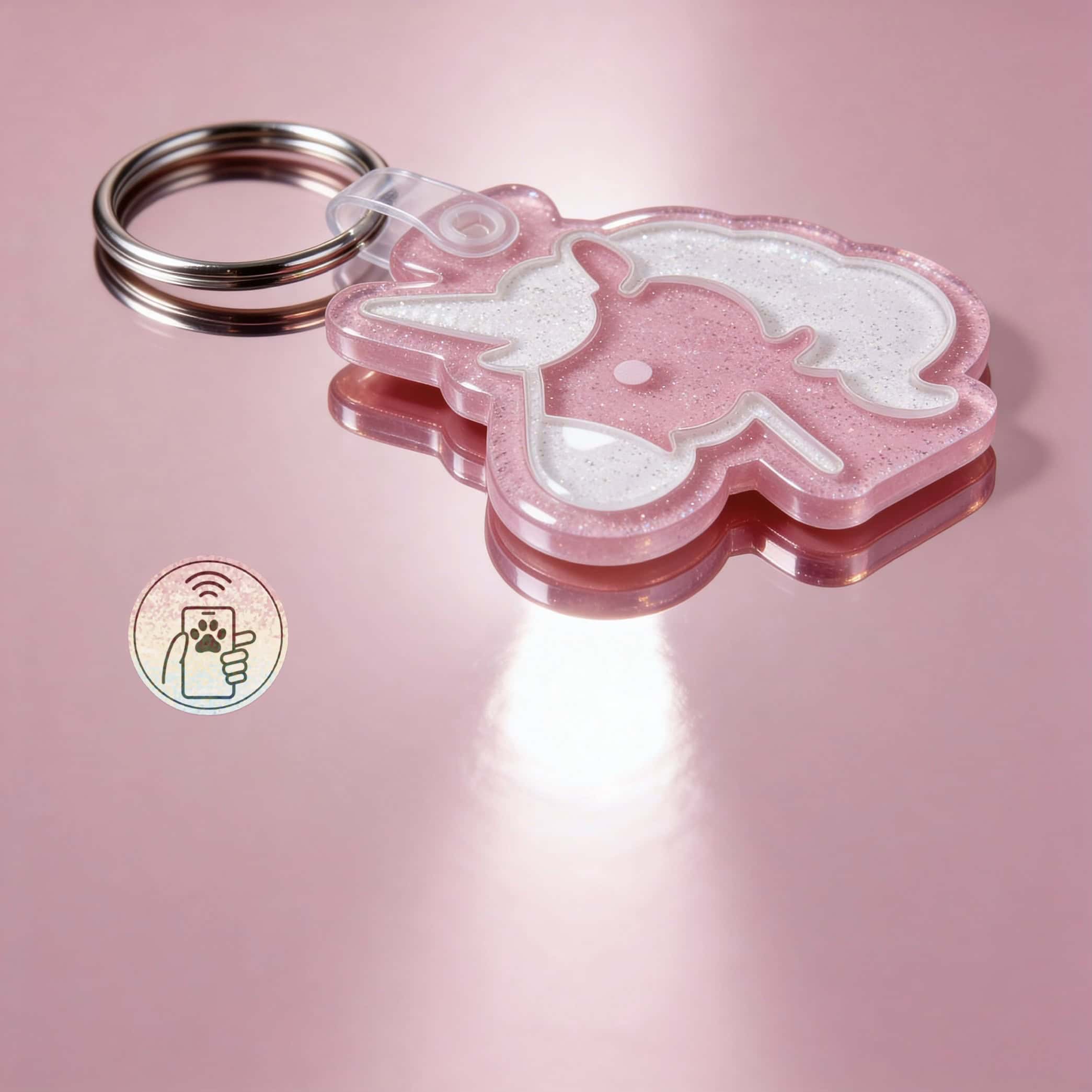
Our disclosed bias: we make pet ID tags, and the riskiest window in a dog whole life is the first month in a new home. A puppy who has not learned the neighborhood, has no recall yet, and slips out during the chaos of a move-in is the classic lost-dog story. Microchips are essential and you should register yours today — but a chip needs a scanner, and the neighbor who catches your puppy has a phone. Our $38 designer acrylic NFC tag gets tapped by any phone with no app on the finder end, is engraved on the back as a backup, and carries no subscription. If you are still building the shopping list, we keep one at what to do in your new pet’s first 30 days.
Frequently asked questions
What is the best puppy food for a large breed?
Any food whose AAFCO statement includes growth of large size dogs (70 lbs or more as an adult). Purina Pro Plan Large Breed Puppy, Royal Canin Large Puppy and Hill’s Science Diet Large Breed Puppy all qualify and are all reasonable choices.
Is expensive puppy food actually better?
Not reliably. Price correlates with marketing and ingredient sourcing, not with nutritional adequacy or safety testing. A mid-priced food from a company with veterinary nutritionists on staff beats a boutique food at twice the price with none.
Can puppies eat adult dog food?
Not as a regular diet. Puppy formulas carry higher protein and fat and specific calcium-to-phosphorus ratios for growth. An all-life-stages food is formulated to puppy standards and is acceptable — check that it names large-breed growth if you have a big puppy.
How do I switch puppy foods without an upset stomach?
Over seven days: 25% new for two days, 50% for two days, 75% for two days, then all new. If stools loosen, hold at the current ratio for an extra day or two instead of pushing forward.
Should I feed wet food, dry food, or both?
Either works. Wet food adds water and palatability; dry is cheaper and easier to measure. Mixing is fine as long as you count both toward the day total. The dental benefit of kibble is smaller than most people assume.
How long should a puppy stay on puppy food?
Until they are done growing: roughly 9 to 12 months for small breeds and 18 to 24 months for large and giant breeds. Your vet can tell you where your puppy is on that curve at their next visit.
Get Your Tag
A $38 designer acrylic NFC tag that any phone can tap — no app, no subscription, engraved backup on the back.