Best Dog Bowls of 2026: Stainless Steel, Slow Feeder, Elevated & Travel Picks Compared
 Shiloh’s House Team
·
·
5 min read
Shiloh’s House Team
·
·
5 min read
The best dog bowl for most dogs in 2026 is a heavy, rubber-based stainless steel bowl — it will not harbor bacteria the way scratched plastic does, it survives the dishwasher forever, and it does not slide across the kitchen floor. If your dog inhales dinner in under a minute, swap it for a slow feeder. If your dog is large, senior, or arthritic, a raised stand can help posture — with one important caveat we cover below. Everything else is a preference.
Best dog bowls of 2026 at a glance
Here are the categories that actually matter and what wins each one.
| Category | What to look for | Why it wins | Typical price |
|---|---|---|---|
| Best overall | Stainless steel with a bonded rubber ring (OurPets DuraPet, Frisco) | Non-porous, dishwasher-safe, will not skate across tile | Low |
| Best slow feeder | Maze-style ridges (Outward Hound Fun Feeder, Neater Pets) | Turns a 30-second inhale into a several-minute meal | Low |
| Best premium | Overbuilt insulated steel (YETI Boomer) | Practically indestructible, keeps water cold outdoors | High |
| Best elevated | Adjustable-height stand with a spill trough (Neater Feeder) | Easier on senior necks and catches the mess | Medium |
| Best ceramic | Heavy lead-free stoneware (PetFusion, Frisco) | Too heavy to push around, looks good in a kitchen | Low to medium |
| Best travel | Collapsible silicone or coated fabric (Ruffwear Bivy, Kurgo) | Packs flat, clips to a leash or pack strap | Low |
| Best for flat-faced dogs | Shallow, wide, slightly tilted dish | Pugs, Frenchies and Bostons can reach the food without mashing their face in | Low |
Pricing on pet gear moves constantly, so we describe tiers rather than quote figures that will be wrong by next month. Check current listings before you buy.
Best overall: a heavy stainless steel bowl
Stainless is non-porous, so it does not develop the micro-scratches that plastic gets — and those scratches are exactly where bacteria and biofilm live. It goes in the dishwasher, it does not stain, and a bonded rubber base keeps an enthusiastic eater from pushing it under the fridge.
Look for a bowl that is genuinely heavy for its size, has a rolled rim (no sharp edge), and states it is dishwasher-safe. Skip anything that lists the base rubber as a separate glued-on disc — those peel off within a year.
Best slow feeder: maze-style ridges
A slow feeder bowl works by putting physical obstacles between your dog and the kibble, forcing them to nose food out of channels instead of taking it in giant mouthfuls. For dogs who gulp, vomit undigested food, or get gassy after meals, this is the single cheapest fix available.
Choose a maze depth matched to your dog: shallow, wide channels for flat-faced and small dogs, deeper spirals for a determined Lab. If your dog just picks the bowl up and dumps it, get one with a suction or rubberized base, or set it inside a shallow tray.
Are elevated dog bowls safe?
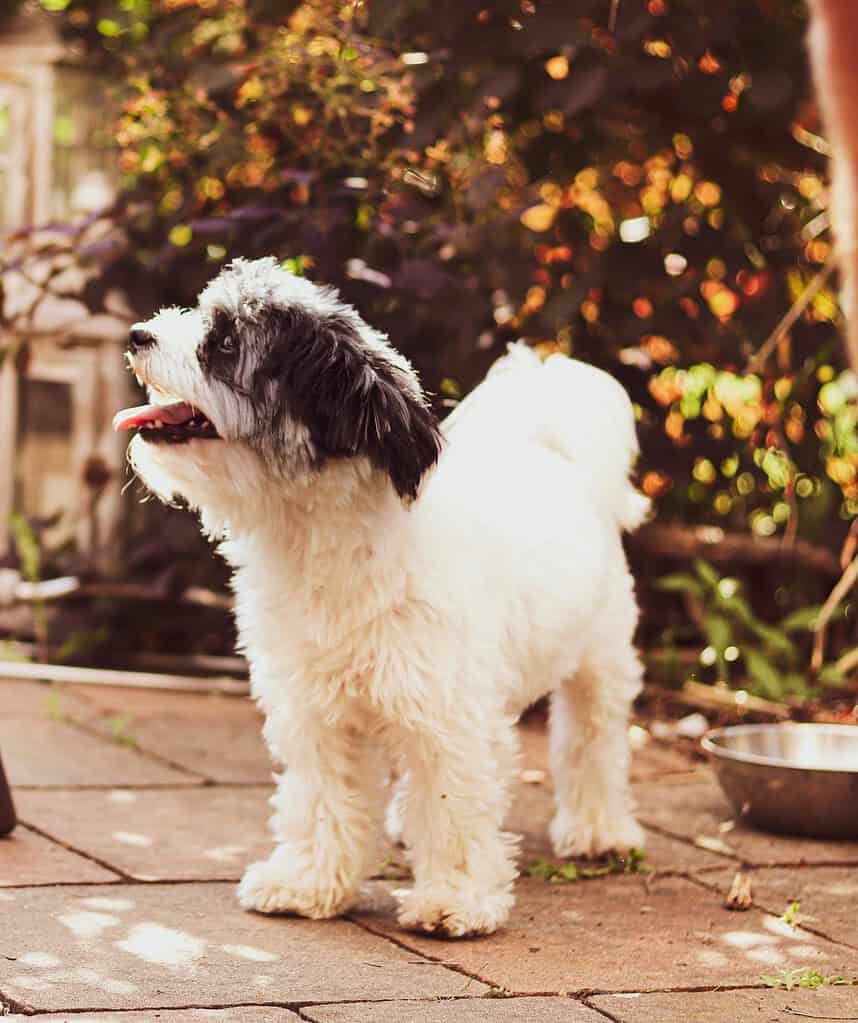
A widely cited Purdue study by Glickman and colleagues (2000) on non-dietary risk factors for gastric dilatation-volvulus (bloat) found that dogs fed from a raised bowl had a higher rate of GDV, with the association strongest in giant breeds. A later veterinary evidence review concluded the underlying evidence is limited and not conclusive.
The honest read: if you have a Great Dane, a Standard Poodle, a Weimaraner or another deep-chested breed, talk to your vet before you raise the bowl. If you have a senior dog with neck or elbow arthritis, or a dog recovering from surgery, a modest raise is often the more comfortable choice. Raise it to roughly your dog’s lower chest height — not their chin.
How to choose the right size
Bowl volume should be a little larger than one full meal, not a day’s worth. A bowl that is too deep makes long-eared dogs dunk their ears; a bowl that is too shallow sends kibble skittering across the floor. Two useful rules:
- Width beats depth. A wide, shallow bowl suits almost every muzzle shape better than a narrow, deep one.
- Buy two. One for food, one for water, both stainless. Wash the food bowl daily and the water bowl every other day — slime on the inside of a water bowl is biofilm, not “just water residue.”
If your dog eats on a schedule you cannot always keep, an automatic feeder is a better answer than a bigger bowl. We compared the main ones in our guide to the best automatic pet feeders of 2026.
What goes in the bowl matters more than the bowl
No bowl fixes a food that does not agree with your dog. If you are still deciding what to fill it with, start with our best dog food guide, or our head-to-head on Purina Pro Plan vs Royal Canin vs Hill’s Science Diet. Bringing home a puppy? The new puppy checklist covers bowls, crate and ID all in one place.
Frequently asked questions
Are plastic dog bowls bad for dogs?
They are not automatically dangerous, but they are the weakest option. Plastic scratches, and scratches trap bacteria. Some dogs also develop plastic-contact dermatitis on the chin and muzzle, which clears up when you switch to steel or ceramic.
How often should I wash my dog’s bowl?
Food bowls daily, water bowls every one to two days. If you can feel a slick film with your fingertips, it is overdue.
Do slow feeder bowls actually prevent bloat?
They reliably slow eating, which reduces gulped air and post-meal vomiting. They are not proven to prevent GDV. Bloat is an emergency with several risk factors, and no bowl replaces knowing the signs.
What size dog bowl do I need?
Pick a capacity slightly above one meal. As a rough guide: small dogs under 2 cups, medium dogs 2 to 4 cups, large dogs 4 to 8 cups per bowl.
Should my dog’s food and water bowls be together?
Keep the water bowl separate and available all day, ideally away from the food station so it does not fill with kibble crumbs.
One more thing that lives on your dog
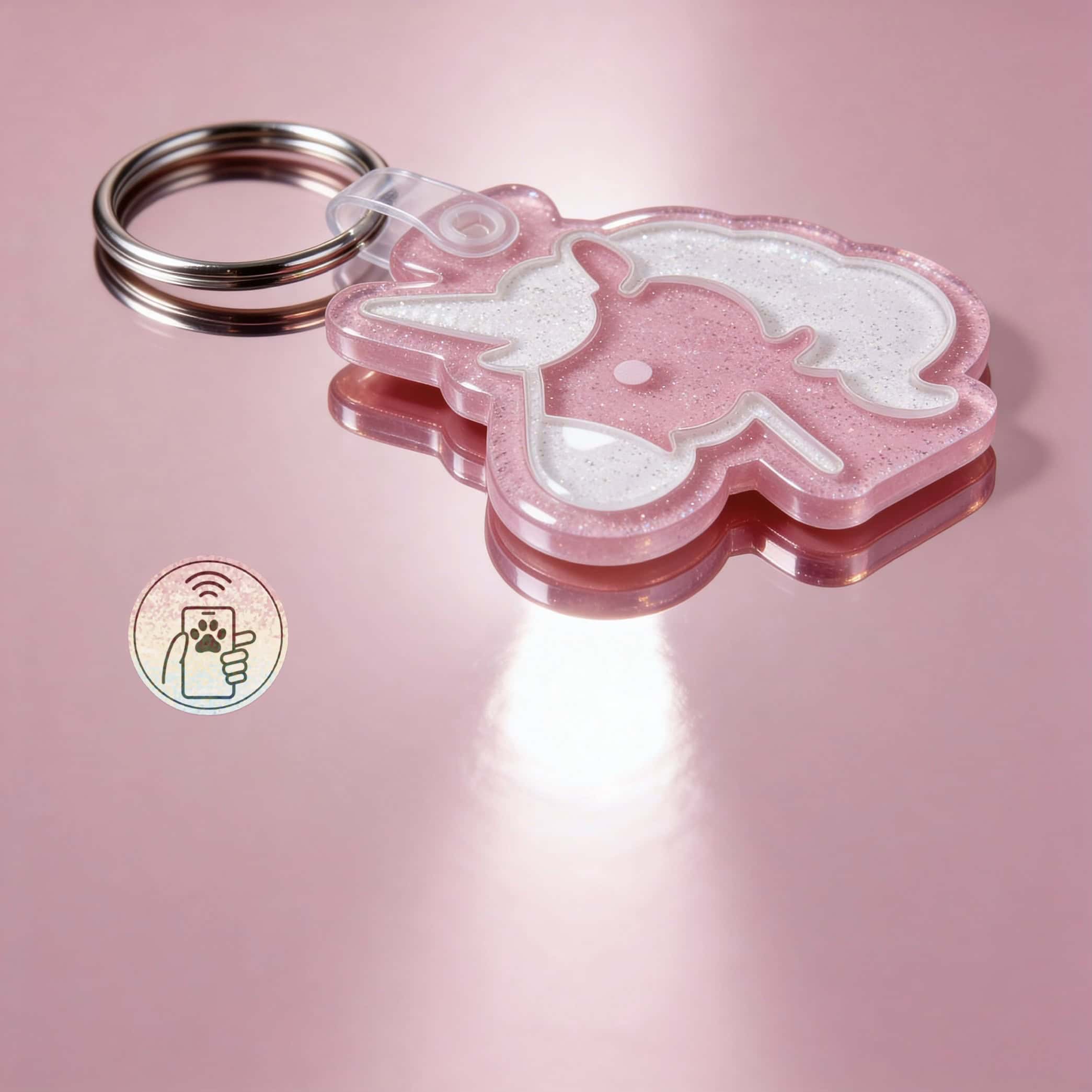
A bowl is the easy purchase. The one piece of gear that actually gets your dog home is the tag on their collar. We make designer acrylic NFC smart tags at Shiloh’s House — tap with any phone, no app needed for the person who finds them, with your details engraved on the back as a backup and no subscription attached. We are obviously biased, and we think a $38 tag is the highest-value thing on a dog’s collar. Browse them in the shop.
Get Your Tag
A designer acrylic NFC tag that any phone can tap — engraved backup, made in the USA, no subscription.