Kennel Cough in Dogs: Symptoms, How Long It Lasts and Vaccines
 Shiloh’s House Team
·
·
10 min read
Shiloh’s House Team
·
·
10 min read
Kennel cough in dogs is a contagious airway infection, caught wherever dogs gather, and the classic sign is a sudden, honking cough. Most cases are mild and clear in 7 to 10 days with rest, though the cough can linger. Keep your dog away from other dogs until at least two weeks after the cough stops, and call your vet for fever, lethargy or labored breathing.
What is kennel cough in dogs?
Kennel cough is the everyday name for canine infectious respiratory disease complex, or CIRDC. The American Veterinary Medical Association (AVMA) describes it as a highly contagious illness of the respiratory tract that can infect dogs of any breed or age. The Merck Veterinary Manual sums it up as inflammation of the trachea, or windpipe, that is usually mild and self-limiting.
“Complex” is the key word. Kennel cough isn’t one germ but a group of viruses and bacteria, and PetMD notes that many dogs are infected with more than one at the same time. The AVMA’s list includes canine parainfluenza virus, canine adenovirus type 2, canine influenza, canine respiratory coronavirus, canine herpesvirus-1 and canine distemper virus, plus the bacteria Bordetella bronchiseptica, Mycoplasma species and Streptococcus equi subspecies zooepidemicus.
Bordetella is the name most owners know; the AKC notes that some people call the illness “Bordetella” because the bacterium is such a common cause. The mix of causes also explains why, as PetMD points out, a vaccinated dog can still catch kennel cough and a dog can catch it more than once.
How do dogs catch kennel cough?
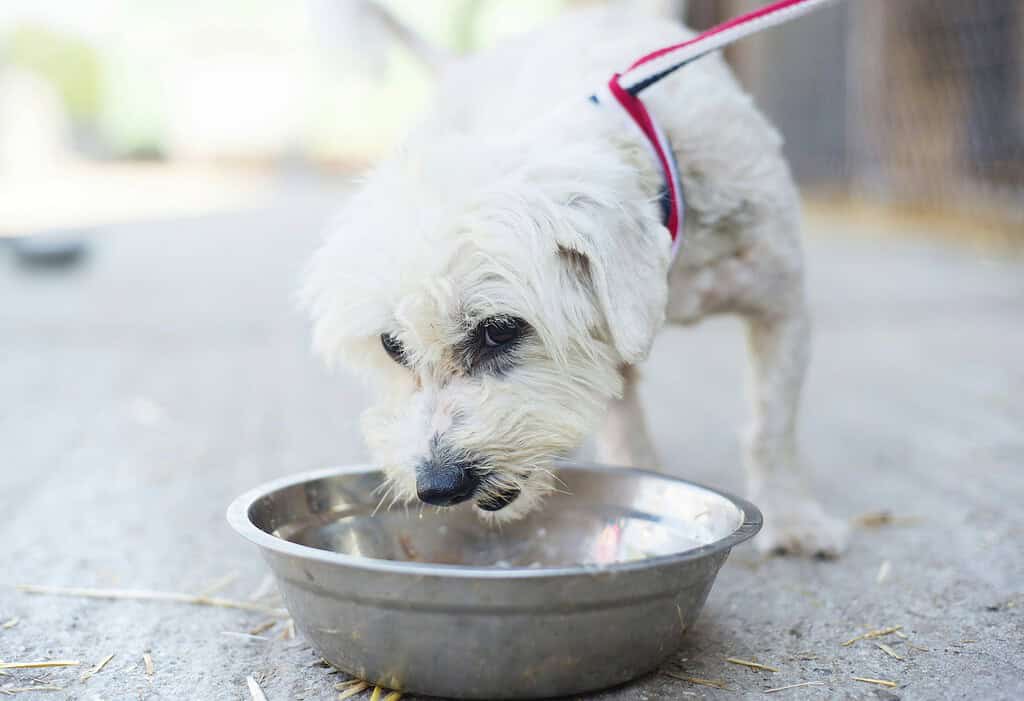
Mostly through the air. Cornell’s Riney Canine Health Center says airborne droplets from coughing and sneezing are the most common route, and the infection also spreads through direct contact, contaminated water and shared objects such as toys, food bowls, clothing and hands. That’s why it clusters where dogs gather: Cornell names boarding, grooming and daycare facilities, shelters, dog shows and training groups, dog parks and veterinary clinics. The AKC adds that cold air, poor ventilation and stress can make dogs more susceptible.
The germs also linger. Cornell says Bordetella can survive in the environment for at least 10 days, and the AVMA says some of the organisms involved last for weeks. The AKC also suggests avoiding shared bowls in public spaces.
Kennel cough symptoms: the honking cough and other signs
The classic sign, in the AVMA’s words, is “a frequent, honking cough that comes on suddenly.” Cornell says owners may at first think their dog is trying to clear something from its throat. A coughing fit can end in gagging or retching and, per the AVMA, bring up froth that looks like vomit. If your dog is bringing up food instead, see our guide to why dogs throw up.
Coughing usually gets worse with activity, and the Merck Veterinary Manual notes that gentle pressure on the windpipe easily sets it off. Other signs, per Cornell, include sneezing, nasal and eye discharge, mild fever, lethargy and a decreased appetite, though many dogs stay bright and active, PetMD says. Not every infected dog coughs, the AVMA adds.
Signs typically appear about six days after exposure, with a range of 2 to 10 days, according to Cornell. A veterinarian quoted by the AKC gives a wider window of 2 to 14 days.
How long does kennel cough last, and how long is it contagious?
Most dogs recover in one to two weeks. The AVMA says most cases are mild and dogs fully recover within 7 to 10 days, and PetMD puts it at 10 to 14 days. The Merck Veterinary Manual notes that severity usually eases during the first 5 days, but the disease persists for 10 to 20 days.
Contagiousness outlasts the cough. PetMD says dogs are generally considered contagious while coughing and for about two weeks after, and the AKC advises keeping your dog away from other dogs for at least two weeks after the coughing stops. Cornell says dogs with Bordetella can stay contagious for up to eight weeks after symptoms resolve.
In practice, skip daycare, boarding, classes, dog parks and grooming until well after the last cough, and give a heads-up to the owners of dogs yours played with just before it started.
Not tagged yet?
A Shiloh’s House smart tag lets anyone who finds your dog tap it with any phone, no app needed, and see your contact info plus the medical notes you keep in the free Lohji app, like a line saying your dog is recovering from kennel cough and should be kept away from other dogs. No battery, no subscription.
How to care for a dog with kennel cough at home
There’s no special drug for kennel cough, the AVMA notes, so supportive care does the work. That starts with rest. The AVMA advises avoiding excitement and neck leashes, and a veterinarian cited by the AKC recommends a harness instead of a collar to reduce pressure on the trachea. Our best dog harnesses guide compares the options.
Moist, clean air helps: the AKC suggests a humidifier or steam therapy and limiting smoke and dust, and PetMD suggests sitting with your dog in the bathroom while you take a hot shower. If your dog’s appetite drops, call your vet, who may suggest tempting them with something like cooked chicken, according to the AKC. After a week or so, if symptoms have improved, the AKC suggests easing back into exercise with short, slow walks.
Contain the illness. Keep a coughing dog away from other dogs until they’ve fully recovered, don’t let them share bowls or toys, and wash bedding, toys and bowls regularly. Cornell says household bleach diluted one part to 32 parts water is an effective disinfectant against Bordetella. And call your clinic before you arrive, as both the AKC and the AVMA advise, so staff can limit other patients’ exposure.
When is kennel cough serious? Pneumonia and high-risk dogs
Most cases stay mild, but kennel cough can turn into pneumonia. The AVMA says severe signs such as fever, lethargy, a productive cough and rapid or labored breathing can mean bacterial pneumonia and need immediate veterinary attention.
Some dogs are more at risk. The Merck Veterinary Manual says kennel cough can progress to bronchopneumonia in puppies. PetMD and the AKC add senior dogs and dogs with weakened immune systems or underlying conditions, and Cornell includes unvaccinated dogs and dogs with existing respiratory disease. PetMD also flags flat-faced breeds such as English Bulldogs, French Bulldogs and Pugs, because their shortened airways may already be compromised.
Antibiotics aren’t automatic. The AVMA says they’re usually unnecessary unless bacterial pneumonia is suspected, including illness that lasts more than 10 days.
The kennel cough vaccine: intranasal, oral or injectable?
The AVMA says the core vaccines recommended for all dogs are highly effective against some of the viruses involved, including canine parainfluenza, canine adenovirus type 2 and distemper. The so-called kennel cough vaccine targets Bordetella. It’s non-core, recommended based on lifestyle and exposure risk under the American Animal Hospital Association (AAHA) guidelines, and Cornell calls it highly recommended for dogs at risk.
It comes in three forms. Per AAHA, the intranasal (into the nose) and oral (into the cheek pouch) versions are single doses, while the injectable needs two doses 2 to 4 weeks apart. Boosters are usually yearly; Cornell notes that some vets give them every six months to high-risk dogs.
Comparisons show that the intranasal and oral formulations are more effective than the injectable vaccine in inducing a quicker immunity that lasts for much longer.
Cynda Crawford, DVM, PhD, University of Florida Shelter Medicine Program, via the American Kennel Club
Plan ahead for boarding. The AKC says intranasal and oral vaccines typically protect within three to five days, while injectables don’t protect until at least 5 days after the second injection, so a dose the morning of drop-off won’t help much.
The AVMA notes that many boarding facilities, training centers and dog shows require certain vaccines, and that vaccines reduce the chance of illness, severe disease and spread to other dogs. They aren’t a force field, though: Dr. Crawford explains that the Bordetella vaccine doesn’t provide sterile immunity, but it can reduce severity and progression to pneumonia and shorten how long a dog stays contagious.
Where canine influenza is circulating, the AVMA also recommends an injectable canine flu vaccine. If someone at home has a weakened immune system, Cornell suggests considering the injectable Bordetella vaccine over the intranasal or oral ones. Cornell says vaccination can start as early as 6 to 8 weeks of age, so add it to your new puppy checklist.
Kennel cough vs. reverse sneezing vs. collapsing trachea
The direction of the air is the quickest clue. Kennel cough pushes air out. A reverse sneeze pulls it in: the AKC describes sudden, rapid, repeated inhalations through the nose followed by snorting, and most dogs are completely normal before and after. Our guide to reverse sneezing in dogs covers it in detail.
Collapsing trachea sounds the most like kennel cough. The American College of Veterinary Surgeons describes a harsh, dry cough that sounds like a goose honking, most often in small breeds and often in dogs that are middle-aged or older. It’s a chronic, progressive weakening of the windpipe, not an infection.
| Condition | What you hear and see | Typical pattern | Your move |
|---|---|---|---|
| Kennel cough | Sudden, honking cough that pushes air out; may end in gagging or froth | Starts about 2 to 14 days after contact with other dogs; clears in 1 to 3 weeks; contagious | Rest, a harness, no contact with other dogs; vet for labored breathing, fever or lethargy |
| Reverse sneezing | Rapid, snorting pulls of air in through the nose; dog stands still, head and neck extended | Spasm-like episodes; normal before and after | Usually harmless; film it and ask your vet if it’s new or frequent |
| Collapsing trachea | Harsh, dry, goose-honk cough; wheezy noise when breathing in | Chronic and progressive; set off by excitement, being picked up or collar pulls | Vet exam; a harness instead of a collar; a healthy weight |
Other conditions cause coughing too. The AKC notes a cough can also signal bronchitis, asthma, heart disease, canine distemper or canine influenza, so a cough that doesn’t fit the pattern, or doesn’t fade, needs an exam.
Frequently asked questions
Can humans catch kennel cough from dogs?
Very rarely. PetMD says kennel cough is not contagious to people. The AVMA notes that Bordetella bronchiseptica can infect humans, but dog-to-human cases are extremely rare and mostly involve people with severely weakened immune systems.
Can cats catch kennel cough from dogs?
Some of the germs can. The AVMA says Bordetella bronchiseptica, Streptococcus equi subspecies zooepidemicus and canine influenza virus can infect cats, so keep a coughing dog’s bowls and bedding away from the cat.
Can a vaccinated dog still get kennel cough?
Yes. The Bordetella vaccine doesn’t cover every virus and bacterium behind kennel cough, but a veterinarian quoted by the AKC says vaccinated dogs are more likely to have milder signs and a quicker recovery.
Will kennel cough go away on its own?
Often, yes. PetMD says many cases resolve on their own within 10 to 14 days. Puppies, senior dogs, flat-faced breeds and any dog with labored breathing, fever or lethargy should see a vet.
When can my dog go back to daycare after kennel cough?
Wait at least two weeks after the last cough, per the AKC and PetMD. Cornell says dogs with Bordetella can stay contagious for up to eight weeks after symptoms resolve, so check your facility’s policy too.
Sources
- American Veterinary Medical Association — Canine Infectious Respiratory Disease Complex (Kennel Cough)
- Merck Veterinary Manual — Kennel Cough
- Cornell Richard P. Riney Canine Health Center — Bordetellosis
- American Kennel Club — Kennel Cough in Dogs: Signs, Symptoms, Treatment
- American Kennel Club — Bordetella Vaccine for Dogs: What to Know
- PetMD — Kennel Cough in Dogs: Symptoms, Causes, and Treatment
- American Animal Hospital Association — Recommendations for Core and Noncore Canine Vaccines (2022 Canine Vaccination Guidelines)
- American College of Veterinary Surgeons — Tracheal Collapse
- American Kennel Club — What Happens When a Dog Reverse Sneezes?