Best Dog Collars of 2026: Ruffwear, Fable, Wild One & Kurgo Compared
 Shiloh’s House Team
·
·
6 min read
Shiloh’s House Team
·
·
6 min read
The best dog collar of 2026 for most dogs is the Ruffwear Front Range — it is padded, weather-proof, has a genuinely strong aluminum V-ring, and comes in a size range that fits almost everything. If you want something that looks good enough to leave on in photos, Fable and Wild One are the design picks. If your dog pulls, skip the flat collar entirely and use a harness. And whichever collar you buy, the collar itself is not ID — the tag hanging on it is the part that gets your dog home.
We sell pet ID tags, so we are biased about that last part and we will say so out loud every time. We do not sell collars, which means we have no reason to talk you into any of these.
Best dog collars of 2026: quick comparison
| Collar | Best for | Material | Typical price |
|---|---|---|---|
| Ruffwear Front Range | Most dogs, hiking, all weather | Padded webbing | Mid ($25–$35 range) |
| Fable Signature | Design-first pet parents | Leather / premium webbing | Premium ($50+) |
| Wild One Collar | Everyday city dogs | Coated, wipe-clean webbing | Mid-premium ($30–$45) |
| Kurgo Collar | Value + adventure hardware | Nylon webbing | Budget-mid ($18–$28) |
| Blueberry Pet | Color variety on a budget | Polyester webbing | Budget (often under $20) |
| Martingale (various) | Escape artists, sighthounds | Webbing + limited-slip loop | Budget-mid |
Prices move constantly and vary by size and colorway. Treat these as ranges, not quotes — always check the current price before you buy.
Ruffwear Front Range The best dog collar for most dogs
Buy this one if you want a single collar that will survive years of rain, lakes, mud and daily leash pressure. The Front Range is the collar that shows up on almost every tested roundup for a reason: padded webbing so it does not saw into the neck, a reflective stripe woven in, and an aluminum V-ring that does not bend when a 70-pound dog lunges at a squirrel. It is not the prettiest collar on this list. It is the one that will still be usable in 2029.
Weak spot: the buckle is plastic, and on giant breeds some owners eventually want metal.
Fable Signature Collar The best-looking dog collar
Fable built its reputation on furniture-grade design, and the collars follow: warm leather tones, quiet hardware, nothing screaming REI. The tradeoff is honest — leather and water are not friends, so if your dog swims daily this is the wrong buy.
Fable is one of the brands we called out in the trendiest dog brands of 2026, and the appeal is real.
Wild One Collar The best everyday city collar
The coated webbing sheds mud and drool in a way canvas does not, the colorways are genuinely good, and the matching leash situation is the whole point of the brand. We compared their leashes in our best dog leashes guide and the same strengths apply here.
Kurgo and Blueberry Pet: the value picks
Buy Kurgo for adventure hardware at a lower price, and Blueberry Pet if you just want six colors for the price of one premium collar. Neither will feel as nice in your hand as Fable. Both will hold a tag, hold a leash, and survive a year of normal walks — which, for most dogs, is the entire job description.
Martingale collars: the pick for escape artists
Buy a martingale if your dog has ever backed out of a flat collar. A martingale tightens to a fixed limit when the dog pulls backward, so it cannot slip over the ears, but it cannot choke either. Greyhounds, whippets, huskies and a lot of nervous rescues need this and nothing else will do.
One caveat: a martingale should not be left on unsupervised, because the loose loop can snag. That means your ID plan needs to survive the collar coming off at home.
How to size and choose a dog collar
The two-finger rule is still the right answer: you should be able to slide two fingers flat between the collar and your dog’s neck, and no more. Measure with a soft tape around the widest part of the neck, then buy the size where your measurement sits in the middle of the range, not at the edge.
- Width: wider spreads pressure. Small dogs need narrow; large dogs need at least an inch.
- Hardware: metal V-rings and D-rings outlast plastic. Check the ring, not the buckle, because the ring is what your leash and tag live on.
- Reflectivity: worth it for anyone who walks before sunrise or after dark.
- Puppies: buy cheap and expect to replace. A puppy will outgrow two collars before it is done growing.
The part of the collar that actually brings your dog home
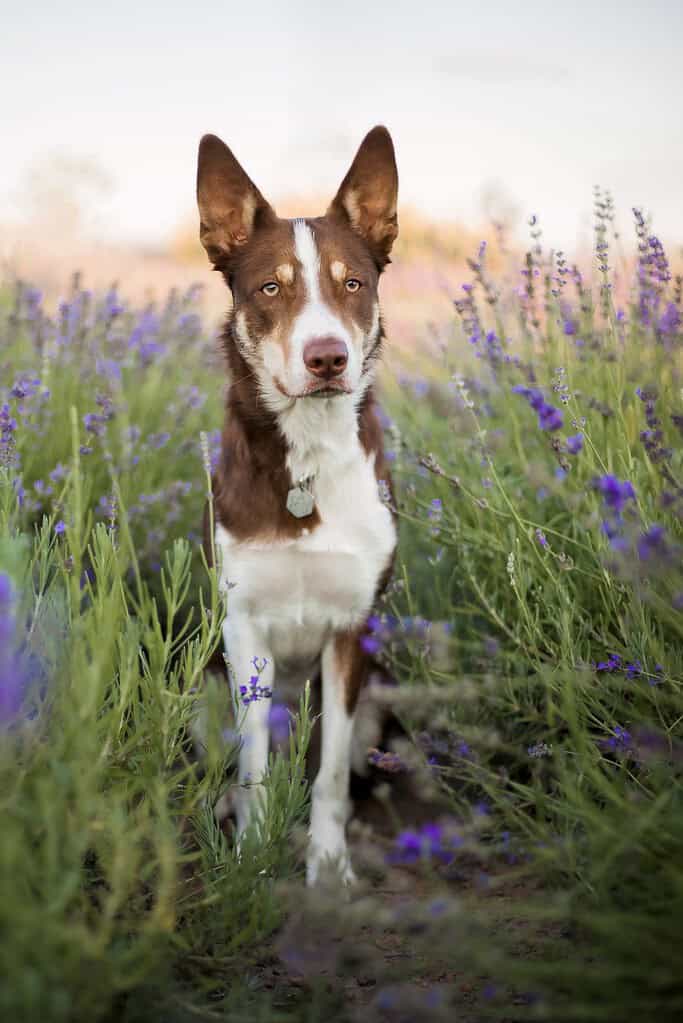
A collar is a handle. A tag is an address. If your dog gets loose, the person who catches them is a neighbor with a phone, not a shelter with a microchip scanner — and a microchip is useless until your dog reaches a vet or shelter that owns one.
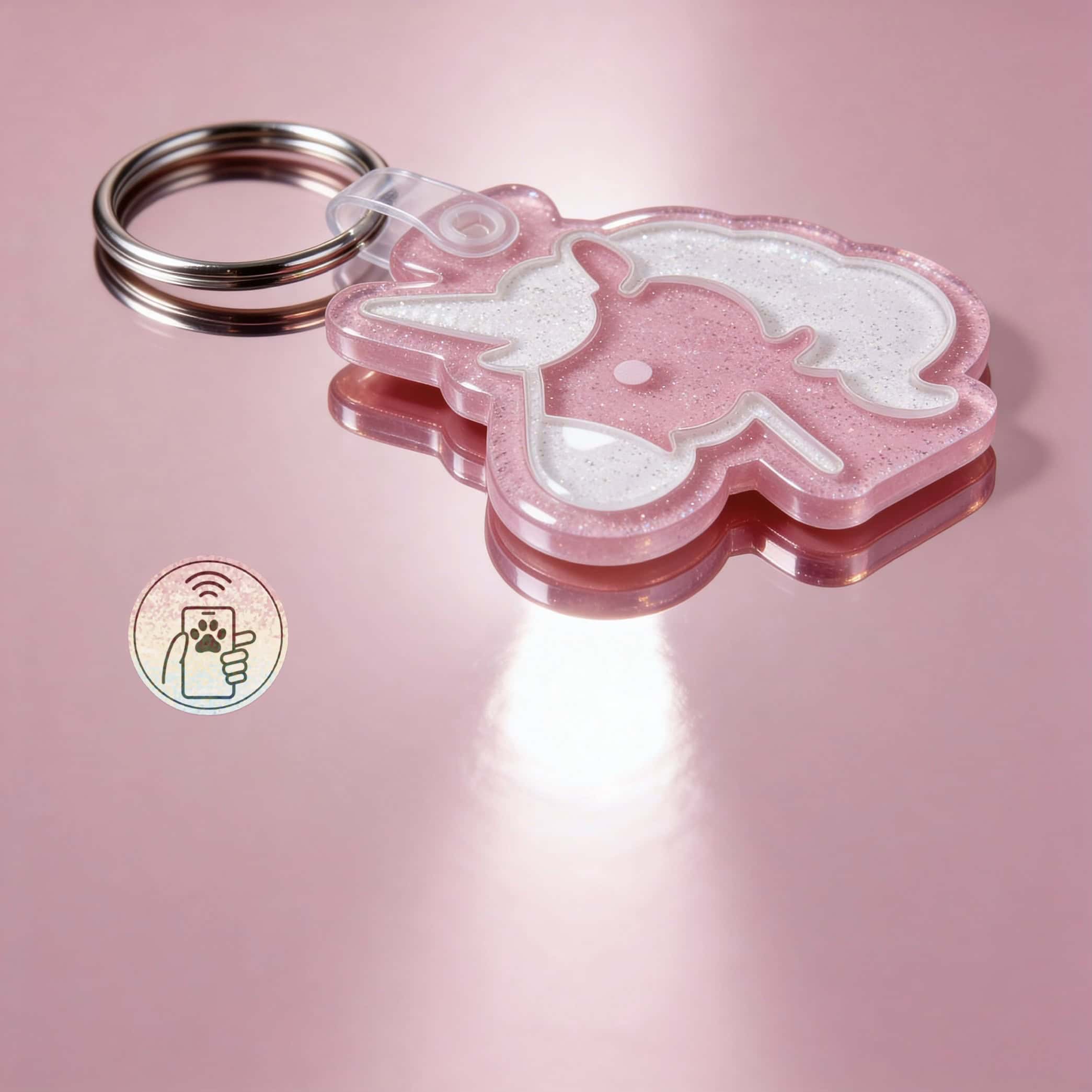
That is why we build what we build. A Shiloh’s House tag is a $38 designer acrylic NFC smart tag: the finder taps it with any phone, no app needed on their end, and your contact info comes straight up. Your details are engraved on the back too, so it still works with a dead phone battery or no signal. No subscription, made in the USA. Our free Lohji app holds the rest — vaccine records, medical history, voice notes — in 54 countries and 16 languages.
If you want the honest comparison against the alternatives, we wrote NFC vs QR vs engraved and why dog tags fall off — the second one matters more than people think, because the best tag in the world does nothing on the sidewalk.
Dog collar FAQ
Should my dog wear a collar all the time?
Most dogs should wear a flat collar with ID at home and outside. The exceptions: crated dogs, dogs in a martingale or prong, and dogs who play rough with another dog — collar-mouth entanglement is a real emergency. A breakaway collar or a tag that rides flat solves most of it.
Is a collar or a harness better for walking?
A harness is better for walking a dog who pulls, and better for any flat-faced breed. A collar is better for carrying ID and for dogs with polite leash manners. Most people should own both and use the harness on the leash.
How tight should a dog collar be?
Two fingers flat between the collar and the neck. If you can fit your whole hand, it will come off over the ears. If you cannot fit two fingers, it is too tight.
How often should I replace my dog’s collar?
Check the webbing and hardware every few months. Replace when the webbing frays, the buckle cracks, or the D-ring has worn thin — that ring failing is one of the most common ways tags get lost.
Do smart collars replace ID tags?
No. GPS collars tell you where your dog is; a tag tells the stranger holding your dog who to call. We broke down the difference in tags vs GPS collars. Ideally you have both.
Get Your Tag
Whatever collar you choose, hang something on it that a stranger can actually use. One tap, no app, no subscription.