Best Dog Doors of 2026: PetSafe, Endura Flap, SureFlap & Ideal Pet Compared
 Shiloh’s House Team
·
·
7 min read
Shiloh’s House Team
·
·
7 min read
The best dog door for most homes in 2026 is the Endura Flap, which seals better than anything else in its price range. PetSafe Extreme Weather is the best value insulated door, PetSafe Electronic SmartDoor is the pick if you have raccoons or a cat you do not want going out, and SureFlap Microchip Pet Door is the small-dog and cat option that opens only for your own animal. Spring is when most people finally install one, so here is what to buy, how to size it, and the security question nobody thinks about until later.
What kind of dog door do you actually need?
Four types: a flap cut into a door, a sliding-glass-door panel insert, a wall-mounted tunnel, and an electronic or microchip door that only your pet can open. The choice is mostly about your house, not your dog.
- Door-mounted flap — cheapest, permanent, requires cutting a hole in a door you own.
- Sliding-door panel — no cutting, fully removable, ideal for renters. Costs you a chunk of doorway width.
- Wall-mount tunnel — best seal and best placement freedom, most expensive and most involved to install.
- Electronic or microchip — unlocks for a collar key or your pet’s existing microchip, locking out wildlife and neighborhood cats.
Best dog doors of 2026, compared
Endura Flap for insulation, PetSafe for value and availability, SureFlap for selective entry on small pets, PlexiDor if you have a determined chewer, Ideal Pet Products if you just need something cheap that works.
| Dog door | Type | Selective entry | Price tier | Best for |
|---|---|---|---|---|
| Endura Flap | Door, wall, sliding panel | No | $$$ | Cold and windy climates |
| PetSafe Extreme Weather | Door mount | No | $$ | Best value insulated |
| PetSafe Electronic SmartDoor | Door mount | Yes, collar key | $$$ | Keeping wildlife out |
| SureFlap Microchip Pet Door | Door or panel | Yes, microchip | $$$ | Cats and small dogs |
| PlexiDor Performance | Door or wall | No | $$$$ | Chewers and big dogs |
| Ideal Pet Products | Door or sliding panel | No | $ | Budget and renters |
Prices shift constantly across Chewy, Amazon, Home Depot and the brands’ own sites, so we have used tiers rather than numbers that go stale. Check current pricing before buying.
Endura Flap — best overall
A single thick flexible flap with strong magnets down the sides and along the bottom, in an aluminum frame. The reason it gets recommended so consistently is that it stays shut in wind, which is where cheap flaps fail. If you live somewhere with real winters or real gusts, this is the one that stops your heating bill from noticing you have a hole in the wall. Available as a door mount, a wall tunnel, and a sliding-glass-door panel.
PetSafe Extreme Weather — best value
Three flaps: two flexible outer flaps plus an insulated center panel. Not quite Endura’s seal, meaningfully cheaper, and stocked everywhere. For most temperate climates this is the sensible buy. The slide-in closing panel is sturdier than the ones on budget doors.
PetSafe Electronic SmartDoor — best for keeping things out
Reads a small key on your dog’s collar and unlocks only for them. This is the answer to raccoons, possums, stray cats, and the neighbor’s dog. It also lets you set a curfew on some models. Downsides: batteries, and a dog who loses the collar key is locked out.
SureFlap Microchip Pet Door — best selective entry for small pets
Uses your pet’s existing microchip as the key, so nothing extra hangs off the collar. Sized for cats and small dogs, and it can be set to let a pet out but not in, or the reverse. If you have both a cat and a small dog, this is usually the right door.
PlexiDor Performance — best for chewers and large dogs
Rigid saloon-style panels rather than a flexible flap, with a steel security plate. Expensive, heavy, and close to indestructible. Worth it for a large dog who has already destroyed one flap.
Ideal Pet Products — best budget pick
Basic vinyl flaps and sliding-door panels at the lowest price that still works. Sealing is mediocre and flaps stiffen in the cold, but for a mild climate, a garage, or a rental you will leave in a year, it does the job.
How to size a dog door
The bottom of the flap should sit no higher than about a third of your dog’s leg height — a step-over that is too tall is the most common reason a dog refuses to use a new door, and it is genuinely hard on senior dogs and dogs with hip problems.
If you are buying for a puppy, size for the adult dog and use the locking panel until they grow into it.
Are dog doors a security risk?
Mitigate it sensibly: install on a side or back door rather than the front, use a model with a rigid locking panel, and choose electronic or microchip entry if you want the opening closed by default. Wall-mounted doors placed high and narrow are harder to exploit than a big flap at ground level.
The escape problem nobody plans for
A dog door converts your yard from a place your dog visits into a place your dog lives — which means every gap in the fence now matters at 2 a.m. A gate left unlatched by a delivery driver, a storm-loosened board, a fence line a dog has been quietly working on for weeks: with a dog door, none of those need you to be awake for your dog to find them.
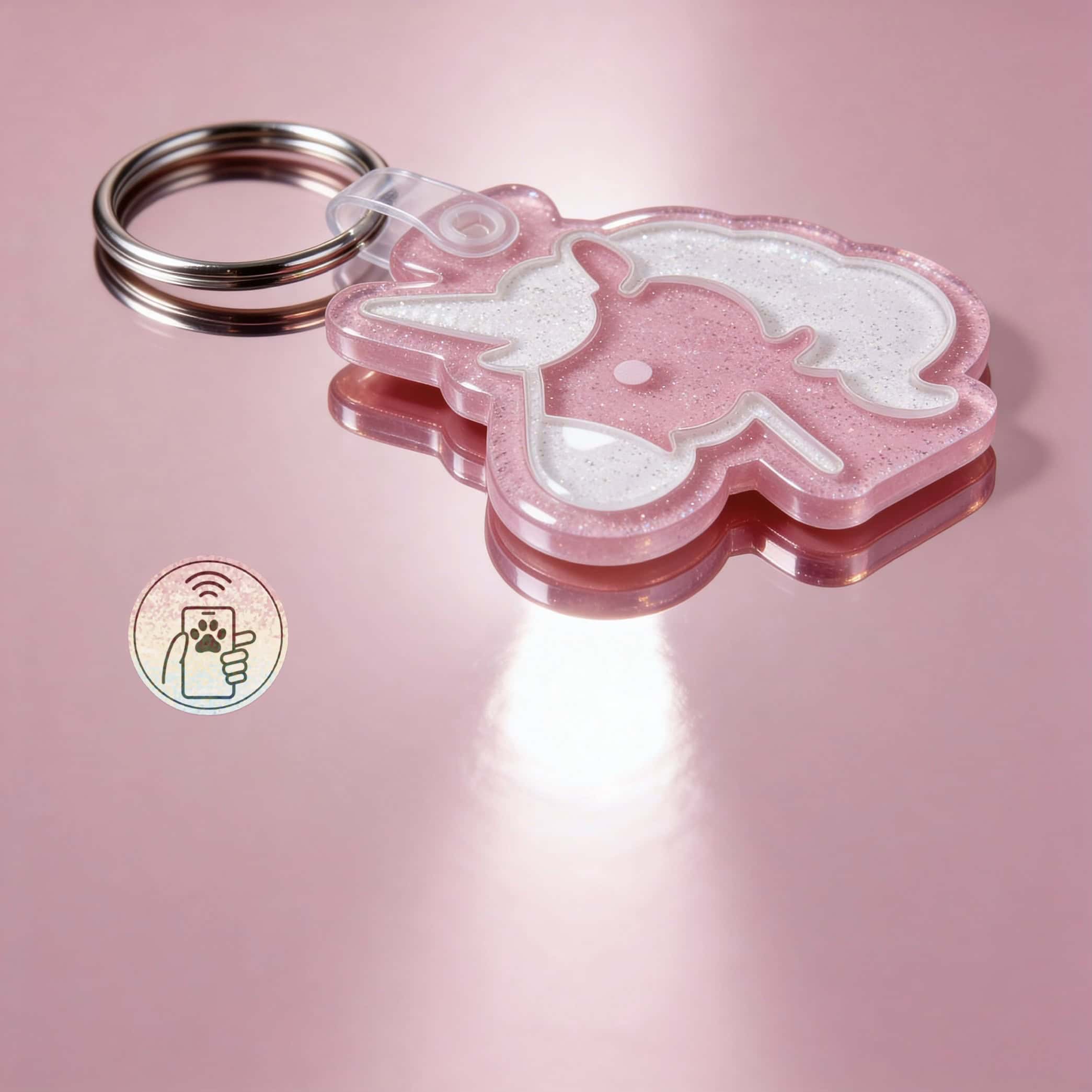
Before you install, walk the fence line, check every latch, and make sure the ID on your dog’s collar is current. This is our business, so treat it as disclosed bias: Shiloh’s House makes $38 designer acrylic NFC smart pet ID tags — any phone taps the tag and gets your contact details with no app on the finder’s end, plus engraving on the back as a backup and no subscription. Whatever brand you use, the tag is what turns a found dog into a phone call. Our guides to the first 60 minutes after a dog goes missing and how to find a lost dog cover the rest.
If a dog door feels like too much freedom, a well-placed pet gate or a crate for unsupervised hours is a legitimate alternative.
Frequently asked questions
How do I train my dog to use a dog door?
Prop or tape the flap fully open first and lure them through with treats from the other side, both directions, until it is boring. Then let the flap down halfway, then fully. Never push a dog through — one bad flap-on-the-back experience can set training back weeks.
Can you put a dog door in a sliding glass door?
Yes. Panel inserts drop into the track and need no cutting, which makes them the standard choice for renters. Confirm your track height before ordering, and expect to lose some doorway width.
Will a dog door make my house cold?
A cheap single flap will. A dual-flap or magnetically sealed door like the Endura Flap or PetSafe Extreme Weather loses far less. Insulation quality is the main thing you are paying for as price goes up.
How do I keep raccoons out of a dog door?
An electronic or microchip door is the only reliable answer — raccoons learn flaps quickly and are strong enough to push through most of them. Locking the panel overnight works too, if you are consistent.
Are dog doors safe for cats too?
Yes, and microchip models are ideal for multi-pet homes because you can allow one animal and block another. Just check the step-over height, which is often set for a dog and too tall for a cat.
Can I install a dog door myself?
A sliding-door panel takes minutes. A door-mounted flap is a straightforward job with a jigsaw if you are comfortable measuring twice. A wall-mount tunnel means cutting through siding, insulation, and possibly wiring — get a professional unless you genuinely know what is behind that wall.
The bottom line
Buy Endura Flap if your weather is harsh, PetSafe Extreme Weather if it is not, and go electronic or microchip if wildlife or a second pet is in the picture. Size it for shoulder height and a low step-over. Then walk your fence line and check the tag on the collar, because the door you just installed works exactly as well at three in the morning as it does at noon.
Get Your Tag
More yard freedom deserves better ID. A $38 designer acrylic NFC tag any phone can tap, engraved on the back, no subscription.