Best Dog Nail Clippers & Grinders of 2026: Dremel, Casfuy, Millers Forge & Safari Compared
 Shiloh’s House Team
·
·
8 min read
Shiloh’s House Team
·
·
8 min read
For most dogs in 2026, the best nail clipper is a plier-style trimmer — Millers Forge for medium and large dogs, Safari for small ones — and the best grinder is the Dremel PawControl, with the Casfuy as the quiet budget alternative. Clippers are faster and cheaper; grinders are far more forgiving on black nails and leave a smoother edge. If your dog has dark nails or you have ever hit the quick and lost their trust, a grinder is the safer tool. Whatever you buy, buy styptic powder at the same time.
What are the best dog nail clippers?
Guillotine clippers still have fans, but they require you to guess how much nail is inside the hole and they can pinch on thick nails. Here is how the tools people actually search for compare.
| Tool | Type | Best for | Noise / vibration | Main drawback |
|---|---|---|---|---|
| Millers Forge Nail Clipper | Plier / scissor | Medium to large dogs, thick nails | Silent | No quick sensor — you have to judge it |
| Safari Professional Trimmer | Plier / scissor | Small dogs and puppies | Silent | Too small for a Rottweiler’s nails |
| Resco Original | Guillotine | Groomers used to the style; made in USA | Silent | Harder to aim; blade needs replacing |
| Dremel PawControl | Rotary grinder | Black nails, nervous dogs, smooth finish | Moderate hum and vibration | Slower; needs desensitising first |
| Casfuy Nail Grinder | Rotary grinder | Small and medium dogs; noise-sensitive dogs | Quiet | Less torque on very thick nails |
| “Smart” LED quick-detection clippers | Plier with light | Owners nervous about dark nails | Silent | Lights help on thin nails only — not magic |
We have left prices out deliberately. Grinder kits in particular are bundled and rebundled constantly, and the accessories included matter more than the sticker — check what is actually in the box at your retailer before you buy.
Best overall clipper: Millers Forge
It is a plier-style tool with a sharp, well-aligned blade and a safety stop, and the value is in the leverage: thick nails on a Lab or a Shepherd cut cleanly instead of crushing and splintering. There is nothing clever about it, which is exactly why it lasts. Sharpness is the whole product with clippers — a dull blade squeezes the nail before it cuts, and that pinch is what teaches dogs to hate the whole procedure.
Best for small dogs: Safari Professional Nail Trimmer
Small dogs need a small tool — oversized clippers on a Yorkie’s nail block your view of exactly the thing you are trying to see. Safari’s small plier-style trimmer is sized properly for toy and small breeds and for puppies, and it comes with a safety stop that limits how far the blade travels. Puppies are the ideal customers for this: start trimming a tiny amount every week from the day they come home and you will own an adult dog who does not care about nail day. Our first 30 days checklist for a new pet covers where handling practice fits in.
Best grinder: Dremel PawControl
If your dog has black nails, a grinder is the safest tool you can own, because you remove nail in thin layers and can stop the moment you see the quick approaching. The Dremel PawControl is the pet-specific version of a tool Dremel has been making for decades: cordless, two speeds, and a guard that sets the sanding angle for you so you do not accidentally flatten the nail at the wrong plane.
Two rules make grinders work. Go in short bursts of a few seconds per nail, because friction generates heat and a hot nail is uncomfortable. And introduce the tool over several days — let it run across the room, then in your hand, then touching a paw, before it ever touches a nail. Skipping that step is why grinders end up in drawers.
Best budget grinder: Casfuy
The Casfuy is the quiet one, which matters more than the price for a sound-sensitive dog. It uses a diamond bit grinding wheel with a two-speed motor and a port cover that limits how much nail can enter, and it is genuinely low-noise and low-vibration compared with a full-size rotary tool. For small and medium dogs it does everything the Dremel does, more slowly. On a Great Dane’s nails it will feel underpowered.
Clippers or grinder: which should you buy?
Buy clippers if your dog has light-coloured nails, tolerates handling, and you want the job done in three minutes. Buy a grinder if your dog has black nails, if you have quicked them before, or if a smooth edge matters — on hardwood floors, or with an owner who bruises easily.
Plenty of households end up owning both: clippers for the bulk of the nail, grinder to round the edge afterwards. That combination is what most groomers do, and it produces the best result on a dog who will sit for it.
How to cut black dog nails without hitting the quick

The quick is the living core of the nail, containing a blood vessel and a nerve; on white nails it is the pink part you can see, and on black nails it is invisible from the outside — so you work from the underside instead.
- Trim tiny slivers, not chunks. Take off a millimetre or two at a time, always at a slight downward angle following the natural curve.
- Look at the cut face after every slice. You will see a chalky, dry white ring. Keep going while it stays chalky.
- Stop when a small dark dot appears in the centre. That grey or black dot is the leading edge of the quick. One more slice would draw blood.
- Do not forget the dewclaws. They never touch the ground, so they never wear down, and an ingrown dewclaw curling into the pad is a genuinely painful and very common problem.
- Keep styptic powder within reach. Kwik Stop or a similar product stops bleeding in seconds. Cornstarch or plain flour pressed firmly onto the nail is the emergency substitute.
- Quicked them anyway? Stay calm. It bleeds a lot and looks alarming, it stings, and it is not dangerous. Apply powder, apply pressure, hand out something wonderful to eat, and stop for the day.
How often should you trim a dog’s nails?
Every three to four weeks for most dogs — and the simplest test is sound: if you can hear nails clicking on a hard floor, they are too long. Dogs walked mostly on pavement wear their front nails down naturally and may need less; dogs on grass and carpet need more. Dewclaws always need attention regardless.
Overlong nails are not cosmetic. They push the toes out of alignment, change how the paw loads on the ground, and over time contribute to splayed feet and joint strain — a real issue in older dogs. There is also a self-fulfilling trap: the quick grows longer along with a neglected nail, so the longer you leave it, the less you can safely remove. Frequent small trims cause the quick to recede over time, which is the only way back.
Frequently asked questions
Are nail grinders better than clippers for dogs?
Safer on dark nails and smoother in finish, but slower and noisier. Clippers are faster and quieter. For a first-time owner with a black-nailed dog, a grinder is usually the better buy.
What can I use if my dog hates nail trims?
Split the job across several days — two nails per session is a perfectly respectable target. Pair every session with high-value food, use a lick mat, and stop while your dog is still calm rather than pushing to the end. For dogs who genuinely panic, ask your vet about a light situational medication for grooming days; it is a common and reasonable request.
How do I know where the quick is on black nails?
You cannot see it from the outside. Cut thin slivers and watch the cut surface: chalky white means keep going, a small dark dot in the centre means stop.
Do dogs’ nails need cutting if they walk on concrete?
Front nails often wear down, but rear nails and dewclaws usually do not. Check all of them.
Can I use human nail clippers on a dog?
Only on a very small puppy in a pinch. Human clippers are the wrong shape for a curved nail and tend to crush and split rather than slice, which hurts.
How much does a professional nail trim cost?
It varies widely by region and by whether it is bundled into a full groom, so ask your groomer or vet clinic locally. Many clinics do walk-in nail trims, which is a reasonable option for a dog who will not accept it at home.
While you are looking at their collar
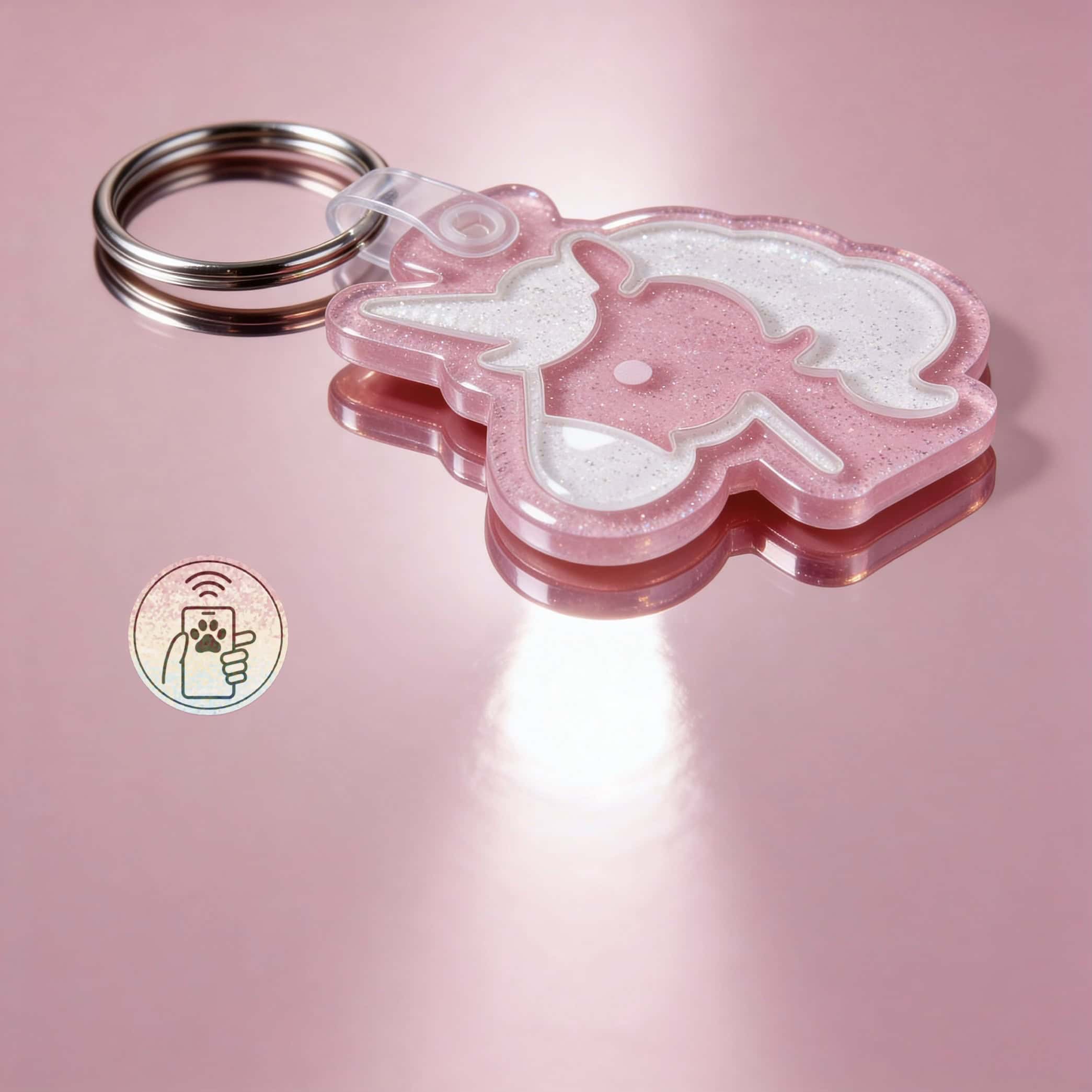
Nail day is the one time a month most people have their dog’s paws in their hands and are actually paying attention — so it is a good moment to check the collar too. Is the ID tag readable, or has the engraving worn to nothing? Is the phone number on it still your phone number? Full disclosure: we make the alternative. Our Shiloh’s House NFC smart tags are $38 designer acrylic tags that anyone can tap with any phone — no app needed on their end — to open your dog’s profile and reach you, with your number engraved on the back as a backup and no subscription. Because the details live in the free Lohji app, you can update your number without buying a new tag. While you are at it, if your dog is coating the house in fur, our guide to why dogs shed so much is the companion read, and if the paw handling ends in a face full of tongue, here is what that means.
Get Your Tag
A $38 designer acrylic NFC tag any phone can tap — engraved backup, made in USA, no subscription, ever.