Can Dogs Eat Cucumbers? Safe Servings, Benefits and What to Avoid
 Shiloh’s House Team
·
·
16 min read

Yes, dogs can eat cucumbers. Plain, fresh cucumber is safe, non-toxic and one of the lowest-calorie crunchy treats you can offer, at about 15 calories per 100 grams. The two real risks are choking on big chunks, especially for small dogs and gulpers, and loose stools from eating too much. Pickles are a no because of the salt, garlic and spices. Wash the cucumber, slice it thin, start with a piece or two, and keep all treats under 10 percent of daily calories.
Last updated: November 2026
Can dogs eat cucumbers safely?
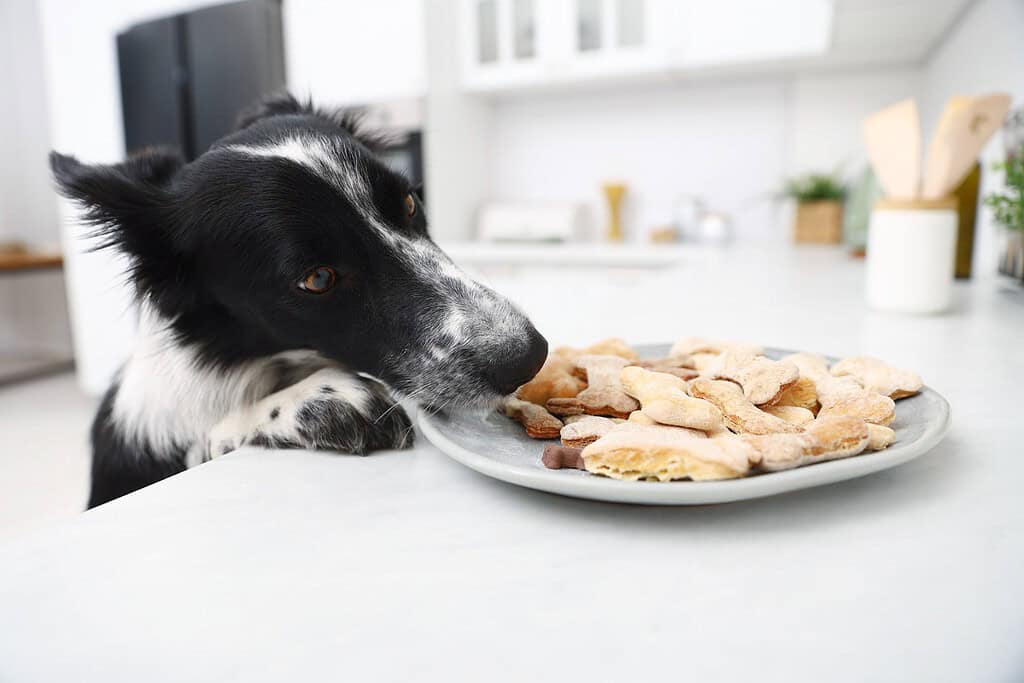
Cucumber is about as uncontroversial as people food gets for dogs. PetMD, Chewy, Rover and the veterinarians they interview all agree: raw cucumber is safe for adult dogs and puppies, and the only things that go wrong are a piece that is too big or a serving that is too generous.
It is not on any poison list. The WSAVA Global Nutrition Committee’s treat handout names the toxic people foods: chocolate, macadamia nuts, onions, leeks, garlic and chives, grapes, raisins and currants, xylitol, alcohol, raw yeast dough and caffeine. Cucumber does not appear, and neither do its seeds or skin. Our guide to foods dogs cannot eat covers the real offenders.
What cucumber is not is a vegetable your dog needs. A dog eating a complete and balanced food gets every vitamin and mineral already. Cucumber earns its place because it lets you reward a dog many times a day for almost no calories. Pickles, seasoned cucumber salad and bitter garden cucumbers are the versions to leave on your own plate.
Are cucumbers good for dogs?
Cucumber is mostly water with a light sprinkling of nutrients, and that is its appeal. Here is what USDA FoodData Central reports for raw cucumber with the peel, per 100 grams and per cup of slices (104 g).
| Nutrient (raw cucumber with peel) | Per 100 g | Per 1 cup slices (104 g) |
|---|---|---|
| Calories | 15 kcal | 16 kcal |
| Water | 95.2 g | 99.0 g |
| Total sugars | 1.67 g | 1.7 g |
| Dietary fiber | 0.5 g | 0.5 g |
| Vitamin K | 16.4 mcg | 17.1 mcg |
| Potassium | 147 mg | 153 mg |
| Sodium | 2 mg | 2 mg |
Three things stand out. A whole cup of slices has about 16 calories, which Chewy’s veterinary reviewers note is less than half of a typical biscuit-style dog treat. There is almost no sugar, which is why veterinarians suggest cucumber for diabetic and overweight dogs. And the fiber is low, so it is gentler on the gut than carrots or green beans in the same volume.
The vitamin K and potassium are real but small. PetMD puts it plainly: your dog will not benefit greatly from the few slices they actually eat. Cucumber is a hydrating, nearly calorie-free crunch, not a supplement.
How much cucumber can a dog eat?
Every veterinary source we opened repeats the same guardrail: all treats combined should stay under 10 percent of a dog’s daily calories. The American Animal Hospital Association’s 2021 nutrition guidelines supply the formula: resting energy requirement equals 70 times body weight in kilograms raised to the 0.75 power, times a life-stage factor of 1.4 to 1.6 for a neutered adult.
We ran that formula for four weights using the 1.6 factor, took 10 percent as the treat budget, and converted it to cucumber at 15 calories per 100 grams. The table is our suggestion, not a veterinary prescription. A quarter-inch round from a garden cucumber weighs roughly 9 grams and carries about 1.4 calories, based on the USDA weight of 301 grams for an 8¼-inch cucumber.
| Dog weight | Daily treat budget (10%) | Cucumber if it were the only treat | Our suggested serving |
|---|---|---|---|
| 10 lb (4.5 kg) | About 35 kcal | About 2¼ cups (232 g) | 2 to 3 thin slices, cut in halves |
| 25 lb (11.3 kg) | About 69 kcal | About 4½ cups (461 g) | 4 to 5 slices (about ¼ cup) |
| 50 lb (22.7 kg) | About 116 kcal | About 7½ cups (776 g) | 6 to 8 slices (about ½ cup) |
| 80 lb (36.3 kg) | About 166 kcal | About 10½ cups (1,104 g) | 8 to 10 slices (about ¾ cup) |
Notice the gap between the third and fourth columns. Calories are not the limit with cucumber; volume is. Long before a 10-pound dog reaches 35 calories of cucumber, it has eaten two cups of watery vegetable and is heading for diarrhea. Our suggestions sit close to PetMD’s (one to two slices under 20 pounds, five to six for medium dogs, a handful for large dogs). For a first taste, offer one piece and check stools the next day.
What are the real risks of cucumbers for dogs?
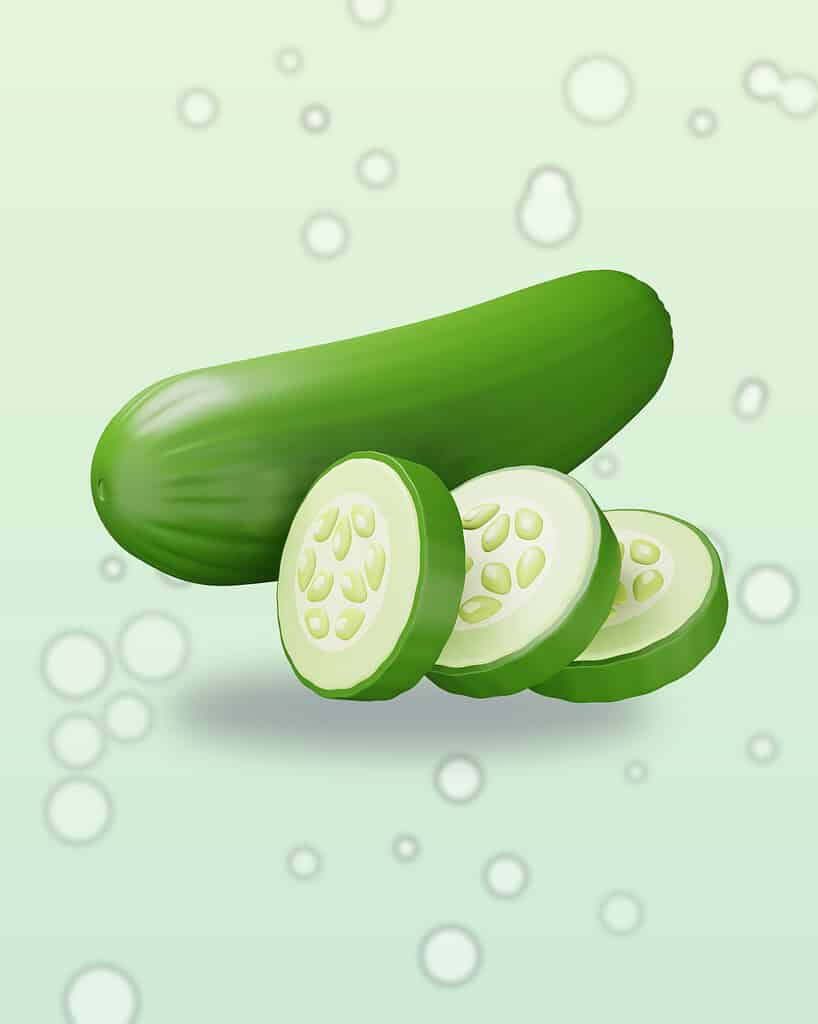
Cucumber has no toxin to worry about, but there are five practical ways it can cause trouble.
The first and most serious is choking or blockage. A cucumber is firm, slippery and round, and a dog that gulps rather than chews can wedge a thick chunk in the throat or swallow a piece large enough to lodge in the intestine. PetMD warns that a whole cucumber or a large piece can cause a choking hazard or an intestinal blockage, especially in smaller dogs, and Chewy’s veterinary reviewers add that a cucumber should never be fed whole. Small breeds and the family food thief who grabs and swallows are the highest-risk group. Slicing thin and halving the rounds solves it.
The second is digestive upset from too much. Cucumber is almost all water, but a big volume of any raw vegetable moves through a dog quickly. PetMD tells owners whose dog ate too much to watch for an upset stomach, and Rover’s veterinary sources list vomiting and diarrhea as the predictable result. This is a dose problem, not a toxicity problem, and it usually resolves within a day once the cucumber stops.
The third is bitterness, which comes from a compound called cucurbitacin. PetMD explains that cucurbitacin is normally found in the roots, stems and leaves of the cucumber plant, that it can spread into the fruit in a smaller dose and make it taste bitter, and that when it does, it is usually concentrated in the ends and the peel. Wild cucumber vines growing along a trail are a different plant and are not for eating. PetMD says that in small servings this compound should not harm you or your dog, but there is no reason to test it. Taste a sliver from the stem end first. If it is bitter, cut off the ends and peel the rest, or skip that cucumber entirely.
The fourth is what is on the peel. The skin itself is safe and digestible for most dogs. But store cucumbers are often waxed to extend shelf life, and conventional produce may carry pesticide residues. The FDA’s produce-safety guidance is to wash everything under running water and to scrub firm produce such as melons and cucumbers with a clean produce brush, even if you plan to peel, so the knife does not carry dirt from the surface into the flesh. The FDA also advises against soap, detergent or produce washes. Dr. Michael Robinson, a veterinarian quoted by Chewy, points out that the wax layer can trap bacteria and recommends peeling for dogs with sensitive stomachs. For most dogs, a good scrub under the tap is enough.
The fifth is seeds. Cucumber seeds contain nothing toxic, but Chewy and PetMD both note that some dogs, particularly puppies and dogs with sensitive digestion, handle them poorly and end up gassy or loose. English cucumbers, the long seedless kind wrapped in plastic, have thinner skin and almost no seeds, which Chewy calls a great option for exactly this reason.
A last and rare possibility is a true food allergy. Rover’s veterinary sources mention it, and the advice is the same as for any new food: start small, watch for itching, hives or vomiting over the next day, and stop if you see any. None of these risks is a reason to avoid cucumber. They are a reason to wash it, slice it and keep the serving sensible.
Can dogs eat pickles?
No. A pickle is a cucumber soaked in salt brine, vinegar and seasonings, and every one of those additions is a problem for dogs.
Start with the salt. USDA FoodData Central lists dill or kosher dill pickles at 809 mg of sodium per 100 grams, against 2 mg for raw cucumber. A single large 4-inch dill pickle (135 g) carries about 1,090 mg of sodium, roughly 2.8 grams of salt. The Merck Veterinary Manual reports that signs of salt toxicosis in dogs can appear after 2 to 3 grams of salt per kilogram of body weight, with vomiting within a few hours that can progress to weakness, diarrhea, muscle tremors and seizures. By that math, one pickle will not poison a 10-pound dog, but it can mean a very thirsty, possibly vomiting dog, and a small dog that gets into several is in real danger.
Then there are the seasonings. Many dill and kosher pickles are brined with garlic, which sits on the WSAVA list of toxic food ingredients alongside onions, leeks, shallots and chives. Sweet pickles add sugar, spicy pickles add chili, and bread-and-butter pickles add both. There is no version of a pickle that is a good idea.
If your dog has already eaten a pickle, read on, and keep our guide to what to do when your dog eats something it should not handy.
List your dog’s food allergies and medical notes where a finder can see them
Shiloh’s House smart tags pair a laser-engraved name and number with a tap-to-open profile that lists your contacts, medications and food sensitivities, so a stranger does not hand your dog the wrong snack. $38 one-time, no subscription, made in the USA.
What should you do if your dog ate a whole cucumber or a jar of pickles?
A whole fresh cucumber is a volume and blockage question. If your dog chewed it into pieces, the most likely outcome is a day of soft stools. Skip the next treat and keep the regular meals. Call your veterinarian if you see repeated vomiting, a bloated or painful belly, straining without producing stool, or gagging, drooling or trouble swallowing, which can mean a chunk is stuck. PetMD lists loss of appetite, vomiting, excessive diarrhea, blood in vomit or stool, weakness and collapse as the signs that need an immediate call. A small dog that swallowed a large section whole should be seen the same day.
“The fiber that is so beneficial can cause vomiting and diarrhea if fed in excess.”
Brett Levitzke, DVM, Chief Medical Officer at VERG, quoted by Rover (2024)
A jar of pickles is a salt and garlic question, and it is more urgent. Do not try to make your dog vomit at home unless a veterinarian or poison line tells you to. Offer fresh water in small amounts and call your vet or the ASPCA Animal Poison Control Center at (888) 426-4435 (a consultation fee applies). Tell them your dog’s weight, how many pickles and how much brine are gone, and whether the label lists garlic. Merck notes that salt toxicosis is unlikely when a dog has fresh water, but warns that gulping a huge amount at once can worsen neurological signs, so offer small, frequent drinks.
Garlic trouble can show up later than salt trouble, so even a dog that seems fine the next morning should be checked if a garlicky brine is involved. Read the label to the vet word for word.
How should you serve cucumber to a dog?
Preparation is the same every time: wash and scrub under running water, trim and taste the stem end, peel if your dog has a sensitive stomach, then cut to size. From there, cucumber is more versatile than it looks.
- Thin slices or half-moons. The default. Quarter-inch rounds for medium and large dogs, halved or quartered for small dogs. At 1.4 calories, a slice is a near-free training reward.
- Frozen slices. Freeze rounds on a tray for a cold summer chew. Let them soften for a minute for small dogs so they are not rock-hard.
- Pureed on a lick mat. Chewy’s veterinary team suggests freezing pureed cucumber on a lick mat as an enrichment treat. It stretches a few slices into ten minutes of licking. Our roundup of the best lick mats for dogs covers which textures hold a puree.
- Stuffed in a rubber toy. PetMD suggests blending cucumber with dog-safe fruit such as watermelon or blueberries and freezing the mix inside a hollow toy. Keep the fruit portion small and see our guide to watermelon for dogs for the seed and rind rules.
- As a meal topper. A few diced pieces on kibble add crunch and water.
Serve it plain, every time. No ranch, no dressing, no salt, no leftover cucumber salad with onion in it. Store-bought cucumber water is also off the list, because PetMD notes some brands contain xylitol, which is toxic to dogs. A few slices in the water bowl at home is fine.
Which dogs should skip cucumber or ask the vet first?
Cucumber is a fine treat for the average healthy dog, and one of the few people foods veterinarians actively suggest for overweight and diabetic dogs. These are the dogs for whom we would pause.
Dogs on a prescription diet. PetMD’s standing advice is that dogs on prescription diets should not be fed any treats outside the diet. That includes elimination diets for allergy testing, where one unlisted snack can wreck weeks of work.
Dogs with kidney disease. People often worry about potassium here, so we checked. Veterinary kidney diets restrict phosphorus, sodium and protein, and most are actually higher in potassium, because low potassium is a common consequence of kidney disease in dogs, according to Today’s Veterinary Practice. Cucumber’s 147 mg of potassium per 100 grams is modest; a few slices add 25 to 40 mg. The exception is the smaller group of dogs whose potassium runs high and who eat a potassium-restricted diet. Your vet knows which group your dog is in.
Dogs with a pancreatitis history. Cucumber is essentially fat-free, so it is one of the safer treats here. The caution is volume, since these dogs often have a sensitive gut, so keep servings small and peel.
Dogs with chronic loose stools. The fiber and seeds can tip a fragile gut. Peeled, seeded, in tiny amounts, or skip it.
Puppies. Fine once fully on solid food, in small, thin pieces. One or two is plenty.
If your dog has a food allergy, a kidney diet or a condition like diabetes, write it down somewhere other people will actually see it. In the free Lohji app from Shiloh’s House, the Smart Tag profile behind a Shiloh’s House tag has a medical-notes field for allergies, medications and feeding rules, so a dog sitter, neighbor or finder who taps the tag with a phone sees “prescription diet only, no treats” before anyone offers a snack. Get the app on the App Store or Google Play.
How does cucumber compare with other crunchy vegetables for dogs?
Cucumber wins on calories and sugar and loses on fiber, which is what you want from a frequent training treat. Here is how the common crunchy vegetables stack up per 100 grams, raw, from USDA FoodData Central, with a dill pickle for contrast.
| Vegetable (raw, per 100 g) | Calories | Sugars | Fiber | Sodium | Potassium |
|---|---|---|---|---|---|
| Cucumber, with peel | 15 kcal | 1.7 g | 0.5 g | 2 mg | 147 mg |
| Celery | 14 kcal | 1.3 g | 1.6 g | 80 mg | 260 mg |
| Zucchini, with skin | 17 kcal | 2.5 g | 1.0 g | 8 mg | 261 mg |
| Green beans | 31 kcal | 3.3 g | 2.7 g | 6 mg | 211 mg |
| Carrots | 41 kcal | 4.7 g | 2.8 g | 69 mg | 320 mg |
| Dill pickle (for contrast) | 12 kcal | 1.1 g | 1.0 g | 809 mg | 117 mg |
Carrots carry nearly three times the calories and sugar of cucumber, which is why a bag of baby carrots is not the free snack it feels like; see our guide to carrots for dogs. Green beans are the better choice when you want fiber to help a dieting dog feel full, and green beans for dogs explains canned versus fresh. Celery matches cucumber on calories but is stringier. Zucchini is cucumber’s closest cousin and swaps in one for one.
One aside for multi-pet homes. The viral videos of cats leaping away from a cucumber are not about the vegetable, and the stunt is not kind. We explain the real reason in why cats are scared of cucumbers.
Frequently asked questions
Can dogs eat cucumber skin?
Yes. Cucumber skin is safe and digestible for most dogs, but it is where wax, dirt and any pesticide residue sit, so scrub it under running water first. Bitter compounds also concentrate in the peel at the stem end. For dogs with sensitive stomachs, veterinarians quoted by Chewy and Rover suggest peeling, which removes all of those concerns at once.
Can dogs eat cucumber seeds?
Yes. Cucumber seeds contain nothing toxic. Some dogs, especially puppies and dogs with sensitive digestion, get gas or loose stools from the seedy center. If that happens, scoop the seeds out or switch to an English cucumber, which has thinner skin and almost no seeds. Most dogs eat regular cucumber, seeds and all, without trouble.
How many cucumber slices can I give my dog?
Treats should stay under 10 percent of daily calories, but with cucumber the practical limit is volume. We suggest two to three thin slices for a 10-pound dog, four to five for a 25-pound dog, six to eight for a 50-pound dog and eight to ten for an 80-pound dog, once a day. Start with one piece the first time.
Can dogs eat pickles?
No. Dill pickles carry about 809 mg of sodium per 100 grams compared with 2 mg in raw cucumber, and many are brined with garlic, which is toxic to dogs. One pickle is unlikely to poison a dog but can cause vomiting and heavy thirst; several pickles or a bowl of brine is a call-the-vet situation.
Can puppies eat cucumber?
Yes, once a puppy is fully on solid food. Cut it into small, thin pieces, because puppies gulp and choke easily, and keep it to one or two pieces since their stomachs are small. Puppies also handle seeds less well, so a peeled, seeded piece or a slice of English cucumber is the gentlest first try.
Can diabetic dogs eat cucumber?
Usually yes, and veterinarians often suggest it. Cucumber has about 1.7 grams of sugar and 16 calories per cup of slices, so it barely moves blood glucose, making it one of the safer treats for a dog on insulin. Still check with the vet who manages the diabetes, since any dog on a prescription diet should have treats approved first.
Sources
- Cucumber, with peel, raw (SR Legacy, FDC ID 168409), USDA FoodData Central (2019)
- Pickles, cucumber, dill or kosher dill (SR Legacy, FDC ID 168558), USDA FoodData Central (2019)
- Carrots, raw (SR Legacy, FDC ID 170393), USDA FoodData Central (2019)
- Beans, snap, green, raw (SR Legacy, FDC ID 169961), USDA FoodData Central (2019)
- Celery, raw (SR Legacy, FDC ID 169988), USDA FoodData Central (2019)
- Squash, summer, zucchini, includes skin, raw (SR Legacy, FDC ID 169291), USDA FoodData Central (2019)
- Can Dogs Eat Cucumbers?, Victoria Lynn Arnold, reviewed by Sandra C. Mitchell, DVM, DABVP, PetMD (2022)
- Can Dogs Eat Cucumbers?, Ashley Davidson, reviewed by Jennifer Coates, DVM, with Michael Robinson, DVM, Chewy (2025)
- Can Dogs Safely Eat Cucumbers?, Emma Stenhouse, with Brett Levitzke, DVM, Nicole Savageau, DVM, and Ambika Vaid, DVM, Rover (2024)
- Selecting and Serving Produce Safely, U.S. Food and Drug Administration (undated, accessed 2026)
- Salt Toxicosis in Animals, Larry J. Thompson, DVM, PhD, DABVT, Merck Veterinary Manual (2024)
- Energy Requirement Calculations (2021 AAHA Nutrition and Weight Management Guidelines), American Animal Hospital Association (2021)
- Feeding Treats to Your Dog, WSAVA Global Nutrition Committee (2024)
- Dietary Guidelines for Dogs with Chronic Kidney Disease (CKD), Today’s Veterinary Practice (2024)