Fi vs Tractive (2026): Which GPS Dog Collar Is Actually Worth the Subscription?
 Shiloh’s House Team
·
·
3 min read
Shiloh’s House Team
·
·
3 min read

Choosing between Fi and Tractive comes down to this: Fi is the premium, US-focused option with a battery that lasts up to a couple of months and a rugged integrated collar; Tractive is the affordable, works-almost-anywhere option with true live tracking and a battery measured in days. Both require a subscription — there is no GPS tracker without one. Here’s the full comparison, and the honest reason we think neither one replaces an ID tag.
Fi vs Tractive: Head-to-Head
| Fi (Series 3+) | Tractive GPS | |
|---|---|---|
| Upfront cost | Low or none (subscription-first model) | Roughly $50–80 for the device |
| Subscription | Required — roughly $189/year | Required — roughly $10–13/month |
| Battery life | Weeks to ~3 months | Up to ~2 weeks; days with heavy tracking |
| Coverage | United States (AT&T network) | Works in many countries worldwide |
| Form factor | Integrated rugged collar | Clips onto any collar |
| Extras | Escape alerts, activity & sleep tracking | Live mode, virtual fence, health alerts |
| Cats? | Dogs only | Dog and cat versions |
Where Fi Wins
Battery life, durability, and design. Fi’s collar-integrated tracker uses a low-power network and geofenced “safe zones,” so it sips battery until your dog actually leaves home — owners routinely report weeks or even a couple of months per charge. The escape alert is fast, the collar itself is genuinely tough, and the app’s activity rankings are addictive. The trade-offs: it’s US-only, dogs-only, and the subscription is the product — you’re paying roughly $189 a year, every year.
Where Tractive Wins
Price, flexibility, and coverage. The device costs less than a nice leash, attaches to any collar (including a cat’s), and works across a long list of countries — the pick if you travel or live outside the US. Live mode updates your dog’s position every few seconds, which is what you actually want mid-panic. The trade-off is battery: heavy live tracking can drain it in a day or two, and a GPS tracker with a dead battery is jewelry.
The Part Both Ads Skip

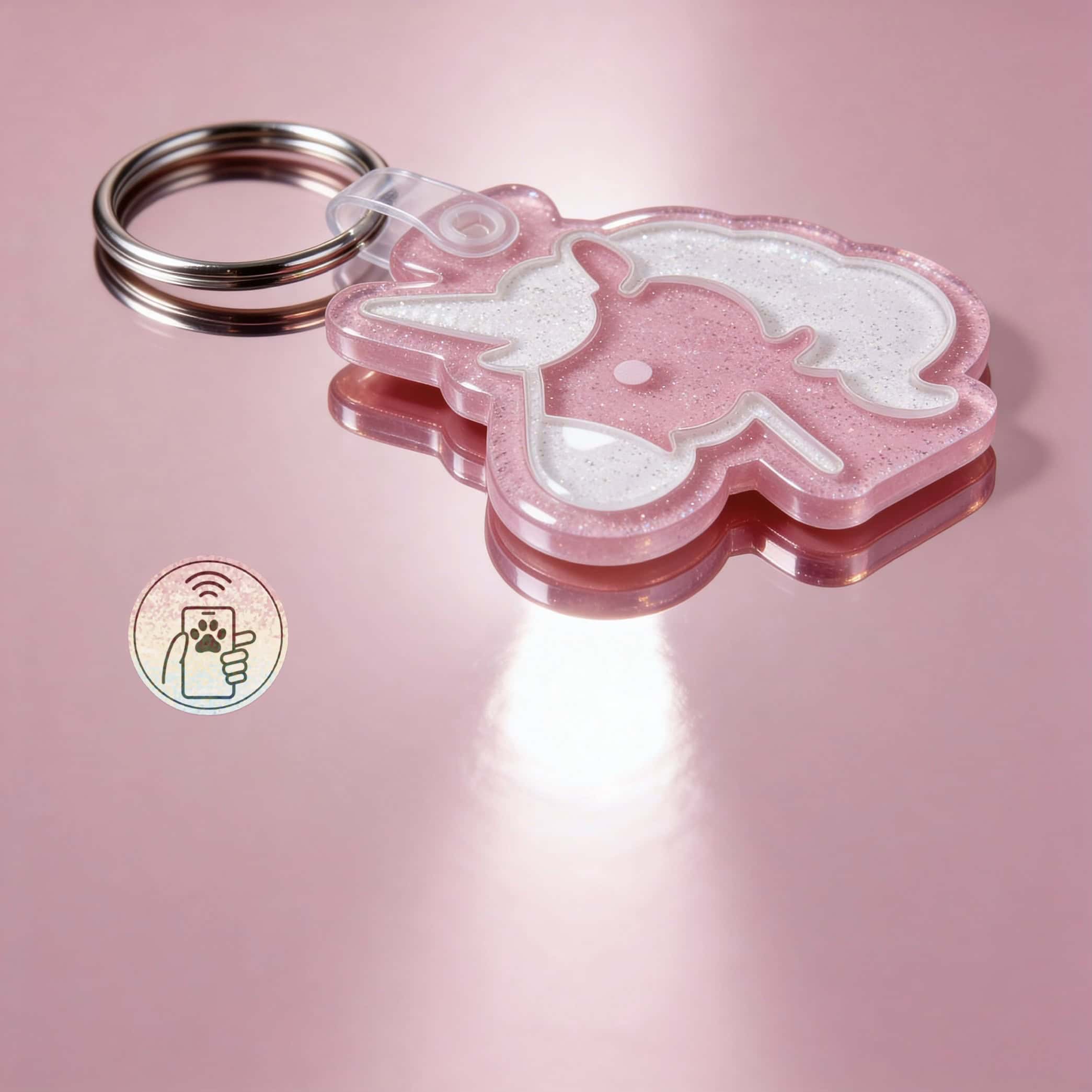
Every GPS collar shares three quiet weaknesses: it needs a charged battery, it needs cell coverage, and it needs you to notice and act. The most common lost-dog scenario doesn’t involve any of that — a neighbor finds your dog sniffing their trash cans within a few blocks of home. What they do next depends entirely on what’s on the collar. That’s why we tell people (yes, we make ID tags, bias fully disclosed) that GPS and ID aren’t competitors — they’re layers. We wrote up how the layers stack in The Dynamic Duo: GPS collar + Shiloh’s House tag and compared the categories head-to-head in pet ID tags vs GPS collars. A $38 NFC smart tag needs no battery, no coverage, and no subscription: the finder taps it with any phone and your contact info appears, with an engraved backup on the tag. If you’re weighing an AirTag instead, our AirTag vs NFC smart tag guide covers that trade-off too.
So Which Should You Buy?
Pick Fi if you’re in the US, your dog is a bolter, and you want the longest battery and a rugged all-in-one collar. Pick Tractive if you want to spend less upfront, need cat support or international coverage, or want the fastest live tracking. Either way, put a tag with your phone number on the same collar — it’s the layer that works when the battery doesn’t.
FAQ: Fi vs Tractive
Is Fi or Tractive better for dogs?
Fi is better for US dog owners who prioritize battery life and durability; Tractive is better for budget-conscious owners, cat households, and anyone outside the US. Both track reliably — the difference is cost structure and battery.
Do Fi and Tractive both require a subscription?
Yes. Fi runs roughly $189 per year, and Tractive plans start around $10–13 per month depending on the plan length. Neither tracker works without an active subscription.
Does Tractive work for cats?
Yes — Tractive makes a lightweight cat version that attaches to a breakaway collar. Fi does not currently make a cat tracker.
Do I still need an ID tag if my dog has a GPS collar?
Yes. A GPS tracker tells you where your dog is, but it doesn’t tell the person who finds your dog who to call. A tag with contact info — ideally a tap-to-call NFC tag with engraved backup — is what turns a found dog into a returned dog.
Get Your Tag
GPS tells you where they are. A Shiloh’s House tag tells the finder who to call — no battery, no subscription, ever.