Pet Travel Checklist: How to Keep Your Dog or Cat Safe on the Road
 Shiloh’s House Team
·
·
4 min read
Shiloh’s House Team
·
·
4 min read
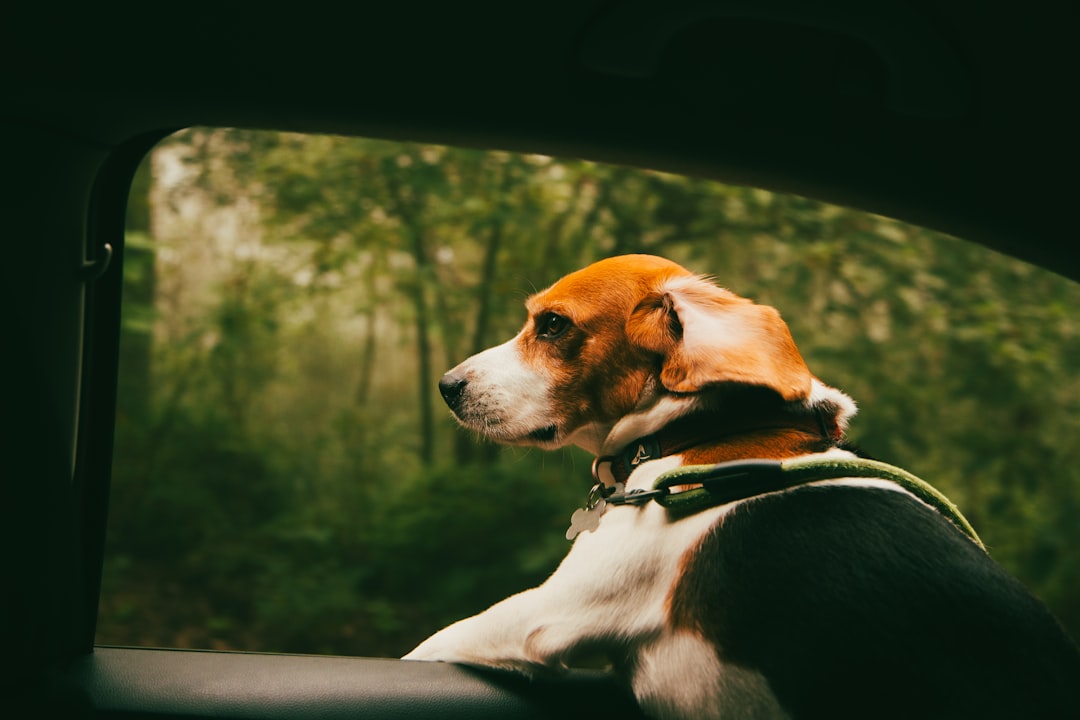
Traveling with pets is one of life’s best joys — and one of its most stress-prone logistics. Unfamiliar surroundings, new smells, gas stations full of strangers, hotel rooms that aren’t home. Most pets handle it beautifully. But the day something goes wrong on the road is the day you’ll wish you’d prepared more.
This is the complete pre-travel checklist every pet parent should run through before any trip — short or long, by car or by air.
1. Update Your Pet’s ID Before You Leave
This is the single most-skipped step that causes the most heartbreak. Engraved tags say your home address — but if your pet escapes 600 miles from home, that information is useless.
Smart NFC tags solve this with travel mode: a temporary profile with your hotel address, vacation rental info, your destination phone number, and any local emergency contacts. Update it the morning you leave, switch back when you’re home.
If you’re using a traditional engraved tag, at minimum write your destination zip code and your cell number on a temporary luggage-style tag clipped to the collar.
2. Pack a Pet Travel Kit
- Vaccination records (digital and printed — some states require proof at borders)
- Vet contact info, both your home vet and at least one near your destination
- Two weeks of medications even for a one-week trip
- Spare collar and leash (in case the primary breaks)
- Familiar bed or blanket — the smell calms them in unfamiliar rooms
- Two favorite toys
- Recent photo on your phone (in case you need to make a “lost” poster on the fly)
- Pee pads, poop bags, paper towels, enzymatic cleaner
- Small first aid kit — bandage, antiseptic, tweezers
3. Plan Your Route With Pets in Mind
- Map out rest stops every 2-3 hours for bathroom breaks and stretching
- Identify pet-friendly hotels ahead of time (don’t assume)
- Look up the closest 24-hour emergency vet at your destination
- Avoid traveling during peak heat — never leave a pet in a parked car, even for “two minutes”
- Know your state’s leash laws — they vary wildly
4. Crate Train Before You Need To
If your pet isn’t crate-comfortable, don’t make their first crate experience the 6-hour drive. Practice short trips. Make the crate a positive space at home with treats and toys long before the road trip.
5. Hydration and Bathroom Logistics
- Don’t feed within 2 hours of departure (motion sickness)
- Offer small water amounts at every stop, not unlimited access while moving
- Use spill-proof travel bowls
- For long road trips, expect a full pee/walk break every 3-4 hours minimum
6. Air Travel: Read the Airline’s Pet Policy Twice
Every airline is different. In-cabin vs cargo. Breed restrictions. Health certificate timing. Carrier dimensions. The fine print can make or break your trip — and finding out at the gate is the worst possible moment.
For brachycephalic breeds (pugs, bulldogs, Persians), many airlines outright refuse cargo travel. In-cabin only. Plan accordingly.
7. Set Up Your Hotel Room Like Home
Walk in. Find the safest corner. Set up the bed, water, food, and a familiar toy in that spot. Show your pet where it is. Many pets stress-pee in new rooms — the familiar bed signals “this is your space, you’re safe.”
Always do not disturb signs when you leave the room with the pet inside. Some hotels actually require pets to be crated when alone. Check before booking.
8. The First 24 Hours at the Destination
- Keep the pet on leash even in fenced backyards (they don’t know the boundaries yet)
- Walk the perimeter of any new outdoor area together
- Don’t leave them alone for long the first day
- Watch for stress signs: not eating, hiding, pacing, refusing water
9. Make a “Lost in Travel” Plan
Hope you never need it. But know in advance:
- The phone number of the local police non-emergency line
- The local Humane Society or animal control
- 2-3 vets in the area
- How to access your pet’s updated digital profile remotely
10. The Smartest Tool for Travel: Updateable Pet ID

If there’s one product that pays for itself the moment you travel, it’s a tag whose contact info you can update from your phone in seconds. Old engraved tags can’t change with you. Microchips never reach a Good Samaritan in real time.
A smart NFC tag with travel mode means your pet’s ID matches your current location, not your home address — for the entire trip, automatically.
Travel-ready, every trip.
Smart NFC tags + Lohji app travel mode — update contact info, hotel address, and emergency contacts from anywhere.
Shop Smart Pet Tags →The best trips with pets are the ones where everything goes smoothly. The smartest pet parents are the ones who prepared for the moment something didn’t.