Best Dry Cat Food of 2026: Purina Pro Plan, Royal Canin, Hill’s & Orijen Compared
 Shiloh’s House Team
·
·
9 min read
Shiloh’s House Team
·
·
9 min read
For most healthy adult cats in 2026, the best dry cat food is Purina Pro Plan or Royal Canin — both come from companies that employ board-certified veterinary nutritionists, run feeding trials rather than just formulating on paper, and own the plants their food is made in. If you want the highest protein and lowest carbohydrate on the shelf, look at Orijen or Dr. Elsey’s cleanprotein. If your cat has a diagnosed medical condition, the right answer is the therapeutic diet your vet prescribes — not anything on this list.
What is the best dry cat food?
Everything else — grain-free marketing, ancestral-diet language, the picture of a wolf on the bag — is downstream of those three things. Here is how the brands cat parents search for most actually compare.
| Brand | Best for | Protein approach | Formulated by staff nutritionists | Watch out for |
|---|---|---|---|---|
| Purina Pro Plan | Most healthy adult cats | Moderate-to-high, animal protein first | Yes | Huge sub-line range — easy to grab the wrong formula |
| Royal Canin | Indoor cats, breed- and age-specific needs | Moderate, precision-formulated | Yes | Ingredient panels read “processed” to some owners |
| Hill’s Science Diet | Senior cats and vet-guided feeding | Moderate, condition-led | Yes | Palatability is hit or miss with picky cats |
| Orijen | Lean, active cats who need calorie density | Very high animal protein, low carbohydrate | Not to the same published standard | Rich — transition slowly; premium price |
| Dr. Elsey’s cleanprotein | Low-carb feeding without wet-food cost | Very high protein, minimal starch | Not to the same published standard | Narrow formula range; less widely stocked |
| Purina ONE / Friskies | Tight budgets and multi-cat homes | Moderate, more plant protein | Yes (same parent company) | Higher carbohydrate load than the premium lines |
We have deliberately left prices out. Bag sizes, retailer promotions and autoship discounts move constantly, and a per-bag price tells you nothing without the cost per day — check current pricing at your vet, Chewy or Amazon and do the math on the feeding guide, not the shelf tag.
Best overall dry cat food: Purina Pro Plan
Pro Plan is the easiest recommendation to defend because Purina meets the boring criteria that actually predict food quality: staff veterinary nutritionists, company-owned manufacturing, published research, and AAFCO feeding trials rather than formulation-only substantiation. Those criteria come from the World Small Animal Veterinary Association’s guidance on choosing a pet food, and only a handful of companies clear all of them. On the bowl side, most Pro Plan cat formulas lead with a named animal protein and land in a sensible protein and fat range for an adult cat. The catch is the sheer size of the line — Complete Essentials, Focus, Specialized, Indoor, Sensitive Skin & Stomach, Urinary — so read the front of the bag, not just the brand.
Best for indoor cats: Royal Canin Indoor Adult
Royal Canin’s whole philosophy is precision formulation for a specific cat, and Indoor Adult is the clearest example: moderate calories for a cat who sleeps 16 hours a day, and a fibre blend aimed at hairball control. Indoor cats are a genuinely different nutritional problem — less activity, more grooming, more boredom eating. Royal Canin also runs the deepest bench of life-stage, breed and therapeutic formulas of any brand, which matters if your cat ever needs to move onto a prescription diet, because you are staying inside one manufacturer’s ecosystem. The ingredient panel reads more “lab” than “farm,” which puts some owners off. It should not: precision is the point. We compared the big three in more depth in our look at Purina Pro Plan vs Royal Canin vs Hill’s.
Best for senior cats: Hill’s Science Diet
Older cats lose lean muscle and often lose appetite at the same time, so the job is getting enough high-quality protein into a smaller appetite while keeping phosphorus and sodium sensible. Hill’s builds around exactly that, and its Prescription Diet line is the standard for kidney, urinary and weight conditions if your cat later needs one. The honest weakness: some cats simply will not eat it. Palatability is a real variable, and a perfect nutrient profile in an uneaten bowl is worth nothing.
Best high-protein dry food: Orijen
If your cat is lean, active and thrives on a meat-forward diet, Orijen packs more animal protein and less starch into a kibble than almost anything else you can buy. Champion Petfoods builds these around high inclusions of fresh and raw animal ingredients, and it shows in the guaranteed analysis. Two caveats worth saying plainly. First, it is rich — switch over a full week or you will be cleaning up the difference. Second, Champion does not publish the same depth of nutritionist staffing and feeding-trial data as Purina, Hill’s and Royal Canin, so you are buying on ingredient philosophy rather than on research volume. That is a legitimate choice; just make it knowingly.
Best low-carb pick: Dr. Elsey’s cleanprotein
Dr. Elsey’s cleanprotein exists to solve one problem: cats are obligate carnivores, and dry food is structurally high in carbohydrate because starch is what holds a kibble together. Their formulas push protein up and starch down about as far as dry food realistically goes. For a cat who needs low-carb feeding but whose household cannot afford to go all-wet, this is the sensible middle. It is a small line and not stocked everywhere, so check availability before you commit your cat to it.
Is dry cat food bad for cats?
No — but it is drier than what a cat evolved to eat, and that is the one thing worth actively managing. Cats descend from desert-dwelling ancestors and have a famously weak thirst drive; they evolved to take most of their water in with their prey. Canned food runs roughly three-quarters water. Dry food runs closer to a tenth. A cat eating only kibble has to make up that difference by drinking, and many simply do not drink enough.
The practical fix is not to ban kibble. It is to make water easy and interesting — which is why a lot of dry-fed households end up with a fountain. Our guide to the best cat water fountains of 2026 covers which ones cats actually use. Better still, feed a mix: dry available during the day, wet at meals. Our best wet cat food guide has the picks.
How to read a cat food label in 30 seconds
- Find the AAFCO statement. It is usually in small type near the feeding guide. It must say the food is complete and balanced for a life stage — growth, adult maintenance, or all life stages. “Intermittent or supplemental feeding” means it is a topper, not a diet.
- Check how that was proven. “Animal feeding tests using AAFCO procedures substantiate” is stronger than “formulated to meet.” The first was fed to real cats; the second was calculated.
- Match the life stage to your cat. Kitten food is not adult food. All-life-stages food is formulated for growth, which means more calories than a sedentary senior needs.
- Look for a named animal protein first. “Chicken” or “chicken meal” beats an unnamed “meat by-product.”
- Confirm taurine is on the list. Cats cannot make enough of it themselves, and deficiency causes heart and retinal disease. Every complete cat food has it; dog food does not, which is why cats must never be fed dog food long-term.
How much dry food should a cat eat?
Start with the bag’s feeding guide for your cat’s target weight — not their current weight — then adjust based on body condition over the next month. Feeding guides are population averages and routinely overshoot for indoor, neutered cats. The check that matters is hands-on: you should be able to feel ribs easily under a thin fat layer, and see a waist from above. Free-feeding a whole day’s kibble is the single easiest way to end up with an overweight cat, which is why measured meals or a portioned feeder work better. Our roundup of the best automatic pet feeders of 2026 covers the portion-control options.
Frequently asked questions
What is the healthiest dry cat food?
For a healthy adult cat, the healthiest dry food is a complete-and-balanced formula from a company that employs veterinary nutritionists and runs feeding trials — in practice Purina Pro Plan, Royal Canin or Hill’s. “Healthiest” changes the moment your cat has a diagnosis, at which point your vet’s therapeutic diet outranks every retail bag.
Is grain-free cat food better?
Not inherently. Grain allergies in cats are uncommon; protein allergies are far more usual. Grain-free kibble also has to replace grain starch with something — usually peas, potatoes or lentils — so it is often not low-carb at all. Buy grain-free because your cat needs it, not because the bag says so.
Can I mix wet and dry cat food?
Yes, and many vets prefer it. You get the moisture of canned food and the convenience and cost of kibble. Just count both toward the daily calorie total, or you will quietly double-feed.
How do I switch my cat to a new dry food?
Over 7–10 days. Start at about a quarter new food, and shift the ratio every couple of days. Cats are neophobic about food and prone to GI upset from abrupt changes; a slow switch avoids both. If your cat refuses to eat for more than about 24 hours, stop and call your vet — cats who stop eating can develop hepatic lipidosis quickly.
Does dry food cause urinary problems in cats?
Dry food does not directly cause urinary disease, but low total water intake concentrates urine, and concentrated urine is a risk factor for crystals and blockages — especially in male cats. If your cat has any urinary history, ask your vet about adding wet food or a prescription urinary diet.
Is expensive cat food actually better?
Sometimes. Price buys better ingredients and more research at the low-to-middle end of the market, then flattens out. Above a point you are largely paying for packaging and story. The company’s answers about who formulated the food matter more than the price.
One more thing your cat needs
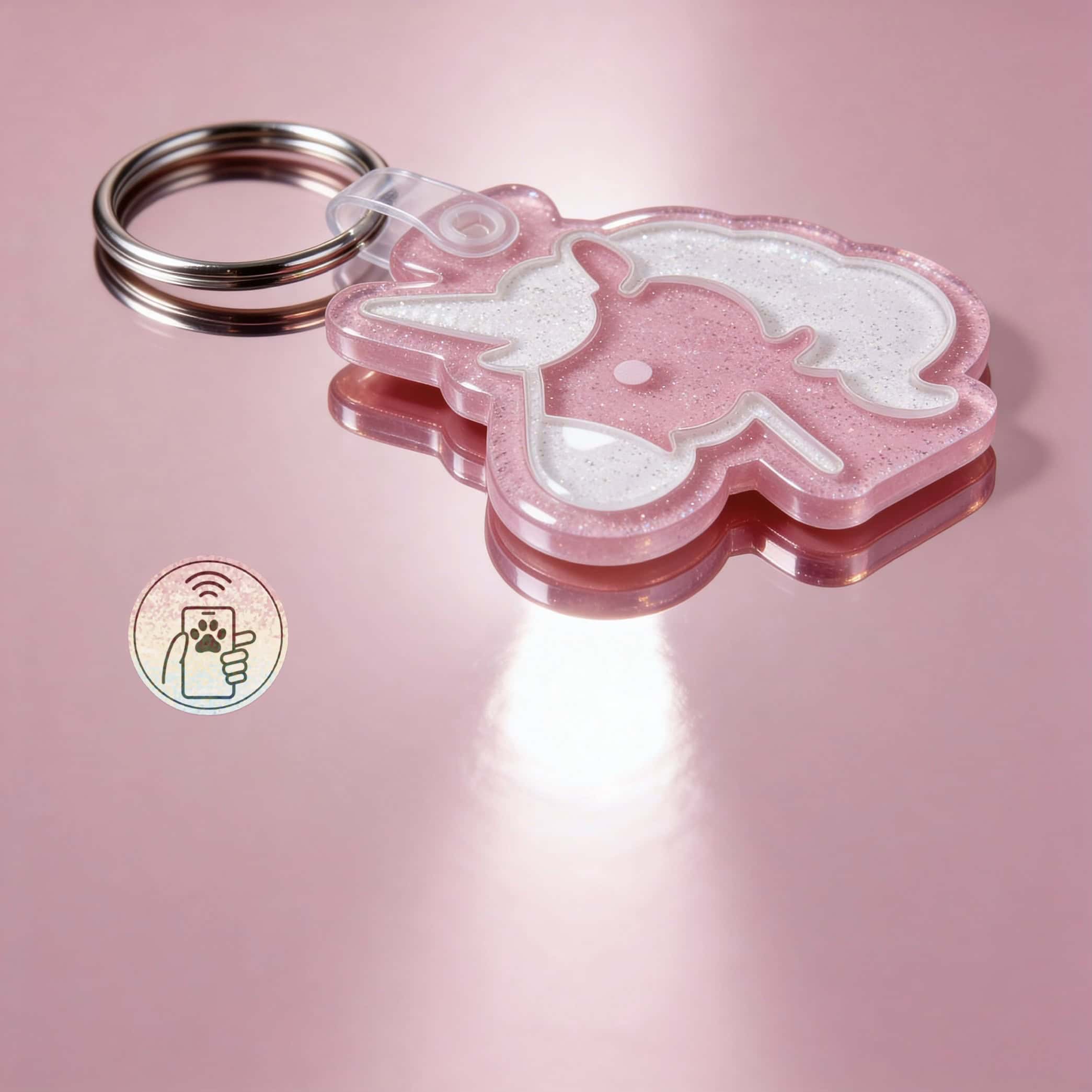
Food is the thing cat parents research hardest and identification is the thing they research least — even though only about 3% of lost cats that reach a shelter are reunited with their owners. Indoor cats are the most exposed, because nobody is looking for them. Full disclosure: we make Shiloh’s House NFC smart tags, $38 designer acrylic tags that any phone can tap to open your cat’s profile — no app for the finder, engraved backup on the reverse, no subscription. The free Lohji app that pairs with them also stores food brand, portion size and vaccine dates, which is genuinely useful for a cat sitter even if you buy your tag elsewhere. If you are not sure your indoor cat needs one, read why indoor cats still need ID tags. And if litter is your next research rabbit hole, we ranked the options in best cat litter of 2026.
Get Your Tag
A $38 designer acrylic NFC tag any phone can tap — engraved backup, made in USA, no subscription, ever.