Best Dog Puzzle Toys of 2026: KONG, Nina Ottosson, West Paw & Trixie Compared
 Shiloh’s House Team
·
·
6 min read
Shiloh’s House Team
·
·
6 min read
The best dog puzzle toy for most dogs is the KONG Wobbler — it is nearly indestructible, works for any size dog, and turns a whole meal into fifteen minutes of work. If you want a true brain game rather than a food dispenser, the Nina Ottosson by Outward Hound line is the standard, sold in four numbered difficulty levels so you can match the puzzle to your dog instead of guessing. For heavy chewers, West Paw Toppl is the one that survives. Below is what each type does, what it costs, and which dog it actually suits.
Quick comparison The best dog puzzle toys
Puzzle toys fall into three groups — dispensers you fill and leave, board puzzles you supervise, and sniffing mats — and most dogs benefit from owning one of each.
| Toy | Type | Difficulty | Typical price | Best for |
|---|---|---|---|---|
| KONG Wobbler | Food dispenser | Easy to moderate | Mid range; check current pricing | Slowing down fast eaters |
| KONG Classic | Stuffable chew | Easy, harder when frozen | Budget | Crate time and separation practice |
| Nina Ottosson Dog Smart (Level 1) | Board puzzle | Level 1 | About 17 dollars MSRP | Puppies and first-time puzzlers |
| Nina Ottosson Dog Brick (Level 2) | Board puzzle | Level 2 | About 20 dollars MSRP | The everyday middle ground |
| Nina Ottosson Dog Twister (Level 3) | Board puzzle | Level 3 | About 25 dollars MSRP | Dogs who solve Level 2 in a minute |
| Nina Ottosson MultiPuzzle (Level 4) | Board puzzle | Level 4 | About 35 dollars MSRP | Border collies and problem solvers |
| West Paw Toppl | Stuffable chew | Easy to hard depending on stuffing | Mid range | Power chewers and dishwasher households |
| Trixie Activity Flip Board | Board puzzle | Level 2 | Budget to mid range | Variety in one board |
| Snuffle mat | Foraging mat | Easy | Budget | Anxious dogs and senior dogs |
Prices above are manufacturer list prices where the brand publishes them; street prices move constantly, so check before you buy.
Best overall: KONG Wobbler
It is a weighted, bowling-pin-shaped dispenser that you fill with a whole meal of kibble. The dog nudges it, it wobbles back upright, and a few pieces fall out. A dog who inhales dinner in ninety seconds will spend ten to twenty minutes on it instead.
It unscrews in the middle for cleaning, holds up to determined nudging, and works on hard floors better than carpet. The trade-off is noise — it is loud on tile, so it is not an apartment-at-midnight toy.
Best brain game: Nina Ottosson by Outward Hound
Level 1 boards like Dog Smart and Puppy Smart are simple lift-the-lid designs. Level 2 adds sliding and flipping. Level 3 boards like Dog Twister and Dog Casino combine two actions in sequence. The Level 4 MultiPuzzle chains four steps together and will occupy a smart dog for a genuinely long time.
Buy one level below where you think your dog sits. A dog who fails on the first try tends to quit; a dog who wins quickly stays interested and levels up. These are supervised toys, not leave-alone toys — the plastic pieces are chewable if a dog gets frustrated.
Best for power chewers: West Paw Toppl
If your dog destroys puzzle toys, the answer is a stuffable rubber toy rather than a plastic board. The Toppl is a squat cone with an open top and internal ridges. Loose treats make it easy; wet food frozen inside makes it hard. Two sizes interlock, which is the trick most owners miss — nesting a small inside a large creates a genuinely difficult puzzle.
It is dishwasher safe, which matters more than it sounds when you are stuffing a toy with wet food several times a week.
Best budget option: a snuffle mat
Snuffle mats are cheap, quiet, machine washable, and use the one sense that tires dogs out fastest. Scatter a handful of kibble into the fabric strips and let the dog work. Ten minutes of sniffing is more mentally tiring than a brisk walk for a lot of dogs, which is why trainers reach for these on rainy days and after surgery when exercise is restricted.
They are also the gentlest option for seniors and for dogs recovering from injury, since there is no pushing or pawing required.
How to introduce a puzzle toy so your dog does not quit
Start far easier than you think you need to, and use food your dog actually cares about. Load the first session so the dog wins in under thirty seconds — lids off, pieces removed, treats visible. Add one layer of difficulty per session. Use high-value training treats rather than plain kibble for the first week, then switch to meals once the game is understood.
If your dog walks away, the puzzle is too hard, the reward is too boring, or they are simply not hungry. All three are fixable.
Do puzzle toys actually help with behavior?
They help with boredom-driven behavior — chewing furniture, digging, barking at nothing — and they are a useful piece of a separation-anxiety plan, but they are not a treatment on their own. A dog who destroys the house when left alone needs a training protocol; a puzzle toy just makes the first ten minutes easier. Our guide to dog calming aids covers what to pair them with.
Enrichment does often reduce odd habits that trace back to under-stimulation, including some cases of dogs eating poop. If your dog is already well exercised and still restless indoors, mental work is usually the missing piece. And if you are building out a toy collection more broadly, our best dog toys guide covers chew toys and fetch toys alongside these.
Safety rules that matter
Supervise board puzzles, size the toy to your dog, and retire anything with chunks missing. Plastic puzzle pieces are a swallowing hazard for determined chewers. Rubber dispensers should be big enough that they cannot fit fully in the mouth. Wash stuffable toys regularly — wet food residue goes bad faster than people expect.
Frequently asked questions
What is the best puzzle toy for a dog who destroys everything?
A rubber stuffable toy such as the West Paw Toppl or a KONG Classic. Skip plastic board puzzles entirely, or only use them with hands-on supervision.
How long should a dog play with a puzzle toy?
Ten to twenty minutes is a full session for most dogs. Mental work is genuinely tiring, and dogs that go much longer often start chewing the toy rather than solving it.
Are puzzle toys good for puppies?
Yes, starting around eight to ten weeks with the easiest designs. Level 1 boards and lightly stuffed rubber toys build confidence and give teething puppies something legal to work on.
Can I feed all my dog meals in puzzle toys?
You can, and many dogs do better for it. Just measure the food as you would in a bowl so puzzle feeding does not quietly become overfeeding.
Do puzzle toys work for cats too?
Several brands make feline versions, and food puzzles are one of the more effective indoor cat enrichment tools. Cat puzzles are smaller and shallower than dog versions, so do not just hand over a dog board.
What is the hardest dog puzzle toy?
Among mainstream toys, the Level 4 Nina Ottosson MultiPuzzle, which requires several different actions completed in sequence before the food is reachable.
One more thing worth doing this week
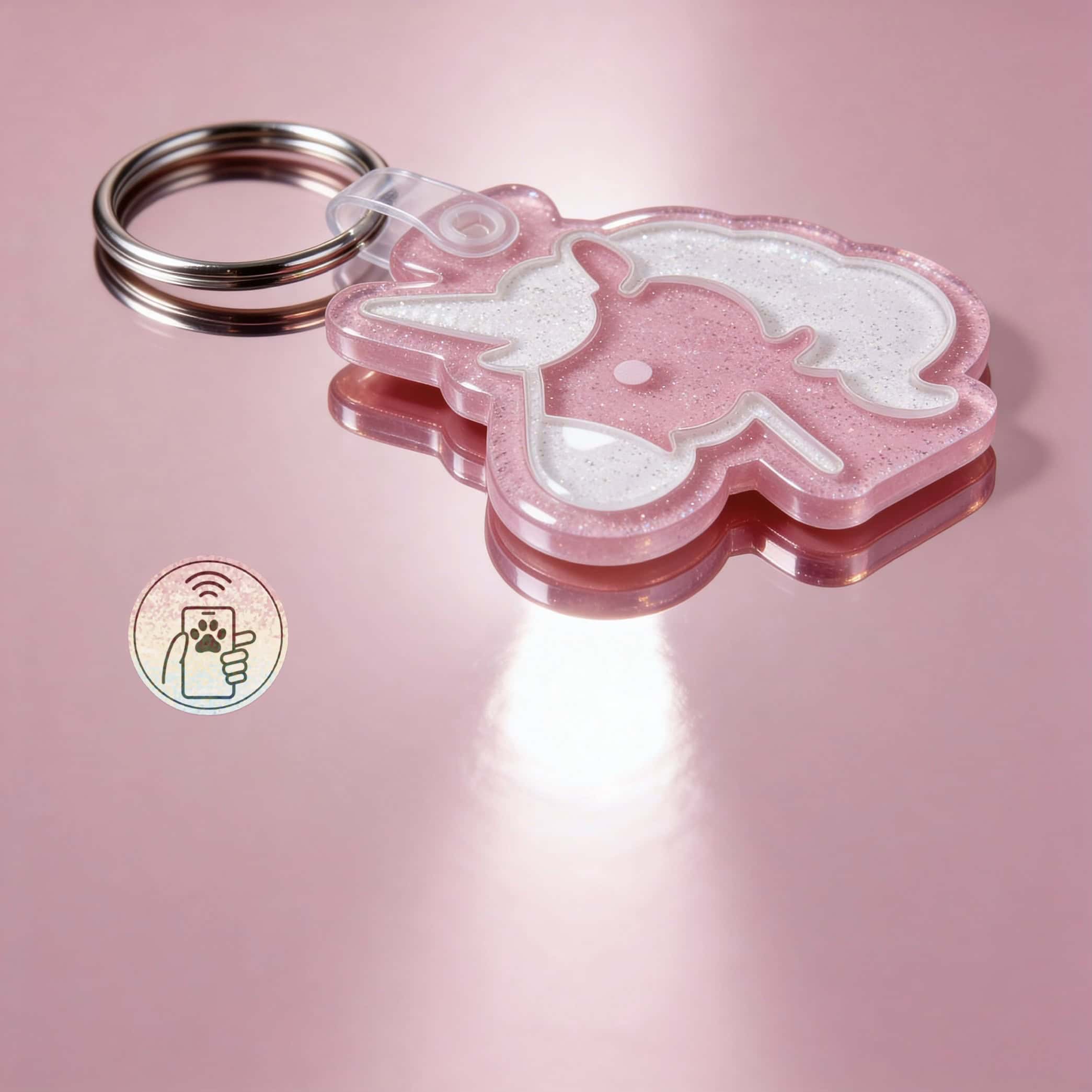
Enrichment keeps a dog happy at home; ID is what brings them back if the door gets left open. A bored dog is a dog that looks for the gap in the fence, and summer is peak season for lost pets. Our designer acrylic NFC smart tags are 38 dollars, tap-to-open on any phone with no app required by whoever finds your dog, and engraved on the back so your number is readable even without a phone. We make them, so read that as the biased recommendation it is — but check today that whatever tag your dog wears still has a number you answer.
Get Your Tag
Designer acrylic, engraved backup, one tap to your full pet profile — no app, no subscription.