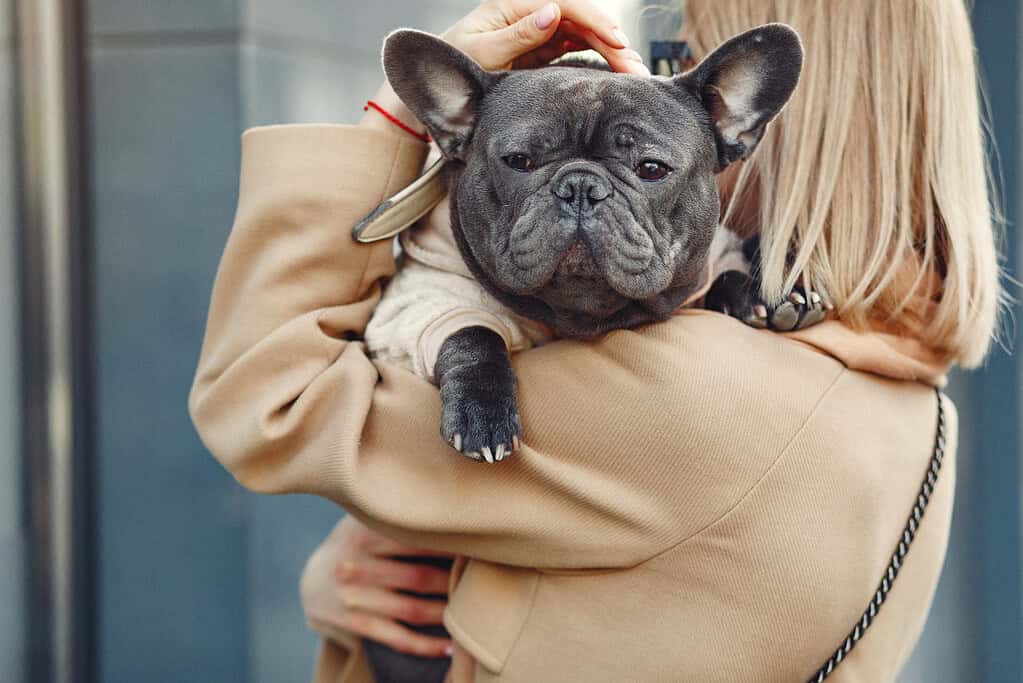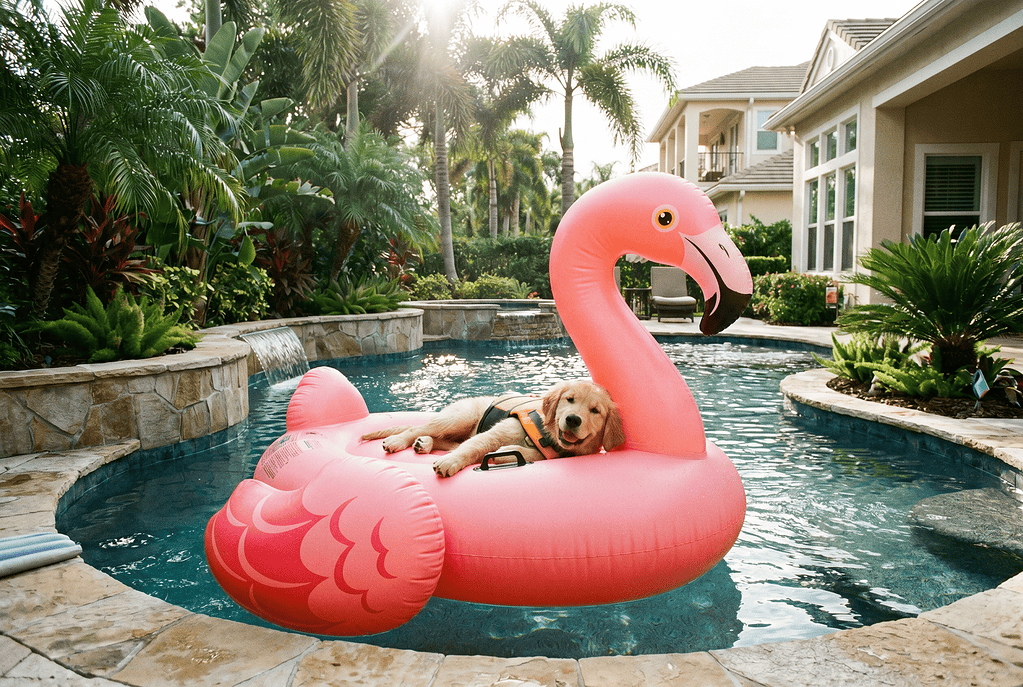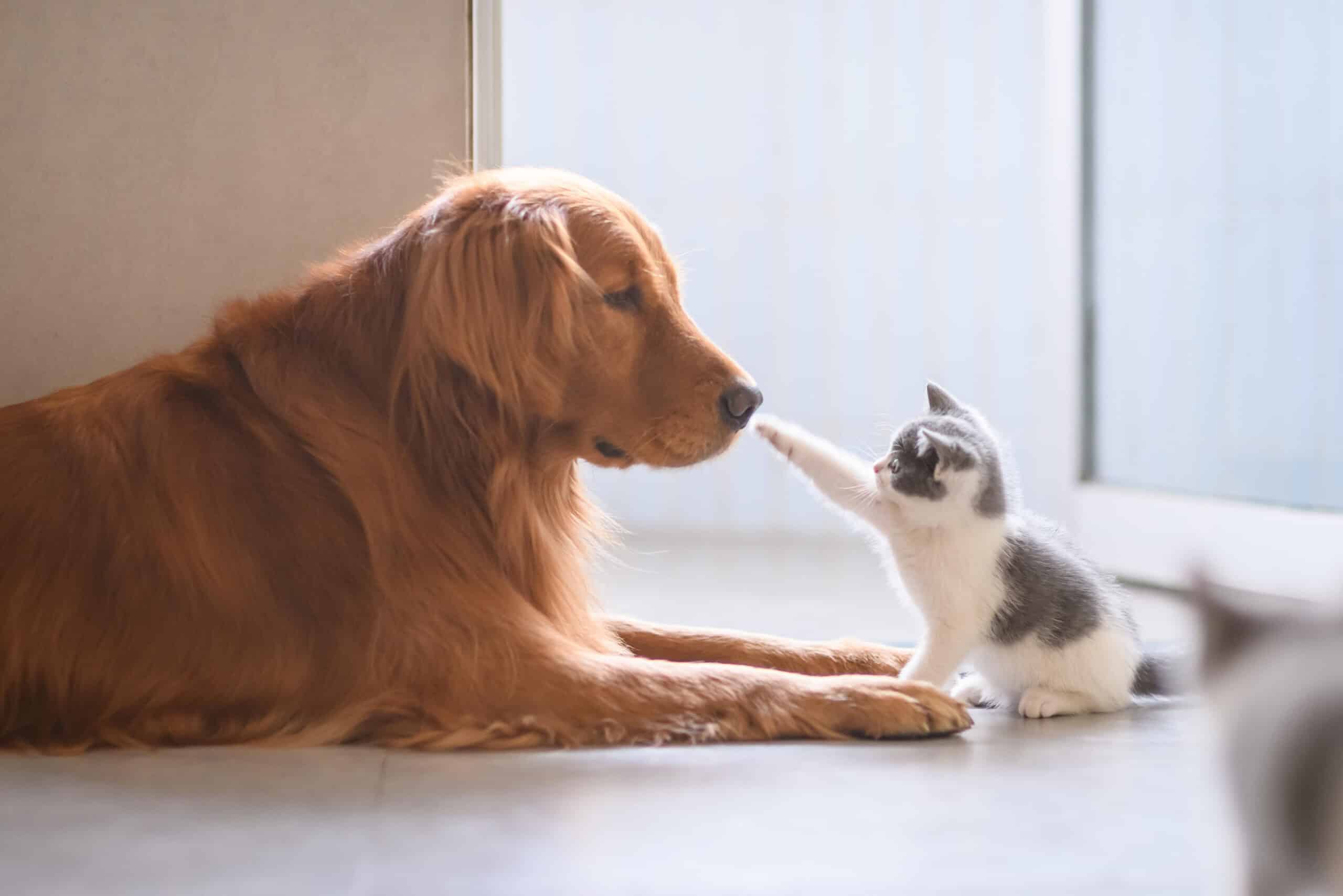
The safest Halloween for a dog or cat is a boring one: pets shut behind an interior door, candy up high, and current ID on the collar before the first trick-or-treater rings the bell. Halloween stacks the three things that get pets hurt or lost into a single evening — a front door that opens dozens of times, strangers in masks, and bowls of chocolate sitting at nose height. Here is exactly what to lock down, plus what to do in the first ten minutes if your pet slips out.
Why Halloween is one of the riskiest nights of the year for pets
Because the door keeps opening while your pet is already stressed. A dog who would never bolt on a normal Tuesday is a different animal after ninety minutes of doorbells, costumes, and shrieking. Cats who normally greet visitors go straight under the bed — or straight out the door behind someone. Add candy wrappers on the floor and a lit pumpkin at tail height, and you have a night that sends a lot of pets to the emergency vet and a lot of owners onto neighborhood lost-pet groups. Our breakdown of lost pet statistics shows the same pattern every year: pets go missing on the loud, busy, door-open nights.
The 7 real Halloween dangers for dogs and cats
1. The front door
This is the big one. Every doorbell is another chance for a scared or curious pet to slip past a leg. Put your pet in a closed back room with water, a bed, and background noise, or use a baby gate as a second barrier behind the entry. If your dog answers the door with you, keep a leash clipped on the whole time.
2. Chocolate and sugar-free candy
Chocolate is toxic to both dogs and cats, and the darker and more bitter it is, the worse it gets — baking chocolate and dark chocolate are far more dangerous per ounce than milk chocolate. Sugar-free candy and gum are the sleeper danger: many contain xylitol (also labeled birch sugar), which can cause a rapid, life-threatening blood sugar crash in dogs.
3. Wrappers, sticks, and foil
The candy itself is not the only problem. Foil, cellophane, and lollipop sticks swallowed whole can cause an intestinal blockage, which is a surgical emergency. Sweep the floor after the kids sort their haul.
4. Costumes that restrict or dangle
A costume should never limit breathing, vision, hearing, or the ability to move and pee normally. Elastic that pinches, small dangling pieces a pet can swallow, and anything that covers the eyes are all out. If your pet freezes, tucks their tail, or tries to back out of it, that is a no — a festive bandana or collar accessory gets you the same photo without the stress. We go deeper in our guides to the best dog Halloween costumes and the best cat Halloween costumes.
5. Candles, lit pumpkins, and glow sticks
A wagging tail clears a low table fast. Use battery tea lights in carved pumpkins, and keep glow sticks and glow jewelry away from cats, who love to chew them; the liquid inside is not usually deadly but it tastes awful and causes drooling, foaming, and panic.
6. Decorations at pet height
Fake cobwebs, string lights, and rubber spiders are all chew and tangle hazards. Kittens and puppies in particular treat hanging decor as a toy.
7. Strangers in masks
Dogs read faces. A masked adult moving fast toward the door can look genuinely threatening, and a normally friendly dog can react badly. This is not the night to test your dog on greetings.
Halloween candy toxicity: what to worry about most
Chocolate, xylitol, raisins, and macadamia nuts are the four that send pets to the ER. If your pet eats any of them, call your vet or the ASPCA Animal Poison Control Center at (888) 426-4435 right away — a consultation fee may apply, and it is worth it. Do not wait for symptoms.
| Treat | Why it is dangerous | Dogs | Cats |
|---|---|---|---|
| Dark or baking chocolate | Theobromine and caffeine; vomiting, tremors, heart arrhythmia | High risk | High risk |
| Sugar-free candy or gum (xylitol) | Sudden blood sugar crash, possible liver damage | Very high risk | Less studied, still keep away |
| Raisin boxes | Linked to acute kidney injury; no known safe dose | High risk | Avoid |
| Macadamia nut candy | Weakness, tremors, vomiting in dogs | Moderate to high risk | Avoid |
| Wrappers, foil, lollipop sticks | Choking and intestinal blockage | Common ER cause | Common ER cause |
| Candy corn and plain sugar candy | Not toxic, but causes vomiting and diarrhea in volume | Keep away | Keep away |
The escape risk nobody plans for — and how to cut it
Assume your pet will get out, and make sure that being found takes seconds instead of days. Most pets who bolt on Halloween are found by a neighbor within a mile, not by animal control. What decides whether they come home that night is whether the person holding the collar can reach you immediately.
That is the whole reason Shiloh’s House exists, so treat this as our honest bias: we make a $38 designer acrylic NFC smart pet ID tag. A finder taps it with any phone — no app to download on their end, no subscription, no account — and your contact details come straight up. The back is engraved as a backup so the tag still works for someone with an older phone or a dead battery. It is not a GPS tracker and we will not pretend otherwise; it is the fastest way to close the loop once a human has your pet in their hands. A microchip does the same job, but only after somebody drives your pet to a vet or shelter and the chip gets scanned.
Whatever tag you use, check tonight that the phone number on it is the one you actually answer. Our guide to what to put on a dog ID tag covers what belongs on it and what to leave off.
Your 10-minute Halloween pet-proofing checklist
- Confirm the phone number on the collar tag is current, tonight, before the sun goes down.
- Take a clear, recent, full-body photo of your pet on your phone.
- Set up a quiet back room: closed door, water, bed, litter box for cats, TV or fan for white noise.
- Feed and walk the dog early, before trick-or-treating starts.
- Put candy bowls, wrappers, and the kids’ haul on a high shelf or in a closed cabinet.
- Swap real candles for battery lights in every pumpkin.
- Keep cats — especially black cats — indoors from a few days before through a few days after.
- Clip a leash on the dog before you open the door, every single time.
If your pet gets out: the first 10 minutes
Search close and search loud before you search wide. Frightened dogs usually run in a straight line and then stop; frightened cats almost always hide within a few houses of home rather than running for miles. Grab a flashlight and check under decks, cars, porches, and bushes on your own block first, calling in a normal, calm voice. Post the photo to your neighborhood app and local lost-pet groups immediately, and leave your front door open with something that smells like home nearby. Our step-by-step plans for finding a lost cat and finding a lost dog walk through the rest hour by hour.
Frequently asked questions
Is it safe to dress my dog up for Halloween?
Yes, if the costume does not restrict breathing, sight, hearing, or movement, has no small parts to swallow, and your dog is genuinely relaxed in it. Do a five-minute test run a few days early. If your dog freezes or tries to shake it off, use a bandana instead.
What Halloween candy is toxic to dogs?
Chocolate (dark and baking chocolate most of all), anything sugar-free containing xylitol, raisins, and macadamia nuts. Wrappers and lollipop sticks are a separate blockage risk. Call your vet or (888) 426-4435 if your dog eats any of these.
Can cats eat candy corn?
No. Candy corn is not acutely toxic the way chocolate is, but cats cannot taste sweetness and have no use for it; the sugar and fat commonly cause vomiting and diarrhea, and the corn syrup adds nothing. Keep it away from them.
Should I keep my black cat inside on Halloween?
Keep every cat inside on Halloween, black or not. Shelters have long recommended extra caution for black cats around Halloween, but the real, everyday risk to all cats is traffic, panic, and open doors on a night when the neighborhood is loud and full of strangers.
My dog bolted out the front door. What do I do first?
Do not chase. Chasing turns it into a game and pushes them farther. Get low, turn sideways, and call in a happy voice, or walk the other way to trigger them to follow. Then search your own block on foot with a flashlight and post the photo online within minutes.
Do indoor cats need an ID tag on Halloween?
Especially on Halloween. Indoor cats are the ones nobody is watching at the door, they have no street sense, and a neighbor who finds one has no way of knowing where they live. A lightweight tag with a working phone number is the difference between a two-hour scare and a two-week search.
Get Your Tag
One tap on any phone brings your pet home — no app for the finder, no subscription, engraved backup on the back.