Reverse Sneezing in Dogs: What It Is and When to Worry
 Shiloh’s House Team
·
·
10 min read
Shiloh’s House Team
·
·
10 min read
Reverse sneezing in dogs is a reflex: instead of blowing air out, your dog pulls it in through the nose in rapid, noisy snorts, usually standing still with the neck stretched out. It looks alarming but is usually harmless, and episodes end on their own, typically within a minute. Call your vet after a first episode, for frequent episodes, or for any trouble breathing.
What is reverse sneezing in dogs?
Reverse sneezing is a reflex, not a disease. VCA Animal Hospitals calls it paroxysmal respiration: a regular sneeze pushes air rapidly out through the nose, while a reverse sneeze pulls it rapidly in. Any irritation of the nose, sinuses or back of the throat can set it off.
PetMD explains the mechanics. When the soft palate, the soft part of the roof of the mouth that separates the nasal passage from the mouth, gets irritated, its muscles spasm and the airway narrows for a moment. Your dog stretches the neck and expands the chest but can’t take a full breath, so they keep trying to inhale through the nose. That repeated effort is the snorting you hear.
It looks dramatic, but VCA describes it as harmless, with no ill effects, and the AKC says it isn’t known to be harmful to dogs without an underlying condition such as heart disease. Dogs that do it often have repeat episodes throughout their lives. Researchers have even suggested the reflex may help move mucus from the back of the nasal passages toward the throat to be swallowed.
It’s mostly a dog thing: the AKC calls it fairly common in dogs and rare in cats. If your cat is the one snorting, start with our guide to why cats sneeze.
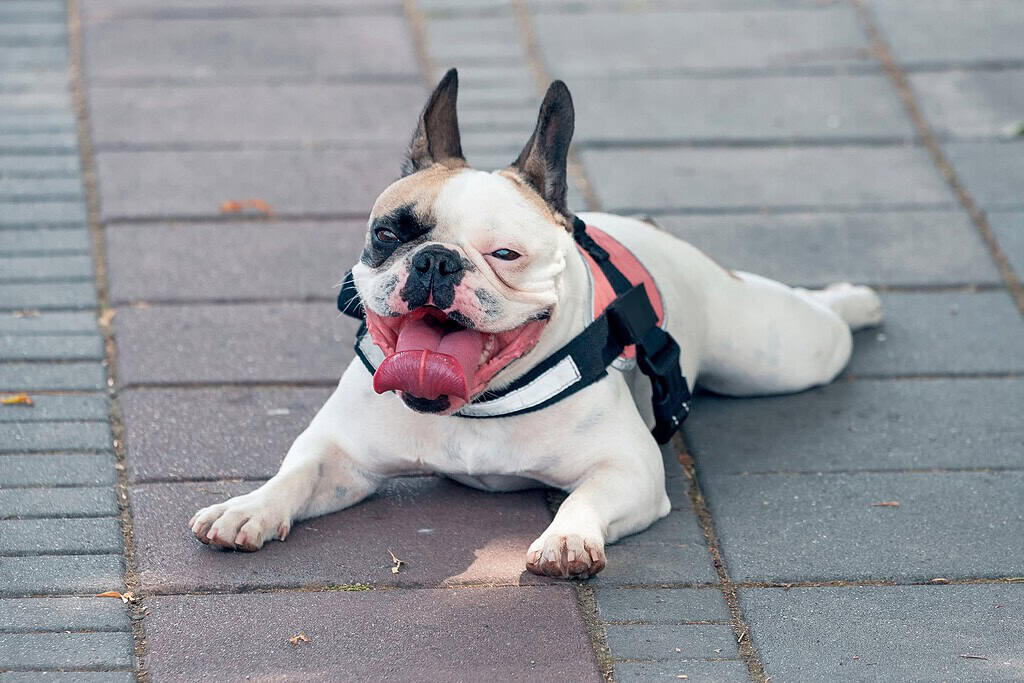
What does a reverse sneeze sound like?
PetMD describes a loud, snorting sound, as if the dog were inhaling its sneezes, that can resemble a goose honking or be confused with choking. VCA says it may sound as if the dog has something caught in the nose or throat. The posture is the giveaway: the dog suddenly stands still and extends the head and neck, a stance veterinary researchers describe as neck stretched out and elbows turned outward.
VCA says an episode can last from several seconds to a minute, and PetMD says most bouts last about 30 seconds or less, even though it can feel much longer. If you can, film it. PetMD says a video is extremely helpful for your vet, because chances are your dog won’t do it again in the exam room.
What triggers reverse sneezing?
Anything that irritates the nose, sinuses or back of the throat can start an episode, and the usual suspects are airborne. VCA lists pollens, grasses, smoke and odors, the AKC mentions dust and powder, and PetMD adds perfume, cleaning products and air fresheners.
Excitement is the other big trigger. PetMD lists overexcitement, exercise intolerance, eating or drinking, and pulling on the leash while attached to a collar. If your dog snorts every time they hit the end of the leash, our guide to stopping leash pulling can help.
Allergies show up on every list, and PetMD notes your vet will ask whether your dog has seasonal allergies; our guide to fall allergies in dogs covers what’s in the air this time of year. Less often, the cause is in the airway itself: VCA lists nasal mites, foreign bodies such as seeds, and masses.
Which dogs reverse sneeze the most?
Any dog can reverse sneeze, but the AKC says it’s more common in smaller dogs, naming miniatures, terriers and brachycephalic (flat-faced) breeds. A 2022 study from the University of Murcia’s veterinary teaching hospital in Spain looked at 30 dogs whose reverse sneezing was fully investigated. Half were toy dogs under 5 kg (about 11 lb), another 27% were small dogs of 5 to 15 kg, and Yorkshire Terriers, Chihuahuas, Maltese and Shih Tzus were among the breeds. The authors add a caveat: small dogs in their region tend to live indoors, close to their owners, so their episodes are more likely to be noticed.
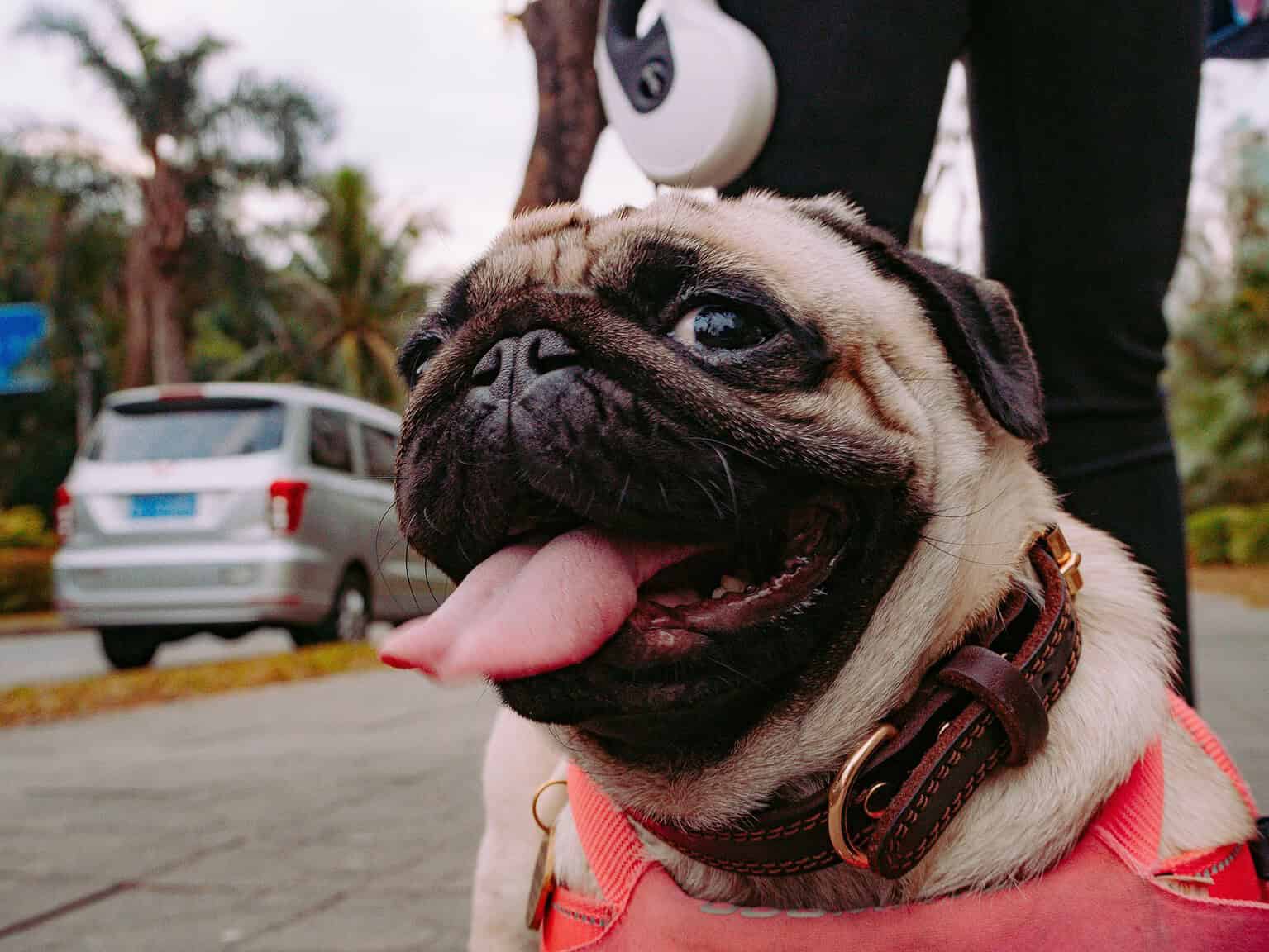
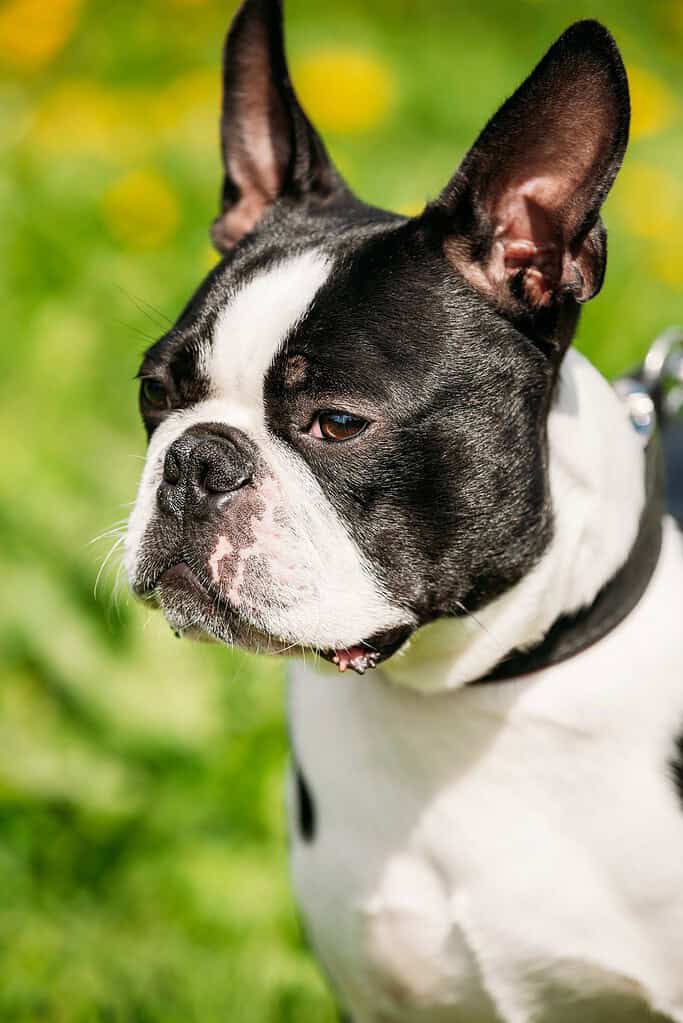
Flat-faced breeds have an extra reason. The American College of Veterinary Surgeons (ACVS) explains that breeds such as English and French bulldogs, Pugs, Pekingese and Boston terriers often have undersized or flattened breathing passages, including an elongated soft palate whose tip protrudes into the airway, and PetMD lists that elongated palate among the causes of reverse sneezing. Long noses aren’t off the hook, though: VCA says dogs with narrow nasal passages, which it describes as long noses, seem more commonly affected.
Not tagged yet?
A Shiloh’s House smart tag lets anyone who finds your dog tap it with any phone, no app needed, and see your contact info plus the medical notes you keep in the free Lohji app. If your dog reverse sneezes, has a collapsing trachea or a flat-faced airway, one line in those notes tells a stranger what’s normal for your dog. No battery, no subscription.
How to help your dog through a reverse sneezing episode
Start by staying calm. PetMD notes that episodes resolve on their own in less than a minute even if you don’t step in. To help one along, here’s what VCA, the AKC and PetMD describe; most of it works by getting your dog to swallow:
- Gently stroke your dog’s neck or head to calm them (VCA).
- Offer something to lick or drink, which may stimulate swallowing and help clear an irritant (VCA).
- Lightly blow in your dog’s face for a few seconds to prompt a swallow (AKC, PetMD).
- Lightly massage the throat (AKC, PetMD). A common remedy the AKC describes is to hold the nostrils closed for a second, then massage the throat, which should make the dog swallow a couple of times.
- Move to a cool spot or outside into fresh air, and talk to your dog calmly (AKC).
Once your dog exhales through the nose, VCA says, the attack is usually over. Most dogs need no medication, though for serious, chronic, allergy-related cases the AKC says some vets recommend antihistamines. Don’t give anything from your own medicine cabinet without your vet’s go-ahead. Day to day, PetMD advises reducing exposure to known irritants, including not using household chemical cleaners while your dog is present. If collar pressure is a trigger, a harness takes the collar out of the equation; see our best dog harnesses guide.
Reverse sneezing vs. kennel cough, collapsing trachea, choking and asthma
The most useful question is which way the air is moving. A reverse sneeze is a noisy pull of air in through the nose, and the dog is back to normal seconds later. A cough or gag pushes air out of the lungs. Choking is a blocked airway, and the dog struggles to get air in at all.
While this is a disruption in their airway, they’re not having difficulty breathing, and it’s not usually serious.
Tom Rinelli, emergency medical care educator and owner of Paws N Claws 911, on reverse sneezing, via the American Kennel Club
| Condition | What you hear and see | Typical pattern | Your move |
|---|---|---|---|
| Reverse sneeze | Loud snorting as air is pulled in through the nose; dog stands still, head and neck extended | Seconds to a minute; normal before and after; set off by irritants, excitement, eating or drinking, collar pressure | Stay calm, help them swallow, film it for your vet |
| Kennel cough | Loud, high-pitched, honking cough that pushes air out; may bring up mucus; sometimes sneezing, nasal discharge, low energy | Starts days after time with other dogs; persistent; contagious | Call your vet; keep your dog away from other dogs |
| Collapsing trachea | Harsh, dry cough like a goose honk; wheezy noise when breathing in | Chronic and progressive; set off by excitement, being picked up or collar pulls; mostly small breeds, middle-aged or older | Vet exam; ask about a harness |
| Choking | High-pitched noise trying to breathe in, or no air moving; pawing at the mouth, gushing drool, retching | Sudden, often with a ball, stick, chew or kibble; dog is clearly distressed | Emergency: check the mouth if it’s safe, then get to a vet |
| Asthma attack | Coughing, wheezing, panting with a wide-open mouth, labored breathing | Triggered by inhaled allergens such as smoke, dust, pollen or perfume; gums may turn blue | Emergency vet visit; don’t hold the mouth closed |
Kennel cough can fool owners, too. Cornell’s Riney Canine Health Center describes a loud, high-pitched, persistent honking cough that owners may at first mistake for the dog trying to clear something from its throat. Signs usually appear about six days after exposure at places where dogs gather, such as boarding, daycare or dog parks, and it’s contagious.
Collapsing trachea is the mix-up the AKC flags directly, calling it more serious than a reverse sneeze. ACVS describes a harsh, dry cough like a goose honk, often brought on by being picked up, a pull on the collar or excitement, mostly in small breeds such as Yorkshire terriers, Pomeranians, Poodles and Chihuahuas, and calls the disease chronic and progressive. Because it causes a similar-sounding cough, PetMD advises a vet check after a first reverse-sneezing episode to rule it out.
Choking and asthma attacks are emergencies, and the giveaway is distress. The AKC’s choking signs include pawing at the mouth, gushing drool, retching, a high-pitched noise when trying to breathe, blue-tinged gums and collapse. PetMD says an acute asthma attack, with coughing, wheezing and wide-mouthed panting, should be considered an emergency.
When to see a vet for reverse sneezing
PetMD’s guidance works as a simple ladder. After a first-ever episode, check with your vet to make sure it really was a reverse sneeze. If episodes are short, your dog quickly returns to normal and there are no other symptoms such as difficulty breathing or weakness, it’s generally fine to mention them at the next checkup. If episodes keep recurring, see your vet promptly to look for an underlying cause.
That last step matters. The Murcia study only included dogs that had a full airway workup, so it skews toward problem cases, but 57% had inflammatory airway disorders, 27% had anatomical or functional problems, and 10% had a foreign body in the nasal or nasopharyngeal passages. The authors’ conclusion: occasional episodes in an otherwise normal dog happen, but reverse sneezing should be treated as a marker of possible airway irritation and investigated.
Frequently asked questions
Is reverse sneezing dangerous for dogs?
Usually not. VCA calls it a harmless condition with no ill effects, and the AKC says it isn’t known to be harmful in dogs without underlying conditions such as heart disease. Frequent episodes still deserve a vet visit.
How long does a reverse sneeze last?
Usually seconds. VCA says an episode can last from several seconds to a minute, and PetMD says most bouts last about 30 seconds or less. Your dog should act completely normal before and after.
How do I stop my dog from reverse sneezing?
Stay calm and try to get your dog to swallow: gently stroke the neck, offer something to lick or drink, lightly blow in their face, or lightly massage the throat. Fresh, cool air can help too. Episodes end on their own in under a minute even if you do nothing.
Should I worry if my dog reverse sneezes every day?
Daily episodes are worth a vet visit. PetMD advises a prompt exam when episodes recur frequently, and in a University of Murcia study of dogs worked up for reverse sneezing, most turned out to have an underlying airway problem, most often inflammation.
Sources
- VCA Animal Hospitals — Reverse Sneeze in Dogs
- American Kennel Club — What Happens When a Dog Reverse Sneezes?
- PetMD — Reverse Sneezing in Dogs: Causes and What to Do
- Veterinary Sciences — Reverse Sneezing in Dogs: Observational Study in 30 Cases (Talavera et al., 2022)
- American College of Veterinary Surgeons — Tracheal Collapse
- American College of Veterinary Surgeons — Brachycephalic Syndrome
- Cornell Richard P. Riney Canine Health Center — Bordetellosis (Kennel Cough)
- American Kennel Club — Dog Choking Prevention: Everything You Need to Know
- PetMD — Can Dogs Have Asthma?