Yes, most dogs can eat cheese in small amounts as an occasional treat. Plain, lower-fat cheeses like mozzarella and cottage cheese are the safer picks, and a pea-size bit of cheddar or Swiss is fine for most healthy dogs. The catch is that cheese is high in fat and often salty, many dogs digest lactose poorly, and some cheeses, plus the grapes, nuts and garlicky spreads on a holiday cheese board, can make dogs sick.
Last updated: December 2025
Is cheese safe for dogs to eat?
Cheese is not toxic to dogs, and most dogs think it is the best thing in the refrigerator. The American Kennel Club says plainly that dogs can eat cheese and notes that it is often a great training reward, especially for puppies. It also points out that cheese contains protein, calcium, vitamin A, essential fatty acids and B-complex vitamins.
The problems come from quantity and type. AKC warns that cheese is high in fat, and that feeding too much on a regular basis can cause weight gain and obesity, and could even lead to pancreatitis, a serious and potentially fatal illness. PetMD, in an article reviewed by veterinarian Teresa Manucy, DVM, adds that the calories in cheese can throw off a dog’s balanced diet and that processed cheese products like American cheese are high in sodium.
Then there is lactose, the sugar in milk. The ASPCA Animal Poison Control Center explains that pets do not have significant amounts of lactase, the enzyme that breaks down lactose, so milk and other dairy products can cause diarrhea or other digestive upset. PetMD goes further and says most dogs are lactose intolerant to some degree.
The good news is that aged hard cheeses carry very little lactose. USDA FoodData Central lists cheddar at about 0.12 grams of lactose per 100 grams and Swiss at essentially zero, while cream cheese has about 3.76 grams per 100 grams. That is one reason a small cube of cheddar sits better with many dogs than a lick of soft cheese spread. AKC still cautions that dogs with severe lactose intolerance may react to cheese even in small quantities, so watch your own dog the first time.

Which cheeses are safest for dogs?
The best cheeses for dogs are plain, lower in fat and not loaded with salt. AKC recommends low-fat options like mozzarella, cottage cheese or soft goat cheese, and notes that cottage cheese is lower in fat and lactose than many cheeses. PetMD rates mozzarella and goat cheese as fine in moderation and puts cheddar, Swiss-style hard cheeses, brie, cream cheese, feta and parmesan in the “occasionally” column because of their saturated fat, sodium or lactose. Blue cheese is the one PetMD marks as a firm no.
Here is how common holiday-board cheeses compare per ounce, using USDA FoodData Central values. An ounce is far more than most dogs should get in one sitting, but it makes the cheeses easy to compare.
| Cheese (1 oz) | Calories | Fat | Sodium | Verdict for dogs |
|---|---|---|---|---|
| Cottage cheese, 1% milkfat | about 20 | about 0.3 g | about 115 mg | Good pick; lowest fat, but salty for its calories |
| Mozzarella, part skim | about 72 | about 4.5 g | about 175 mg | Good pick in small bits |
| Goat cheese, soft | about 75 | about 6.0 g | about 130 mg | OK in small amounts if plain (no herbs or garlic) |
| Swiss | about 111 | about 8.8 g | about 53 mg | OK as tiny pieces; low salt, high fat |
| Cheddar | about 114 | about 9.4 g | about 185 mg | OK as tiny pieces; high fat |
| Brie | about 95 | about 7.9 g | about 178 mg | Occasional only; rich and higher in lactose |
| Cream cheese | about 99 | about 9.8 g | about 89 mg | Occasional only; skip flavored spreads |
| Feta | about 75 | about 6.1 g | about 323 mg | Limit; very salty |
| Parmesan, grated | about 119 | about 7.9 g | about 510 mg | Limit; saltiest on the board |
| Blue cheese (Roquefort, Stilton, Gorgonzola) | about 100 | about 8.1 g | about 326 mg | Avoid |
Figures are rounded from USDA FoodData Central values per 100 grams. Brands vary, so check the label on what you actually bought. Cheese also sneaks into plenty of other holiday dishes. Our guide to whether dogs can eat turkey covers the rest of the plate.
Which cheeses and cheese board foods are dangerous for dogs?
A plain cube of cheddar is rarely the problem. The trouble is usually what sits next to it, or what has been mixed into it.
Blue cheeses. PetMD lists blue cheese as unsafe because it contains roquefortine. The Merck Veterinary Manual explains that molds such as Penicillium growing in foods, including dairy products, can produce tremorgenic mycotoxins such as penitrems and roquefortine C, which cause vomiting, tremors and seizures in dogs. Merck also notes that roquefortine C on its own may not be an important tremor-causing toxin, since cases where it was found were not always tested for penitrems. The practical takeaway is the same: skip blue cheese, and never let your dog eat moldy cheese or leftovers from the trash.
Cheese with garlic, onion or chives. AKC warns that some cheeses contain herbs or other ingredients that are toxic to dogs, such as garlic, onions and chives. The ASPCA says these Allium vegetables can damage red blood cells and lead to anemia. Herbed goat logs, garlic-and-herb spreads and chive cream cheese all belong out of reach.
Everything else on the board. Grapes and raisins can cause kidney damage in dogs, macadamia nuts can cause weakness, tremors and vomiting, and fatty nuts like pecans and walnuts can trigger stomach upset or pancreatitis, according to the ASPCA. Salty cured meats and crackers add to the sodium load, and some sugar-free jams, crackers and baked goods contain xylitol.
“Grapes, raisins, macadamia nuts, onions, peppers, garlic, chocolate, caffeinated beverages, alcoholic beverages, and fatty foods, such as gravy, buttery sauces, fatty cuts of meat, sausage, or oily fish are the biggest mistakes I see over the holidays.”
Dr. Christine Rutter, clinical assistant professor (Texas A&M College of Veterinary Medicine & Biomedical Sciences)
How much cheese can a dog have?
Use the 10% rule. Treats of every kind, cheese included, should make up no more than 10% of your dog’s daily calories, with the other 90% coming from a complete dog food. PetMD and Tufts University’s Petfoodology team both use this rule, and Tufts adds that one very high-calorie treat can use up the allowance faster than several small ones.
Cheese is calorie-dense, so the allowance goes quickly. A single ounce of cheddar is about 114 calories by USDA figures. For a small dog, that is a big slice of the whole day. PetMD offers these serving guidelines for healthy-weight dogs, using cubes about a quarter inch square:
| Dog size | Serving | How often |
|---|---|---|
| Extra-small (2 to 10 lb) | 1 to 2 pea-size pieces | A few times a week at most |
| Small (11 to 20 lb) | 1 to 2 quarter-inch cubes | A few times a week at most |
| Medium (21 to 50 lb) | 3 to 4 cubes | A few times a week at most |
| Large (51 to 90 lb) | 5 to 6 cubes | A few times a week at most |
| Extra-large (91 lb and up) | 7 to 8 cubes | A few times a week at most |
Start smaller than you think. PetMD suggests introducing cheese in small amounts and watching for vomiting, diarrhea, bloating or gas. If even a little gives your dog loose stools, cheese is not the right snack for them. For lower-calorie rewards, plain apple slices and canned pumpkin work for many dogs; see our guides to apples for dogs and pumpkin for dogs.
How do you keep your dog safe around a holiday cheese board?
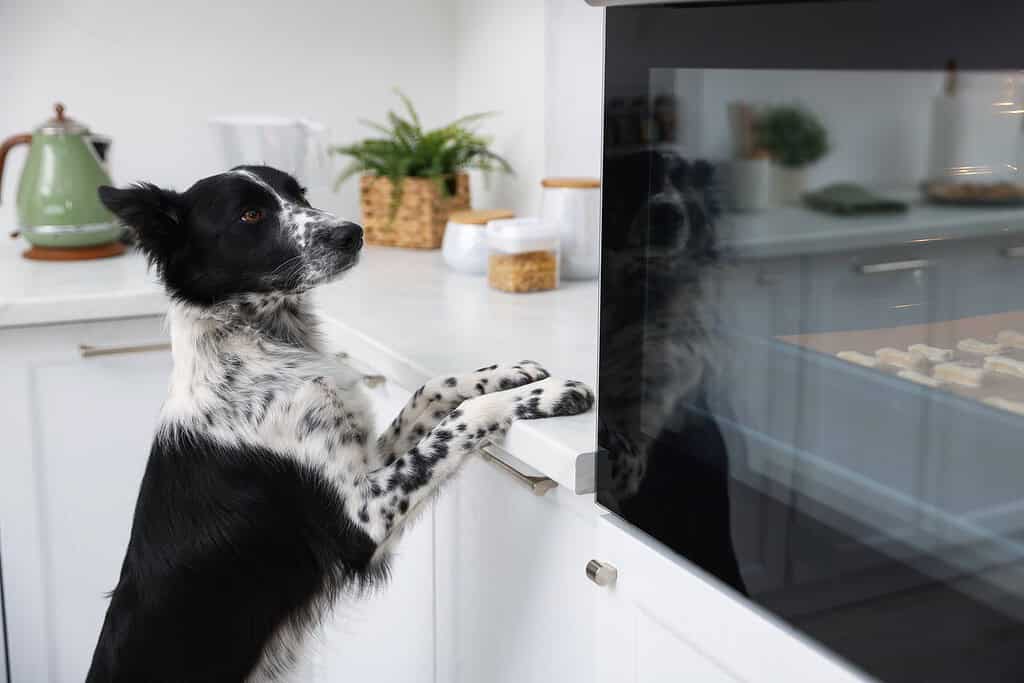
Between Christmas and New Year’s, cheese boards show up everywhere: on coffee tables, at the end of the kitchen island, on a low tray by the fireplace. To a dog, a board at nose height is an open invitation. A dog helping itself can eat far more in a minute than you would ever hand over, so the best plan focuses on the setup.
Start with where the board goes. A coffee table is the worst spot, since most dogs can reach it without even standing up. Put boards on a counter or dining table, push them back from the edge, and remember that tall dogs and determined jumpers can reach more than you expect. If you are hosting, a baby gate across the kitchen or a closed door gives your dog a cozy space away from the action, with a chew or a lick mat to keep busy.
Next, look at what is on the board through your dog’s eyes. A typical spread might include grapes, dried fruit with raisins or currants, candied pecans or macadamia nuts, salami, an herbed cheese, a garlic dip, a wedge of blue cheese and crackers. Almost every item on that list is either toxic or too fatty or salty for a dog. If you want your dog to have a share, set aside a small dish of plain mozzarella or cheddar bits before you build the board, so nothing is coated in herbs, honey or crumbs from the blue cheese.
Brief your guests. Well-meaning visitors are the most common source of “just one bite.” A simple line at the door works: please don’t feed the dog, but if you want to give a treat, use these. Keep a small jar of dog treats or the pre-cut plain cheese near the entryway so guests can join in safely. Children especially need a clear rule, because a toddler holding a cracker at dog height is basically serving it.
Watch the cleanup window. Late in the evening, when everyone is tired and plates sit out, is when dogs strike. Leftover rinds, wax coatings, toothpicks and cheese knives have no business in a dog’s mouth. Clear the board as soon as the party winds down and take trash out to a lidded can. Moldy leftovers are their own hazard, so throw out old cheese where your dog cannot dig.
Know the signs that mean you should call someone. Mild diarrhea or gas after a few extra cubes of plain cheese usually passes. Repeated vomiting, a painful belly, a hunched “praying” posture, weakness, tremors or seizures are different. Those can point to pancreatitis, a mycotoxin problem or a toxic food from the board, and they need a veterinarian quickly. It helps to know before the party which emergency clinic is open on the holidays near you.
Finally, plan for the door. Parties mean coats, deliveries and guests stepping out, and a dog distracted by food smells can slip outside in seconds. Make sure your dog is wearing current ID before the first guest arrives. Our party pet safety guide covers food, noise and open doors in more detail, and most of it applies to any winter gathering.
Can dogs with pancreatitis, kidney disease or weight problems eat cheese?
For some dogs, the answer changes from “a little is fine” to “probably not.” Always ask your own veterinarian, especially if your dog eats a therapeutic diet.
Pancreatitis. VCA Animal Hospitals explains that pancreatitis may be triggered in some cases by a fatty meal, and that dogs recovering from it are fed small amounts of a low-fat, easy-to-digest diet. PetMD says dogs with pancreatitis should not eat cheese and may need to be limited to rare exceptions, if any. If your dog has had even one episode, keep cheese off the menu unless your vet says otherwise.
Kidney disease. VCA notes that kidney support diets are formulated with reduced phosphorus, sodium and protein. Tufts’ Petfoodology team suggests treats for most dogs with chronic kidney disease should stay under 100 mg of sodium per 100 calories. By USDA numbers, cheddar is around 162 mg per 100 calories and part-skim mozzarella around 244, and low-fat cottage cheese, while very lean, is far higher. Swiss is lower in sodium, but cheese is still a protein- and phosphorus-rich food, so let your vet decide.
Weight problems. With most dogs evaluated in the 2022 APOP survey carrying extra weight, cheese is an easy place to cut. AKC advises checking with your vet before adding cheese if your dog is struggling with obesity or has food sensitivities.
Is cheese a good way to give a dog pills?
For many healthy dogs, yes. AKC notes cheese is a good way to conceal pills, and PetMD says some dogs can tolerate lower-sodium, lower-fat, lower-lactose cheeses often enough to use them as pill pockets for daily medications.
A few tips make it work better. Use the smallest amount that hides the pill, such as a pinch of soft mozzarella or a thin slice of Swiss pressed around it. Give a plain piece first, then the one with the pill, then another plain piece, so your dog swallows quickly instead of sorting through it. If your dog takes medication every day, count those cheese calories as part of the 10% treat allowance.
Check with your veterinarian before hiding any medication in food. Some drugs are meant to be given on an empty stomach, and dogs with pancreatitis, kidney disease or food allergies may need a different wrapper.
Can puppies eat cheese?
Yes, in tiny amounts. PetMD says puppies can eat cheese but should be introduced to it slowly to make sure they don’t react, and AKC calls cheese a great training reward, especially for puppies. Because puppies are small and growing, their treat allowance is small too, so think shreds, not cubes.
Use cheese as a high-value reward for hard skills like recall or crate training, and use regular puppy kibble or puppy treats for everyday practice. Watch for loose stools after the first few tries. If your puppy is on a large-breed growth diet or has a sensitive stomach, ask your vet how many extra calories are safe.
What should you do if your dog ate cheese off the counter?
First, figure out what and how much. A few cubes of plain cheddar will probably mean nothing worse than gas or a soft stool. A whole wedge of brie, a block of cheese or anything from a mixed board needs more thought. Look for missing grapes, nuts, garlic spreads, sugar-free items or blue cheese, and note the amount and the time.
Call your veterinarian or the ASPCA Animal Poison Control Center at (888) 426-4435 if your dog ate blue cheese, moldy cheese, a large amount of high-fat cheese, or anything toxic from the board. Signs of pancreatitis can include vomiting, abdominal pain, diarrhea, lethargy and loss of appetite, per VCA, and Texas A&M’s Dr. Rutter notes that fatty-food pancreatitis may show up immediately or up to seven days later. Keep a basic kit ready at home; our pet first aid kit checklist lists the essentials, and our list of foods dogs can’t eat covers the rest of the kitchen.
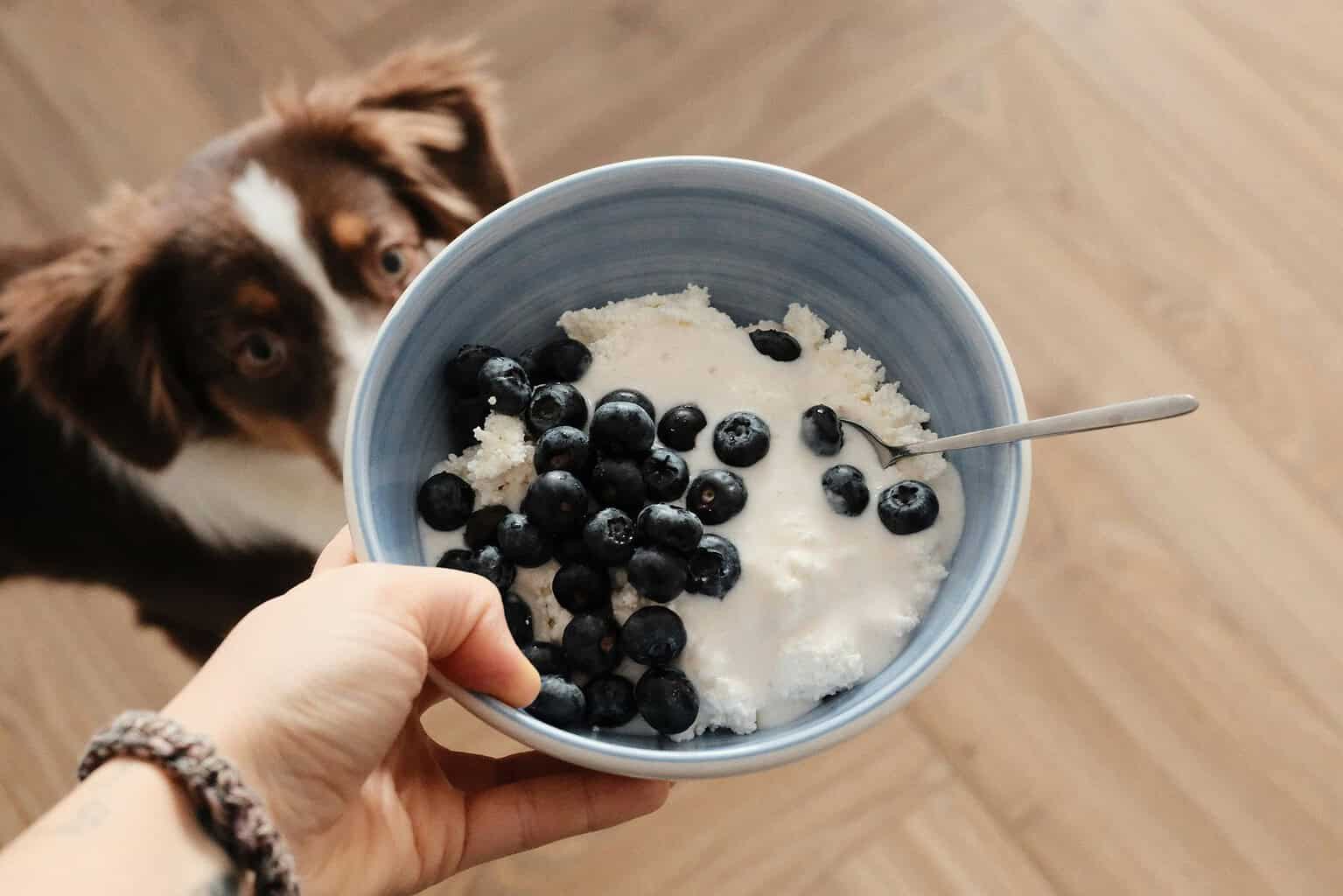
And if a busy party leaves you wishing your dog had a better way to keep busy, smear a thin layer of plain cottage cheese or another vet-approved spread on a lick mat. Our guide to the best lick mats for dogs has ideas for what to put on them.
Party guests, open doors, one curious dog
A Shiloh’s House Smart Tag is laser-engraved acrylic with an NFC back. Anyone who finds your dog taps it with a phone, no app needed, and sees a live profile with one-tap Call, Text and Map, plus medical notes like “no dairy.”
Frequently asked questions
Can dogs eat cheese every day?
Most healthy dogs can have a tiny amount often, especially as a pill wrapper, but daily cheese adds up fast. PetMD suggests a few times a week at most for healthy-weight dogs, and all treats together should stay under 10% of daily calories. If your dog gets cheese every day, choose a lower-fat option like part-skim mozzarella and cut back on other treats.
What is the best cheese for dogs?
Plain, lower-fat cheeses are the best choices. AKC recommends mozzarella, cottage cheese and soft goat cheese, and PetMD rates mozzarella and goat cheese as fine in moderation. Low-fat cottage cheese has the least fat by USDA figures, though it is fairly salty for its calories. Skip anything with herbs, garlic, onion or chives, and never offer blue cheese.
Is blue cheese toxic to dogs?
Blue cheese is best avoided. PetMD lists it as unsafe because of roquefortine, and the Merck Veterinary Manual notes that molds in dairy products can produce tremorgenic mycotoxins that cause vomiting, tremors and seizures in dogs. A small accidental nibble may cause no signs, but call your vet or animal poison control if your dog ate a lot or ate moldy cheese.
Can lactose-intolerant dogs eat cheese?
Some can, in tiny amounts. Aged hard cheeses like cheddar and Swiss contain very little lactose according to USDA data, so they are usually easier on the stomach than milk or cream cheese. AKC cautions that dogs with severe lactose intolerance may still react to small amounts. If cheese gives your dog gas or diarrhea, stop and choose a non-dairy treat.
Can dogs eat string cheese or mac and cheese?
Plain string cheese is usually mozzarella, so a small piece is fine for most dogs, although PetMD calls it a less ideal pick because it is processed. Mac and cheese is not recommended. PetMD notes that the dairy and pasta can be hard for dogs to digest, and many recipes add butter, salt, garlic or onion powder that dogs should not have.
What happens if a dog eats too much cheese?
Mild cases usually mean gas, an upset stomach or diarrhea from the fat and lactose. Larger amounts of high-fat cheese can trigger pancreatitis, which VCA says causes vomiting, abdominal pain, fever, lethargy and appetite loss. Call your veterinarian if your dog ate a large amount, keeps vomiting, seems painful, or ate cheese mixed with garlic, grapes, nuts or other toxic foods.
Sources
- American Kennel Club — Can Dogs Eat Cheese? Feeding Cheese to Your Dog (2025)
- PetMD — Can Dogs Eat Cheese? (2025)
- ASPCA Animal Poison Control — People Foods to Avoid Feeding Your Pets (n.d.)
- VCA Animal Hospitals — Pancreatitis in Dogs (n.d.)
- VCA Animal Hospitals — Nutrition for Dogs with Chronic Kidney Disease (2025)
- Merck Veterinary Manual — Tremorgenic Neuromycotoxicosis in Dogs (2024)
- USDA FoodData Central — SR Legacy cheese entries: cheddar, Swiss, mozzarella, cottage, blue and others (2019)
- Tufts Petfoodology — What Treats Can I Give My Dog With Kidney Disease? (2018)
- Texas A&M College of Veterinary Medicine — Safe Holiday Snacking for your Pet (2016)
- Association for Pet Obesity Prevention — 2022 Survey Reveals Alarming Rates of Pet Obesity in the US (2023)