Shiloh’s House vs ByteTag vs PetHub: Which Smart Pet Tag Is Right for Your Pet? (2026)
 Shiloh’s House Team
·
·
3 min read
Shiloh’s House Team
·
·
3 min read
If you’ve narrowed your smart pet tag search down to a shortlist, it probably includes ByteTag, PetHub, or us. All three put a digital profile on your pet’s collar, and all three are enormous upgrades over a bare engraved tag. But they take different approaches, and the differences matter most in the exact moment you bought the tag for: when a stranger is standing over your lost pet, trying to figure out how to help.
We’ll say it plainly since it’s our blog: we think we win this comparison. But we’ll show our work, and we’ll tell you honestly where the others are the better pick. (For the wider field including Crumb, YIP, and traditional tags, see our full 2026 smart tag roundup.)
The 30-second verdict
| Shiloh’s House | ByteTag | PetHub | |
|---|---|---|---|
| Technology | NFC tap + engraving | QR code | QR code |
| Finder needs | Any phone, one tap | Camera scan of code | Camera scan of code |
| Price | $38 one-time | ~$25 one-time | Tag + optional premium plan |
| Pet records | Full app (Lohji): medical, vaccines, voice notes | Web profile | Web portal, more with premium |
| Standout | Design + app + no subscription | Price | Shelter alert network |
Round 1: the finder experience
This is the whole ballgame. A QR tag asks the finder to notice the code, open their camera, hold it steady over a small tag on a possibly nervous animal, and wait for the link. That works fine most of the time — ByteTag and PetHub have reunited plenty of pets this way. But codes scratch, fade, and fail in low light.
An NFC tag is the same tech as tap-to-pay: hold any modern phone near the tag and the profile opens. See our evergreen guide to the best smart pet tags for how every brand compares. Nothing to aim, nothing to read, nothing to download. And because things can always go wrong, every Shiloh’s House tag is also physically engraved with your contact info — a backup neither QR competitor consistently offers. Curious how the technologies compare in detail? Here’s our honest NFC vs QR vs engraved breakdown.
Round 2: what the tag knows
ByteTag and PetHub profiles cover the essentials: contact info, some notes, vet details. Our free companion app, Lohji, treats your pet’s profile as a living record — vaccine history, medical conditions, emergency contacts, even a voice note in your own voice that plays for whoever finds your pet. It syncs to the tag in about two minutes and works in 54 countries and 16 languages. For a dog with a seizure disorder or a cat with a heart condition, that depth isn’t a luxury.
Round 3: cost over five years
ByteTag at ~$25 and Shiloh’s House at $38 are both one-time purchases — over a pet’s lifetime the difference is a bag of treats. PetHub’s model is different: the basic tier is affordable, but the features you’d most want in an emergency sit in the premium subscription, which compounds year after year. Do the five-year math before you decide.
Round 4: will your pet actually wear it?
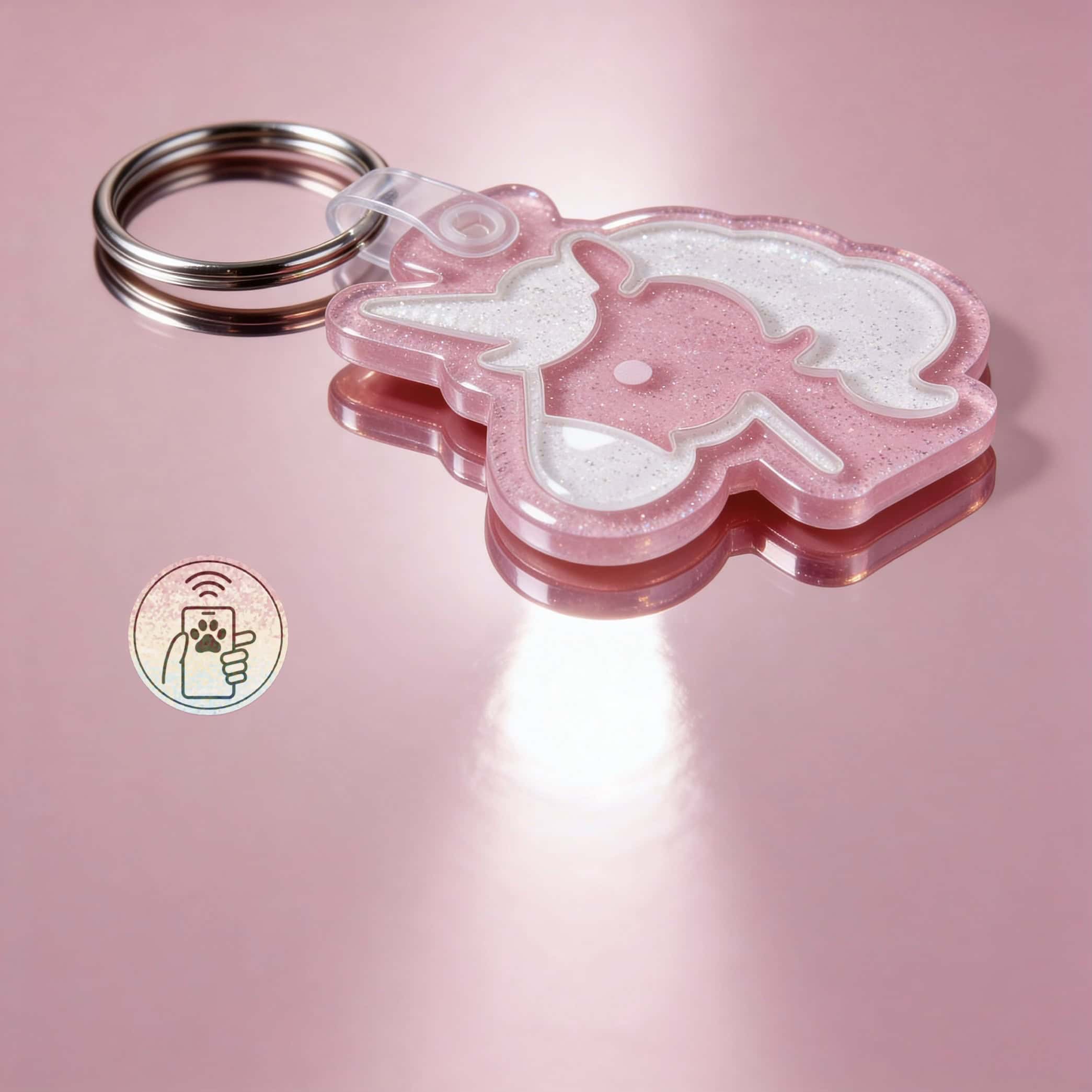
An unfashionable truth about pet safety gear: if it’s ugly or bulky, people take it off for photos, for guests, for no reason at all — and lost pets aren’t wearing tags they’re not wearing. ByteTag’s silicone tags are practical. PetHub’s are utilitarian. Ours are designer acrylic pieces — crowns, lightning bolts, unicorns — in three sizes from teacup to giant breed, with a no-fade surface. Safety gear that looks like an accessory stays on the collar.
Where the others win
- Choose ByteTag if price is the deciding factor and a straightforward QR profile covers your needs.
- Choose PetHub if your city issues PetHub-linked pet licenses — their shelter alert network is a real, unique advantage there.
- Choose Shiloh’s House if you want the easiest finder experience (tap, not scan), engraved backup, a full medical profile in a free app, and a tag pretty enough to stay on the collar — with no subscription, ever.
Get Your Tag
Tap-to-ID, engraved backup, and the free Lohji™ app — designed to bring your pet home faster.
Whichever tag you choose, wear one. A third of pets go missing in their lifetime — our 2026 lost pet statistics show the ones wearing ID come home dramatically more often.