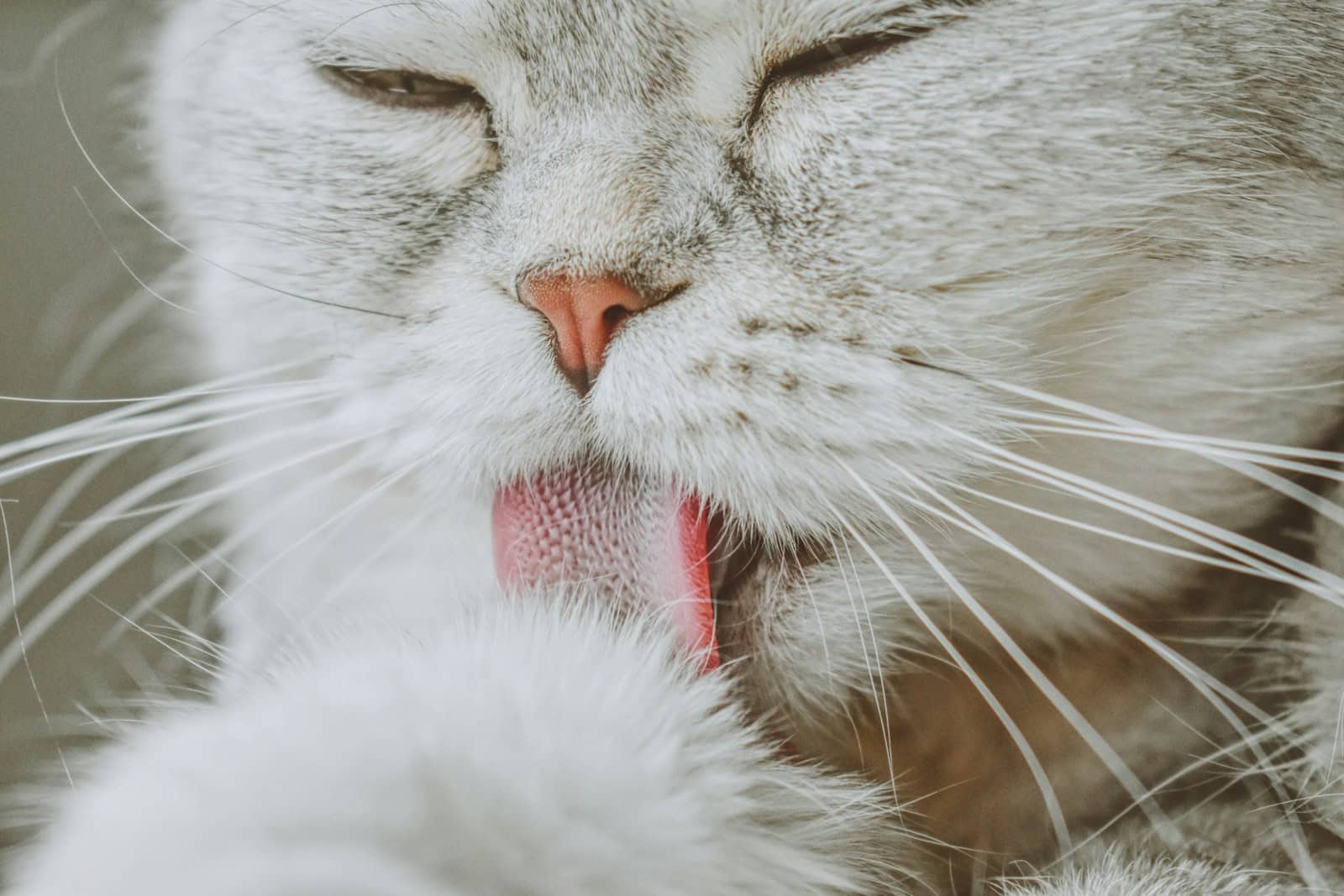
Most heavy cat shedding in spring is completely normal. As daylight hours stretch out, cats drop the dense winter undercoat they grew in autumn — a shift triggered by light exposure more than temperature, which is why indoor cats under artificial light often shed a little all year instead of in two tidy bursts. The shedding that is not normal comes with bald patches, scabs, itching, or a cat who suddenly looks unwell. Here is how to tell the difference.
Is it shedding or hair loss?
Shedding thins the coat evenly; hair loss leaves gaps. That single test sorts most cases in about ten seconds.
| Normal shedding | Worth a vet visit |
|---|---|
| Loose hair everywhere, coat still even | Bald patches, thinning on the belly or back legs |
| Skin underneath looks clean and healthy | Redness, scabs, flakes or sores |
| Cat grooms normally and is comfortable | Constant licking, chewing or scratching |
| Eating, drinking and playing as usual | Weight loss, thirst changes, low energy |
| Peaks in spring and autumn | Came on suddenly with no seasonal pattern |
If your cat is in the right-hand column, our guide to cat hair loss and bald patches covers the medical causes in detail.
8 reasons your cat is shedding so much
1. It is spring
Lengthening days trigger the seasonal coat change. Cats shed the thick undercoat grown for winter, and for a few weeks it comes out in clouds. Long-haired breeds make this dramatic; a Maine Coon in April can fill a brush in one sitting.
2. Your cat lives indoors under artificial light
Indoor lighting blurs the seasons. Without a strong light cycle, the shed-and-regrow signal never fully switches off, so indoor cats shed moderately year-round rather than twice a year. It feels like more hair overall, because it never stops.
3. Nobody is brushing
Loose hair has to go somewhere. Brushed out, it lands in the bin. Left alone, it lands on the sofa or gets swallowed — which is exactly how spring becomes hairball season. Daily brushing during a heavy shed, a few times a week the rest of the year, is the single highest-impact change you can make.
4. The diet is thin on protein or fatty acids
Coat quality is built from what goes in the bowl. Hair is mostly protein, and omega-3 and omega-6 fatty acids support the skin barrier that holds it. Cats on low-protein or low-fat food often shed more and have duller coats. So do dehydrated cats — dry skin sheds more, and a cat who eats only kibble may be running a little dry.
5. Stress
A stressed cat sheds more, fast. Vets see it in the exam room constantly: hair loosens within minutes of a stress spike. At home, a move, a new pet, building work or a changed routine can lift shedding for weeks.
6. Fleas, mites or allergies
An itchy cat over-grooms, and over-grooming pulls hair out. Fleas are the classic cause, but food and environmental allergies do the same thing. The tell is hair coming out in specific places — the belly, the base of the tail, the inner thighs — rather than everywhere.
7. A medical condition
Hyperthyroidism, kidney disease, diabetes and ringworm all change the coat. These usually come with other signs: weight loss despite a good appetite, extra thirst, vomiting, or circular patches of hair loss. Any of those alongside heavy shedding is a vet appointment, not a grooming problem.
8. Age or weight makes self-grooming hard
Cats who cannot reach do not shed less — they just keep it. Arthritic seniors and overweight cats struggle to groom their back half, so dead hair mats there while the front looks fine. These cats need you to do the brushing.
How to reduce shedding around the house
Brush, feed and hydrate — in that order. A slicker brush or de-shedding tool a few minutes a day removes more hair than any supplement; our roundup of the best cat brushes for shedding covers which tool matches which coat. Feed a complete food with real animal protein and ask your vet about an omega-3 supplement if the coat looks dull. Add water to the diet through wet food or a fountain. Keep flea prevention year-round, not just in summer. And accept a baseline: a cat that never shed would be a cat with a problem.
When to call the vet
Call if the coat is coming out in patches, the skin looks angry, or your cat is behaving differently. Sudden severe shedding paired with weight loss, increased thirst, vomiting or lethargy deserves a same-week appointment. Ringworm in particular spreads to people, so circular bald patches should be checked rather than watched.
Frequently asked questions
How long does cat shedding season last?
Usually three to six weeks in spring and again in autumn, though indoor cats often shed lightly year-round instead of in distinct seasons.
Do indoor cats shed more than outdoor cats?
They shed more consistently. Outdoor cats under natural light tend to have two heavy sheds; indoor cats under artificial light spread the same volume across the whole year.
Does shaving a cat stop shedding?
No. Shaving removes existing hair but does not slow the follicles, and the coat also regulates temperature and protects skin from sun. Vets generally reserve it for severe matting.
Do certain cat breeds shed less?
Some shed less noticeably — Siberians, Bengals, Devon Rex and Sphynx among them — but no cat with hair is non-shedding, and low-shedding is not the same as hypoallergenic.
Can stress make a cat shed?
Yes. Stress loosens hair quickly, which is why so much fur ends up on the vet’s table. Ongoing stress at home can raise shedding for weeks until the routine settles.
While you are looking closely at your cat
Brushing season is a good moment to check the collar. Cats slip out during spring window-opening more than any other time, and an indoor cat without ID is the hardest kind to get home — which is exactly the argument in do indoor cats need ID tags. Our own answer is a lightweight acrylic NFC tag on a breakaway collar: any phone taps it, no app needed for the finder, engraved details on the back as backup. We make them, so weigh that accordingly.
Get Your Tag
Lightweight designer acrylic NFC tags for cats — tap with any phone, engraved backup, no subscription.