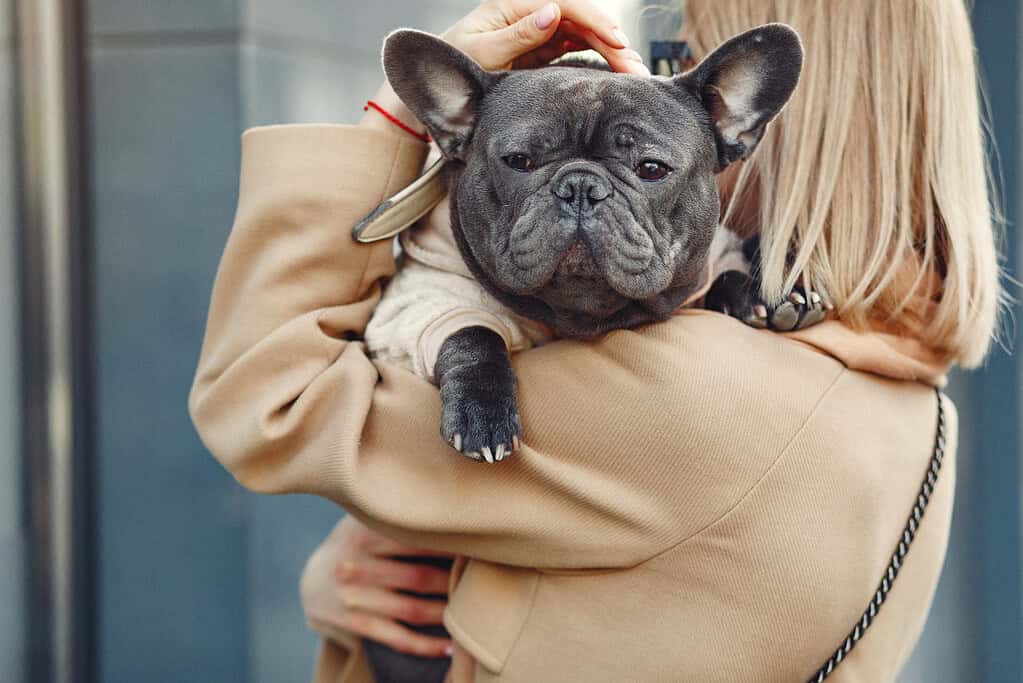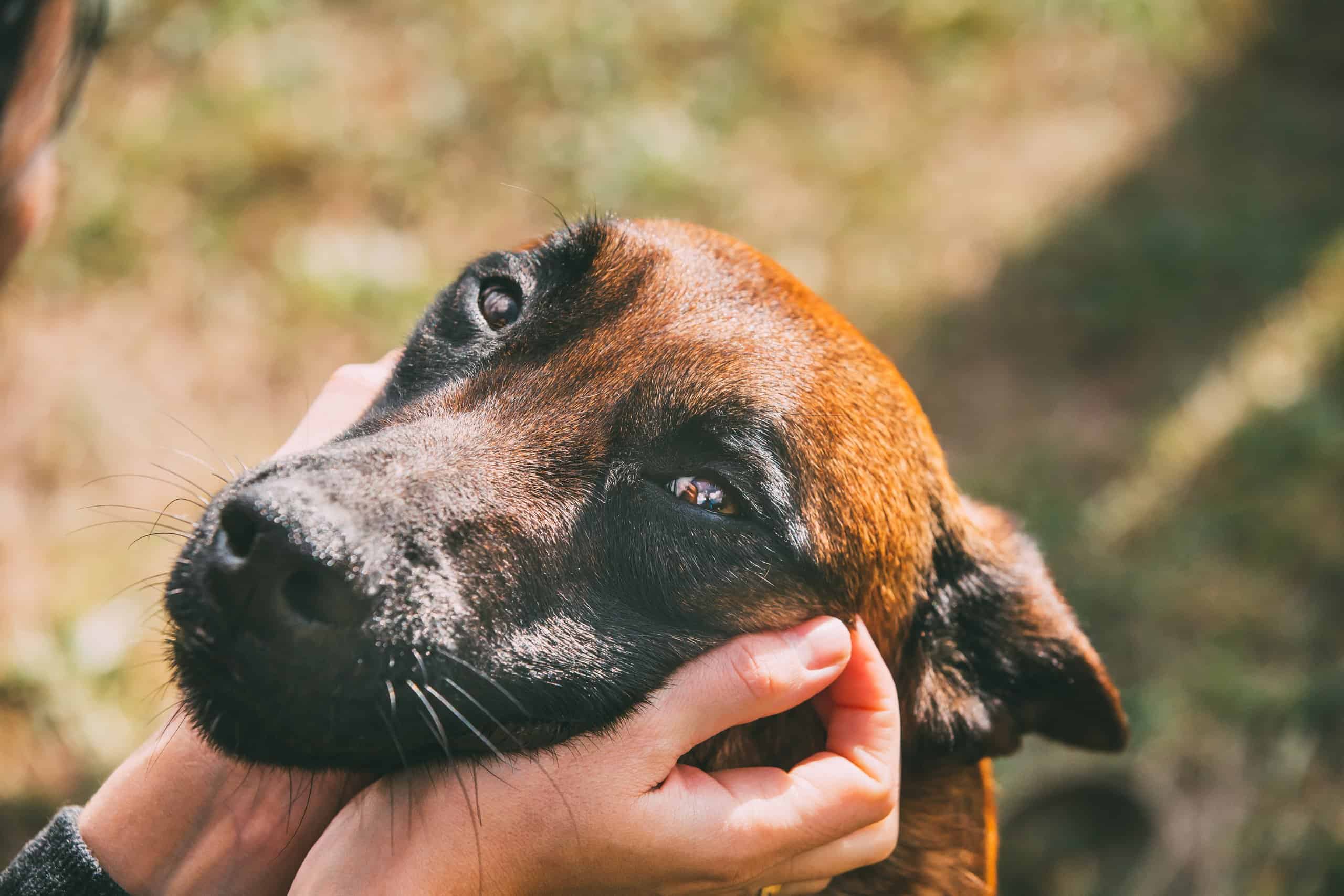
Dogs tilt their heads to hear you and see you better. Turning the head shifts the ear flaps to pinpoint where a sound is coming from, and it swings the muzzle out of the way so your dog can read the lower half of your face. On top of that, head tilting is heavily reinforced – we melt, we coo, we hand over a treat – so dogs learn to repeat it. A tilt is only a problem when it is constant, always to the same side, or paired with stumbling, head shaking, or flicking eyes. That version is a medical sign, not a cute one.
The short answer, in one paragraph
A normal head tilt is brief, happens in response to something (a word, a squeak, a doorbell), and goes away when the moment passes. A concerning head tilt is persistent, one-sided, and happens even when nothing is going on. Everything below unpacks the first kind – and tells you exactly how to recognize the second.
1. They are locating the sound
Tilting moves the ear flaps and changes the timing of sound hitting each ear, which helps a dog pinpoint where a noise came from. Dogs hear a much wider frequency range than we do, but locating a sound in space is a separate skill from hearing it. Small adjustments to head angle give the brain better data. This is why the tilt so often shows up at exactly the moment you say something in a rising, sing-song tone, or when a faint sound comes from outside.
Floppy-eared breeds tend to tilt more visibly than prick-eared breeds, because they have more work to do to clear the ear canal. That is a tendency, not a rule – plenty of German Shepherds are champion tilters.
2. Their muzzle is literally in the way
A long snout blocks part of a dog’s view of your mouth and chin, and tilting swings it out of the visual field. Dogs read human faces constantly, and the lower face carries a lot of the signal – whether you are smiling, whether you are about to move. A dog with a long muzzle has a blind wedge right in the middle of your face. Tilting is a cheap fix.
This is the same instinct behind a lot of other behavior people ask about, like why your dog stares at you. Dogs are watching us far more closely than most people realize.
3. They are working out a word they know
Dogs often tilt when they recognize part of what you said and are waiting for the rest. Researchers at Eotvos Lorand University in Budapest studied this directly and found that dogs who were unusually good at learning object names tilted their heads far more often when they heard a familiar toy’s name than dogs who were not. The tilt appeared to line up with retrieval – the dog searching memory for a match.
Practically: if your dog tilts when you say “walk” but not when you say “whisk,” that is a comprehension tilt.
4. You taught them to do it (without meaning to)
Head tilting is one of the most heavily rewarded behaviors in dog-human life. Your dog tilts, you laugh, you say their name in a happy voice, you take a photo, sometimes a treat appears. That is textbook reinforcement. Over months, a reflex becomes a party trick your dog offers on purpose.
You can see the difference: a reflexive tilt is fast and tied to a sound. A learned tilt is held, often with eye contact, and looks a bit performative. Both are normal.
5. They are engaged with you and want more
Tilting frequently shows up in the middle of positive social attention – it is an engagement signal, not just a sensory one. A relaxed body, soft eyes, loose mouth and a tilt together read as “I am listening, keep going.” It often travels with other affiliative behaviors, the same family that includes following you from room to room.
6. Something is wrong with the ear or the balance system
A tilt your dog cannot stop is a medical sign, most commonly an ear infection, but also vestibular disease, an inner ear problem, a foreign body, a polyp, or in older dogs a neurological event. The giveaway is that the head stays tilted between events, usually to the same side, and other symptoms show up with it.
Cute tilt vs. concerning tilt
| What you see | Normal tilt | Call the vet |
|---|---|---|
| Timing | Brief, in response to a sound or word | Constant, present at rest |
| Direction | Either side, varies | Always the same side |
| Balance | Steady, normal walking | Stumbling, circling, leaning, falling |
| Eyes | Soft, focused on you | Rapid flicking side to side (nystagmus) |
| Ears | Clean, no odor | Scratching, head shaking, discharge, smell |
| Appetite and mood | Unchanged | Off food, nausea, withdrawn |
What to do if the tilt looks medical
Book a vet visit rather than waiting it out, and do not put anything in the ear before that appointment. Ear infections get harder and more painful to treat the longer they run, and cleaners can make some conditions worse. Old-dog vestibular disease often looks alarming – head tilt, wobbling, eye flicking – and frequently improves substantially over days to weeks, but it needs a diagnosis first because the symptoms overlap with far more serious causes.
One practical note while a dog is unsteady: a wobbly dog is a dog more likely to get out a door or wander off a curb. Make sure the ID on the collar is current before you leave for the appointment. We build NFC smart ID tags for exactly that gap – one tap from any phone opens your pet’s profile, no app needed for the person who found them – and we will say plainly that we are biased about ours. If yours is a scratched-out engraved tag from three addresses ago, any replacement beats it. Here is what actually belongs on the tag.
Frequently asked questions
Is it bad to make my dog tilt their head?
No. Asking for a tilt with a squeaky noise or a word is harmless and briefly enjoyable for most dogs. Do not do it repeatedly for content when your dog has stopped engaging – watch for a turned-away head or lip licking, which means they are done.
Why does my dog tilt his head when I talk to him?
Because speech is exactly the kind of sound that rewards tilting: it carries meaning your dog is trying to extract, and the source is your face, which is easier to read at an angle.
Do all dogs tilt their heads?
No. Some dogs almost never do it, and that is not a sign of low intelligence. Muzzle shape, ear shape, hearing, and how much the behavior has been reinforced all change how often you see it.
Why does my dog tilt his head at the TV?
Modern screens refresh fast enough that dogs perceive coherent motion, and TV sound is full of high-frequency cues like squeaks, whines and doorbells. That combination is very tilt-worthy.
My dog’s head has been tilted for two days. Is that an emergency?
Treat a tilt lasting more than a few hours as a same-day or next-day vet visit, and treat a tilt with vomiting, falling over, or flicking eyes as an emergency now.
Can ear mites cause head tilting?
Yes. Mites, infections, water trapped after a swim, grass seeds and polyps can all cause enough irritation to produce a persistent tilt, usually with scratching and head shaking.
Get Your Tag
Designer acrylic NFC tags that tap to your pet’s profile from any phone – with engraved backup, made in the USA, and no subscription ever.