Why Does My Dog Stare at Me? 7 Real Reasons (and When to Worry)
 Shiloh’s House Team
·
·
7 min read
Shiloh’s House Team
·
·
7 min read
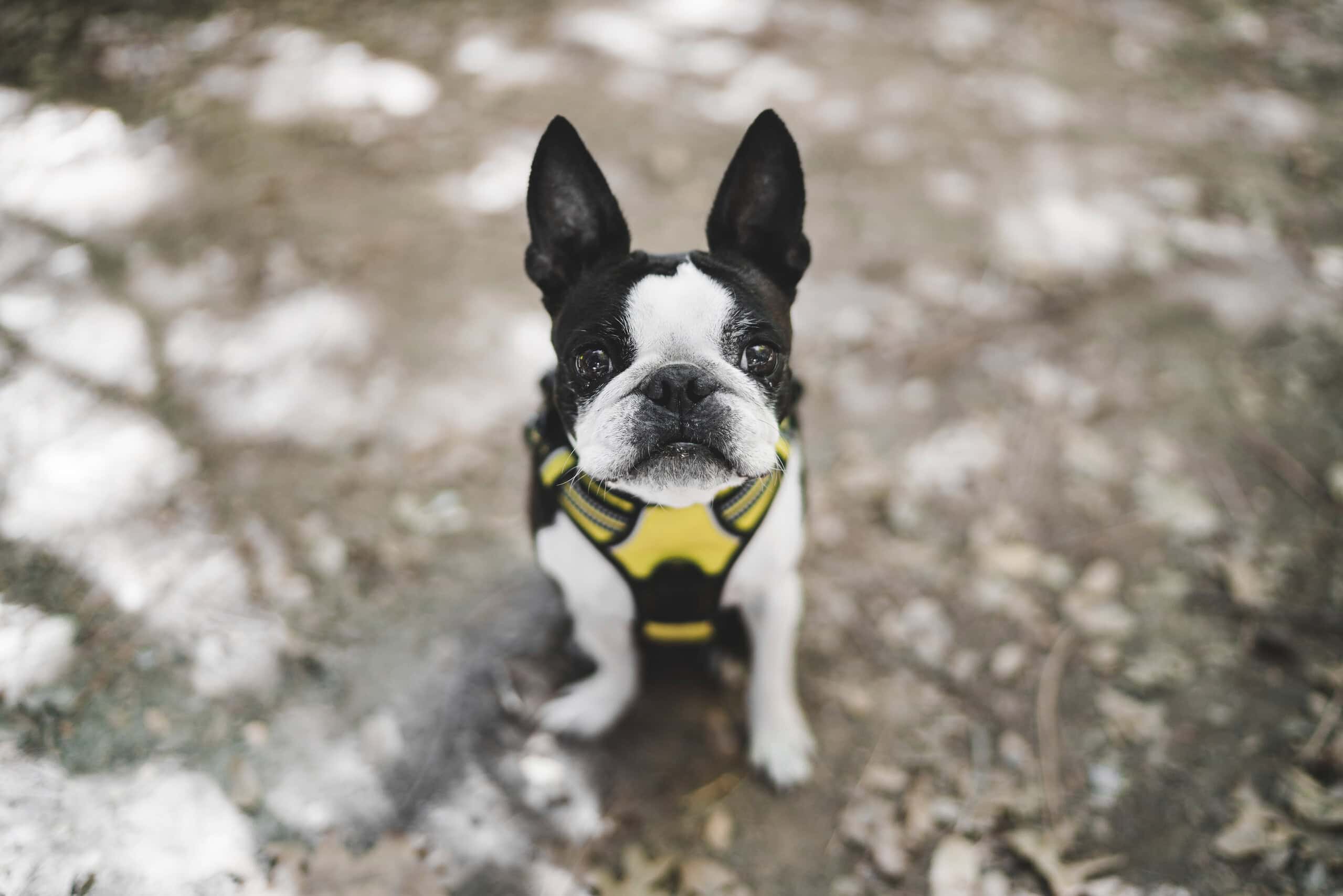
Most of the time your dog stares at you because they are reading you — waiting for a cue, asking for something, or simply bonding. Research on human–dog eye contact found that mutual gazing raises oxytocin in both species, the same hormone loop that bonds parents and infants, which is why a soft-eyed stare feels like affection: it more or less is. A hard stare is different, and so is a dog who stares past you at nothing. Here is how to tell the three apart.
What does it mean when your dog stares at you?
Dogs are unusually good at reading human faces and gestures, and staring is how they gather that data. Below are the seven reasons that cover nearly every case.
| Type of stare | What it looks like | What to do |
|---|---|---|
| Affection / bonding | Soft eyes, blinking, loose body, slow tail | Look back and enjoy it |
| Waiting for a cue | Alert, ears forward, checks your hands | Give a clear cue — this is a trained dog working |
| Asking for something | Stare plus glance at the door, bowl or leash | Answer the request — or teach a better one |
| Begging | Only at mealtimes, drool, close range | Send to a mat; never pay the stare with food |
| Confusion | Head tilt, freezing mid-cue | Simplify the cue and lower the difficulty |
| Hard stare / guarding | Stiff body, unblinking, whale eye, still tail, over an item | Back away, do not reach in, call a pro |
| Blank / medical stare | Stares at walls or into space, unresponsive to name | Book a vet exam |
1. They are bonding with you
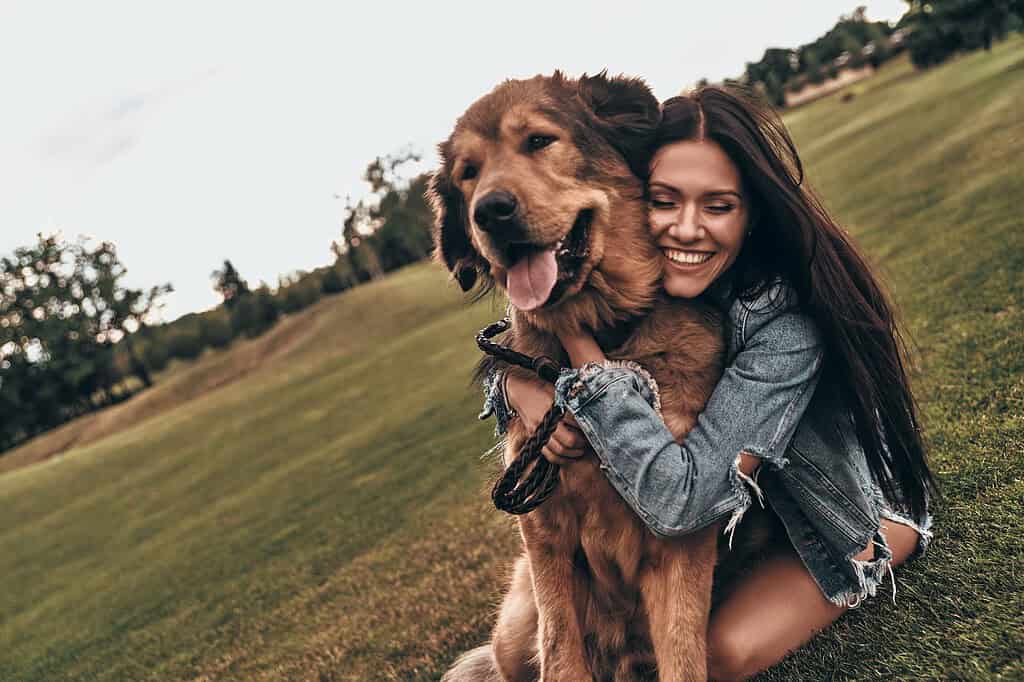
Researchers found that longer eye contact between owners and dogs raised oxytocin levels in both, and that giving dogs oxytocin increased their gazing in turn — a feedback loop that looks a lot like the one between human parents and babies. Wolves raised by humans do not do this nearly as readily, which suggests the behavior developed over the course of domestication. When your dog gazes at you with soft, blinking eyes and a loose body, that is the loop running.
2. They are waiting for a cue
A dog who watches your hands and face is a dog who has learned that good things start with you. Well-trained dogs stare more, not less, because attention has been paid for. If your dog locks on before a walk, at a curb, or during training, that is a working dog checking in. Reward it.
3. They want something specific
Watch what they look at next. The classic pattern is stare, then glance at the target: the leash, the water bowl, the back door, the toy under the couch. It is a genuine communication attempt, and dogs are remarkably good at it. Teach a clearer replacement if the staring gets constant — a nose touch to a bell for the door, or a specific mat for “I need something.”
4. They are begging (and it works)
Mealtime staring is learned, not emotional. Every scrap handed over during a stare pays the behavior directly, and food rewards are the fastest form of learning a dog has. If you would like your dinner back, the fix is a place cue with a stuffed chew, applied every meal for a couple of weeks. Not looking at them does nothing; giving them a better job does.
5. They are confused
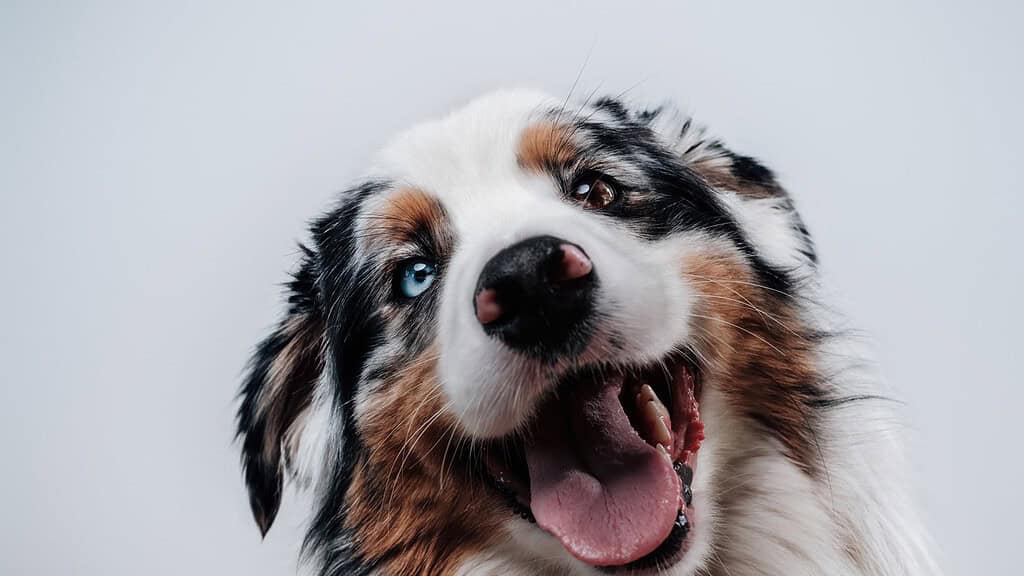
A stare plus a head tilt in the middle of training usually means the cue was unclear. Dogs freeze and stare when they cannot work out what earns the reward. Back up a step, make the criteria easier, and pay something. Repeating a cue louder is the one thing that never helps.
6. Hard staring — the one to take seriously
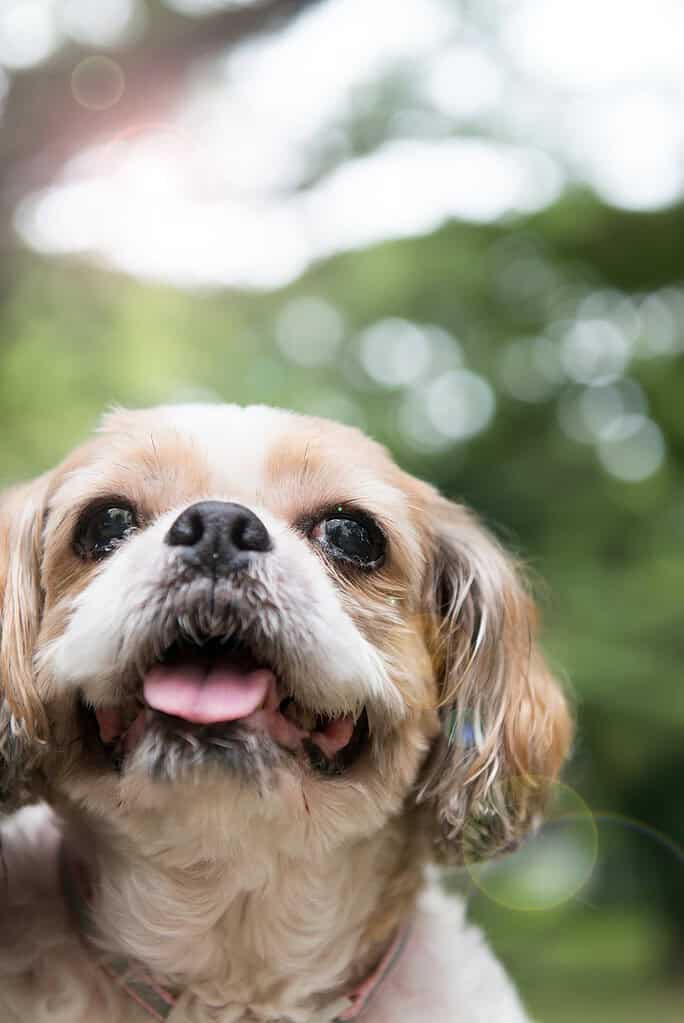
A hard stare is a warning, not a conversation. The signs are stiffness, an unblinking fixed gaze, a closed mouth, a still or high tail, and often “whale eye” where the whites show at the corner. It most often appears over a resource — a bone, a stolen sock, a food bowl, a favorite spot on the couch.
What to do: stop moving toward the dog, avoid direct eye contact, and back away calmly. Do not reach in to take the item; trade for something better and pick the item up later. Resource guarding responds well to a proper trade-and-swap protocol, and badly to confrontation, so get a certified trainer or veterinary behaviorist involved rather than winning the argument. With an unfamiliar dog, the same rule applies: no eye contact, no reaching, create distance.
7. When staring is a medical sign
Call your vet if your dog stares at walls or into empty space and does not respond to their name. That is a different behavior from staring at you, and it can point to canine cognitive dysfunction in senior dogs, focal seizures, vision loss, pain, or in rare cases a compulsive disorder. Red flags worth an exam:
- Staring at a wall, corner or ceiling rather than at people
- Getting stuck behind furniture or on the hinge side of a door
- Night-time pacing, new confusion, or reversed sleep patterns in an older dog
- Brief unresponsive episodes, lip-smacking, twitching or fly-snapping
- Bumping into things, or a new reluctance on stairs
If a workup is on the horizon, our honest look at whether pet insurance is worth it in 2026 covers what these visits actually cost.
Should you stare back at your dog?
With your own dog, yes — softly. Relaxed mutual gazing with a dog who knows and trusts you feeds the oxytocin loop and is genuinely good for both of you. With a strange dog, no. Direct eye contact from a stranger reads as a challenge to many dogs, and it is the wrong opening move. Turn slightly sideways, look at their shoulder rather than their eyes, and let them approach you.
Frequently asked questions
Why does my dog stare at me while I eat?
Because it has worked before, or because it worked for a previous owner. Food is the most powerful reinforcer a dog has. Put them on a mat with something better to do before you sit down rather than after the staring starts.
Why does my dog stare at me while pooping?
Because it is a vulnerable moment and they are checking that you are keeping watch. It is a trust behavior, not an odd one. Look away if you like — they will still finish.
Is it bad to make eye contact with a dog?
Not with your own dog, when the eye contact is soft and mutual. With an unfamiliar or tense dog it is risky; avoid it and give them space.
Why does my dog stare at me and not blink?
Look at the rest of the body. A loose, wiggly dog is being intense in a friendly way. A stiff, still dog with a closed mouth is warning you — back off and get help from a professional.
Why does my dog stare at me when I am about to leave?
They have learned your departure cues — the shoes, the keys, the bag — and they are predicting what happens next. If it comes with pacing, drooling, whining or destruction, look at separation anxiety rather than plain staring; our guide to back-to-school separation anxiety walks through it.
Do dogs stare because they are protecting me?
Sometimes, but genuine protective staring is usually directed outward at a person or dog, not at you. A dog staring at you is far more likely to be asking for something.
My dog follows me everywhere and stares. Is that normal?
Very. Some dogs are natural velcro dogs, and staring is part of the same package. We covered the tipping point between devotion and distress in why your dog follows you everywhere.
One more thing that stare is telling you
A dog who watches you constantly is a dog who is bonded to you — and bonded dogs are exactly the ones who bolt after a firework, a squirrel or an open gate trying to find you again. Every dog who goes outside should be wearing ID a stranger can act on in seconds. That is why we make Shiloh’s House NFC smart tags: one tap with any phone opens your dog’s profile — no app needed for whoever finds them — with your number engraved on the back as a backup. Full disclosure, they are ours, and the free Lohji app that pairs with them holds medical records and voice notes even if you buy your tag elsewhere. Also worth reading: why dogs lick so much.
Get Your Tag
A $38 designer acrylic NFC tag any phone can tap — engraved backup, made in USA, no subscription, ever.