How Cold Is Too Cold for Dogs? A Temperature Guide by Size and Coat
 Shiloh’s House Team
·
·
15 min read
Shiloh’s House Team
·
·
15 min read

Most dogs are fine until the thermometer drops below about 45°F. Below 32°F, small dogs, thin-coated dogs, puppies, seniors and sick dogs can get into trouble if they stay out too long, and below 20°F every dog is at risk of hypothermia and frostbite on a long outing. Wind and wet weather push those numbers up, a thick double coat pushes them down, and no chart beats watching your own dog: shivering, a tucked tail, lifted paws or pulling toward the door mean it’s time to go in.
Why there’s no single number
Ask a veterinarian how cold is too cold and you’ll get a shrug before you get a number. The American Veterinary Medical Association says pets’ cold tolerance varies from pet to pet based on their coat, body fat stores, activity level and health, and that long-haired or thick-coated dogs tend to be more cold-tolerant but are still at risk. Dr. M.A. Crist of Texas A&M’s veterinary college puts it the same way: fur thickness and length, body mass and more all feed in, which makes it hard to name one dangerous temperature.
Acclimation matters too. PetMD’s Dr. Jennifer Coates points out that 55°F feels frigid after summer and like shorts weather after a long winter, and that dogs used to the cold handle it much better than dogs that aren’t. The Tufts Cummings School’s Dr. Elizabeth Rozanski notes that acclimating to the cold can take dogs a while. So a Minnesota Lab in January and a Florida Lab visiting for the holidays are not working with the same number.
There’s really no cut-off temperature for it being too chilly to take your dog outside.
Jonathan Babyak, Tufts Cummings School of Veterinary Medicine, in Tufts Now
Babyak’s advice is to watch the dog, not the thermometer: some dogs run in the snow for hours and end up panting, while others shiver and pull toward the house after a few minutes. The thresholds below are the guardrails veterinarians use; your dog’s behavior is the final word.

The temperature thresholds vets actually use
Several veterinary sources put numbers on it, and they line up well. Dr. Coates writes that cold should not become a problem for most dogs until the temperature falls below 45°F, at which point some cold-averse dogs may start to feel uncomfortable; that under 32°F small breeds, thin-coated dogs and very young, old or sick dogs could be in danger if they spend too much time outdoors; and that under 20°F all pet parents need to know their dogs could develop hypothermia or frostbite when outside for extended periods. Dr. Crist calls it clinically accepted that indoor pets not acclimated to cold should not be left outside when the average daily temperature is below 45°F.
| Outside temperature | What veterinarians say |
|---|---|
| Above 45°F | Comfortable for most dogs. Cold-averse dogs may start to feel it as it dips toward 45 (PetMD). |
| 40°F | Keep a close eye on small or thin-coated dogs, even on a dry, windless day (PetMD). |
| 32°F (freezing) | Small, thin-coated, very young, old or sick dogs can be in danger with too much time out (PetMD). Aim to walk above 32°F and keep cold walks to 30 minutes or less (Dr. Nick Horniman, via PetMD). |
| 30°F | Most dogs start getting cold if they aren’t walking, running or playing (PetMD). |
| 20°F | Any dog can develop hypothermia or frostbite on an extended outing. Sweaters and booties help; limit time outside to active play and potty breaks (PetMD). |
| 15°F | Dogs without thick fur should wear a coat to spend time outside (Tufts Cummings School). |
| 10°F to 32°F | Small warm-weather breeds (Chihuahuas, Yorkies, Italian greyhounds): no more than 10 to 15 minutes outdoors (Hill’s). |
| Below 10°F | Small warm-weather breeds should not spend any time outdoors (Hill’s). |
| Down to 0°F | Medium and large warm-weather breeds (boxers, Dalmatians, Rottweilers, border collies) can be out for up to 30 minutes if exercising hard; 5 to 10 minutes if just standing around (Hill’s). |
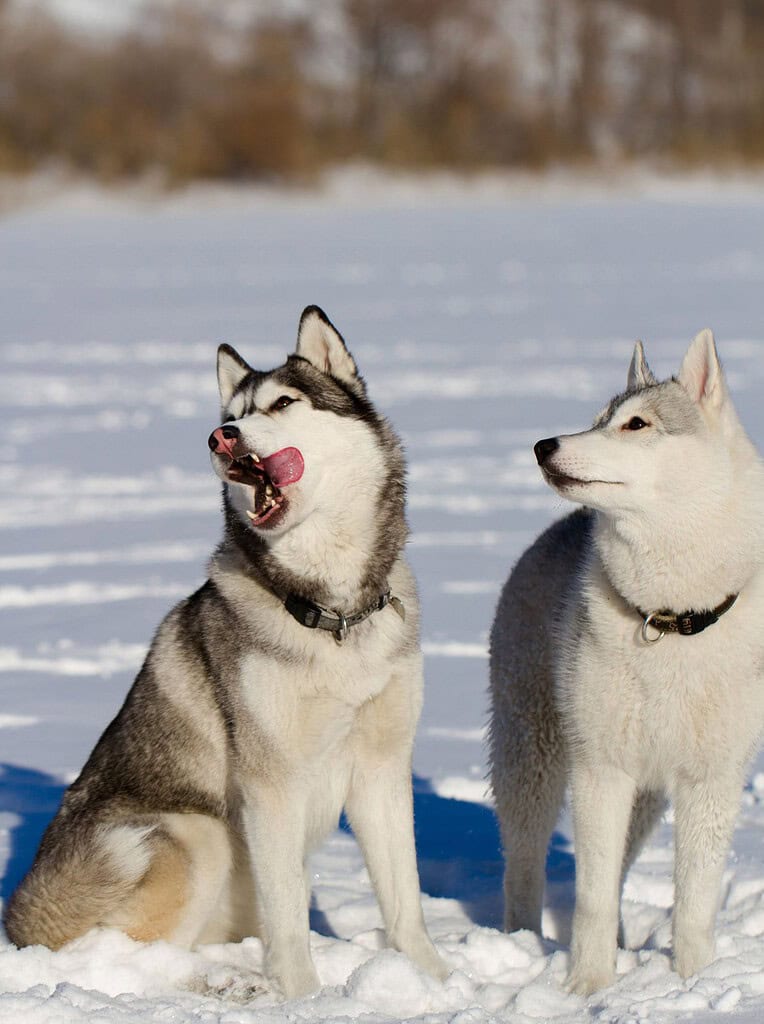
| Well below 0°F | Healthy, cold-accustomed Arctic breeds (huskies, malamutes, Keeshonden, Saint Bernards) with insulated, windproof shelter and unfrozen water can stay out as long as they like (Hill’s). |
Those numbers assume a dry, calm day. PetMD’s Dr. Sandra Mitchell says that if it’s windy or wet, or anything else makes it feel colder, plan on bringing your dog in even sooner. And the AVMA adds a caution that gets lost in the breed talk: even huskies and other dogs bred for cold climates should never be left outside for long periods in below-freezing weather.
What changes the math: size, coat, age, wind and wet
The clearest framework comes from the Tufts Animal Care and Condition scales, a screening tool veterinarian Gary Patronek designed for animal-welfare officers. Its weather-safety scale reads risk off the temperature by dog size, then adjusts: add a point of risk for a toy breed, add two points if the dog is out in rain or sleet, add a point for a puppy under six months or an elderly dog, and subtract a point for a northern or heavy-coated breed, for good shelter and bedding, or for a dog that’s acclimated to the cold. The scale also comes with a reminder that duration counts: brief cold exposure is not the same as being left out all night.
Notice that wet weather is the biggest single penalty, worth twice as much as being a toy breed. A dog’s coat insulates by trapping still air against the skin; soak it and that layer is gone. The AVMA makes the same point about clothing: a wet sweater or coat can actually make your dog colder, so keep a dry one for each trip out. Short-legged dogs get a second penalty the chart doesn’t show, because, as the AVMA notes, their bellies and bodies are more likely to touch snow-covered ground.
Health matters as much as breed. The AVMA lists diabetes, heart disease, kidney disease and hormonal imbalances such as Cushing’s disease as conditions that make it harder for a dog to regulate body temperature, along with being very young or very old. The AKC adds that small dogs, senior dogs, puppies and short-coated dogs lose body heat fastest, and that newborn puppies can become hypothermic at normal room temperatures. If your dog is on that list, use the small-dog column in the table whatever their size, and ask your vet for a limit.
Not tagged yet?
Snow and ice hide the scents dogs use to find their way home, which is why so many go missing in winter. A Shiloh’s House smart tag puts your phone number and your dog’s medical notes on their collar, readable with one tap of any phone — no battery, no subscription, and your number laser-engraved on the back as a backup.
Signs your dog is too cold
Dogs tell you before they’re in danger, if you know the vocabulary. Dr. Mitchell’s list: shivering or trembling, holding feet up in the air, whining, a hunched posture with the back arched and belly tucked, a tucked tail, acting less active, disoriented or dazed, and refusing to walk. The AVMA’s version adds anxiety, slowing down or stopping, seeming weak and looking for warm places to burrow, and says any of those mean get them back inside quickly, because they are early signs of hypothermia.
Lifted paws deserve special attention. Dr. Coates lists holding up one or more paws among the cues to head inside, and Hill’s notes that dogs may hold up a paw when frostbite is starting to hurt. Ice balls between the toes cause the same hop; the AVMA suggests trimming the hair between the toes to reduce buildup, and our guides to dog boots and paw balm cover the gear that helps.
Whole-body shivering is the one most owners wait out, and they shouldn’t. Shivering is how a dog generates heat, and it’s useful right up until it stops: Dr. Coates warns that severe shivering may stop as hypothermia progresses, which is a sign things are getting worse, not better. If your dog has shivered hard and then gone quiet and still, that’s an emergency. If shivering shows up indoors or in mild weather, cold may not be the cause at all; our guide to why dogs shake walks through the other reasons.
Hypothermia and frostbite: what’s actually happening
A dog’s normal body temperature is around 101.5°F, give or take a degree, according to Dr. Coates, and hypothermia sets in once it drops to about 98 or 99°F. The AKC breaks it into stages: mild hypothermia at a body temperature of 90 to 99°F, moderate at 82 to 90°F, and severe below 82°F. Left untreated, the AKC says, hypothermia can lead to cardiac and respiratory failure, brain damage, coma and death.
The body’s first move is to protect the core. Dr. Coates explains that a cooling dog narrows the blood vessels near the surface and sends blood away from the skin, legs, ears and feet toward the brain and heart. That’s why the early signs are shivering, muscle stiffness, lethargy, trouble walking and pale gums with cool ears and paws, and why the late signs are the shivering stopping, collapse, fixed and dilated pupils and slow, irregular heart and breathing rates. PetMD notes that dogs lose heat mainly through the skin, by contact with cold surfaces like snow and by radiating warmth into cold air, and that wind chill and sleet speed it up.
Frostbite follows from the same blood-flow shift. Emergency veterinarian Dr. Laura Kozlowski, quoted by PetMD, explains that diverting blood to the core organs can leave the tail tip, ears, nose, paw pads and toes without enough circulation until the tissue freezes and dies. Her signs to look for: redness, swelling, blistering, pain that makes a dog scratch, lick or chew the spot, and skin that turns darker or black. The AKC adds that wet or damp areas of a dog are more vulnerable to frostbite, which is one more reason to towel off a snowy dog and to skip the walk if they’re still damp from a bath.
What to do if your dog gets too cold
For a dog that’s shivering and uncomfortable but alert, the fix is simple: bring them inside and warm them gradually. Hill’s suggests wrapping them in towels warm from the dryer; Dr. Coates says to think warm, not hot, and never to use a heating pad, which can burn the skin or pull too much blood to the surface and cause shock. Offer water. Most dogs bounce back within minutes once they’re dry and out of the wind.
If you see the hypothermia signs above, especially stiffness, confusion, collapse or shivering that has stopped, PetMD and the AKC agree: get your dog somewhere warm and contact your veterinarian immediately. Dr. Coates notes that at the hospital, hypothermic dogs can be given warmed IV fluids and warmed, humidified oxygen while the team monitors heart rhythm and blood work. Any dog with a rectal temperature under 98 to 99°F is hypothermic and needs treatment.
Frostbite needs a lighter touch. Hill’s advice is to apply a warm, wet compress to the affected area, pat the skin dry rather than rubbing it, never apply direct heat, and call your vet. Frostbitten tissue can take days to declare itself, so a dog with pale, cool ear tips or toes after a cold outing is worth a call even if they seem fine.
How to keep winter walks safe
Dress the dog who needs it. Hill’s advice applies the sweater question by breed: the warm-weather breeds that feel the cold benefit most, and the AVMA recommends keeping several sweaters or coats so there’s always a dry one. The AKC’s caution is that clothing is an adjunct, not a substitute for supervision, and should never go on an unattended dog. Our guide to the best dog winter coats sorts out insulation, fit and which dogs actually need one. The ASPCA adds a grooming rule that surprises people: never shave a dog down to the skin in winter, and for long-haired dogs, trim rather than shave, including the hair between the toes.
Shorten the loop. The AVMA says you’ll probably need to shorten walks in very cold weather; Dr. Horniman’s 30-minute ceiling below freezing is a fair default, and Hill’s 10-to-15-minute limit for small breeds between 10 and 32°F is the one to remember with a Chihuahua. Keep dogs active while they’re out, since every source agrees a dog standing still gets cold far faster than one trotting, and go out in the warmest part of the day when you can. Steer clear of frozen ponds and lakes, which the AVMA warns can be deadly if the ice gives way.
Protect the paws and the belly. Both the AVMA and the ASPCA say to wipe or wash feet, legs and belly after every walk so your dog doesn’t lick off de-icing salt or antifreeze, and to use pet-safe ice melt at home. Dr. Kozlowski says rock salt licked off the paws is irritating and can cause mild vomiting and diarrhea, while even small amounts of antifreeze are deadly. Our guide to pet-safe ice melt covers the products, and foods dogs can’t eat has the antifreeze and other winter poison basics.
Keep the ID current. The AVMA notes that many pets become lost in winter because snow and ice hide the scents that would normally lead them home, and the ASPCA says more dogs are lost in winter than in any other season. A well-fitting collar with up-to-date contact information, a microchip whose registry details are current, and a leash on snowy or icy walks cover the three ways a winter walk goes wrong. If the worst happens, our guide to the first 60 minutes after a dog goes missing is the one to open.
If your dog lives outside
The veterinary consensus is that they shouldn’t, at least not in cold weather. The AVMA says cats and dogs should be kept inside during cold weather, calls the belief that fur makes them more resistant than people untrue, and says no pet should be left outside for long periods in below-freezing weather. Dr. Crist’s threshold for unacclimated indoor pets is an average daily temperature below 45°F.
If a dog truly can’t come in, the AVMA’s shelter checklist is specific: a warm, solid shelter against the wind, with the floor raised off the ground to limit heat loss, thick dry bedding changed regularly, the door facing away from prevailing winds, and unlimited fresh water that isn’t frozen (a pet-safe heated bowl works). Dr. Crist adds that the structure should be small enough for the dog to curl up and hold body heat, with dry straw or blankets kept clean and dry. Skip space heaters and heat lamps, which the AVMA says risk burns and fire, and use heated mats with care. Outdoor dogs also burn more calories staying warm, so ask your vet about winter feeding. Cold cars count as outside: the AVMA warns a car cools like a refrigerator and can chill a pet rapidly, so leave the dog home rather than in the car.
Frequently asked questions
What temperature is too cold to walk a dog?
Below 45°F, watch cold-sensitive dogs; below 32°F, keep walks to 30 minutes or less and bring small, thin-coated, young, old or sick dogs in sooner; below 20°F, every dog is at risk of hypothermia and frostbite on a long walk. Wind and wet weather lower all of those numbers.
How long can a dog stay outside in the cold?
Hill’s veterinary guidance: small warm-weather breeds no more than 10 to 15 minutes between 10 and 32°F and not at all below 10°F; medium and large warm-weather breeds up to 30 minutes down to 0°F if they’re exercising hard, 5 to 10 minutes if standing still; cold-accustomed Arctic breeds with proper shelter can stay out as long as they like. Supervise and come in at the first shiver.
Do dogs need coats in winter?
Short-coated, small, thin, elderly and sick dogs usually do, and Tufts veterinarians suggest a coat for any dog without thick fur below 15°F. Thick double-coated breeds generally don’t. Keep coats dry; a wet one makes a dog colder.
Can dogs get frostbite?
Yes. Ears, tail tip, nose, toes and paw pads are the usual sites. Look for pale, grey or blackened skin, swelling, blistering, or a dog licking and chewing the spot. Warm the area with a warm, wet compress, don’t rub it, and call your vet.
Is it OK for my dog to sleep outside in winter?
Veterinary groups advise against it, and the AVMA says no pet should be left out for long periods below freezing. If there’s no alternative, the dog needs a raised, insulated, wind-blocked shelter with dry bedding, unfrozen water and extra food, and should be brought in during cold snaps.
Sources
- American Veterinary Medical Association — Cold weather animal safety
- PetMD — How Cold Is Too Cold for Your Dog? (Jennifer Coates, DVM)
- PetMD — Hypothermia in Dogs: Signs and Treatment (Jennifer Coates, DVM)
- PetMD — How To Keep a Dog Warm in the Winter (Sandra C. Mitchell, DVM)
- PetMD — 5 Tips for Walking Your Dog in the Winter (Dr. Nick Horniman, Dr. Laura Kozlowski)
- American Kennel Club — Hypothermia in Dogs: How Cold Is Too Cold?
- Hill’s Pet — Dogs & Cold Weather: How Long Can My Dog Be Outside? (Dr. Sarah Wooten)
- Texas A&M School of Veterinary Medicine — How Cold Is Too Cold: Keep Pets Safe in Winter Weather
- Tufts Now — How do I protect my dog in winter from extreme cold, ice, salt, and deicers?
- Tufts Cummings School of Veterinary Medicine — Winter Hazards for Pets
- ASPCA — Cold Weather Safety Tips
- Tufts Animal Care and Condition (TACC) scales — weather safety scale (Gary Patronek, VMD)