Can Dogs Eat Cranberries? Sauce, Juice and Safe Amounts
 Shiloh’s House Team
·
·
14 min read

Yes, dogs can eat cranberries in small amounts, as long as they are plain fresh, frozen or unsweetened dried berries. Cranberries are not toxic to dogs, and a raw cup has only about 50 calories. The trouble is what holiday cranberries usually come with: sugar-heavy sauce, juice cocktails, trail mixes with raisins, xylitol-sweetened products and brandy-soaked recipes. Large amounts can upset the stomach, and dogs prone to calcium oxalate bladder stones should skip cranberry supplements entirely.
Last updated: December 2025
Can dogs eat cranberries safely?
Cranberries show up on almost every December table, so it is no surprise that the question comes up the week before Christmas. The good news is that the berry itself is not a problem. The American Kennel Club says both fresh and dried cranberries are safe to feed dogs in small quantities, and Pet Poison Helpline lists cranberries among its pet-friendly fall foods, raw or processed, as long as the label has nothing toxic in it.
That last part is the whole story. A plain cranberry is a tart, watery, low-calorie fruit. A cranberry on a holiday table is usually something else: simmered in sugar, mixed with orange zest and walnuts, folded into stuffing with raisins, baked into a scone, or poured from a bottle that is mostly apple and grape juice. The berry stays the same, but the risk changes with every added ingredient.
Many dogs will not even want a fresh cranberry. They are sour, firm and a little bitter, and plenty of dogs spit them right back out. If yours enjoys them, think of cranberries the way you would think of a few blueberries or apple slices: a small, occasional extra on top of a complete and balanced diet, not a health food your dog needs.
The forms that are generally fine are plain fresh berries, plain frozen berries, plain cooked berries with nothing added, and unsweetened dried cranberries in small amounts. The forms we would keep away from dogs are canned or homemade cranberry sauce, cranberry juice cocktail and cranberry-grape blends, sweetened dried cranberries in more than a nibble, trail mixes and fruit blends, and any baked good or relish that mixes cranberries with other ingredients.
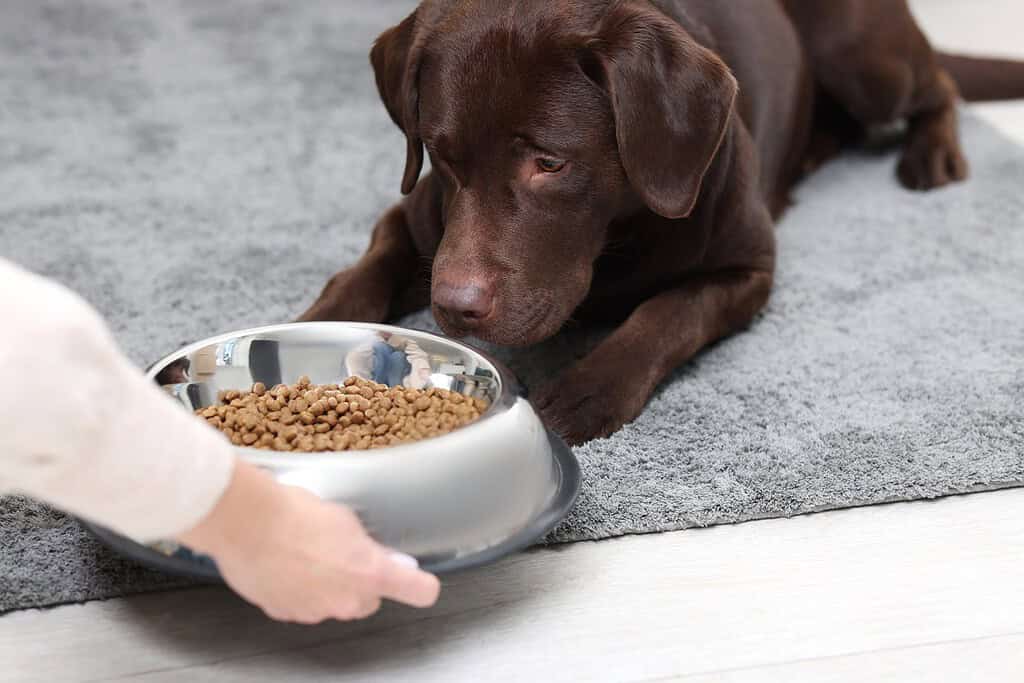
Are cranberries good for dogs?
Cranberries do bring some nutrients, but none that a dog cannot get from a complete commercial diet. According to USDA data, 100 grams of raw cranberries contain 3.6 grams of fiber, 14 milligrams of vitamin C, about 1.3 milligrams of vitamin E and 80 milligrams of potassium, with only 4.3 grams of sugar. Veterinarian Dr. Beth Turner of Preventive Vet notes that cranberries are high in antioxidants and a good source of fiber, several vitamins, copper, manganese and potassium.
The catch is that the nutrition label changes dramatically once cranberries are processed for people. Here is how the three most common holiday forms compare, using USDA FoodData Central records.
| Per 100 grams | Raw cranberries | Dried, sweetened | Canned sauce, sweetened |
|---|---|---|---|
| Calories | 46 | 308 | 159 |
| Total sugars | 4.3 g | 72.6 g | 31.8 g |
| Fiber | 3.6 g | 5.3 g | 1.1 g |
| Vitamin C | 14 mg | 0.2 mg | about 2 mg |
| Water | 87 g | 16 g | mostly syrup |
Source: USDA FoodData Central, SR Legacy records 171722, 171723 and 173961. Drying removes most of the water, so every bite of a sweetened dried cranberry carries roughly six to seven times the calories of a fresh berry by weight, and almost all of it is sugar. One cup of canned sauce holds about 88 grams of sugar, according to USDA.
So yes, a fresh cranberry is a reasonable low-calorie snack. A handful of sweetened dried cranberries is closer to candy.
How many cranberries can a dog eat?
The standard rule veterinarians use is that treats and extras should stay under 10% of a dog’s daily calories. The World Small Animal Veterinary Association (WSAVA) publishes a treat chart for healthy adult dogs in ideal body condition, and we used it with USDA calorie data to show what that budget looks like in cranberries.
| Dog’s weight | Daily treat budget (WSAVA) | Fresh cranberries that use the whole budget | Sweetened dried cranberries that use the whole budget | Our sensible serving |
|---|---|---|---|---|
| 4 kg (about 9 lb) | 24 kcal | about 52 g | about 8 g | 1 to 3 fresh berries, halved |
| 10 kg (about 22 lb) | 47 kcal | about 100 g | about 15 g | up to 1 tablespoon chopped fresh |
| 20 kg (about 44 lb) | 79 kcal | about 170 g | about 26 g | 1 to 2 tablespoons fresh |
| 30 kg (about 66 lb) | 108 kcal | about 235 g | about 35 g | up to 2 tablespoons fresh |
| 40 kg (about 88 lb) | 134 kcal | about 290 g | about 44 g | up to 2 tablespoons fresh |
Calories alone would let a big dog eat a surprising pile of fresh cranberries, but calories are not the limiting factor. Tartness, fiber and the oxalate question below are. That is why our serving column stays well under the calorie math and lines up with the 1 to 2 tablespoons a day that Preventive Vet describes as moderate for dogs and cats.
If your dog is on a weight-loss plan or a prescription diet, ask your veterinarian before adding any fruit at all. Extras on those plans are often capped below 10%.
Can dogs eat cranberry sauce, cranberry juice or dried cranberries?
This is where most holiday problems start. The AKC notes that cranberry sauce is high in sugar, which can cause stomach upset, and that some recipes include grapes, raisins, currants or brandy. Dr. Turner at Preventive Vet puts it bluntly: when cranberries are dried, cooked, sauced or juiced, there can be added sugars, xylitol, grapes, raisins or even alcohol. Here is how we sort the common forms.
- Canned jellied sauce. One half-inch slice is about 57 grams and 91 calories according to USDA, which is nearly double a 22-pound dog’s whole daily treat budget. A lick off the plate is unlikely to hurt a healthy dog, but it is not a treat.
- Homemade cranberry relish or sauce. Check the recipe. Orange zest and sugar are common, and so are raisins, currants, port and brandy. Skip it unless you made a plain batch just for the dog.
- Cranberry juice cocktail. These drinks are mostly sweetener and other juices, and cranberry-grape blends add grape juice. Dogs do not need juice of any kind.
- Sweetened dried cranberries. A few plain ones are not dangerous, but the sugar adds up fast. Read the bag, because some blends include raisins.
- Trail mix, fruitcake, stollen and cranberry scones. These often combine cranberries with raisins, macadamia nuts, chocolate or rich butter. Keep them out of reach.
- Sugar-free cranberry products. Any label listing xylitol or birch sugar is an emergency risk, not a treat.
The same caution applies to everything around the cranberry sauce on a holiday plate. Our guides to turkey, ham and cheese cover the rest of the spread.
Do cranberries help dogs with UTIs?

The honest answer is that the evidence in dogs is thin and mixed. The idea comes from human medicine. People with urinary tract infections were long told to drink cranberry juice to make urine more acidic, but as Dr. Turner explains at Preventive Vet, juice lowers urine pH only slightly. The current theory is different. Compounds in cranberries called proanthocyanidins, often shortened to PACs, appear to keep certain strains of E. coli from sticking to the lining of the bladder, which may make it harder for an infection to take hold.
That mechanism is plausible. The question is whether it means fewer infections in real dogs, and only a couple of small clinical studies have tried to answer it.
The first, published by Chou and colleagues in the American Journal of Veterinary Research in 2016, followed 12 client-owned dogs with a history of recurrent UTIs. Six received an antibiotic and six received an oral cranberry extract for six months. None of the 12 dogs developed a UTI during the study, and the authors said that, based on the dogs’ histories, about 12 infections would have been expected over that period. In a separate lab experiment, urine from six dogs given the extract for 60 days reduced E. coli adhesion to canine kidney cells at 30 and 60 days, although the urine did not stop bacteria from growing. The authors concluded the extract may have benefit for preventing UTIs in dogs.
Other veterinarians read the same study more cautiously. In a 2019 review for Veterinary Practice News, Dr. Brennen McKenzie pointed out that the antibiotic group received only two weeks of cephalexin while the cranberry group was treated for six months, and that with no infections in either group, the study cannot show whether cranberry reduced recurrence. He agreed the lab work supports the anti-adhesion idea but cannot prove real-world benefit.
The second study is larger and better controlled. Olby and colleagues at North Carolina State University ran a randomized, placebo-controlled, blinded trial published in the Journal of Veterinary Internal Medicine. They enrolled dogs that had lost the ability to walk after surgery for an acute disk herniation in the lower back, a group with a known risk of bacteria in the urine because their bladders do not empty well. Across 94 dogs, bacteria were found in the urine 17 times, 6 in the placebo group and 11 in the cranberry group. E. coli specifically turned up 7 times, once with placebo and 6 times with cranberry. The researchers concluded the trial did not show a benefit of oral cranberry extract, while noting it had low statistical power and that other doses could be studied.
Put together, the dog research leaves cranberry in the maybe column. A standardized cranberry extract might help some dogs avoid repeat infections caused by certain E. coli strains, but nobody has shown that clearly, and there is no established dose. It is even less likely that a few fresh berries, a spoonful of sauce or a splash of juice would do anything for the urinary tract, because those foods contain far less of the active compounds than concentrated extracts do.
What this means for you is practical. If your dog is straining, peeing often, having accidents or passing blood, that needs a veterinary visit and usually a urine test and culture, not a trip to the pantry. Infections and stones can look the same at home. If your dog gets repeat infections, bring any cranberry product label to your veterinarian and ask whether it fits your dog’s history.
Can cranberries cause bladder stones in dogs?
Cranberries contain oxalate, and that matters for one specific group of dogs: those that form calcium oxalate bladder stones. The AKC quotes veterinarian Dr. Marie Haynes warning that feeding large amounts of cranberries can contribute to calcium oxalate stones. The Minnesota Urolith Center at the University of Minnesota, one of the best-known stone analysis labs in veterinary medicine, advises against potassium citrate products that contain cranberry for oxalate-forming pets because cranberries are a source of oxalate.
Veterinary nutritionist Dr. Martha Cline, DACVN, made a similar point in 2016 conference notes on managing calcium oxalate stones, writing that cranberry supplements are not recommended because they contain both vitamin C and oxalates and can acidify the urine. Dogs do not need dietary vitamin C, and excess vitamin C is itself a precursor to oxalate.
“It may be surprising, then, to learn there is little convincing evidence to support the effectiveness of cranberry in preventing or treating UTI.”
Brennen McKenzie, VMD, Veterinary Practice News
For most healthy dogs, an occasional fresh cranberry is not a meaningful oxalate load. The concern grows with concentrated supplements given every day, and with dogs that have already had calcium oxalate stones or whose veterinarian has flagged them as stone formers.
How do you serve cranberries to a dog safely?
If your dog likes them and has no urinary history, fresh cranberries can be a fun, low-calorie extra. A few habits keep it that way.
- Start with plain fresh or frozen berries. Rinse them and check for stems or soft, moldy berries.
- Halve or chop them for small dogs. Preventive Vet notes whole cranberries can be a choking hazard for toy breeds, seniors and dogs with dental problems.
- Offer one or two the first time and watch for vomiting, diarrhea or gas over the next day.
- Cook them plain if your dog prefers soft food. Simmer in water with nothing added, cool completely and mash.
- Skip juice and sauce entirely, and treat sweetened dried cranberries as an occasional nibble, not a snack bag.
- Count them as treats. Cut back on other extras on days your dog gets fruit.
Frozen cranberries also make a cool, crunchy enrichment treat dropped into a lick mat with plain pumpkin, as long as the total stays within the serving guide above.
If your dog does have a food rule, like no cranberry supplements because of past stones, it helps to keep that written somewhere a pet sitter or holiday guest can actually see it. In the free Lohji app from Shiloh’s House, a Smart Tag profile can hold medical notes, behavior notes, your vet’s details and up to three emergency contacts, so a finder who taps your dog’s NFC tag sees it right away. The app also turns one clear photo of your dog into a 3D animated-style character for wallpapers, watch faces and seasonal stickers, including Christmas and Hanukkah designs. It is on the App Store and Google Play.
What should you do if your dog ate cranberry sauce or a holiday dish?
Plain cranberries, even a fair number of them, usually cause nothing worse than a loose stool. Sauce and mixed dishes are different, because the real question is what else was in them. Before you panic, find the can, the bag or the recipe.
- Plain sauce or plain berries. Offer water, skip the next treat and watch for vomiting or diarrhea for 24 hours.
- Anything with raisins, grapes or currants. Call your veterinarian or a poison line now, even if your dog seems fine. Merck notes vomiting often appears within 6 to 12 hours and kidney failure can follow within 24 to 72 hours.
- Anything sugar-free. Check for xylitol. Signs of low blood sugar can begin within 30 minutes.
- Alcohol-soaked recipes or a whole fruitcake. Call for advice, and mention every ingredient.
Our step-by-step guide on what to do when your dog ate something it shouldn’t walks through the calls to make, and our Christmas pet safety checklist covers trees, plants and guests. For a broader list, see the foods dogs can’t eat.
Busy house, open doors?
Holiday guests mean doors left open and plates left low. A Shiloh’s House Smart Tag lets anyone who finds your dog tap a phone to see your contacts and medical notes, no app needed.
Frequently asked questions
Are cranberries toxic to dogs?
No. Plain cranberries are not toxic to dogs, and the AKC and Pet Poison Helpline both describe them as safe in small amounts. The risks come from added ingredients like raisins, grapes, xylitol, alcohol and large amounts of sugar, and from overfeeding, which can cause vomiting, diarrhea or, over time, extra oxalate in dogs prone to stones.
Can dogs eat dried cranberries or Craisins?
A few plain dried cranberries are fine for most dogs, but sweetened dried cranberries contain about 308 calories and 72 grams of sugar per 100 grams, according to USDA. Keep the portion tiny, especially for small dogs, and always check the bag for raisins or other dried fruit mixed in before sharing any.
Can dogs have cranberry juice?
We do not recommend it. Cranberry juice cocktails are mostly added sugar and other juices, and some blends contain grape juice. Juice also contains far less of the compounds studied for urinary health than standardized extracts. If you are thinking about cranberry for your dog’s bladder, talk with your veterinarian about a product made for dogs instead.
Will cranberry pills cure my dog’s UTI?
No. Cranberry is not a treatment for an active infection. Studies in dogs are small and mixed, and a 94-dog randomized trial at North Carolina State found no benefit from cranberry extract. A dog with urinary signs needs a veterinary exam and urine testing, and often antibiotics chosen from a culture result.
Can puppies eat cranberries?
Healthy puppies can try a small piece of plain fresh cranberry, but their stomachs are more sensitive and their treat budget is small. Chop the berry well to prevent choking, offer only one or two, and focus on their complete puppy food. Skip dried, sweetened and sauced forms completely until they are adults.
Can dogs eat cranberries every day?
A few fresh cranberries a day are unlikely to harm a healthy adult dog if they fit within the 10% treat budget. Daily concentrated cranberry supplements are a different matter, especially for dogs with a history of calcium oxalate stones, so check with your veterinarian before making cranberry a daily habit.
Sources
- Can Dogs Eat Cranberries?, American Kennel Club, 2025
- Cranberry and Pet Urinary Health, Miracle Berry or Fad?, Preventive Vet, 2025
- Effects of cranberry extract on prevention of urinary tract infection in dogs (Chou et al.), American Journal of Veterinary Research, 2016
- Effect of Cranberry Extract on the Frequency of Bacteriuria in Dogs with Acute Thoracolumbar Disk Herniation (Olby et al.), Journal of Veterinary Internal Medicine, 2017
- Is cranberry effective for treating UTIs?, Veterinary Practice News, 2019
- How to adjust potassium citrate to minimize calcium oxalate, Minnesota Urolith Center, University of Minnesota, 2021
- Xylitol Toxicosis in Dogs, Merck Veterinary Manual, 2024
- Grape, Raisin, and Tamarind Toxicosis in Dogs, Merck Veterinary Manual, 2024
- Feeding Treats to Your Dog, World Small Animal Veterinary Association, 2024
- Friendly Fall Foods, Pet Poison Helpline, 2023
- Nutritional Management of Calcium Oxalate Urolithiasis (Martha Cline, DVM, DACVN), CVC Kansas City Proceedings, 2016
- Cranberries, raw (FDC 171722), USDA FoodData Central, 2019