Acrylic vs Metal Dog Tags: Which Lasts and Reads Better?
 Shiloh’s House Team
·
·
14 min read

For most dogs and cats, a thick cast acrylic tag is the better everyday choice: it is lighter for its size, quiet, rust-free, nickel-free, and an NFC smart chip reads cleanly through it, which metal interferes with. Stainless steel still wins on raw toughness, deep engraving and chew resistance. Pick stainless for heavy chewers and rough working dogs, and acrylic for small pets, cats, noise-sensitive dogs, metal-sensitive skin and smart tags.
Last updated: December 2025
Which is better, acrylic or metal dog tags?
Neither material wins every category, which is why the honest answer depends on your pet. What the numbers do show is that acrylic and metal are built for different jobs.
Acrylic (the plastic chemists call PMMA, sold under names like ACRYLITE and Plexiglas) is light, rigid, waterproof and an electrical insulator. It does not rust or tarnish, it contains no nickel, and a laser can engrave it cleanly. Its weak points are surface scratches and cracking under a sharp blow or a determined chewer.
Metal tags come in three main flavors: aluminum, stainless steel and brass. Aluminum is cheap and light but soft. Stainless steel is the toughest tag material most owners will ever buy, and a deep engraving in steel can outlast the dog. Brass is heavy, classic looking and tarnishes. All three clink against each other and the D-ring, and all three interfere with NFC chips.
Here is the quick verdict by situation:
- Small dogs, cats and seniors: acrylic or aluminum, because weight and noise matter more than armor.
- Heavy chewers and working dogs: stainless steel, ideally a slide-on tag that sits flat on the collar.
- Dogs with itchy skin under the tag: acrylic, since it is metal-free.
- Smart NFC tags: acrylic or another non-metal housing, because metal blocks or detunes the antenna.
- Tightest budget: aluminum.
The rest of this guide shows the data behind each of those calls, starting with what acrylic actually is. For a broader look across silicone, enamel and fabric too, see our guide to choosing the right material for your pet’s ID tag.

What is acrylic, and does cast or extruded matter for a pet tag?
Acrylic is a rigid, glass-clear thermoplastic. Sheet makers produce it two ways, and the difference shows up on your pet’s collar.
Cast acrylic is made by pouring liquid resin into a mold and letting it cure. Extruded acrylic is pushed continuously through rollers. They share the same chemistry, but the processes give them different behavior:
- Engraving contrast. Laser maker Trotec explains that engraving cast acrylic produces a frosted result, while engraving extruded acrylic is translucent and difficult to see. Canal Plastics puts it simply: cast turns matte white when engraved, and extruded does not change color. On a tag, that is the difference between a phone number that pops and one a finder has to tilt into the light.
- Scratch and chemical resistance. Canal Plastics notes cast acrylic is harder, which makes it slightly more scratch resistant. Interstate Plastics adds that cast is more resistant to solvents and to scratching than extruded.
- Crack resistance. Pololu, which laser cuts acrylic parts every day, notes that cast sheet has a higher molecular weight and is less likely to crack when machined.
So what does the data sheet say about cast acrylic? ACRYLITE lists a specific gravity of 1.19, a Rockwell hardness of M-94, a tensile strength of 10,000 psi and water absorption of only 0.2% over 24 hours. Translated for pet owners: it is light, stiff, strong enough for daily wear and does not soak up water the way wood or fabric would.
Our post on the benefits of acrylic pet ID tags covers the style side of the material in more depth.
How do acrylic and metal tags compare on weight, noise and price?
This is where the two materials separate most clearly. The table below uses published densities and a simple calculation: a 1.25-inch round tag, 1 mm thick, weighs about 0.9 g in acrylic, 2.1 g in aluminum, 6.3 g in stainless steel and 6.7 g in brass. Real acrylic tags are usually much thicker (often 3 to 6 mm) so they hold an engraving and resist snapping, which puts a typical acrylic tag at roughly 3 to 6 g. The useful takeaway: a thick acrylic tag weighs about the same as a thin stainless one, but it is bigger, easier to read and much quieter.
| Material | Density (g/cm³) | Typical tag weight | Noise | Rust or tarnish | Engraving readability | Allergy risk | Approx. price | Best for |
|---|---|---|---|---|---|---|---|---|
| Cast acrylic | 1.19 | About 3 to 6 g (3 to 6 mm thick) | Soft tap, no jingle | None | High contrast frosted or color-filled text | Metal-free | About $15 to $40 | Cats, small dogs, quiet homes, NFC smart tags |
| Aluminum (anodized) | 2.7 | About 2 g | Light jingle | No rust; color layer wears | Good at first, soft metal wears fastest | Low | About $5 to $15 | Budget, backup tags |
| Stainless steel (304) | 8.0 | About 6 g | Loud metal-on-metal | Highly corrosion resistant | Deep engraving lasts; low contrast unless filled | Contains about 8% nickel | About $10 to $25 | Chewers, working and outdoor dogs |
| Brass | 8.5 | About 6 to 7 g | Loud, deep clink | Tarnishes | Fills with tarnish over time | Copper alloy; plated tags vary | About $10 to $25 | Classic look on medium and large dogs |
Densities come from the ACRYLITE data sheet and handbook values; tag weights are calculated for a 1.25-inch round tag and exclude the split ring. Prices are typical US ranges for engraved tags and vary by size and seller.
Which tag stays readable longer, acrylic or metal?
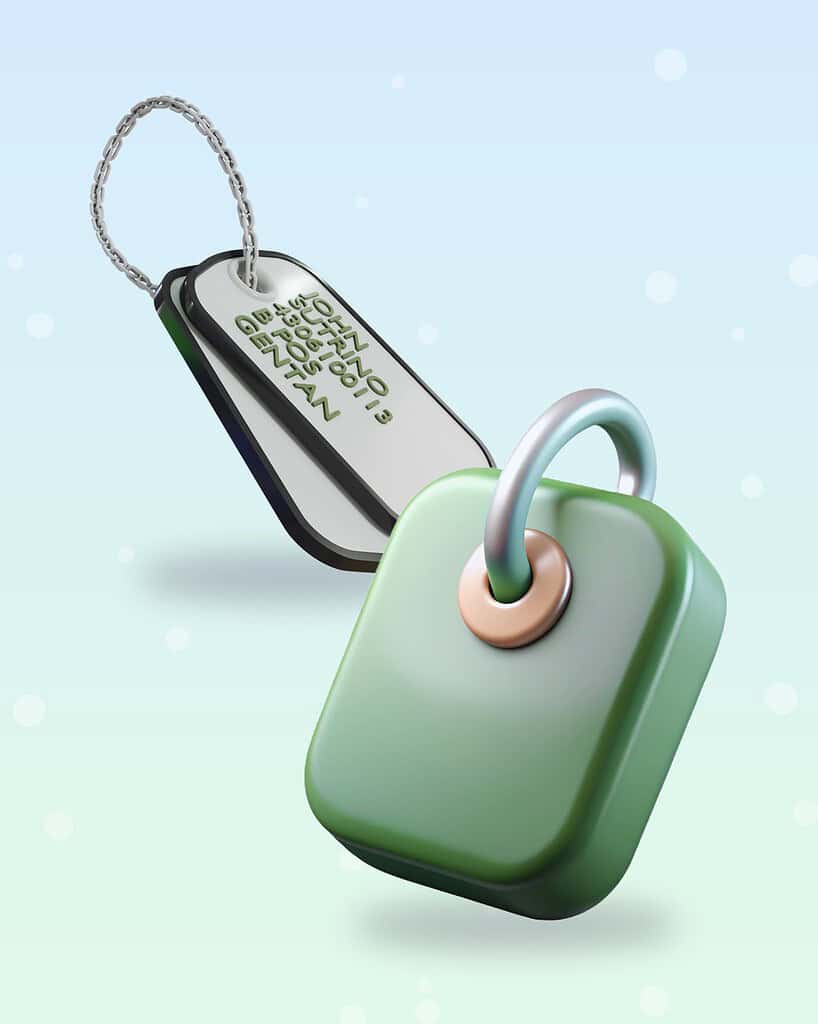
For an ID tag, durability really means readability over time, and the two materials lose it in very different ways.
How metal tags wear
Stainless steel is the endurance champion. It is hard, it shrugs off water and salt, and a deep engraving cut into steel is almost impossible to rub away. The trade-off is contrast. A bare engraving in polished steel is silver on silver, and it can be hard to read in dim light unless the letters are filled with black enamel. That fill can wear out before the engraving does.
Aluminum is a different story. Most colorful metal tags are anodized aluminum, where the color sits in a thin oxide layer on the surface. Engraving cuts through that layer to show bright metal underneath, which gives great contrast on day one. Aluminum is soft, though, and a tag that bangs against other tags, the D-ring, pavement and crate bars all day loses edges and shallow letters faster than any other common metal.
Brass reads well when new, but it tarnishes. Oxidation darkens the surface and settles into engraved letters, so the text slowly loses contrast unless you polish it. Brass-plated tags can also wear through to the base metal at the edges.
How acrylic tags wear
Acrylic does not rust, tarnish or corrode, and water does not hurt it. ACRYLITE lists water absorption of just 0.2% over 24 hours for its cast sheet. Sunlight is not much of a problem either. ACRYLITE describes its acrylic as naturally UV-stable and offers a 30-year warranty against yellowing on several clear products.
The main way acrylic loses readability is surface scratching. Acrylic is much softer than steel, so grit, concrete and other tags leave fine marks over time. How much that matters depends on how the text is made:
- Engraved text in cast acrylic sits below the surface, so scratches across the face rarely reach into the letters. The frosted white engraving keeps its contrast because the contrast comes from the material itself, not from a coating.
- Color-filled engraving adds a contrasting paint into the engraved letters. It reads beautifully, and because the paint sits below the surface it is fairly well protected, though a very deep scrape can still chip it.
- Printed text on top of acrylic is the weakest option. Ink on the surface takes every scratch directly, and it can rub off along the edges where the tag swings against the collar.
- Text printed or engraved on the back face of a clear tag and read through the front is a clever middle ground, because the acrylic itself shields the text from scratches.
Thickness matters too. A thicker acrylic tag holds a deeper engraving and is far less likely to snap at the ring hole, which is the most stressed spot on any tag.
Which wins?
For pure longevity under abuse, a deeply engraved stainless steel tag lasts longest. For readability at a glance, a laser-engraved cast acrylic tag with frosted or filled text usually beats bare steel, because a stranger sees high-contrast letters instead of silver on silver. Aluminum fades and wears fastest of the four, and brass needs polishing to stay legible.
To extend any tag’s life, keep tags from grinding together and clean them gently. Our guide on how to clean a pet ID tag explains why acetone, alcohol and window sprays are off limits for acrylic. If your current tag is already hard to read, our explainer on why pet ID tags fade walks through the causes material by material.
Which material is safer for small dogs, cats and chewers?
Safety comes down to three things: weight, noise and what happens when a tag gets chewed or snagged.
Weight. On a 10-pound dog or a cat, a few grams swinging from the throat every step adds up. Acrylic and aluminum are the light options. Stainless and brass are dense, so a large metal tag is heavy for a tiny neck. Our guide to lightweight tags for small and senior pets covers sizing and attachment in detail.
Noise. Metal tags jingle against each other and the collar hardware with every step, scratch and head shake. That constant sound sits right next to a dog’s ears.
“Perhaps the easiest hearing-related aid you can provide for your dog is to silence their dog tag.”
Marc Bekoff, Ph.D., ethologist and professor emeritus, Psychology Today
Bekoff argues that the jingle can get in the way of a dog listening to the world around them. Acrylic answers that without a silencer. It makes a soft tap instead of a ring, especially when it is the only tag on the collar.
Chewing and sharp edges. This is where metal earns its place. Pololu warns that acrylic is somewhat brittle and susceptible to cracking if it is dropped or hit, especially at sharp corners. A puppy who chews its own tag, or a housemate who chews it for them, can crack acrylic and leave a sharp edge. Metal will not shatter, but a bent or chewed metal tag can also develop burrs, and hard tags of any kind are not something to let a dog gnaw on. Choose rounded shapes in either material, check edges monthly and replace any tag that is cracked or sharp. For persistent chewers, a stainless slide-on tag that sits flat on the collar is the safer bet.
Do NFC smart tags work in acrylic and metal tags?
This is the category where the materials are not close. NFC (near field communication) is the tap-to-read technology in contactless cards and phones. An NFC tag holds a tiny chip connected to a coil antenna, and a phone powers and reads it with a magnetic field at 13.56 MHz.
Metal gets in the way of that field. NXP, one of the largest NFC chip makers, explains that when metal is close to an NFC antenna, the alternating magnetic field generates eddy currents in the metal that create an opposing field, absorb power and detune the antenna. STMicroelectronics shows the practical result in its antenna design guide: one example antenna tuned for open air had a read range of 7.5 cm, but placed close to a metal surface it gave no detection at all. Engineers can design special on-metal tags with ferrite shielding and retuned antennas, but a standard NFC inlay inside or against a metal tag is likely to read poorly or not at all.
Acrylic has the opposite property. It is an excellent electrical insulator (ACRYLITE lists a volume resistivity of 1.6 × 10¹⁶ ohm-cm) so it does not carry eddy currents and the magnetic field passes straight through. That is why most NFC pet tags use acrylic, resin or silicone bodies rather than steel.
Shiloh’s House Smart Tags are built this way: personalized, laser-engraved premium acrylic with a “Tap Phone Here” NFC back, waterproof, scratch-resistant and UV-stable. A finder taps the tag with a modern phone, no app needed, and a live profile opens with one-tap call, text and directions, voice notes from you, medical notes, multiple contacts and a reward if you offer one. You update that profile anytime in the free Lohji app (App Store or Google Play), and the same app can turn a photo of your pet into a cartoon Lohji for the profile. NFC is not GPS, so it does not track location; it helps the person who finds your pet reach you fast. Our explainer on how NFC pet tags work covers the technology step by step.
Acrylic that reads at a glance and with a tap
Shiloh’s House Smart Tags pair laser-engraved, UV-stable acrylic with an NFC profile any modern phone can open, and you can update it anytime in the free Lohji app.
How do you choose between an acrylic and a metal tag?
Run through these questions in order. The first one that clearly applies to your pet usually settles it.
- Does your pet chew tags, or live a rough working life? Choose stainless steel, ideally a deep-engraved or slide-on style. Durability beats everything else here.
- Is your pet a cat, a toy breed or a senior? Choose acrylic or aluminum. Light and quiet matter more than armor on a small neck.
- Does your pet scratch at the tag spot or have sensitive skin? Choose acrylic, which is metal-free.
- Do you want a smart tag that opens a profile with a tap? Choose acrylic or another non-metal body, because metal interferes with NFC.
- Does the jingle bother you or your dog? Choose acrylic, or add a silencer to metal tags.
- Is budget the deciding factor? Aluminum costs the least, though it wears fastest.
Whatever you pick, check the quality markers. For acrylic: cast rather than extruded, at least a few millimeters thick, laser-engraved or filled text, smooth rounded edges and a reinforced ring hole. For metal: real stainless rather than plated steel, deep engraving rather than a shallow scratch, and filled letters for contrast.
Many owners end up with both: a stainless rabies tag required by their county, plus an acrylic ID or smart tag for readability and a tap-to-call profile. That pairing gets the strengths of each material.
Considering a soft, silent tag instead of either? Read our side-by-side of silicone vs acrylic pet tags, with density, hardness, chew resistance, noise and NFC compared for dogs and cats.
Frequently asked questions
Are acrylic dog tags durable?
Yes, if they are made well. Cast acrylic is rigid and strong, does not rust or tarnish, absorbs very little water and resists yellowing in sunlight. Its weak points are surface scratches and cracking under a sharp impact or chewing. A thick, cast acrylic tag with laser-engraved text and rounded edges holds up to everyday wear for years. Heavy chewers are better off with stainless steel.
Are acrylic tags lighter than metal tags?
Per millimeter of thickness, yes. Acrylic has a density of 1.19 g/cm³ compared with 2.7 for aluminum, 8.0 for stainless steel and 8.5 for brass. Acrylic tags are usually made thicker, often 3 to 6 mm, so a finished acrylic tag weighs roughly what a thin stainless tag does, about 3 to 6 g, while giving you a larger, easier-to-read face.
Do acrylic pet tags scratch easily?
Acrylic is softer than metal, so its surface picks up fine scratches over time, especially when it rubs against other tags or concrete. Cast acrylic resists scratches better than extruded. Engraved text sits below the surface, so light scratches across the face rarely affect readability. Clean it with mild soap and water only, never acetone, alcohol or window spray, which can damage the surface.
Can dogs be allergic to metal tags?
Some dogs react to certain metals, and nickel is the metal most often linked to contact allergies. Type 304 stainless steel contains about 8% nickel, and plated tags can vary in what they contain. Most dogs wear metal tags without problems, but redness, hair loss or itching where the tag rests is worth showing your vet. An acrylic tag removes metal contact from that spot entirely.
Can you put an NFC chip in a metal dog tag?
It is possible but difficult. Metal near an NFC antenna creates eddy currents that absorb power and detune the antenna, so a standard NFC chip in or against metal may read poorly or not at all. Engineers use ferrite shielding and special on-metal antennas to work around it. Acrylic is an electrical insulator, so NFC reads through it without those workarounds.
Which tag material is quietest?
Silicone and acrylic are the quietest common tag materials. They make a soft tap instead of the bright jingle of metal on metal. Stainless steel and brass are the loudest, especially when several tags hang from one ring. If you keep metal tags, a rubber or neoprene silencer or a single slide-on tag cuts most of the noise. Fewer tags on the ring also helps.
Sources
- Physical Properties of ACRYLITE cast sheet, ACRYLITE, n.d.
- Why doesn’t ACRYLITE acrylic sheet yellow?, ACRYLITE (Röhm), n.d.
- Acrylic Laser Processing Guide, Trotec Laser, n.d.
- FAQ About Acrylic Plexiglass, Canal Plastics Center, n.d.
- Cast vs. Extruded Acrylic, Interstate Plastics, n.d.
- More information about acrylic, Pololu, n.d.
- Density of Common Materials (CRC Handbook values), AJ Designer, n.d.
- The nickel advantage, Nickel Institute, n.d.
- AN11564 PN7120 Antenna Design and Matching Guide, NXP Semiconductors, n.d.
- AN2972 How to design an antenna for dynamic NFC tags, STMicroelectronics, n.d.
- Dog Tags May Be an Unintended Pain in Their Ears, Psychology Today, 2019