Flying With a Dog for the Holidays: Airline Rules, Fees and a Calm Flight Plan
 Shiloh’s House Team
·
·
15 min read
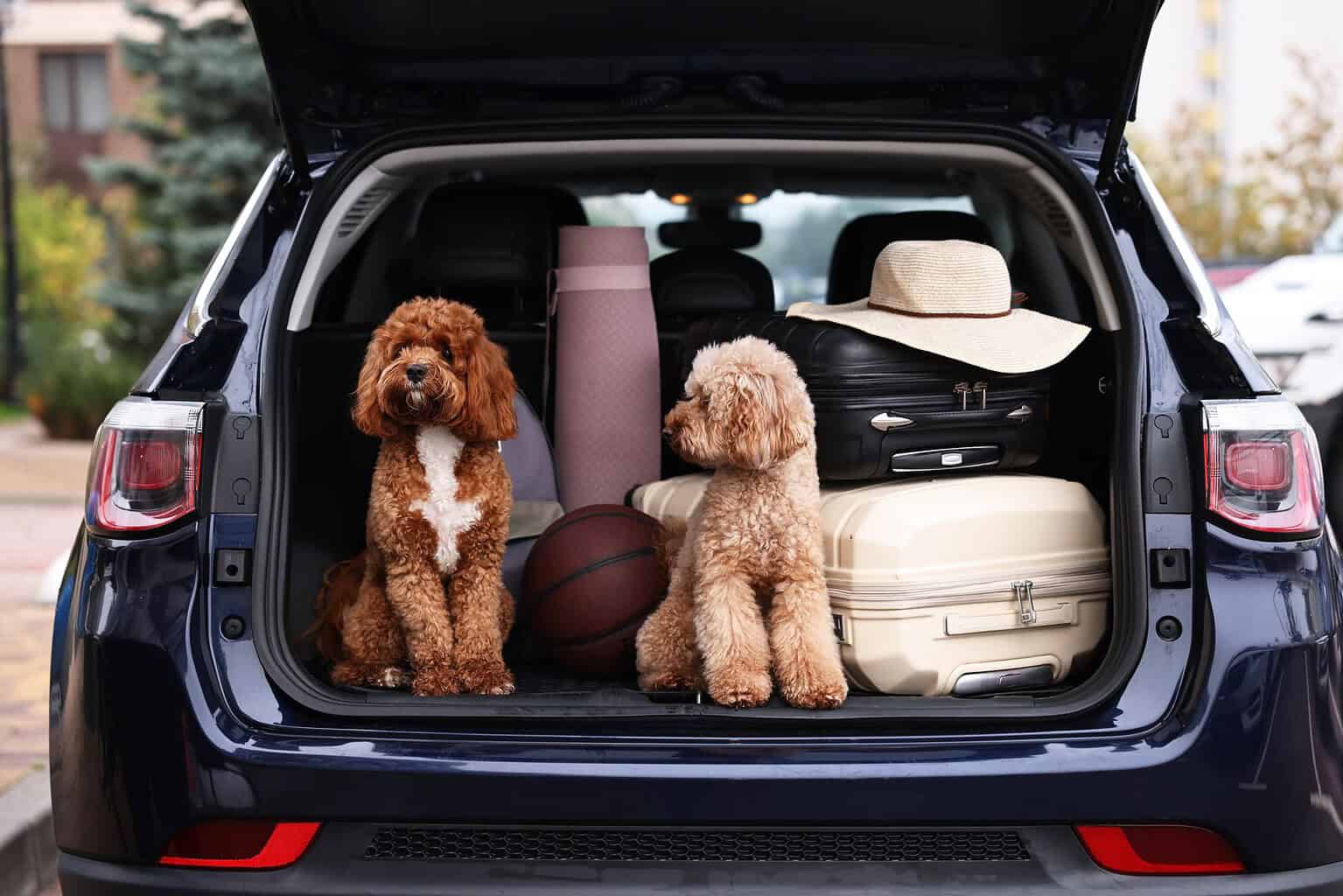
Flying with a dog is very doable if your dog is small enough to ride in a carrier under the seat in front of you. Most major US airlines charge about $100 to $150 each way for a dog in the cabin, cap the number of pets per flight and require the carrier to stay closed and stowed. Larger dogs have far fewer options, because most big airlines no longer accept pets as checked baggage. Book early, train your dog to love the carrier and skip sedatives.
Last updated: December 2025
How safe is flying with a dog, really?
The short version is that serious problems are rare, but they are not zero. US airlines must report every loss, injury or death of an animal they transport to the Department of Transportation. For calendar year 2024, carriers reported 10 deaths, 3 injuries and no lost animals, up slightly from 9 incidents in 2023.
Those numbers mostly reflect animals that travel apart from their owners, in the hold. A dog riding under your seat stays within arm’s reach, so you can watch their breathing, offer water during a layover and notice trouble early. That is one big reason veterinarians generally prefer the cabin for any dog who fits.
The everyday risks are stress, dehydration and the occasional escape in a busy terminal. A good plan covers all three.
Before you book, ask yourself a few honest questions:
- Does your dog fit? Most airlines want the dog able to stand up and turn around inside a carrier that slides under the seat.
- Is your dog healthy? Heart, breathing and chronic conditions deserve a vet conversation first.
- Is the trip worth it for them? For a short holiday visit, a trusted sitter or boarding kennel may be kinder.
Should your dog fly in the cabin, as checked baggage or in cargo?
There are three ways a dog can fly, and for most families only one is realistic.
In the cabin. Your dog rides in a soft or hard carrier under the seat in front of you, counted as your personal item or carry-on on most airlines. This is the standard option for small dogs and cats, and it is the one this guide focuses on.
Checked baggage. Your dog travels in a crate in a temperature-controlled section of the hold on your flight. This option has shrunk dramatically. American, Delta and United now accept checked pets only for active-duty military or State Department personnel on orders, according to Chewy’s October 2025 airline roundup. Southwest and JetBlue carry no pets in the hold at all. Alaska Airlines is the main large US carrier still accepting checked pets for regular travelers, for about $150 each way.
Cargo. Your dog ships as freight, often on a different flight, usually booked through an airline cargo division or a professional pet shipper. It can cost far more than a cabin ticket.
If your dog is too big for the cabin, compare a pet shipper quote with the cost and time of driving. For many holiday trips under a day’s drive, the car wins. Our pet travel checklist covers how to keep a dog safe on a road trip instead.
Trained service dogs are the exception to all of this. They fly free in the cabin at the handler’s feet, without a carrier, as long as the airline’s DOT forms are complete.
What do the major airlines charge for a dog in the cabin?
Pet fees climbed in 2024 and 2025. Delta raised its carry-on pet fee from $95 to $150 one way, travel journalist Peter Greenberg reported in July 2025, which put it level with American, United and JetBlue. Here is where the big US airlines stood in late 2025, based on airline pet pages and Chewy’s October 2025 roundup. Fees are per pet, per direction, and change often, so confirm on the airline’s site before you pay.
| Airline | In-cabin fee (one way) | Notes |
|---|---|---|
| American | About $150 | Soft carrier about 18 x 11 x 11 in, hard 19 x 13 x 9 in on mainline; pet plus carrier up to 20 lb |
| Delta | About $150 ($200 international) | Soft carrier about 18 x 11 x 11 in recommended |
| United | About $150 | Soft 18 x 11 x 11 in, hard 17.5 x 12 x 9 in; extra fee for long layovers |
| Southwest | About $125 | Domestic only, no cargo; carrier must fit under seat, check current size |
| Alaska | About $100 | Soft carrier about 17 x 11 x 9.5 in; checked pets about $150 |
| JetBlue | About $150 | Carrier up to 17 x 12.5 x 8.5 in; limited pets per flight; no cargo |
Do the round-trip math before you book. A holiday trip on American, Delta, United or JetBlue costs about $300 in pet fees alone, compared with about $200 on Alaska. Two pets usually means two fees and, on United, a second seat.
Watch the fine print on connections. United charges an additional fee for domestic itineraries with a stopover longer than four hours, so a nonstop is often cheaper as well as calmer.
What size carrier and weight limits apply under the seat?
The real rule on every airline is simple: the carrier must fit under the seat in front of you, with your dog inside able to stand, turn around and lie down comfortably, and it must stay there for the whole flight. The published dimensions are the airline’s best guess at what fits on its smallest aircraft.
Most airlines land in a similar range. A soft carrier of about 18 x 11 x 11 inches works on American, Delta and United. Alaska and JetBlue are a little tighter, at about 17 inches long and 9.5 or 8.5 inches tall. Height is the dimension that trips people up, because the space under the seat is shallow. United notes that carriers on its Boeing 737 MAX can be no more than 10 inches tall.
Soft-sided carriers are the practical choice for most dogs. They squish slightly to fit, and airlines such as Alaska do not accept hard-sided carriers in the cabin at all. Look for mesh on several sides, a leak-proof bottom and a locking zipper. Our airline-friendly carrier guide walks through what to look for, and the same features matter for small dogs.
Weight limits vary more than people expect. American sets a 20-pound limit for pet and carrier combined. United and Delta print no weight limit and simply require the fit. In practice, a dog over about 15 to 18 pounds rarely fits comfortably in an 11-inch-tall bag, whatever the policy says.
Which dogs can’t fly, and do emotional support animals still fly free?
Breed rules matter most for flat-faced dogs. Brachycephalic breeds such as Bulldogs, French Bulldogs, Pugs, Boston Terriers, Boxers and Shih Tzus have narrowed airways that make heat and stress harder to handle. That is why airlines that still carry checked pets, including Alaska and American, do not accept brachycephalic dogs in the hold, and American also halts checked pets to and from some desert cities in summer.
Inside the cabin, most big airlines do not ban flat-faced breeds. United, for example, says it has no weight or breed limitations for in-cabin pets. That does not make the cabin risk-free for them. Texas A&M veterinarians advise owners of flat-faced breeds to talk with both the airline and their vet before flying.
The other big rule change is about emotional support animals. In December 2020, the Department of Transportation finalized a rule under the Air Carrier Access Act that took effect on January 11, 2021. It defines a service animal as a dog individually trained to do work or perform tasks for a person with a disability, and it says airlines are no longer required to treat emotional support animals as service animals.
Major US airlines now treat emotional support dogs as pets, with the regular fee, carrier and size rules. A therapist’s letter no longer gets a large dog into the cabin for free.
Psychiatric service dogs are different. A dog trained to perform specific tasks for a person with a mental health disability is a service animal under the rule and still flies free. Airlines can ask for the DOT Service Animal Air Transportation Form, can limit each passenger to two service animals and can require the dog to fit at the handler’s feet or on their lap.
How do you plan a calm holiday flight, from booking to landing?

Holiday flights are fuller, delays are more common and terminals are louder, so a little extra planning goes a long way. Start as soon as you know your dates.
Book your dog when you book yourself. Airlines cap the number of pets per cabin, sometimes at just a handful per flight, and those spots go quickly around Thanksgiving, Christmas and New Year’s. Many airlines let you add a pet online. Others, especially for international trips, require a phone call. Do not buy a nonrefundable ticket until your dog’s spot is confirmed.
Choose the simplest route you can. The AVMA recommends booking a nonstop flight and avoiding layovers and busy holidays where possible. When you cannot avoid the holidays, avoid the peak days instead. Flying on the holiday itself or midweek is often quieter than the Sunday after Thanksgiving or the days right before Christmas. In colder months, the AVMA suggests afternoon flights, when temperatures are generally warmer.
Pick your seat with the carrier in mind. You cannot sit in an exit row or, on many airlines, the bulkhead row, because there is no seat in front of you to slide the carrier under. On some United aircraft, a window seat is the only economy seat where the carrier fits.
Spend the weeks before the trip making the carrier boring. Leave it open in the living room with a favorite blanket inside. Feed meals in it, toss treats in it and zip your dog in for a few minutes, then longer. Take short car rides with the carrier on your lap. Texas A&M veterinarians suggest driving around with the pet in the carrier so movement starts to feel normal. A dog who already naps in the bag at home will handle a two-hour flight far better.
On travel day, keep things predictable. A small meal a few hours before the flight is easier on the stomach than breakfast in the car, and VCA Animal Hospitals suggests lining the carrier with an absorbent pad and packing spares. Walk your dog thoroughly before you go inside the terminal, and again in a pet relief area after security if your airport has one. Check in at the counter, since most airlines need to see the pet and collect the fee there.
Security is the moment to slow down. The AVMA advises removing your dog from the carrier just before screening and sending only the empty carrier through the X-ray machine. You will carry your dog through the metal detector, so a snug harness with the leash already clipped on is far safer than a loose collar. Once you are through, step away from the belt to a quiet corner and put your dog straight back in the carrier.
On the plane, tell the flight attendant you have a pet on board, keep the carrier zipped and under the seat, and resist opening it mid-flight. Offer a few ice chips or sips of water through the door if your dog seems thirsty. After landing, head straight to a relief area before you collect bags or meet family at the curb.
Should you sedate your dog for a flight?
For most dogs, no. Sedatives and tranquilizers can lower blood pressure, heart rate and breathing at the same time a dog is dealing with cabin pressure equal to roughly 8,000 feet of altitude, and they can blunt a dog’s ability to stay balanced when the carrier is moved. The AVMA says these drugs can increase the risk of heart or respiratory problems and are generally not allowed by airlines. American Airlines goes further and says it does not accept pets that have been sedated or tranquilized.
“For animals that are flying, sedation is generally not advised because it can potentially interfere with an animal’s ability to breathe normally during changes in altitude or to regulate its body temperature.”
Dr. Lori Teller, clinical assistant professor, Texas A&M College of Veterinary Medicine & Biomedical Sciences
That does not mean anxious dogs are out of luck. There is a real difference between heavy sedation and anti-anxiety or anti-nausea medicine your vet prescribes for travel. VCA notes that vets sometimes use medications such as trazodone or gabapentin, along with tools like snug calming wraps and pheromone collars, to take the edge off travel stress.
If your vet does recommend something, do a trial run at home a week or two before the trip so you know how your dog reacts and how long it lasts. Never give a human medication or a dose borrowed from another pet.
What paperwork do you need for domestic and international trips?
For a domestic flight with your dog in the cabin, many airlines do not require a health certificate. Your destination state and your airline can, though, and requirements are stricter for checked pets and for Hawaii. The AVMA notes that when an airline does require a health certificate, it generally must be signed by your veterinarian within 10 days before travel. Schedule that appointment carefully, because a holiday delay can push a return flight outside the window.
Whatever the rules say, carry proof of a current rabies vaccine, a recent photo of your dog and your vet’s phone number.
International trips take much more lead time. Every country sets its own entry rules, which can include a microchip, specific vaccines, blood tests, import permits and an endorsed health certificate. Some countries require months of preparation, so check the USDA APHIS pet travel site and your destination’s rules as soon as the trip is a possibility.
Coming back into the United States has its own rules. Since August 1, 2024, the CDC requires every dog entering or returning to the US to be at least 6 months old, to have a microchip readable by a universal scanner and to arrive with a CDC Dog Import Form receipt. For dogs that have been only in dog rabies-free or low-risk countries in the past 6 months, that free online form is the only document the CDC requires, and the receipt is valid for 6 months. Dogs that have been in high-risk countries face extra steps.
That microchip requirement is a good reminder to check that your dog’s chip is registered to your current phone number before any trip. Our guide on microchips versus smart tags explains why you want both.
What should you do if your dog gets loose at the airport?
Airports are one of the worst places for a dog to bolt. There is traffic at the curb, open space near the runways and thousands of strangers. Prevention starts with three layers of ID that all match your trip.
- A collar or harness tag with your cell number and your dog’s name. See what to put on a dog ID tag for the essentials.
- A registered microchip with up-to-date contact details.
- A carrier label with your name, cell number, flight details and destination address, plus a recent photo of your dog tucked in a pocket.
If the worst happens, act fast. Tell the nearest airline agent or TSA officer right away and ask them to alert airport operations and airport police, who can warn staff on the ramp. Do not chase your dog toward traffic. Crouch, call in a calm voice and use treats or a familiar squeaky toy. Leave your carrier and an item that smells like you near where your dog was last seen.
Then widen the search. Call local shelters and animal control, post on neighborhood lost pet groups for the airport area and keep your phone charged and on. Scared dogs can cover a lot of ground, as our look at how far a lost dog can travel shows, so do not limit the search to the terminal.
Flying for the holidays? Pack an ID that travels with you
A Shiloh’s House Smart Tag opens a live profile when anyone taps it with a phone, no app needed, so a finder at the airport or your destination can call or text you in one tap.
Frequently asked questions
How much does it cost to fly with a dog?
In late 2025, most major US airlines charged about $100 to $150 each way for a dog in the cabin. American, Delta, United and JetBlue were at about $150, Southwest about $125 and Alaska about $100. That fee is per pet and per direction, so a round trip usually costs $200 to $300 before any layover surcharges or second seats.
Can my dog sit on my lap during the flight?
Generally no. On most airlines, your dog must stay inside a closed carrier stowed under the seat in front of you for the entire flight, including taxi, takeoff and landing. Only trained service dogs can ride outside a carrier, at your feet or on your lap. Opening the carrier mid-flight also raises the risk of an escape in the aisle.
Is there a weight limit for dogs in the cabin?
Some airlines set one and some do not. American caps pet and carrier at 20 pounds combined, while United and Delta print no weight limit and simply require that the carrier fit under the seat with your dog able to stand and turn around. In practice, most dogs over about 15 to 18 pounds are too big for the space.
Can a large dog fly in the cabin?
Only if it is a trained service dog. Large pet dogs, including emotional support dogs, cannot ride in the cabin on major US airlines because they will not fit in an under-seat carrier. Your options are an airline that still accepts checked pets, such as Alaska, a professional pet shipper using cargo, or driving to your destination instead.
Do I need a health certificate to fly with my dog?
It depends on the airline, the destination and how your dog travels. Many airlines do not require one for domestic cabin travel, but checked pets, Hawaii and international trips usually do. When one is required, it generally must be issued by your veterinarian within 10 days of travel. Always carry proof of rabies vaccination either way.
Should I give my dog anything to calm them before flying?
Do not sedate your dog unless your veterinarian specifically recommends it. The AVMA warns that sedatives can raise the risk of heart and breathing problems at altitude, and some airlines refuse sedated pets. Ask your vet about non-sedating anti-anxiety options, try any medication at home first, and spend a few weeks training your dog to relax in the carrier.
Sources
- Bureau of Transportation Statistics — Air Travel Consumer Report: December 2024, Full Year 2024 Numbers (2025)
- Chewy — The Complete Airline Pet Policy Guide for U.S. Airlines (2025)
- Peter Greenberg Travel Detective — Flying With Pets Is Getting Pricier (2025)
- United Airlines — Traveling with pets (2025)
- American Airlines — Traveling with pets (2025)
- U.S. Department of Transportation, Federal Register — Traveling by Air With Service Animals, final rule (2020)
- CDC — Entry Requirements for Dogs from Dog-Rabies Free or Low-Risk Countries (2024)
- American Veterinary Medical Association — Traveling with your dog or cat (n.d.)
- Texas A&M Veterinary Medicine & Biomedical Sciences — Holiday Travel With Pets Part 2: How To Safely Fly With Your Pets (2021)
- Texas A&M Veterinary Medicine & Biomedical Sciences — Veterinarian-Approved Tips For Traveling With Pets (2024)
- VCA Animal Hospitals — Flying with Your Dog in the Airplane Cabin (n.d.)