Can Dogs Eat Carrots? Raw, Frozen, Baby Carrots & How Much
 Shiloh’s House Team
·
·
15 min read
Yes, dogs can eat carrots, and plain carrots are one of the best low-calorie treats you can share. Raw, steamed, boiled or frozen carrots are all fine when served plain and cut to a size that suits your dog. Baby carrots work too, though small dogs need them halved or sliced. Skip carrot cake, which can hide raisins or xylitol, and glazed carrots made with butter and sugar. Keep carrots, like all treats, under 10% of daily calories.
Last updated: November 2026
Can dogs eat carrots?
Carrots are safe for dogs. They are not toxic, they are mostly water and fiber, and a few pieces barely register in a dog’s daily calorie budget. The American Kennel Club puts it simply: dogs can eat carrots, and the vegetable can serve as a healthy, low-calorie snack. The AKC also notes that carrots are an excellent source of vitamin A, potassium and fiber.
That is why carrots show up so often on veterinary treat lists. The clinical nutrition team at Tufts University’s Cummings School of Veterinary Medicine includes raw baby carrots and steamed carrots on its list of healthy, relatively low-calorie treat options for dogs. Carrots also appear as an ingredient in plenty of commercial dog foods and treats.
The risk comes from what happens around the carrot, not the carrot itself. Three things cause nearly every problem:
- Size. A whole carrot or a baby carrot gulped in one piece can lodge in a small dog’s throat.
- Add-ons. Butter, brown sugar, honey glazes, salt and the raisins in carrot cake turn a healthy vegetable into a problem.
- Amount. Too much fiber at once can mean gas, loose stool or vomiting.
If you are checking several foods before a family meal, our guide to foods dogs can’t eat covers the ingredients that should never reach the dog bowl.
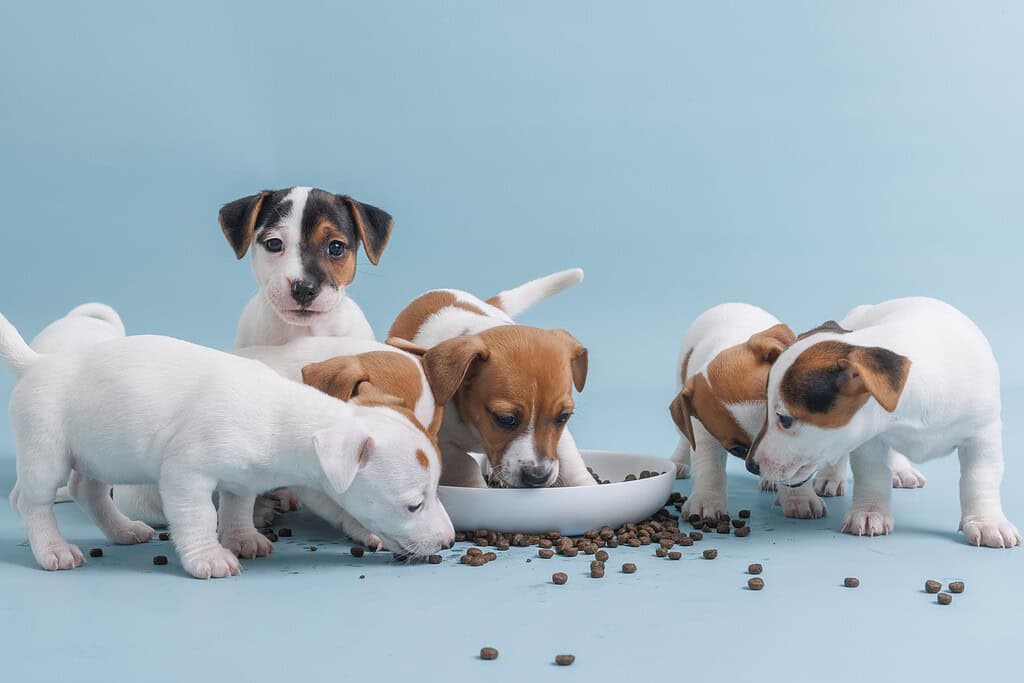
Are raw, cooked or frozen carrots better for dogs?
All three are fine. The best choice depends on your dog’s teeth, age and chewing style.
Raw carrots are crunchy, cheap and need no prep beyond washing and cutting. Dr. Kelly Hood, a veterinarian quoted in Rover’s vet-reviewed guide, says raw or frozen carrots are generally best because nothing has been added to them. The AKC recommends washing or peeling carrots to remove dirt and pesticide residue first.
Cooked carrots are softer, which makes them a better pick for senior dogs, dogs with sore or missing teeth, and tiny breeds. Steam or boil them in plain water, let them cool, and serve them without butter, oil, salt or seasoning.
Frozen carrots give a dog something cold and firm to work on, which is why the AKC says some vets recommend cold or frozen carrots for teething puppies to ease discomfort. Frozen pieces are harder than raw ones, so size matters even more. For puppies, a carrot stick that is too long to swallow whole, held or watched closely, is safer than a pile of small frozen coins that can be gulped.
Canned carrots are the one form to skip. Rover’s guide advises against them because many are packed with added sugar and sodium.
If your dog likes crunchy vegetables, green beans work the same way and are just as easy to freeze.
Are baby carrots safe for dogs?
Yes. Baby carrots are simply full-size carrots that have been cut and peeled into small, uniform pieces, and they are a handy, ready-to-go treat. USDA FoodData Central lists raw baby carrots at 35 calories per 100 grams, slightly lower than whole raw carrots, with 2.9 grams of fiber and about 4.8 grams of natural sugar.
Per piece, that works out to very little. Tufts’ clinical nutrition team counts 4 baby carrots (40 grams) at about 16 calories, so one baby carrot is roughly 4 calories.
Their shape is the catch: smooth, firm and about the width of a small dog’s throat. For dogs under about 20 pounds, cut each baby carrot lengthwise into halves or quarters. Medium and large dogs can usually have them whole, though fast eaters do better with pieces too.
Rover’s guide quotes a simple portion idea: a baby carrot for small dogs and a whole carrot for medium to large dogs. That fits neatly inside the 10% treat rule for most healthy adult dogs, which we break down by weight below.
Keep the bag sealed and out of reach. A dog who finds an open bag will not stop at one.
How should you cut carrots for your dog’s size?
Choking is the most real risk carrots pose, and it is almost entirely preventable with a knife. The AKC advises cutting whole carrots and even carrot sticks into bite-size chunks before feeding them. Dr. Lindsey Bullen, a board-certified veterinary nutritionist interviewed by Rover, gives the same advice, especially for smaller dogs, to help prevent both choking and digestive blockages.
The goal is a piece that is either small enough to swallow safely without chewing, or so long that your dog has to chew it before it can go down. The dangerous middle ground is a firm, round piece roughly the width of your dog’s windpipe. A whole baby carrot for a Chihuahua, or a thick carrot coin for a Beagle that inhales its food, sits right in that zone.
For toy breeds under 10 pounds, think tiny. Grate raw carrot over the food bowl, or cut thin matchsticks and then chop them into pieces no bigger than a pea. Cooked carrot mashed with a fork is even safer for very small or senior dogs, since it simply cannot block an airway the way a hard chunk can.
Small dogs from about 10 to 25 pounds do well with baby carrots quartered lengthwise, or thin rounds cut from a whole carrot no thicker than a coin. Slicing lengthwise first and then across breaks up the round shape that makes carrot pieces risky.
Medium dogs from about 25 to 50 pounds can usually handle a baby carrot cut in half lengthwise, or carrot sticks about the size of your little finger. Many dogs this size chew carrots well, but if yours tends to swallow treats whole, go one size smaller.
Large and giant dogs over 50 pounds can usually have whole baby carrots or sticks cut from a full-size carrot. The bigger concern with these dogs is how they eat. A Labrador who swallows a whole raw carrot in two gulps is taking a bigger chance than a slow-chewing Great Dane. Some owners give big dogs a whole, long carrot to gnaw on. That is fine for a careful chewer who is supervised, but take it away once it has been worn down to a stub that could be swallowed.
A few habits make any size safer. Always supervise carrot time, especially the first few times. Do not toss carrot pieces into the air for your dog to catch, because a piece caught mid-flight goes straight to the back of the throat. Give pieces one at a time to fast eaters instead of a pile. If you have more than one dog, separate them for treats so nobody rushes to beat a housemate.
Know the signs of trouble, too. A dog who is choking may paw at the mouth, gag, drool heavily, cough without producing anything, or struggle to breathe. Retching or repeated attempts to swallow after eating a hard piece can also point to something stuck. Any of those calls for your veterinarian or an emergency clinic right away.
Finally, remember that frozen carrots are harder and slipperier than raw ones, and cooked carrots are softer. Adjust the cut to the texture. A raw carrot coin that is fine for a 30-pound dog may be too hard when frozen, while a steamed piece the same size will squash easily.
How many carrots can a dog eat a day?
Treats of any kind, carrots included, should make up no more than 10% of a dog’s daily calories. Tufts’ veterinary nutritionists use that rule so treats do not unbalance a complete diet. Their examples: a 10-pound dog averages about 300 calories a day, so its treat budget is about 30 calories, while an average 75-pound dog needs about 1,400 calories, leaving about 140 for treats.
“Carrots can be given daily to dogs as a treat.”
Dr. Nell Ostermeier, veterinarian and spokesperson for Figo Pet Insurance, Rover (2024)
The table below uses the standard veterinary estimate for a neutered adult dog (resting energy requirement of 70 times body weight in kilograms to the 0.75 power, multiplied by 1.4, as shown in AAHA’s nutrition guidelines). Your dog’s real number can be 30% higher or lower, according to the Merck Veterinary Manual, so treat these as starting points.
| Dog weight | Approx. daily calories | 10% treat budget | Ceiling in baby carrots (about 4 cal each) | Sensible everyday serving |
|---|---|---|---|---|
| 5 lb | 180 | 18 | 4 | 1 baby carrot, finely chopped |
| 10 lb | 300 | 30 | 7 | 1 to 2 baby carrots, quartered |
| 20 lb | 510 | 51 | 12 | 2 to 3 baby carrots, halved |
| 30 lb | 690 | 69 | 17 | 3 to 4 baby carrots |
| 50 lb | 1,020 | 102 | 25 | 1 medium carrot (about 25 cal) in sticks |
| 75 lb | 1,380 | 138 | 34 | 1 to 2 medium carrots |
| 100 lb | 1,710 | 171 | 42 | 2 medium carrots |
The “ceiling” column assumes carrots are the only treat that day, which is rarely true. The everyday column leaves room for training rewards and a chew. If you use carrots for training, our roundup of best dog training treats covers how to mix them with higher-value rewards.
Are carrots good for a dog’s teeth?
A little, but carrots are not the “natural toothbrush” the internet often claims.
The AKC says chewing on carrots can help improve a dog’s dental health, and crunching a firm vegetable does rub some soft plaque off tooth surfaces and gets saliva flowing. But most dogs bite a carrot a few times with their back teeth and swallow. The front teeth, the canines and, most importantly, the gumline get very little contact. Gum disease starts at and below the gumline, which is exactly where a carrot cannot reach.
Rover’s vet-reviewed guide puts it plainly: crunchy carrots may offer some oral health benefits, but they are not a replacement for daily brushing and the regular dental cleanings your vet recommends. A carrot also cannot remove tartar, the hardened plaque that needs a professional cleaning under anesthesia.
Think of carrots as a crunchy snack, not dental care. What works:
- Daily brushing with a dog toothpaste. Never use human toothpaste, which can contain xylitol. Our step-by-step guide on how to brush your dog’s teeth walks you through it.
- Dental chews or water additives that carry the Veterinary Oral Health Council (VOHC) seal, which means they passed plaque or tartar testing.
- Regular dental checks at your vet.
If your dog already has bad breath, red gums or brown buildup, a carrot habit will not fix it. Book an exam first.
Can carrots help a dog lose weight?
They can help, mainly by replacing higher-calorie treats. Dr. Bullen, the veterinary nutritionist Rover interviewed, says carrots are a great low-calorie alternative to fatty store-bought treats for dogs that are overweight or on a strict diet, since they are mostly water.
The math is what makes them useful. A medium raw carrot (61 grams) has about 25 calories, according to USDA data, and a baby carrot about 4. For a 10-pound dog with a treat budget of roughly 30 calories a day, that leaves room for several carrot pieces where a single rich biscuit might have used it all. Swapping two or three biscuit treats a day for carrot pieces can trim a meaningful share of a small dog’s treat budget without your dog feeling shortchanged.
A few cautions keep the swap working:
- Carrots still count. Natural sugars are fine in moderation, but a dog fed carrots by the bagful can still gain weight. Keep them inside the treat budget.
- Use the full weight-loss plan. Treat swaps help, but weight loss in dogs comes mostly from measured meals and the right food. Your vet can calculate a target based on ideal weight.
For dogs that need a bit more volume to feel full, plain pumpkin and green beans are other low-calorie, fiber-rich options vets often mention.
Diet notes that travel with your dog
If your dog has food allergies or a special diet, a Shiloh’s House Smart Tag lets anyone who finds them tap the tag and see your medical notes and contacts, no app needed.
Can dogs eat carrot cake or glazed carrots?
No. The carrot is not the problem. The other ingredients are.
Carrot cake often contains raisins, and raisins are one of the most serious food risks for dogs. VCA Animal Hospitals warns that even one grape or raisin can cause kidney failure in dogs, and names carrot cake specifically as a baked good that can contain them. Pet Poison Helpline notes there is no well-established toxic dose, so it treats even 1 to 2 raisins as potentially toxic and worth treating.
Sugar-free or “keto” carrot cakes and frostings add another danger: xylitol. Pet Poison Helpline explains that xylitol causes a rapid drop in blood sugar and liver failure in dogs, and that it can become life-threatening in as little as 15 minutes. On top of that, regular carrot cake brings sugar, butter or oil, cream cheese frosting, nuts and sometimes nutmeg, which together can mean vomiting, diarrhea or worse in a sensitive dog.
Glazed carrots are usually cooked in butter with brown sugar or honey. They are not toxic the way raisins are, but the added fat and sugar are exactly what you do not want, particularly for dogs prone to pancreatitis or weight gain. Serve your dog a few plain pieces set aside before the glaze goes on.
The same holiday logic applies to sweet potatoes: plain is great, but marshmallow-topped casserole is not a dog food.
Can diabetic dogs eat carrots?
Usually, yes, with your vet’s sign-off and some consistency. Carrots do contain natural sugar, about 4.7 grams per 100 grams raw according to USDA data, so it is a fair question. But they also carry fiber, and in the small amounts that count as a treat, the sugar load is low.
The veterinarians at Mar Vista Animal Medical Center write that treats for diabetic dogs should ideally be small and low in carbohydrates, that high-fiber vegetable bits usually work, and that baby carrots “should fit the bill.” They also stress that every treat works against the insulin you give, so treat calories need to be counted and meals adjusted. Their goal for diabetic dogs: two similar meals about 12 hours apart, with less than 10% of daily nutrients coming from treats.
If your dog was recently diagnosed, our guide to diabetes in dogs covers signs, treatment and daily life with insulin.
Can dogs be allergic to carrots?
It is possible but uncommon. A 2016 review in BMC Veterinary Research pooled 297 dogs with confirmed food allergies and found the most frequent triggers were beef (34%), dairy (17%), chicken (15%) and wheat (13%). Carrots did not appear on the list. The same review found soy, corn, egg, pork, fish and rice reported less often.
Uncommon is not never, though. Food reactions usually show up as itching, paw licking, ear infections or red skin, and sometimes vomiting or diarrhea.
A far more common issue is plain digestive upset. Because carrots are high in fiber, Rover’s vet-reviewed guide notes that too many, or carrots eaten too fast, can cause diarrhea, vomiting or gas. Dr. Hood recommends introducing them gradually and in small quantities. Start with a piece or two, watch the next day’s stool, and build from there.
What about vitamin A? Dogs can convert beta-carotene from plants into vitamin A, unlike cats, according to Merck. Merck also notes there are no known cases of poisoning from beta-carotene itself; vitamin A toxicity in dogs comes from things like liver, cod liver oil and supplements. Treat-size carrot portions are not a concern.
If your dog does have a food allergy or a special diet, note it on their Smart Tag profile. In the free Lohji app (App Store, Google Play), you can add medical notes that a finder sees when they tap the tag, so nobody hands your lost dog the wrong snack. And yes, Lohji also has a “Hungry” sticker for the dog who stares at you every time you open the crisper drawer.
Frequently asked questions
Can dogs eat carrots every day?
Yes, most healthy dogs can have a few carrot pieces daily. Dr. Nell Ostermeier, a veterinarian quoted by Rover, says carrots can be given daily as a treat. Keep the amount inside your dog’s 10% treat budget, which works out to one or two baby carrots for a 10-pound dog and a medium carrot or so for a 50-pound dog, and introduce them slowly.
Can puppies eat carrots?
Yes. Puppies can have small amounts of plain carrot once they are eating solid food, and the AKC notes some vets recommend cold or frozen carrots to ease teething discomfort. Cut pieces small or offer a long stick your puppy must chew, and always supervise. Treats should stay a small part of a growing puppy’s diet, which needs balanced puppy food.
Should I peel carrots before giving them to my dog?
Peeling is optional. Rover’s vet-reviewed guide says whole carrots, including the skin, are safe for dogs. The AKC recommends washing or peeling carrots to remove dirt and pesticide residue. A good scrub under running water is enough for most carrots, and baby carrots are already peeled, though a quick rinse before serving is still a good habit.
Can dogs eat carrot tops?
Rover’s vet-reviewed guide says whole carrots are safe for dogs, including the leafy greens. Wash the tops well, chop them finely, and offer only a small amount, since leafy greens are fibrous and can upset some stomachs. Never feed greens that may have been sprayed with garden chemicals, and skip any wild plant that only looks like a carrot top.
What should I do if my dog ate a whole carrot?
Carrot is not toxic, so the concern is a piece stuck in the throat or gut. Watch for gagging, drooling, repeated swallowing, retching, vomiting, belly pain or not eating. Call your vet if you see any of these, and right away if your dog is small or struggling to breathe.
Are carrots better than store-bought dog treats?
For calories, usually yes. One baby carrot has about 4 calories, so you can give several pieces for the cost of one rich biscuit. Carrots are not more motivating than meat-based treats for every dog, though, so many owners use carrots for everyday snacks and keep richer rewards for training. Both still belong inside the 10% treat budget.
Sources
- USDA FoodData Central, Carrots, raw (SR Legacy 170393) (2026)
- USDA FoodData Central, Carrots, baby, raw (SR Legacy 168568) (2026)
- American Kennel Club, Can Dogs Eat Carrots? (2025)
- Rover, Can Dogs Eat Carrots? Plus 7 Great Dog Carrot Recipes (2024)
- Tufts Petfoodology, Treat Options for Dogs and Cats Without Unbalancing Their Diet (2021)
- AAHA, Energy Requirement Calculations, Nutrition and Weight Management Guidelines (2021)
- Merck Veterinary Manual, Nutritional Requirements of Small Animals
- Merck Veterinary Manual, Toxicoses in Animals From Human Multivitamins and Supplements (2025)
- VCA Animal Hospitals, Prevent Pet Poisoning This Memorial Day
- Pet Poison Helpline, Kids Health and Safety Risks to Pets (2020)
- Mar Vista Animal Medical Center, Diet for the Diabetic Dog
- Mueller, Olivry and Prélaud, Common Food Allergen Sources in Dogs and Cats, BMC Veterinary Research (2016)