Can Dogs Eat Sweet Potatoes? Safe Amounts, Skin, Casserole and Prep
 Shiloh’s House Team
·
·
15 min read

Yes, dogs can eat sweet potatoes, as long as they are fully cooked, peeled, plain and fed in moderation. A spoonful of mashed or cubed sweet potato is a good source of fiber and beta-carotene and only about 16 calories. Skip raw sweet potato, the skin, and every holiday version made with butter, brown sugar, marshmallows, nutmeg or sugar-free sweeteners. Keep all treats, sweet potato included, under 10 percent of your dog’s daily calories.
Last updated: November 2026
Can dogs eat sweet potatoes?
Yes. Plain, cooked sweet potato is one of the safest people foods you can share with a dog. It is not toxic to dogs, it is soft and easy to portion, and it already shows up as an ingredient in plenty of commercial dog foods and treats.
The American Kennel Club answers the question with a clear yes, and PetMD, in an article reviewed by veterinarian Dr. Jennifer Coates, says dogs can eat sweet potatoes as long as they are fully cooked, plain and served in moderation. Both sources draw the same lines: cook it, peel it, keep it plain and keep the portion small.
The trouble starts with what we do to sweet potatoes in November. By Thanksgiving, which falls on November 26 this year, most of the sweet potato in an American kitchen is buried under butter, brown sugar, marshmallows, pecans or pie spice. That is the version your dog is most likely to beg for, and it is the version they should not get.
Here is the quick version of what is fine and what is not:
- Fine: baked, boiled, steamed or microwaved sweet potato, peeled, with nothing added.
- Not a good idea: raw sweet potato, large chunks, and the skin.
- Keep away: casserole, candied yams, sweet potato pie, fries and anything with sugar-free sweeteners.

Are sweet potatoes good for dogs?
In small amounts, they can be. Sweet potato is a starchy vegetable, so most of its calories come from carbohydrate, but it brings more to the bowl than a plain starch.
According to USDA FoodData Central, 100 grams of boiled, peeled sweet potato contains 76 calories, 2.5 grams of fiber and about 5.7 grams of natural sugar. It also delivers 787 micrograms of vitamin A, in the form of beta-carotene, the orange pigment the body converts to vitamin A. One cup of mashed sweet potato, about 328 grams, has 249 calories and 8.2 grams of fiber.
Here is what those nutrients do:
- Fiber supports normal digestion. AKC calls sweet potatoes an excellent source of dietary fiber that helps the digestive system work more effectively.
- Beta-carotene becomes vitamin A, which PetMD says supports eye health, immune function and normal cell growth.
- Vitamins and minerals include vitamin C, vitamin B6, manganese, potassium and iron.
- Low fat makes plain sweet potato a lighter choice than most table scraps.
There is a limit to the upside. A complete and balanced dog food already provides the vitamins your dog needs, so sweet potato is a treat, not a supplement. Dr. Rachel Barrack, a veterinarian quoted by the AKC, said the health benefits are the same for dogs as for people, then added a warning about overdoing it.
“Too much of a good thing can cause bone and muscle weakness, due to excessive vitamin A.”
Dr. Rachel Barrack, veterinarian, Animal Acupuncture, American Kennel Club (2026)
That risk comes from feeding large amounts day after day, not from a spoonful on Thanksgiving. AKC also stresses that carbohydrates like sweet potato should never become a dog’s main source of nutrition. Animal protein and a complete diet come first.
Can dogs eat raw sweet potatoes or sweet potato skin?
No to raw, and it is best to skip the skin too.
Raw sweet potato is hard, dense and difficult to digest. AKC says you should never feed it, because it is tough to chew, can upset your dog’s stomach and could cause an intestinal blockage. PetMD agrees, warning that large raw or undercooked pieces increase the risk of choking and gastrointestinal upset. A dog that grabs a raw chunk off the cutting board and gulps it whole is the classic scenario.
The skin is not toxic, but both AKC and PetMD recommend peeling. The skin is fibrous and harder to digest, and PetMD notes it can add to choking or blockage risk, especially in small dogs. If your dog eats a bit of peel, it is unlikely to cause trouble, but it should not be part of the serving you prepare.
Signs that a piece of sweet potato is causing a problem include repeated vomiting, drooling, a tense or painful belly, straining, or not wanting to eat. Those can point to an obstruction and need a vet visit the same day. Our guide on what to do if your dog ate something it shouldn’t walks through the first steps.
Can dogs eat sweet potato casserole, pie or candied yams?
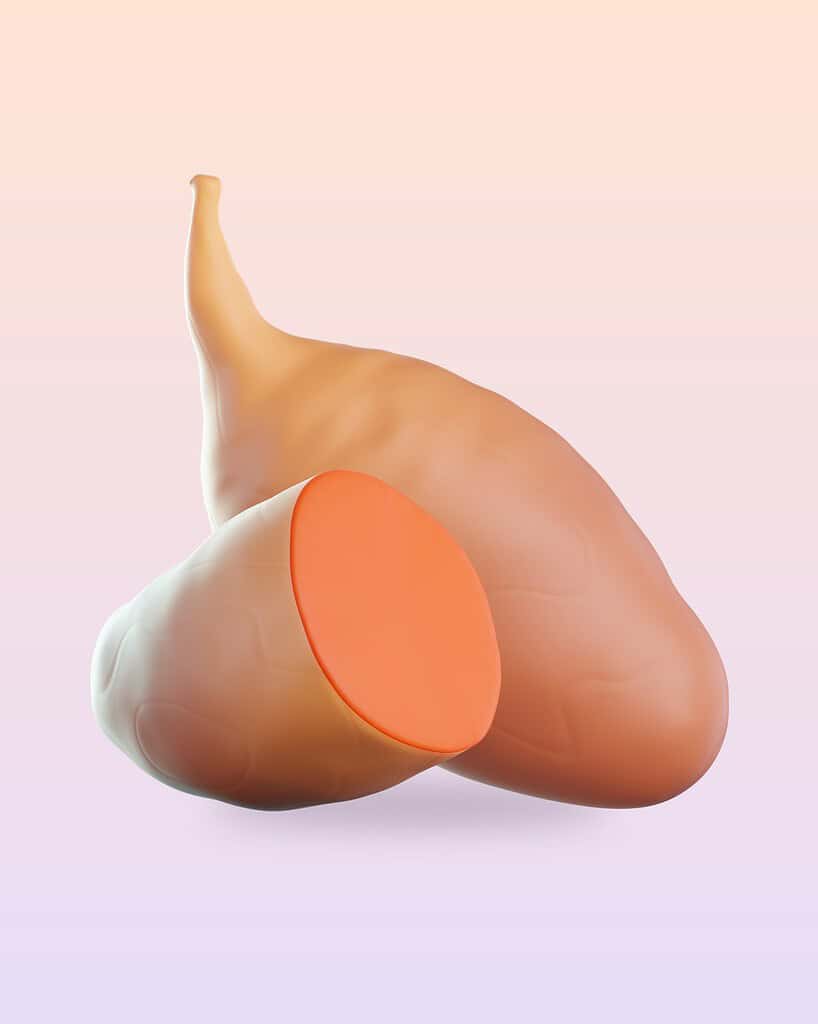
No. These dishes start with a safe vegetable, then pile on ingredients that range from unhealthy to dangerous. The sweet potato is not the problem. Everything mixed into it is.
Sweet potato casserole is the most common holiday version. A typical recipe adds butter, brown or white sugar, eggs, vanilla, sometimes cream, and a topping of marshmallows or a pecan, butter and sugar crumble. The result is high in fat and sugar and much higher in calories than plain sweet potato. Fat is the biggest concern. The ASPCA warns that feeding foods high in fat to dogs can lead to pancreatitis, an inflammation of the pancreas, and it recommends sticking to your pet’s normal diet on Thanksgiving. A rich side dish your dog is not used to is exactly the kind of food that warning is about.
Candied yams are usually sweet potatoes cooked in butter and brown sugar or syrup. They carry the same fat and sugar load as casserole, just without the topping.
Sweet potato pie brings in pie spice. Most recipes call for cinnamon, ginger and nutmeg. Nutmeg contains a compound called myristicin. PetMD reports that nutmeg poisoning in dogs can occur with as little as 1 teaspoon of ground nutmeg, though the amount in a slice of pie is usually too small to do more than upset the stomach. Signs of true nutmeg toxicity include vomiting, disorientation, a racing heart, high blood pressure and, in severe cases, seizures, and they can last up to 48 hours.
Then there is xylitol. This sugar substitute appears in some sugar-free and reduced-sugar pies, syrups, toppings and baked goods. The ASPCA warns that desserts containing artificial sweeteners like xylitol can cause low blood sugar, liver damage or even death in pets. If anyone at your table bakes sugar-free, read the label or ask before a single bite is shared.
Other ingredients to watch for in holiday sweet potato dishes include:
- Onion and garlic, which the ASPCA notes are common in Thanksgiving dishes and can be toxic to pets. They turn up in savory sweet potato mash and roasted sides.
- Bouillon or stock, which the ASPCA warns is high in sodium and can cause stomach problems and even seizures.
- Pecan crumbles, extra butter and cream, which pile more fat onto an already rich dish.
- Salt and oil in sweet potato fries, which PetMD lists as a poor choice for dogs.
If your dog steals a spoonful of casserole, do not panic. Check the recipe for xylitol, onion or garlic. If none of those are in it, watch for vomiting, diarrhea or belly pain over the next day or two. If xylitol is involved, or your dog ate a large amount, call your vet or a pet poison hotline right away.
The easy fix is to set aside one plain sweet potato before the butter and sugar go in. Bake or boil it with the rest, mash a spoonful into your dog’s bowl, and they get a holiday plate without the risk. For the rest of the menu, our guides on whether dogs can eat turkey and how to plan a calm Thanksgiving with pets cover the turkey, bones, guests and open doors. Our list of foods dogs can’t eat covers the other toxic ingredients that show up on holiday tables.
How much sweet potato can a dog eat?
Less than most people think. PetMD and most veterinarians follow the 10 percent rule: treats of every kind should supply no more than 10 percent of a dog’s daily calories, and the other 90 percent should come from a complete and balanced food.
To turn that into spoonfuls, we estimated daily calories with the resting energy formula from the 2021 AAHA nutrition guidelines (70 times body weight in kilograms to the 0.75 power), multiplied by 1.4, the low end of AAHA’s range for neutered adults. One tablespoon of mashed sweet potato is about 16 calories, based on USDA’s figure of 249 calories per 328-gram cup.
| Dog weight | Approx. daily calories | 10% treat budget | Most sweet potato if it is the only treat | Suggested serving (PetMD) |
|---|---|---|---|---|
| 10 lb | about 300 | about 30 calories | about 2 tbsp | 1 tbsp |
| 20 lb | about 510 | about 51 calories | about 3 tbsp | 1 to 2 tbsp |
| 40 lb | about 860 | about 86 calories | about 5 tbsp | 2 to 3 tbsp |
| 60 lb | about 1,170 | about 117 calories | about 7 tbsp | 3 tbsp |
| 80 lb | about 1,450 | about 145 calories | about 9 tbsp | 3 tbsp |
| 100 lb | about 1,710 | about 171 calories | about 11 tbsp | 4 tbsp |
The fourth column is a ceiling, not a target. It assumes sweet potato is the only treat your dog gets that day, which is rarely true on a holiday. PetMD’s serving sizes in the last column are a better everyday guide, and PetMD suggests offering them two to three times a week rather than daily.
Every dog is different. Active, intact or working dogs burn more, while older, less active or overweight dogs burn less. Your vet can give you an exact calorie target. If you are already using sweet potato as a reward during training, count it with your other training treats so the total stays inside the budget.
Busy holiday house? Make sure your dog can always get home
Guests, open doors and a busy kitchen make the holidays a good time to check your dog’s ID. Shiloh’s House Smart Tags are waterproof acrylic NFC tags, made in the USA. Any finder taps the tag with a phone, no app needed, and sees your dog’s live profile with one-tap call, text and directions, plus medical notes. $38, with 35 designs.
Can diabetic or overweight dogs eat sweet potatoes?
Sometimes, but only with your vet’s approval and in smaller amounts than the table above.
For diabetic dogs, the sources disagree on the details. Dr. Barrack told the AKC that sweet potatoes should be added with caution to the diets of diabetic dogs because of a high glycemic index. PetMD describes sweet potatoes as having a relatively low glycemic index compared with some other carbohydrates, and says diabetic dogs should only eat them if their veterinarian recommends it. Both agree on the practical point. A diabetic dog’s insulin dose is matched to a consistent diet, and extra carbohydrate can throw that balance off. Our guide to diabetes in dogs explains why consistency matters so much.
Weight is the more common issue. In the Association for Pet Obesity Prevention’s 2022 survey, veterinary professionals classified 59 percent of the dogs they evaluated as overweight or obese. For those dogs, AAHA’s guidelines use a lower energy factor, so the treat budget shrinks too. A 20-pound dog on a weight-loss plan may only have room for one or two tablespoons of sweet potato on the days it gets any.
If your dog has a special diet, write it down where other people will see it. The Smart Tag profile you set up in the free Lohji app has room for medical notes, up to 3 guardians with one-tap call and text, short voice messages from your family and a reward offer. Anyone who finds your dog can see that it is diabetic or on a restricted diet before handing over a snack. Get the Lohji app on the App Store or Google Play.
Do sweet potatoes in dog food cause heart disease?
There is no evidence that a spoonful of sweet potato as a treat harms a dog’s heart. The concern is about dog foods that use large amounts of certain plant ingredients as main ingredients, and the research has shifted since the story first broke.
In July 2018, the FDA announced it was investigating reports of dilated cardiomyopathy (DCM), a disease of the heart muscle, in dogs eating certain foods, many labeled grain-free, that contained a high proportion of peas, lentils, other legume seeds (pulses) or potatoes as main ingredients. FDA defined main ingredients as the first 10 on the label. Sweet potatoes were counted in the potato group.
In its June 2019 update, FDA reported that more than 90 percent of the products named in DCM reports were grain-free and 93 percent contained peas and/or lentils. A far smaller proportion contained potatoes.
In December 2022, FDA said it did not intend to release further public updates until there was meaningful new scientific information. It reported 1,382 reports of DCM in dogs between January 1, 2014, and November 1, 2022, and noted that adverse event numbers alone do not establish a causal relationship with any product.
Researchers at Tufts University have kept working on the question. In a June 2026 update, veterinary nutritionist Dr. Lisa Freeman wrote that diet-associated DCM appears to be associated with diets high in pulses, in both grain-free and grain-inclusive foods, and that it does not appear to be caused by a lack of grains or a taurine deficiency. Her team has found a possible mechanism involving abnormal fat metabolism.
For help reading a food label, see our comparison of grain-free vs grain-inclusive dog food.
Are sweet potato chews and jerky treats safe?
Dried sweet potato chews are popular because they are single-ingredient and chewy. Most are fine for healthy dogs, but they have a history worth knowing.
Starting in 2007, FDA investigated thousands of illnesses linked to jerky pet treats. As of December 31, 2015, the agency had received about 5,200 complaints tied to chicken, duck or sweet potato jerky treats, involving more than 6,200 dogs and more than 1,140 canine deaths. Most complaints involved chicken jerky, and many involved products imported from China. About 60 percent of reports were gastrointestinal illness and about 30 percent involved the kidneys or urinary tract, including a rare kidney condition called Fanconi-like syndrome. FDA testing never identified a single root cause, and the agency’s public page was last updated in 2018.
FDA also pointed out that manufacturers are not required to list the country of origin for every ingredient, so a “made in USA” label on the bag does not always tell you where the sweet potato came from.
If you buy sweet potato chews, choose brands that state where the sweet potatoes are grown and processed, and size the chew so it cannot be swallowed whole. Stop feeding them if you notice less appetite, vomiting, diarrhea, more drinking or more urinating. Those were the warning signs FDA listed for jerky-related illness.
How do you prepare sweet potatoes for your dog?
Keep it simple. PetMD’s steps are close to what most vets recommend:
- Wash and peel the sweet potato.
- Cook it thoroughly by steaming, boiling, baking or microwaving until a fork slides in easily.
- Mash or cube it into bite-size pieces so it is easy to chew and swallow.
- Serve it plain, with no butter, oil, salt, sugar or spices.
- Cool it before serving, since the inside stays hot longer than the outside.
Start with a teaspoon or two the first time and watch for gas or loose stool over the next day. PetMD notes that some dogs are allergic to sweet potato, with signs such as itching, recurring ear infections or digestive upset, though this is uncommon.
Ways to serve it:
- Stir a spoonful into your dog’s regular dinner. The ASPCA suggests mixing small pieces of turkey, sweet potato and green beans into a pet’s usual meal as a Thanksgiving treat.
- Spread mash on a lick mat or stuff it into a puzzle toy to keep your dog busy while guests eat.
- Freeze small spoonfuls on a tray for a cool treat.
Plain canned pumpkin works in a similar way. See our guide on whether dogs can eat pumpkin for how the two compare.
Frequently asked questions
Can dogs eat sweet potatoes every day?
It is better as an occasional treat. PetMD suggests serving sweet potato two to three times a week and keeping all treats under 10 percent of daily calories. Large daily amounts can crowd out balanced food, and AKC warns that too much vitamin A over time can cause bone and muscle problems. If your vet has added sweet potato to a special diet, follow that plan.
Can puppies eat sweet potatoes?
Yes, in small amounts. PetMD says puppies can have plain, fully cooked sweet potato, introduced gradually because their stomachs are sensitive. Start with a teaspoon, mashed smooth, and watch for vomiting or diarrhea. Puppies need a complete growth diet, so keep sweet potato as a tiny extra rather than a meal replacement.
Is sweet potato good for a dog with diarrhea?
Plain cooked sweet potato contains fiber, but it is not a treatment for diarrhea, and too much of it can make loose stool worse. Diarrhea that lasts more than a day or two, contains blood, or comes with vomiting or lethargy needs a vet. Ask your vet before using sweet potato in a bland diet, especially for small dogs or puppies.
What happens if my dog ate sweet potato casserole?
Check the recipe first. If it contains xylitol, onion or garlic, call your vet or a pet poison hotline right away. If not, watch for vomiting, diarrhea, belly pain or loss of appetite over the next 24 to 48 hours, which can signal stomach upset or pancreatitis from the butter and sugar.
Can dogs with heart disease eat sweet potatoes?
Ask your vet first. Tufts University veterinary nutritionists recommend that dogs diagnosed with DCM or early heart changes eat a diet without pulses or potatoes, including sweet potatoes, along with medical treatment. A plain treat-sized spoonful is not the main concern, but a heart patient’s diet should be managed as a whole by your veterinary team.
Can dogs eat sweet potato fries?
Restaurant and frozen fries are not a good choice. PetMD notes that they are usually cooked in oil and seasoned with salt, garlic or onion powder. If you want to share, bake peeled sweet potato wedges at home with no oil or seasoning and cut them into small pieces once cooled.
Sources
- American Kennel Club — Can Dogs Eat Sweet Potatoes? (2026)
- PetMD — Can Dogs Eat Sweet Potatoes? Benefits and Risks (2025)
- USDA FoodData Central — Sweet potato, cooked, boiled, without skin (2019)
- AAHA — Energy Requirement Calculations, 2021 Nutrition and Weight Management Guidelines (2021)
- FDA — FDA Investigation into Potential Link between Certain Diets and Canine Dilated Cardiomyopathy (2022)
- FDA — Questions and Answers: FDA’s Work on Potential Causes of Non-Hereditary DCM in Dogs (2022)
- Tufts Petfoodology — Update on Diet-Associated Dilated Cardiomyopathy: June 2026 (2026)
- Tufts Petfoodology — Diet-Associated Dilated Cardiomyopathy: The Cause Is Not Yet Known but It Hasn’t Gone Away (2023)
- FDA — FDA Investigates Animal Illnesses Linked to Jerky Pet Treats (2018)
- ASPCA — Thanksgiving Safety Tips That Will Keep Your Pets Feeling Thankful This Holiday (2025)
- PetMD — Can Dogs Have Nutmeg? (2023)
- Association for Pet Obesity Prevention — 2022 Survey Reveals Alarming Rates of Pet Obesity in the US (2023)