Why Does My Dog Nibble Me? Gentle Nibbling, Corncobbing and When to Worry
 Shiloh’s House Team
·
·
15 min read
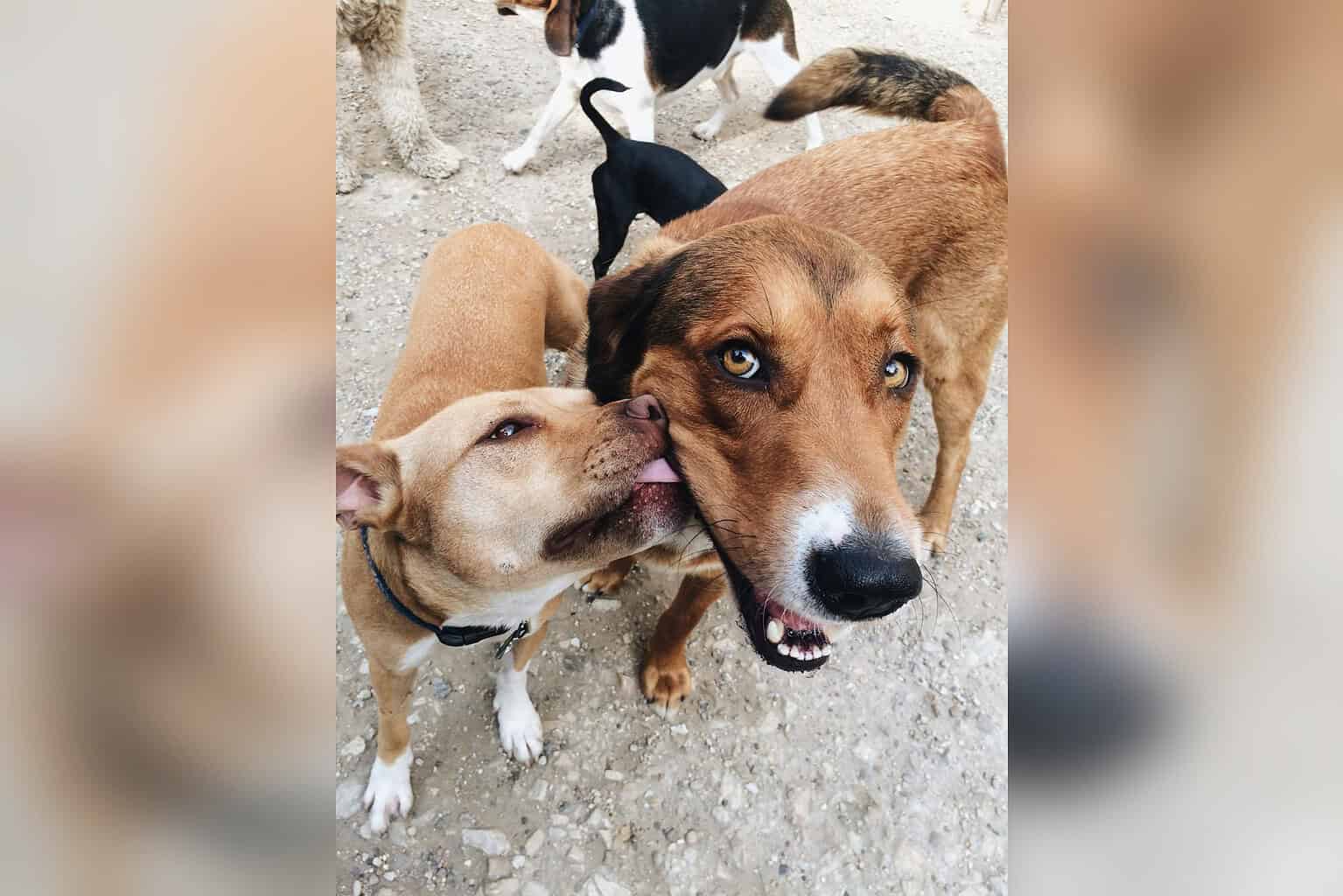
Most gentle nibbling is normal, friendly dog behavior, not a bite. When a relaxed dog rapidly nibbles you with only the small front teeth, often called “corncobbing,” it is usually social grooming, affection, play or self-soothing. Nibbling becomes worth a closer look when it is hard, frantic, constant, aimed at one sore spot on the dog’s own body, or comes with a stiff body, growling or a sudden change in behavior.
Last updated: October 2025
What does it mean when your dog nibbles you?
A nibble is a dog using its mouth with very little pressure. It is not the same as a bite, and it is not quite the same as the open-mouthed mouthing that young puppies do all day. Veterinarians interviewed by Rover in 2025 described the difference in two words: pressure and intent. A nibbling dog uses its front teeth lightly and its body stays loose. A biting dog uses more force, often with the back teeth, and usually shows warnings first, such as growling, a stiff posture or pinned-back ears.
Within that gentle category, the most common reasons dogs nibble people are:
- Grooming and bonding. Dogs groom the dogs they are close to, and many extend that to their people.
- Play. Mouth games are how dogs play with each other, so a nibble can be an invitation.
- Attention. If nibbling reliably makes you look, laugh or pet, your dog will keep doing it.
- Excitement. Greetings and games can wind a dog up.
- Teething. Puppies with sore gums chew whatever is handy, including fingers.
- Stress, a repetitive habit or discomfort. Less common, but the reasons that matter most to catch.
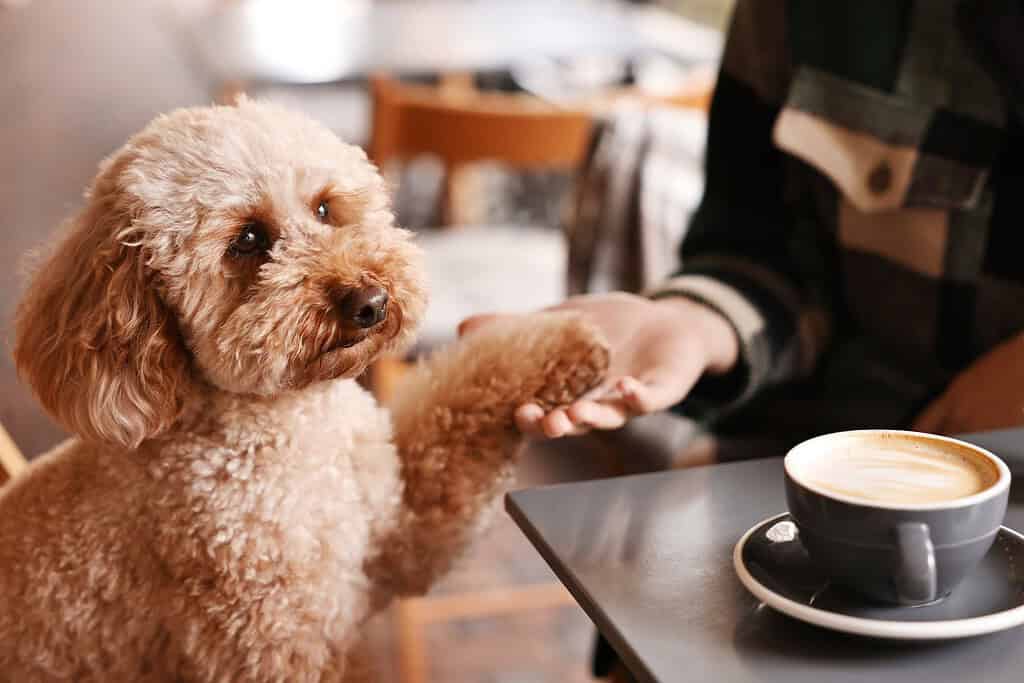
Context tells you which one you are looking at. Nibbling also travels with other contact behaviors, so a nibbler is often a leaner, a licker or a paw-placer too. Our guide on why your dog puts his paw on you covers that side of the same conversation.
What is corncobbing and why do dogs use their front teeth?
Corncobbing, sometimes shortened to “cobbing,” is the rapid, gentle nibbling a dog does with its incisors. The name comes from the motion: the dog’s front teeth move quickly over skin, fur, a sleeve or a blanket, a lot like a person eating kernels off a corncob.
The incisors are built for exactly this work. Dogs use them to pick at fur, nibble out debris and work at an itch, which is why you often see a dog corncob its own leg during self-grooming. When a dog does the same thing to another dog, usually around the face, neck or ears, it is social grooming, a bonding behavior that keeps relationships smooth. Many dogs simply include their people in that circle.
“Gentle nibbling is usually an expression of comfort and love, in a similar way to how dogs tend to rub up against one another in a pack to associate and bond.”
Dr. Gary Dattner, veterinarian and CVO of Tandem Vet Care, Rover (2025)
Some dogs corncob more than others. Dr. Dattner told Rover that naturally social breeds such as retrievers and spaniels are more likely to cob your body or things closely associated with you, which fits dogs bred to carry game gently in their mouths. Herding breeds were bred to move livestock by nipping at heels, and some keep that habit with people’s ankles. Another vet, Dr. Nell Ostermeier, noted some dogs may just like the salty taste of your skin.
Dogs also corncob objects. Blankets, plush toys and the corner of a pillow are classic targets, especially when a dog is settling down to sleep. For most dogs this is a calm, self-soothing ritual. It only becomes a concern when it turns intense, constant or damaging.
Is my dog nibbling to play or to get my attention?
Often, yes. Puppies learn to play with their mouths in the litter, and adult dogs keep using light nibbles, mouthing and play bites as part of normal play. The ASPCA notes that most mouthing is normal dog behavior, and that a playful dog will have a relaxed body and face, while an aggressive dog usually looks stiff, may pull its lips back to show its teeth, and delivers quicker, more painful bites.
Attention-seeking nibbling is play’s close cousin. Dogs repeat what works. If a nibble on your hand gets you to stop scrolling, talk to your dog or start a game, the nibble has earned a reward, and it will show up again tomorrow. That is just learning, but it means well-meant reactions, like pushing the dog away while laughing, can keep the habit going.
Overexcitement is the third piece. Many dogs get mouthier as their arousal rises during greetings, rough play, zoomies or a long petting session. A soft nibble at the start can turn into harder grabbing as the dog winds up. The ASPCA suggests that if your dog gets riled up when you pet it, you feed small treats from your other hand while you stroke, so your dog gets used to being touched without mouthing.
How is puppy teething nibbling different from puppy biting?
Puppies nibble, mouth and bite more than adult dogs for two overlapping reasons: they explore the world with their mouths, and for months their mouths are sore. According to the Merck Veterinary Manual, most dogs have 28 baby teeth that start coming in at 3 to 5 weeks, and permanent teeth usually begin to appear around 4 to 5 months, with all 42 present by about 7 months. The AKC puts the end of teething at roughly six months for most puppies.
Teething nibbling tends to look like slow, chewy gnawing, often when the puppy is settled. Puppy play biting is fast, bouncy and tied to excitement. Both are normal, but they need slightly different responses. A teething puppy needs plenty of safe chews, including cold or frozen options. A play-biting puppy needs to learn bite inhibition, which the ASPCA defines as a dog’s ability to control the force of its mouthing.
You can continue the lessons a puppy’s littermates started by ending play when teeth press too hard. If you are dealing with a full-on piranha puppy, our step-by-step guide on how to stop a puppy from biting covers the training plan in detail, and our roundup of vet-backed dog chew toys helps you find a better target than your fingers.
The AKC’s chief veterinarian, Dr. Jerry Klein, has said that play biting does not mean a puppy is vicious, but if you have not been able to moderate it by about six months of age, it is a good idea to consult an experienced trainer or behavior specialist.
Can nibbling be a sign of anxiety or a compulsive habit?
Sometimes. The same gentle nibble that means comfort in one dog can be a coping strategy in another. Veterinarians quoted by Rover in 2025 pointed out that a dog may nibble because it is content, because it wants attention, or because it is anxious, and that the rest of the body usually tells you which. An anxious nibbler may show wide eyes, a tucked tail, pulled-back ears, or lots of lip licking and yawning, and the nibbling tends to cluster around stressful moments such as storms, visitors or the minutes before you leave.
In these situations the nibbling is usually a form of self-soothing. Dogs nibble their own legs, toys or blankets the way some people bite their nails. A dog that settles itself with a few minutes of corncobbing a blanket at bedtime is coping well. The concern is the dog that needs to do it more and more, or can only do it instead of relaxing.
Veterinary behaviorists use the term compulsive disorder for repetitive behaviors that have become exaggerated, hard to interrupt and disruptive to normal life. VCA Animal Hospitals describes flank sucking as a good example. It is a behavior in which a dog takes a fold of skin on its flank into its mouth and holds it there, and a genetic component has been identified in Doberman Pinschers. VCA says that if flank sucking does not cause sores and does not get in the way of the dog’s daily life, it may simply be a safe, self-soothing behavior that does not need treatment. If it causes lesions, interferes with normal activities or is difficult to interrupt, it is considered compulsive and should be evaluated.
Research backs up that line between harmless and harmful. A 2007 study in the Journal of the American Veterinary Medical Association looked at blanket and flank sucking in Doberman Pinschers. Among the dogs that flank sucked, 7 of 22, or 32 percent, had physical signs from the behavior, ranging from a repeatedly wet coat to hair loss and open skin lesions. The authors advised reducing triggers, offering a safe alternative to mouth, and redirecting rather than punishing.
Signs that a nibbling habit may be shifting from comfort into compulsion include:
- The nibbling lasts much longer than it used to, or happens many times a day.
- Your dog is hard to call away from it, or goes straight back to it once you stop interrupting.
- It leaves wet patches, thinning fur, redness, sores or chewed-through fabric.
- It shows up in place of eating, playing, sleeping or greeting you.
- It started or got worse after a big change, such as a move or a new baby.
Punishment tends to backfire here. VCA notes that punishment and owner frustration can increase a pet’s anxiety, and that simply blocking access to the behavior with bandages or a cone often leads to relapse once the barrier comes off. The more useful approach is to work on the cause. That means a predictable routine, enough exercise, food puzzles and chews at known trigger times, and gentle training so the dog has a calm job to do instead.
Because painful, neurological and skin conditions can look just like compulsive behavior, VCA stresses that a dog with repetitive nibbling needs a medical work-up before anyone labels it a behavior problem. If anxiety is part of the picture, it helps to look at the whole dog. Our guide to separation anxiety in dogs walks through the signs that a dog is struggling when routines change.
Could nibbling mean pain, and when should you call the vet?
Yes, and this is the reason most likely to be missed. When a dog repeatedly nibbles one spot on its own body, such as a paw, a hip, the base of the tail or a wrist, it may be responding to itch or pain in that area. A 2020 commentary in the journal Animals by veterinary behavior specialists, led by Professor Daniel Mills, reviewed 100 recent referral cases and estimated that around a third of dogs seen for behavior problems had some form of painful condition, and in some caseloads the figure was nearly 80 percent. The authors listed nibbling or scratching at a specific area, especially if sudden and paired with a skin flinch or yelp, among the signs that should make a vet think about pain.
Skin problems are a common trigger too. Allergies, fleas, mites and skin infections make dogs itchy, and corncobbing is how many dogs scratch with their mouth. If the nibbling focuses on the feet, our guide on why dogs lick their paws covers the usual suspects. If your dog also licks floors, walls or the air, read why dogs lick the floor, because nausea and digestive upset can drive oral behaviors as well.
A dog with a sore spot may also mouth your hand when you touch it, as if to say “not there.” That is communication, and it deserves respect rather than correction.
A trainer suits manners problems; a veterinary behaviorist suits fear, anxiety, compulsive behavior or any hard bite.
What does each type of nibble mean?
This table is our own summary of the guidance from the ASPCA, AKC, VCA and the veterinarians quoted above. It is a starting point for reading your dog, not a diagnosis.
| Nibble type | What it usually means | What to do (our suggestion) |
|---|---|---|
| Soft, rapid front-teeth “corncob” on your arm while relaxed | Social grooming, affection, comfort | Fine to allow if you like it; offer a toy or chew if you don’t |
| Bouncy nibbles with play bows and a wiggly body | Invitation to play | Redirect into fetch or tug; pause play if teeth press hard |
| Nibbles when you stop petting or look at your phone | Attention-seeking, learned habit | Don’t react to the nibble; reward a sit or a calm lie-down instead |
| Harder, faster grabbing during greetings or long play | Overexcitement, rising arousal | 10 to 20 second break, then calmer play; keep greetings low-key |
| Slow gnawing on hands in a puppy under 7 months | Teething discomfort, exploration | Swap in a safe or chilled chew every time |
| Nibbling blankets, toys or own legs at stressful times | Self-soothing, possible anxiety | Note the triggers; add enrichment and routine; talk to your vet if it grows |
| Repeated nibbling of one spot, with sores or hair loss | Itch, pain or a compulsive pattern | Vet exam first; behaviorist referral if no medical cause |
| Nibble or snap with a stiff body, freeze or growl | Discomfort or a warning, not affection | Stop the interaction, give space, get professional help |
The 10 to 20 second break comes from the ASPCA’s time-out method for hard mouthing. The rest of the right-hand column is our own practical advice.
How do you redirect a nibbling dog gently?
If your dog’s nibbling is soft and you enjoy it, you do not have to stop it. If you would rather your dog kept its teeth to itself, or the nibbles are getting harder, these steps work for most dogs:
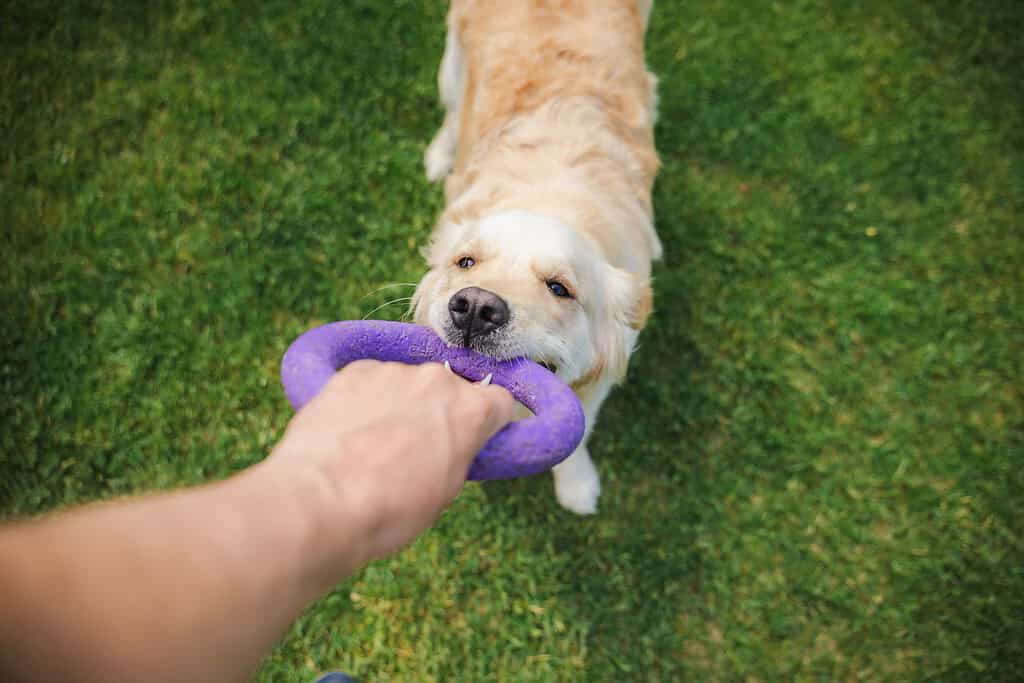
- Keep a toy within reach. Have a chew or tug toy in your pocket or beside the couch, and offer it the moment teeth touch skin.
- Go still, not jerky. The ASPCA warns that yanking your hand away looks like a game and can invite more grabbing. Let your hand go limp instead.
- Use a short time-out for hard nibbles. Stand up, turn away or leave the room briefly, then come back and calmly carry on. Gentle play continues; painful play stops.
- Teach a cue. Practice “gentle,” “leave it” or a solid sit and reward it with food. Dr. Dattner suggested these cues specifically because they help dogs control their mouths.
Consistency matters most when other people care for your dog. In the free Lohji app from Shiloh’s House, you can add behavioral notes to your dog’s profile, such as “gentle nibbler when excited, offer a toy,” and list a pet sitter as one of up to three contacts. If your dog wears a Shiloh’s House smart tag, those behavior notes also show on the profile a finder sees when they tap the tag with a phone, which helps a stranger understand that a mouthy greeting is friendly. Get it on the App Store or Google Play.
Let a finder know your dog’s quirks before they say hello
Shiloh’s House smart tags are laser-engraved premium acrylic with a “Tap Phone Here” NFC back. A finder taps with any modern phone, no app needed, and sees a live profile with one-tap call, text and directions, voice messages, behavior and medical notes, and multiple contacts. Waterproof, scratch-resistant and UV-stable, made in the USA in 35 designs for about $38, with no subscription and 30-day returns.
Is dog nibbling safe around kids?
A gentle nibble that an adult barely notices can startle or hurt a child, and children often react in ways that make things worse. They squeal, wave their hands and run, which many dogs read as the start of a chase game.
The stakes are real. The American Veterinary Medical Association says more than 4.5 million people are bitten by dogs in the United States each year, and more than half of dog-related injuries happen to children. The AVMA advises that children should never be left unsupervised with dogs, even family pets.
A few house rules make nibbling much easier to manage with kids:
- Teach kids to “be a tree.” If the dog nibbles, they stand still, fold their arms and look away, instead of running or flapping their hands.
- Toys, not hands. Children should play with dogs through a toy, such as a tug rope or a ball, never by wrestling or letting the dog mouth their fingers.
- Give the dog an exit. A crate, bed or gated room the kids leave alone lets the dog walk away when it has had enough.
Puppies and kids together need the most supervision, because both are still learning. Our article on pets and kids growing up together covers the wider benefits and the habits that keep everyone safe. If a dog nibbles a child with real pressure, or ever shows warning signs around children, involve your vet and a qualified behavior professional rather than hoping it passes.
Frequently asked questions
Why does my dog nibble me with his front teeth?
Soft, rapid nibbling with the front teeth, often called corncobbing, is usually social grooming or affection. Dogs groom each other with their incisors, and many treat their people the same way. As long as your dog is relaxed and the nibble doesn’t hurt, it is generally normal behavior.
Is corncobbing a sign of love?
Often, yes. Veterinarians describe gentle nibbling as an expression of comfort and bonding, similar to how dogs groom and rub against dogs they are close to. The same nibble can also mean excitement, anxiety or an itch, so read the situation too.
Should I let my dog nibble me?
If the nibbling is gentle, occasional and you enjoy it, there is no need to stop it. If you dislike it, it is getting harder, or there are young children or older adults in the home, redirect your dog to a toy, reward calm behavior and pause interaction when teeth press too hard. Avoid physical punishment, which can make mouthing worse.
Why does my dog nibble blankets?
Many dogs nibble or suck on blankets and soft toys as a calming ritual, especially before sleep. It is usually harmless. VCA notes that this kind of behavior becomes a concern if it causes damage, is hard to interrupt or starts to replace normal activities.
When will my puppy stop nibbling?
Most puppies finish teething by about six to seven months, and nibbling from gum discomfort usually fades then. Play mouthing takes training to reduce. The AKC’s chief veterinarian suggests talking to an experienced trainer or behavior specialist if play biting is still hard to manage at about six months.
Can nibbling turn into biting?
Gentle affectionate nibbling does not usually become aggression, but overexcited play nibbles can get harder. Stop interactions when a dog stiffens, freezes or growls, teach a gentle mouth early, and have your vet check for pain if nibbling changes or becomes forceful.
Sources
- Why Your Dog Nibbles You & What It Means, Rover (2025)
- Dental Development of Dogs, Merck Veterinary Manual (2025)
- Dentition, dog, Merck Veterinary Manual
- Mouthing, Nipping and Play Biting in Adult Dogs, ASPCA
- How to Stop Puppy Biting and Train Bite Inhibition, American Kennel Club (2021)
- Puppy Teething Timeline, American Kennel Club (2019)
- Compulsive Disorders in Dogs, VCA Animal Hospitals
- Behavior Counseling: Compulsive, Stereotypic and Displacement Disorders, VCA Animal Hospitals
- Blanket and flank sucking in Doberman Pinschers, Journal of the American Veterinary Medical Association (2007)
- Pain and Problem Behavior in Cats and Dogs, Mills et al., Animals (2020)
- For National Dog Bite Prevention Week, experts provide tips to prevent likelihood of bites, American Veterinary Medical Association (2024)