Why Does My Dog Put His Paw on Me? What It Means and What to Do
 Shiloh’s House Team
·
·
16 min read
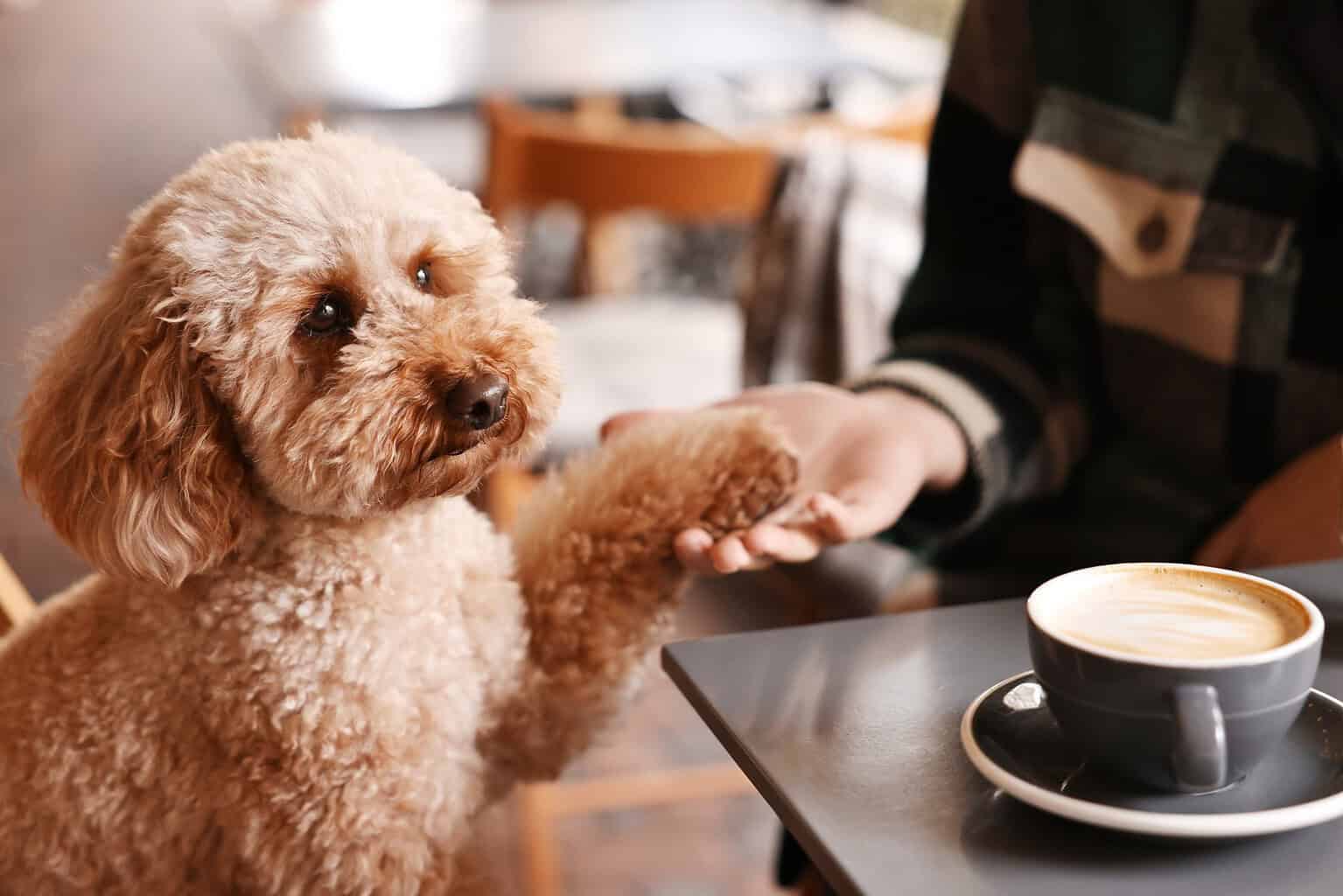
When your dog puts his paw on you, he is almost always communicating a need, most often “pay attention to me,” “keep petting me” or “I want something.” Pawing starts in puppyhood and sticks around because people respond to it. It can also signal affection, worry or appeasement, and occasionally pain. Read the context: what happened right before, what your dog’s body is doing, and what he does after you respond.
Last updated: October 2026
What does it mean when a dog puts his paw on you?
A paw on your knee, your arm or your laptop keyboard is one of the clearest messages your dog can send. Dr. Mary Burch, a certified applied animal behaviorist and director of the AKC Family Dog Program, describes it as communication first and foremost, with a meaning that changes depending on the moment. A paw can mean “I’m hungry,” “I need to go out,” “pet me” or “I’m nervous about that thunder.”
Behavior professionals have a name for this kind of request. Burch notes that applied behavior analysts call it “manding,” which means a request or a demand. PetMD’s trainer-written, vet-reviewed guide puts it even more simply: the current theory is that a dog uses pawing to communicate an unmet need.
Pawing works because people respond to it, and it often comes with connection. In the 2015 Science study led by Miho Nagasawa, dog and owner pairs who gazed at each other most during a 30-minute session saw oxytocin climb in both species: a 130% rise in the dogs and 300% in the owners, Science reported. Wolves raised by people showed no such effect.
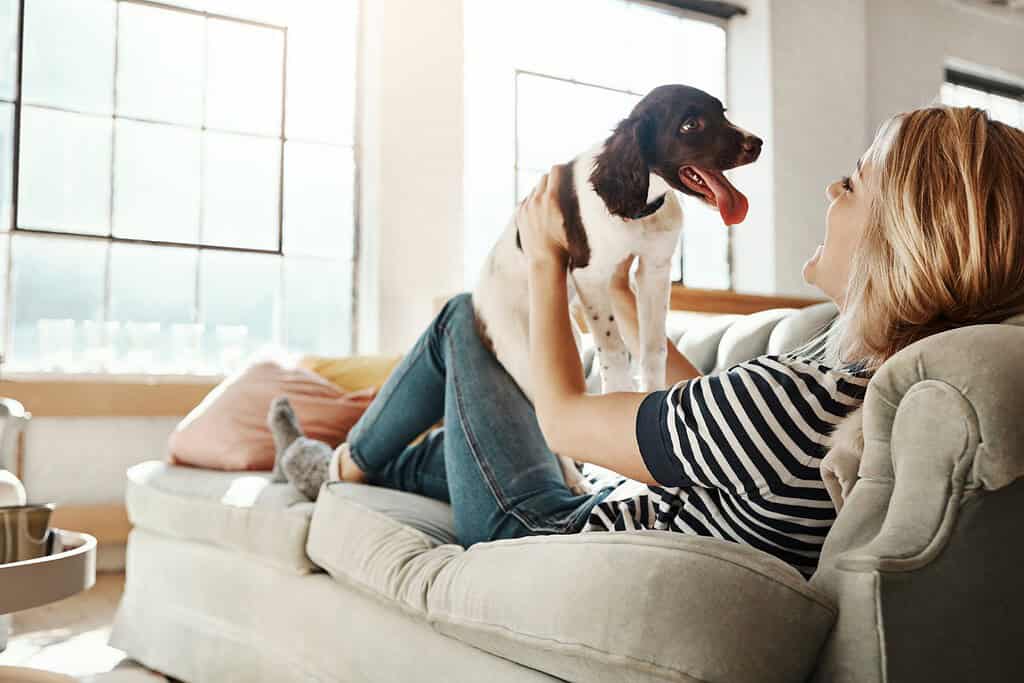
How can you tell what your dog’s paw means?
The same paw tap can mean very different things, so look at what happened just before, what the rest of your dog’s body is doing, and what your dog does once you respond. PetMD suggests simple questions: did your dog stare at you first, circle the food bowl or walk to the back door? Use this table as a quick translator, not a diagnosis.
| Context | Body language | Likely meaning | What to do |
|---|---|---|---|
| You stop petting | Loose body, soft eyes, leaning in | “Keep going” | Pet a bit more, or end calmly with a cue like “all done” |
| You are on a call or working | Staring, nudging, maybe a whine | Attention seeking, often learned | Don’t respond to the paw; reward a sit; give a chew beforehand |
| About 30 minutes before a meal | Restless, circling the bowl | Hungry | Keep a steady meal schedule; don’t feed for pawing |
| Near the door or leash hook | Looking at the door, pacing | Potty break or walk | Take the potty break; ask for a sit before the leash goes on |
| Thunder, fireworks, doorbell, you packing a bag | Panting, low tail, lip licking, clinging | Anxiety, seeking comfort | Comfort calmly; secure doors; check ID is on and current |
| Someone leans over or reaches toward the dog | Raised paw, head turned away, eyes averted | Appeasement, “please ease off” | Give space; let the dog approach |
| New pawing plus limping or licking a foot | Favoring a leg, restless, withdrawn | Possible pain | Check the paw; call your vet if it lasts |
Why does my dog paw at me for attention?
Attention is the most common reason a dog paws at you, and it is usually a habit we taught without meaning to. Dr. Sagi Denenberg, a veterinary behaviorist quoted by the AKC, explains that attention-seeking behaviors are innate. Dogs use them with other dogs, so of course they try them on us. What turns a natural behavior into a nuisance is trial-and-error learning. A dog tries barking, jumping, nudging and pawing, notices which one gets the fastest reaction, and keeps using the winner.
Pawing tends to win because it is gentle and hard to ignore. A paw lands on your arm, you look down, you say “hey buddy,” maybe you scratch an ear. From your dog’s point of view, the experiment worked. Do it again tomorrow and it works again. After a few weeks, pawing is simply how your dog asks for things.
The tricky part is that almost any response counts as a reward. PetMD’s example is one many owners will recognize: the dog paws, you say “no,” and then you stand up and play anyway. The word was a correction, but the outcome was attention, so the dog learns that pawing pays. Even pushing the paw away is touch, and touch is what many dogs wanted in the first place.
Dr. Stephanie Borns-Weil, who heads the behavior service at Tufts University’s Cummings Veterinary Medical Center, describes the same pattern in a dog she calls Bandit. Bandit wanders in during a video meeting and lifts his owner’s hand off the keyboard. The owner says “not now,” Bandit nudges and woofs, and the owner gives in and scratches his ears. By the end of the day, Bandit has learned that the meeting is the perfect time to demand attention. Borns-Weil’s point is that these demand behaviors may start for many reasons, including anxiety and uncertainty, but they are always maintained by learning. The good news, in her words, is that whatever our dogs learn from us, they can unlearn.
Here is how to tell if your dog’s pawing is mostly attention seeking:
- It happens when you are busy, on the phone or focused on a screen.
- It stops the moment you look, talk or touch.
- Your dog seems relaxed and happy, not tense or worried.
- It gets more insistent when you ignore it at first, then fades when nothing happens.
That last point surprises people. Borns-Weil warns that unwanted behavior will get worse before it gets better once you stop rewarding it. Trainers call this an extinction burst. Your dog paws harder, adds a whine, maybe a bark, because the old trick suddenly stopped working. If you give in at the peak, you have just taught your dog that louder, longer pawing gets results. If you stay steady and reward a calmer behavior instead, the burst fades.
None of this means attention-seeking pawing is bad. Your dog is social and wants to be with you, which is exactly why dogs make such good companions. The goal is not to shut the conversation down. It is to give your dog a clearer, more polite way to start it, and to make sure his day includes enough walks, play and sniffing that he is not living on scraps of attention.
Is pawing a sign of affection and bonding?
Often, yes. Many dogs rest a paw on you while settled close, and it is easy to see the loose body, the slow blink and the sigh that goes with it. Burch compares canine touch to a human hug. Like a hug, it can mean several things, but love is often one of them.
“When your dog puts a paw on you, it is most often a sign of communication, and it doesn’t always mean the same thing.”
Dr. Mary Burch, Certified Applied Animal Behaviorist and Director of the AKC Family Dog Program, American Kennel Club
There is real biology behind the warm feeling. In a 2003 study in The Veterinary Journal, Johannes Odendaal and Roy Meintjes measured blood chemistry in people and dogs before and after a session of positive interaction. Levels of oxytocin, beta-endorphin, prolactin, dopamine and beta-phenylethylamine rose in both species, and cortisol, a stress hormone, fell in the humans. The 2015 Nagasawa study in Science added that a dog’s gaze at its owner raised the owner’s oxytocin, and that the owner’s attention, including touching, fed back into the dog’s oxytocin too. The authors described it as a positive loop, similar to the one between parents and infants.
No study has measured hormones during pawing itself, but a relaxed paw on your leg with soft eyes is fair to read as an invitation to connect, right alongside other contact behaviors like leaning on you and following you from room to room.
Why does my dog put his paw on me when I pet him?
If the paw comes down right when your hand stops moving, your dog is almost certainly saying “don’t stop.” Burch tells the story of her Border Collie, Laddie, who would prompt her to pet him, and if she stopped, the paw would come down on her arm again. That is manding in its purest form: a clear request, repeated until it works.
PetMD also points out that some dogs rest a paw on your arm during petting as a sign of affection rather than a demand. You can usually tell the difference by intensity. A resting paw that stays put while your dog melts into you is contentment. A paw that taps, scrapes or swats the second you pause is a request for more.
There is one exception worth knowing. Occasionally a dog uses a paw to push your hand away. PetMD notes that pawing can be a stress response, especially if the dog is trying to push you away. Watch for a stiff body, a turned head, lip licking or a dog who leans away from your hand. If you see those signs, stop petting and let your dog decide whether to come back. A simple consent test helps: pause for three seconds. If your dog moves closer or nudges you, keep going. If he stays still or moves off, he has had enough.
Is my dog pawing at me because he wants food, play or a walk?
Very often. A paw is a polite way to remind you of the schedule. PetMD notes that many dogs become restless about 30 minutes before mealtime, and pawing is one way they alert you. The AKC adds that owners often answer a paw with a treat or a bite of dinner, which is the fastest way to turn an occasional tap into constant table-side pawing.
Puppies and young dogs also paw to go outside. Watch where your dog looks. Eyes on the door or leash hook usually mean a potty break or a walk. Eyes on a toy mean play. Eyes on the kitchen mean food, and that one is worth resisting outside of mealtime.
The fix is not to ignore real needs. It is to change how the request is made. PetMD’s three-step approach works well: when your dog paws, get up, ask for an alternate behavior like sit, then give your dog what he wanted. Once sitting reliably gets the walk or the meal, sitting replaces pawing. Keep treats under 10% of daily calories, as PetMD advises.
A dog who paws for play all day may need more of it. Food puzzles, like those in our guide to dog puzzle toys, give your dog something to do while you work.
Can pawing mean my dog is anxious or stressed?
Yes, and this is the version of pawing worth taking most seriously. The AKC notes that thunder, separation anxiety when a dog thinks you are leaving, or a sudden knock at the door can send a dog pawing at you for comfort, often with heavy breathing, a low tail or general uneasiness. The American Animal Hospital Association’s behavior guidelines list “lifting paw in an intentional movement” and “increased closeness to preferred associates” among common signs of anxiety and distress in pets.
A raised paw is also an appeasement signal. VCA Animal Hospitals describes a progression of submissive signals that includes low crouching, raising a front paw, lying down and rolling over, all meant to reduce a perceived threat. A dog who lifts a paw while turning his head away and tucking his tail is asking for space, not a shake. Step back and let him come to you.
Anxious pawing clusters around storms, fireworks, visitors and, this time of year, trick-or-treaters. Our Halloween doorbell anxiety guide covers how to set up a quiet room for the night.
Pay special attention to a dog who paws at you and then at the door when scared. That combination can mean your dog wants out, and frightened dogs are the ones most likely to bolt through an opening. In an ASPCA-funded national survey published in 2012, 14% of dog owners had lost a dog in the past five years. Most were found, and 14% got home through an identification tag. Keep a tag on your dog at all times, with current information.
With a Shiloh’s House Smart Tag, updating is easy: you change your dog’s profile anytime in the free Lohji app (App Store or Google Play), so a new phone number or a note like “nervous, do not chase” is live on the tag right away.
Got a door-pawer who might bolt?
A Shiloh’s House Smart Tag opens a live profile when a finder taps it with any modern phone, with one-tap call, text and directions, your voice notes and medical notes, so a scared dog gets home faster.
Could pawing be a sign of pain or a medical problem?
Sometimes. Dogs tend to hide pain, so a new or sudden change in how your dog touches you is worth a closer look, especially if it comes with other changes. VCA Animal Hospitals lists signs of pain that include restlessness, withdrawing from the family, licking obsessively at painful areas and changes in posture. A dog who suddenly paws at you more, seems clingy and keeps licking one foot may be telling you something hurts.
The paw itself can be the problem. VCA notes that a dog who licks at its pads or limps may have a torn, punctured or burned foot pad, and its first-aid guide suggests looking between the toes for foreign bodies like thorns, splinters and grass awns, checking pads for cuts and assessing each nail for breaks. Allergies can also make paws itchy and inflamed. Our guides on why dogs lick their paws and why dogs limp go deeper.
Be gentle if you check. VCA warns that dogs in pain may bite, even people they love.
How do I stop my dog from pawing at me?
You don’t need to stop all pawing. The goal is to stop the pushy version: scratching, swatting, raking your arm or pawing at guests and kids, whose skin scratches easily.
Start by removing the payoff. Tufts’ Borns-Weil recommends ignoring the unwanted behavior, rewarding a desirable alternative, adding enrichment, keeping expectations consistent and planning ahead for the times your dog usually demands attention. Everyone in the house needs to follow the same rules, or the pawing will keep paying off for whoever gives in.
Then teach your dog a better way to ask. Three alternatives work well:
- Sit to ask. The simplest swap. Before every good thing (meals, walks, petting, the ball), ask for a sit. Soon your dog sits on his own to request things.
- Chin rest. Teach your dog to rest his chin on your knee or palm. Hold your hand low, mark and reward the moment his chin touches, then build up to a few seconds. It gives a contact-loving dog the closeness he wants without claws.
- Go to your mat. Reward your dog for lying on a bed or mat near you while you work, with treats delivered calmly to the mat. A lick mat or chew on the mat makes it even more appealing.
When your dog paws, turn away or stand up quietly without talking. The moment he offers the new behavior, reward it generously. Expect the extinction burst described earlier, and push through it.
Avoid punishment. Yelling or swatting the paw can frighten your dog and worsen anxiety. If pawing comes with growling or snapping, work with a veterinary behaviorist or certified trainer.
Do puppies paw more than adult dogs?
Many do. Pawing is one of the earliest things a puppy does: PetMD notes that pups paw at their mothers for milk, so it is a natural reflex long before it becomes a learned request. Puppies also use paws in play with littermates, batting and pinning, which is why a playful puppy may swat at your hands.
Puppies are learning the rules of communication too. VCA explains that dogs first show appeasement signals as puppies and need chances to practice canine communication with friendly, social adult dogs. A puppy who raises a paw when an adult dog or a stranger looms over him is using the same polite language.
That makes puppyhood the ideal time to shape pawing. Reward sits early and redirect pawing play onto toys.
In adult dogs, pawing is usually a long-established habit. The meaning matches the dog’s history: if pawing has always earned treats, it means “treat, please.” In senior dogs, watch for change. A dog who never pawed and suddenly starts, especially alongside restlessness, stiffness or withdrawal, should see the vet to rule out pain.
Frequently asked questions
Why does my dog put his paw on me and push?
A pushing paw usually means one of two things. If your dog is relaxed and you just stopped petting, he likely wants more attention or wants you to move over. If his body is stiff, his head is turned away or he is licking his lips, the push may mean “please stop.” PetMD notes that pushing away with a paw can be a stress response, so check body language first.
Why does my dog paw at me at night?
Night pawing is often a potty request, especially in puppies and seniors, or a sign your dog is restless. Take a quiet, boring potty break without play. If night pawing is new in an older dog and comes with restlessness or panting, ask your vet about pain or other medical causes.
Should I let my dog put his paw on me?
It is up to you. A gentle, occasional paw from a relaxed dog is harmless and often affectionate. If pawing is frequent, scratchy or aimed at guests and children, teach an alternative like sit or a chin rest and stop rewarding the paw.
Is pawing a sign of dominance?
No. Behavior experts describe pawing as communication, usually a request for something the dog wants or needs. Veterinary behaviorists explain attention-seeking behaviors as learned through trial and error, not as attempts to control people. A raised paw can even be an appeasement signal, which is the opposite of a challenge.
Why does my dog give me his paw without being asked?
If you have ever taught “shake,” your dog may offer it because it earned treats before. Untrained dogs offer paws because pawing has gotten a reaction in the past. A soft, relaxed dog offering a paw is usually asking for connection.
When should I worry about my dog pawing at me?
Worry when pawing is sudden and new, comes with limping, foot licking, restlessness or withdrawal, or appears with signs of fear like trembling, panting and a tucked tail. Those can point to pain or anxiety. VCA recommends a vet visit if lameness lasts more than 24 hours. Frequent anxious pawing is also worth discussing with your veterinarian.
Sources
- Why Does My Dog Put Their Paw On Me?, American Kennel Club (2026)
- Why Do Dogs Put Their Paws On People?, PetMD (2025)
- How to Stop Attention-Seeking Behavior, Cummings School of Veterinary Medicine at Tufts University (2020)
- How to Identify and Stop Attention Seeking Behavior in Dogs, American Kennel Club (2023)
- Oxytocin-gaze positive loop and the coevolution of human-dog bonds, Science (2015)
- How dogs stole our hearts, Science (2015)
- Neurophysiological correlates of affiliative behaviour between humans and dogs, The Veterinary Journal (2003)
- Common Signs of Anxiety/Distress, American Animal Hospital Association (2015)
- Canine Communication: Interpreting Dog Language, VCA Animal Hospitals
- How Do I Know if My Dog is in Pain?, VCA Animal Hospitals
- First Aid for Limping Dogs, VCA Animal Hospitals
- Frequency of Lost Dogs and Cats in the United States and the Methods Used to Locate Them, Animals (2012)