Do Dogs Recognize Their Owner’s Voice? What Brain Scans Show
 Shiloh’s House Team
·
·
17 min read
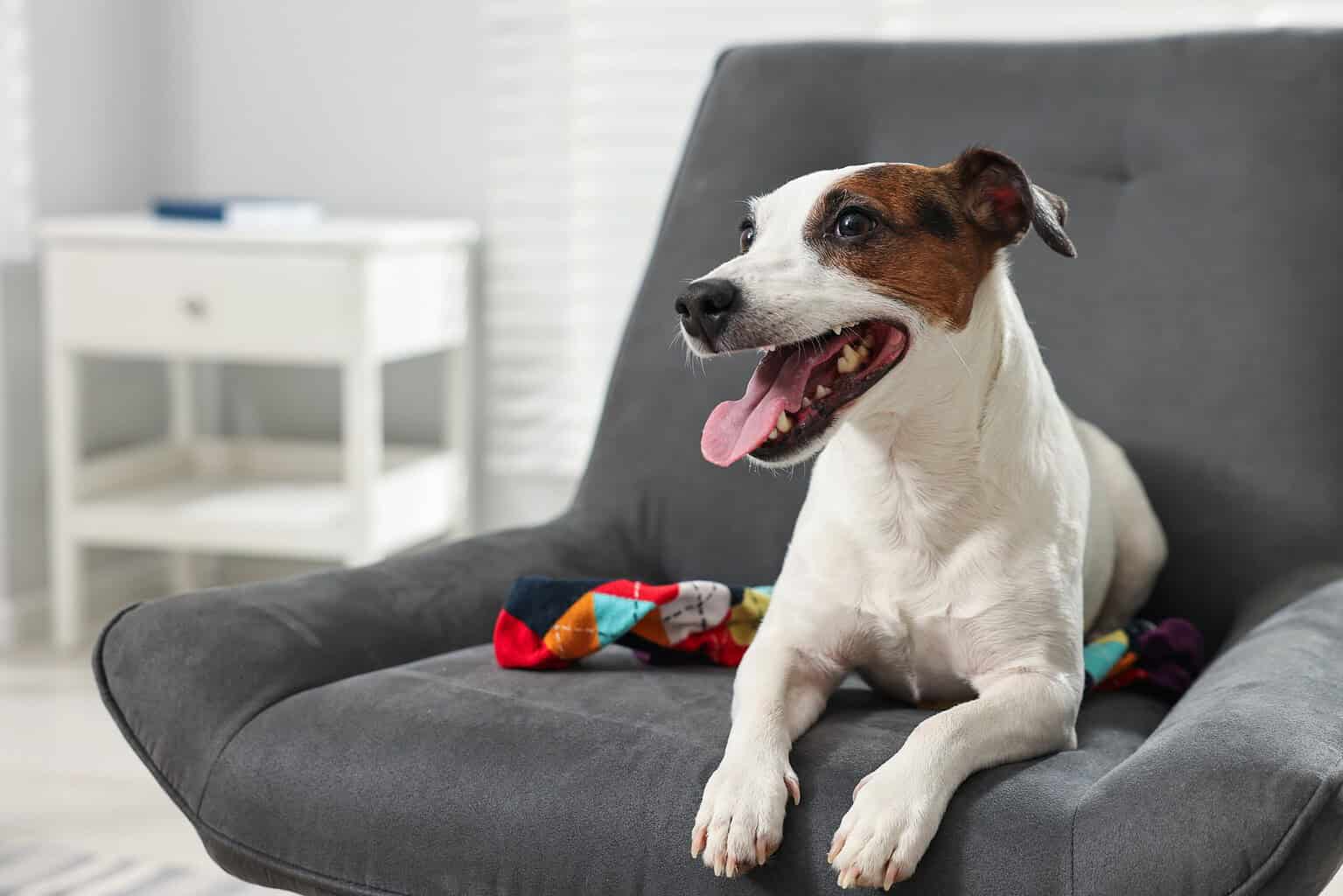
Yes, dogs recognize their owner’s voice, and the proof is now in the lab. In a 2022 study at Eötvös Loránd University in Budapest, dogs picked their owner’s recorded voice over a stranger’s 82 percent of the time with no face or scent to help them. Brain scans show why: dogs have voice-processing regions much like ours, and they lean on pitch and vocal “roughness” to tell people apart. Phones blur exactly those cues, and cats recognize their owners too, they just rarely show it.
Last updated: September 2025
Do dogs recognize their owner’s voice?
Most owners already believe their dog knows their voice. What was missing until recently was a clean test that stripped away everything else a dog could use: the sight of you, the smell of you, your footsteps.
The Department of Ethology at ELTE built that test. Twenty-eight owner-and-dog pairs played hide-and-seek in the lab. The owner hid behind one opaque screen and a stranger behind another, and loudspeakers behind each screen played pre-recorded speech. Both voices read recipes in a flat, neutral tone, so the dog could not simply follow an excited “Come here!” Across ten rounds the owner’s voice was paired with 14 strangers, some chosen to sound similar to the owner.
The dogs found their owner in 82 percent of trials. To rule out smell, the last two rounds played the owner’s voice from where the stranger was hiding, and the dogs still followed the voice, choosing correctly 87 percent of the time. They were not sniffing their way to the answer; they were listening.
“This is the first demonstration that dogs can tell apart their owner’s voice from many others. The study also shows that dogs make use of some, but only some of the same voice properties as humans do to recognize who is talking.”
Attila Andics, PhD, head of the Neuroethology of Communication Lab, Eötvös Loránd University (ELTE press release, 2022)
If your dog tracks your voice from room to room, see our guide to why your dog follows you everywhere for the attachment side.
What do brain scans show about how dogs hear voices?
The behavioral test tells you what dogs can do. Functional MRI tells you what their brains are doing while they do it, and the same Budapest group has been scanning awake, unrestrained dogs for more than a decade.
The first landmark came in 2014, when Attila Andics and colleagues published the first comparative fMRI study of a primate and a non-primate species in Current Biology. Eleven dogs, trained for about 20 weeks to lie still in the scanner, and 22 people heard the same set of nearly 200 sounds: dog vocalizations, human vocalizations and environmental noise. The researchers found “voice areas” in the dog brain that responded more strongly to vocal sounds than to other sounds, in a location strikingly similar to the voice areas in the human brain.
In 2016 the group went further in Science. Thirteen dogs heard their trainer say praise words and neutral words in either a praising or a neutral tone. Meaningful words were processed with a left-hemisphere bias regardless of tone, a right-hemisphere region tracked intonation, and the reward centers lit up only when words and tone both signaled praise. Andics told ELTE: “So dogs not only tell apart what we say and how we say it, but they can also combine the two, for a correct interpretation of what those words really meant.”
A 2023 study in Communications Biology, led by Anna Gergely and Anna Gábor, added one more piece. In 19 dogs, auditory regions responded more to the exaggerated, high-pitched speech people use with dogs and babies than to adult-directed speech, especially from women, driven by how high and variable the pitch was.
Here is how the main studies line up.
| Study | Year and journal | Animals | What they found |
|---|---|---|---|
| Andics et al. (ELTE) | 2014, Current Biology | 11 dogs, 22 humans | Dogs have voice-sensitive brain areas located much like ours |
| Andics et al. (ELTE) | 2016, Science | 13 dogs | Words processed on the left, intonation on the right; reward center active only when both say praise |
| Root-Gutteridge et al. (Sussex) | 2019, Biology Letters | 70 dogs took part, 24 analyzed per condition | Dogs spontaneously tell unfamiliar same-sex speakers apart, and recognize the same word across speakers |
| Gábor et al. (ELTE) | 2022, Animal Cognition | 28 dogs | Dogs chose the owner’s recorded voice over 14 strangers 82 percent of the time; pitch and jitter made the difference |
| Gergely, Gábor et al. (ELTE) | 2023, Communications Biology | 19 dogs | Auditory cortex responds more to dog- and infant-directed speech, especially from women |
| Saito & Shinozuka (Tokyo) | 2013, Animal Cognition | 20 cats | 15 cats habituated to strangers’ voices and then reacted significantly more to the owner calling their name |
| Saito et al. (Tokyo) | 2019, Scientific Reports | 78 cats | Household cats told their own name from similar-sounding nouns, even when a stranger said it |
| Takagi et al. (Kyoto) | 2021, PLOS ONE | 50 cats in the main experiment | Cats were surprised when the owner’s voice seemed to jump to a new location |
The samples are small, which is normal for fMRI work with dogs who must volunteer to lie still. The consistent pattern across independent labs in Hungary, England and Japan is what makes the conclusion solid.
Which parts of your voice does your dog actually recognize?
People identify a speaker mostly from three things: pitch (how high or low), noisiness (how clean or harsh) and timbre (brightness or darkness, shaped by the throat and mouth). The 2022 ELTE study asked whether dogs use the same toolkit.
The answer was partly. When the owner’s and the stranger’s voices were far apart in average pitch and in jitter, a tiny cycle-to-cycle wobble we hear as roughness, dogs decided quickly and chose correctly. When the voices were close on those measures, the dogs looked longer and struggled more. Timbre did not predict how hard the choice was. As lead author Anna Gábor put it in the ELTE release, “If two voices differ in a property that matters for dogs, decisions should be easier.”
That is useful to know about your own dog. Someone whose pitch and vocal texture are close to yours will be harder for your dog to tell from you by voice alone, which is one reason dogs sometimes trot to the wrong person’s call from another room.
A 2019 University of Sussex study in Biology Letters, by Holly Root-Gutteridge and colleagues, showed the skill is not limited to familiar voices. Dogs who heard a stranger say four short words, then a new word from a second stranger of the same sex, perked up at the change of speaker. Pitch differences had been removed from the recordings, so the dogs were using subtler vocal-tract cues. The same dogs also recognized one word spoken by four different people as the same word, something once thought uniquely human.
Can dogs recognize voices on the phone or a video call?

This is the question behind most searches on the topic, usually typed from a hotel room. The honest answer is that your dog probably can recognize your voice through a phone, but the phone makes the job harder than it is in your kitchen, and the screen adds almost nothing.
Start with what a phone does to a voice. Traditional telephone networks were specified decades ago to carry only the band from about 300 to 3,400 hertz, enough for people to understand words. The fundamental frequency of a speaking voice, the buzz of the vocal folds we hear as pitch, sits below that band for nearly all adults, so on a narrowband call it is simply not transmitted. Speech engineers Peter Vary and Rainer Martin note in their textbook on digital speech transmission that the fundamental frequency “is not transmitted in most cases” over conventional telephony, and that “some speaker-specific features are not transmitted over the telephone.” Our brains rebuild the pitch from the harmonics that do get through, which is why you still know who is calling.
Now put that next to the dog research. The 2022 ELTE study found that average pitch and jitter were the cues dogs relied on to pick their owner from a stranger. Those are exactly the features a narrowband call strips or smears. A dog hearing you on an old landline or a poor cell connection is being asked to identify you with the two most useful clues removed.
The good news is that most calls today are not narrowband. Wideband or “HD voice” codecs, used by modern cell networks and internet calling apps, carry roughly 50 to 7,000 hertz, which brings the fundamental frequency back. A speakerphone at conversational volume gives your dog a far better chance than a handset pressed to a sitter’s ear.
The screen is a different story. After the 2016 Science paper, Andics told TIME that “when you hear someone live or you hear someone via headphones, there’s not much of a difference for dogs, but seeing someone live or on a screen seems to be very different,” adding that his team’s earlier work found a small on-screen face was not enough for a dog to recognize its owner. “Realistic size matters,” he said. Veterinary behaviorist Nicholas Dodman of Tufts told National Geographic in 2015 that dogs can sometimes recognize an owner on a large television, but a phone-sized face with no body and no smell is “a very bizarre place for your face to pop up.”
So what should you expect when the sitter holds up the phone? Veterinarians who spoke to POPSUGAR in 2020 described the full range. Zay Satchu of Bond Vet said dogs are more likely to follow a phone call than a video call because “they usually can pick up on the sound of their owner’s voice.” Paul Cunningham, an emergency clinician at BluePearl, has watched boarded and hospitalized dogs “perk up, wag their tail, and generally seem more attentive” when they hear an owner on the phone. Banfield’s Heidi Cooley covered the rest: if your dog does not react, “don’t take it personal.”
There is one real caution. Cunningham also described anxious dogs becoming frantic, searching the house for the owner of a voice with no body attached. For a calm dog, a short cheerful call in your normal dog-directed voice is harmless and may be a small comfort. For a worrier, it is kinder to skip the call and let the sitter keep the routine steady.
Do cats recognize their owner’s voice too?
Yes, and the research tells a story every cat owner will recognize: they know exactly who you are, and they mostly decline to do anything about it.
In 2013 Atsuko Saito and Kazutaka Shinozuka at the University of Tokyo visited 20 cats at home. With the owner out of sight, a speaker outside the room played three strangers calling the cat’s name, then the owner calling it. Fifteen of the 20 cats gradually tuned out the strangers, and those cats showed a significant rebound in attention when the owner’s voice arrived. But the response was almost entirely a head turn or an ear swivel; meowing and approaching were rare. The university’s own headline called them aloof cats who recognize but do not respond.
Saito’s team followed up in Scientific Reports in 2019 with 78 cats from Japanese homes and a cat café. Cats heard four nouns matched to their name in length and rhythm, then their own name, and household cats clearly reacted to the name, even when a stranger said it. Café cats, who hear many visitors calling many cats, told their name from ordinary nouns but not from their housemates’ names.
Then in 2021, Saho Takagi and colleagues at Kyoto University showed in PLOS ONE that cats do something more sophisticated. Fifty cats heard their owner call their name five times from a speaker outside the room, then once more, immediately, from a speaker across the room. The cats showed the most surprise in exactly that condition, as if the owner had teleported. They were not surprised when the second voice was a stranger’s or a non-social noise, which suggests cats map where their person is from voice alone.
How can you put this to work every day?
Once you know that your dog’s brain is tuned to your pitch and tone, and that the reward center responds only when words and tone agree, a few everyday habits follow.
Use your “dog voice” on purpose. The 2023 Communications Biology study found dog brains respond more to the high, variable pitch of dog-directed speech than to flat adult speech. Save that register for the moments you want attention.
Keep praise and tone matched. The Science study showed praise words in a neutral voice did not light up the reward regions. “Good girl” mumbled at the television is noise; the same words in a warm, rising tone are a paycheck.
Build recall around one sound. Pick a single recall word, say it in the same bright pitch every time and pay it generously, and do not dilute it by also using it for “get out of the trash.”
Lower your pitch and slow down to calm. The same system that reads a high, fast voice as exciting reads a low, slow one as settled. During thunderstorms, fireworks or a vet visit, speak in long, low sentences.
Leave your voice behind thoughtfully. For a confident dog, a recording of you reading in an ordinary tone, played while you are out, is a low-cost comfort. For a dog with separation trouble, test it at home first and watch for pacing or searching. Our guide to back-to-school separation anxiety in dogs covers how to tell the difference, and if your dog answers your absence with long vocalizing, see why dogs howl.
One more sign worth knowing: if your dog usually comes to your voice and suddenly stops, book a hearing check. Age-related hearing loss often shows up first as a dog who “ignores” a voice they used to find across the house.
Let a stranger hear your voice when your dog needs it most
A Shiloh’s House Smart Tag is laser-engraved premium acrylic with a “Tap Phone Here” NFC back. When a finder taps it with any phone, they see your contacts, medical notes and the voice messages you recorded, so your dog hears a familiar voice while help is on the way. $38 one-time, no subscription, no battery, made in the USA, 30-day returns.
How can your voice help if your dog is ever lost?
Everything above points to one practical conclusion. A lost dog in a stranger’s yard is being handled by a voice they have never heard. The finder is guessing how to say the name on the tag and whether the dog is friendly. Your voice solves both problems, and the research says even a recording carries the cues your dog uses to recognize you.
That is the thinking behind the Smart Tag profile that runs inside the free Lohji app from Shiloh’s House. The tag is laser-engraved acrylic with an NFC chip in the back; a finder taps it with any phone, with no app to install, and a live profile opens. On that profile you can record a short clip of how to pronounce your dog’s name, and up to three voice messages of 15 seconds each. The finder hears you say the name the way your dog has heard it a thousand times, hears whether your dog is shy or friendly, and hears what to do next. Your dog, meanwhile, hears the one voice in that yard they actually know.
The rest of the profile does the ordinary lost-dog work: up to three emergency contacts with one-tap call, text and map buttons, medical notes, behavior notes, vaccine and vet details, and an optional reward, all editable when you move or change numbers. For what belongs on the tag itself versus the profile, see our checklist of what to put on a dog ID tag and our explainer on whether NFC pet tags work without internet.
The other half of the Lohji app is the fun half: upload one photo and it creates a cartoon character of your pet, which can be the profile picture a finder sees or become wallpapers and stickers. Both halves are in the same free app, on the App Store and on Google Play.
One recording tip: speak in the calm, slightly bright tone you use at home, not an announcer voice, and record in a quiet room, because the finder’s phone speaker will already take some texture out of your voice.
Frequently asked questions
Do dogs recognize their owner’s voice?
Yes. In a 2022 study at Eötvös Loránd University, 28 dogs chose the hiding place playing their owner’s recorded voice over a stranger’s in 82 percent of trials, with no visual or scent cues. Brain-imaging work from the same lab shows dogs have voice-sensitive brain regions located much like the ones in humans.
Can dogs recognize voices on the phone?
Often, yes, but it is harder than in person. Traditional phone lines cut the low frequencies that carry pitch, and pitch is one of the two main cues dogs use to identify a speaker. Modern wideband calls and speakerphones restore much of that information. Many dogs perk up at an owner’s phone voice; some show no reaction at all, and both are normal.
Why does my dog ignore me on FaceTime?
Researchers who studied dogs and screens found that a small, flat face in a phone is not enough for a dog to recognize its owner, even though the voice may be. Dogs also miss the scent and body that normally come with your face. If your dog reacts to your voice but looks confused by the screen, that is the expected result, not a snub.
Do dogs know their owner’s voice from a recording?
Yes. The 2022 Budapest study used only pre-recorded speech played through loudspeakers, and dogs still identified their owners, even when the owner was hiding somewhere else. The recordings were neutral recipe sentences, so the dogs were responding to the voice itself, not to their name or a familiar command.
Do cats recognize their owner’s voice?
Yes. A 2013 University of Tokyo study found that cats who had tuned out three strangers calling their name reacted significantly more when their owner’s voice followed. The reaction was mostly a head turn or an ear flick rather than a meow or an approach. Later studies showed cats also recognize their own names and track where their owner is from voice alone.
Which part of my voice does my dog recognize most?
Pitch and the fine roughness of your voice. The 2022 ELTE study found dogs chose faster and more accurately when the owner and stranger differed more in average pitch and in jitter, a measure of cycle-to-cycle wobble. Timbre, which matters a great deal to human listeners, did not predict how hard the choice was for dogs.
Sources
- Anna Gábor, Noémi Kaszás, Tamás Faragó, Paula Pérez Fraga, Melinda Lovas, Attila Andics, “The acoustic bases of human voice identity processing in dogs”, Animal Cognition, 2022 — https://link.springer.com/article/10.1007/s10071-022-01601-z
- Eötvös Loránd University, “Dogs can recognize their owner by voice alone”, ELTE Faculty of Science press release, 2022 — https://ttk.elte.hu/en/dogs-can-recognize-their-owner-by-voice-alone
- Attila Andics, Márta Gácsi, Tamás Faragó, Anna Kis, Ádám Miklósi, “Voice-Sensitive Regions in the Dog and Human Brain Are Revealed by Comparative fMRI”, Current Biology, 2014 — https://www.cell.com/current-biology/fulltext/S0960-9822(14)00123-7
- Attila Andics, Anna Gábor, Márta Gácsi, Tamás Faragó, Dóra Szabó, Ádám Miklósi, “Neural mechanisms for lexical processing in dogs”, Science, 2016 — https://www.science.org/doi/10.1126/science.aaf3777
- Eötvös Loránd University Department of Ethology, “Dog brains process both what we say and how we say it”, ELTE press release, 2016 — https://ethology.elte.hu/en/content/dog-brains-process-both-what-we-say-and-how-we-say-it.t.34476
- Holly Root-Gutteridge, Victoria F. Ratcliffe, Anna T. Korzeniowska, David Reby, “Dogs perceive and spontaneously normalize formant-related speaker and vowel differences in human speech sounds”, Biology Letters, 2019 — https://royalsocietypublishing.org/rsbl/article/15/12/20190555/62557/Dogs-perceive-and-spontaneously-normalize-formant
- Anna Gergely, Anna Gábor, Márta Gácsi, Anna Kis, Kálmán Czeibert, József Topál, Attila Andics, “Dog brains are sensitive to infant- and dog-directed prosody”, Communications Biology, 2023 — https://www.nature.com/articles/s42003-023-05217-y
- Atsuko Saito, Kazutaka Shinozuka, “Vocal recognition of owners by domestic cats (Felis catus)”, Animal Cognition, 2013 — https://pubmed.ncbi.nlm.nih.gov/23525707/
- Atsuko Saito, Kazutaka Shinozuka, Yuki Ito, Toshikazu Hasegawa, “Domestic cats (Felis catus) discriminate their names from other words”, Scientific Reports, 2019 — https://www.nature.com/articles/s41598-019-40616-4
- Saho Takagi, Hitomi Chijiiwa, Minori Arahori, Atsuko Saito, Kazuo Fujita, Hika Kuroshima, “Socio-spatial cognition in cats: Mentally mapping owner’s location from voice”, PLOS ONE, 2021 — https://journals.plos.org/plosone/article?id=10.1371/journal.pone.0257611
- Peter Vary, Rainer Martin, “Speech Coding”, in Digital Speech Transmission and Enhancement, Second Edition, Wiley, 2023 — https://doi.org/10.1002/9781119060970.ch8
- TIME, “Why Dogs Understand What We Say But Still Don’t Get FaceTime”, TIME, 2016 — https://time.com/4472687/dogs-understand-humans-facetime/
- Liz Langley, “Why Can’t Dogs Recognize Us on Our Phones and Tablets?”, National Geographic, 2015 — https://www.nationalgeographic.com/animals/article/150530-dogs-animals-psychology-technology-science
- Kathryn Mayer, “Do Dogs Understand Phone and Video Calls?”, POPSUGAR, 2020 — https://www.popsugar.com/pets/do-dogs-understand-phone-video-calls-48006583