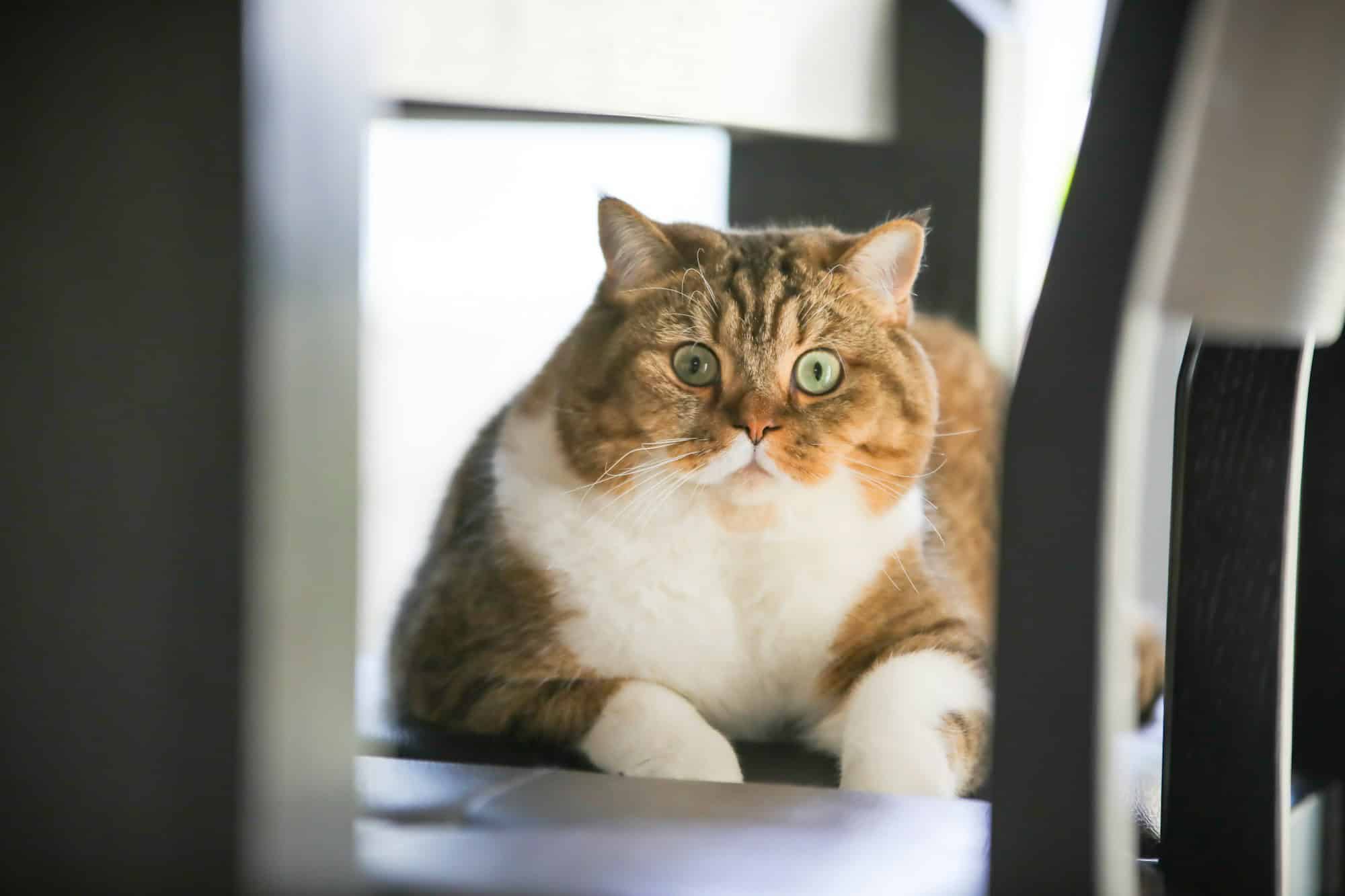
The best over-the-counter cat food for weight loss in 2026 is Hill’s Science Diet Perfect Weight, and the best results overall come from a vet-prescribed diet like Royal Canin Satiety Support or Hill’s Prescription Diet Metabolic. But the food matters less than the maths: cats lose weight when they eat measurably fewer calories than they burn, and no bag does that for you. Below we compare five diets, explain why wet food often outperforms dry, and cover the one rule that makes feline weight loss genuinely dangerous if you get it wrong.
Best cat food for weight loss at a glance
If you want a short answer: start with Hill’s Perfect Weight or Purina Pro Plan Weight Management if your cat is mildly chubby, and ask your vet about a prescription diet if your cat is genuinely obese.
| Food | Type | Best for | Price tier |
|---|---|---|---|
| Hill’s Science Diet Perfect Weight | OTC dry & wet | Best overall OTC pick | Mid |
| Purina Pro Plan Weight Management | OTC dry & wet | High protein, wide availability | Mid |
| Royal Canin Veterinary Satiety Support | Prescription | Cats who beg constantly | Premium |
| Hill’s Prescription Diet Metabolic | Prescription | Genuinely obese cats | Premium |
| Wellness CORE Reduced Fat | OTC grain-free dry | Grain-free preference | Mid–premium |
Prices shift constantly between Chewy, Amazon, Petco and vet clinics, so we list tiers instead of numbers. Check the current price before you buy.
Hill’s Science Diet Perfect Weight — best overall over-the-counter
Choose this if your cat is a few pounds over and you want one bag that does the job without a vet visit. Perfect Weight is the OTC formula most vets name first: calorie-reduced, high in protein relative to fat, and available in both dry and wet. It comes in an indoor variant too, which matters because indoor cats burn far less than the feeding chart assumes.
Downside: it is a maintenance-grade diet, not a therapeutic one. A cat who is properly obese will usually do better on prescription food under supervision.
Purina Pro Plan Weight Management — best high-protein OTC
Choose this if your cat is a fussy eater or you want the widest availability. Pro Plan’s weight formula keeps protein high while cutting fat, which is the right shape for a cat — cats are obligate carnivores and lose muscle quickly when protein drops. It is stocked almost everywhere, which matters more than it sounds when you are six weeks into a diet and cannot find the bag.
Downside: portion discipline is entirely on you. The bag guidelines run generous for a sedentary indoor cat.
Royal Canin Veterinary Satiety Support — best for cats who beg
Choose this if the diet keeps failing because your cat screams at you. Satiety Support is built around high fibre to fill the stomach on fewer calories, and that is the single biggest reason feline diets collapse — the human gives in. It requires a prescription and a vet-set target weight.
Downside: high fibre means more litter box volume, and some cats simply dislike the texture.
Hill’s Prescription Diet Metabolic — best for genuinely obese cats
Choose this if your vet has told you your cat is obese, not just chunky. Metabolic is a therapeutic diet designed for supervised weight loss with regular weigh-ins. Used properly, with measured portions and monthly check-ins, it is the most reliable option on this list.
Downside: cost, and the need for actual vet follow-up. It is not a food you start and forget.
Wellness CORE Reduced Fat — best grain-free option
Choose this if you already feed grain-free and want to stay there. CORE Reduced Fat keeps the brand’s high-meat formulation while trimming fat. Grain-free is a preference rather than a proven advantage for weight loss, but if your cat is already settled on it, switching brands mid-diet is one variable too many.
Downside: grain-free dry foods are often calorie-dense despite the label. Measure, do not eyeball.
Wet food or dry food for cat weight loss?
Wet food usually wins. It is mostly water, so a cat eats a satisfying volume for far fewer calories, and the extra moisture helps urinary health — a common problem in overweight indoor cats. Dry food is cheaper and easier to portion, and free-feeding dry is the single most common cause of a fat cat. If you feed dry, weigh it; a measuring cup is off by a surprising margin.
The rule that makes cat diets dangerous
Never crash-diet a cat. Cats who lose weight too fast — or who stop eating entirely — can develop hepatic lipidosis, a serious liver condition. Safe feline weight loss is slow: roughly half a percent to one percent of body weight per week, set by your vet, with regular weigh-ins. If your cat refuses the new food and eats nothing for more than a day or two, call your vet rather than waiting it out. A cat who suddenly stops eating is its own emergency, which we cover in why is my cat not eating.
Portions matter more than the bag
The honest truth of every weight-loss food is that it works because you feed less of it. Start from your cat’s target weight, not their current one, and split the day’s ration into several small meals. Our cat feeding chart by weight walks through the numbers, and if you are choosing an everyday food afterwards, our guides to the best dry cat food and best cat food for indoor cats cover maintenance. Dog owners doing the same job should read our best dog food for weight loss guide instead.
Move the food, not just the calories
Weight loss in an indoor cat is mostly about activity you have to manufacture. Feed from puzzle feeders, scatter the kibble ration, and add two short play sessions a day — our best cat toys of 2026 roundup covers the wand toys that actually get a lazy cat moving.
One more thing we will admit a bias about, because we make pet ID tags. Cats who start getting more exercise get more curious, and curious indoor cats find open doors. A slimmer, livelier cat is a cat more likely to slip outside. Our $38 NFC smart cat tag is light enough for a breakaway collar, and anyone who finds your cat can tap it with any phone — no app on their end — to see your number straight away. Designer acrylic, made in the USA, engraved backup on the back, no subscription. The free Lohji app also stores weight records and vet notes, which is genuinely handy when you are tracking a diet between weigh-ins. Plenty of other tags work; ours is just the one we would put on our own cats.
Frequently asked questions
How do I know if my cat is overweight?
You should be able to feel the ribs easily under a thin layer of fat, and see a waist when you look down from above. No visible waist and no easily felt ribs means overweight. Your vet will score it out of nine; five is ideal.
How fast should a cat lose weight?
Slowly — broadly half a percent to one percent of body weight per week, set by your vet. Faster than that risks liver problems. A cat who needs to lose two pounds may take six months to do it safely.
Is wet or dry food better for cat weight loss?
Wet food generally makes the diet easier because the same calories fill more of the stomach and add moisture. Dry food can work well if you weigh every portion and stop free-feeding.
Do I need a prescription weight-loss cat food?
Not for a mildly chubby cat — an over-the-counter weight formula plus measured portions is usually enough. Prescription diets are worth it for genuinely obese cats, for cats who beg relentlessly, and for cats with other health conditions.
Can I just feed less of my cat’s current food?
Sometimes, but cutting portions of a regular food also cuts protein, vitamins and minerals. Weight-loss formulas are built to keep nutrition intact at lower calories, which is why vets prefer them over simply feeding less.
Get Your Tag
A lighter, livelier cat is a cat who explores. One tap on our NFC tag shows any finder your number — no app, no subscription.