Dry Skin on Dogs in Winter: Causes, Relief and Red Flags
 Shiloh’s House Team
·
·
14 min read

Most winter flaking comes from dry, heated indoor air, cold wind and too many baths with the wrong shampoo. Run a humidifier, bathe less often with a gentle dog shampoo and conditioner, brush regularly, and ask your vet about omega-3s. But flaky skin is also a sign of allergies, mites, infections and hormone problems, so book a vet visit if your dog is very itchy, losing hair, has sores or a smell, or does not improve.
Last updated: January 2026
Why dogs get dry, flaky skin in winter
Skin trouble is one of the most common reasons dogs see a vet at any time of year. “Itchy skin is the most common condition we see affecting dogs,” Dr. Emily Tincher, chief veterinary officer at Nationwide, said in a 2025 news release. Winter adds a few extra stresses of its own on top of that.
The biggest one is dry air. PetMD notes that a dog’s skin can dry out during the winter months and whenever in-home heating is running, and that dogs who sleep near a heat source are especially exposed. VCA Animal Hospitals points to the constant switch between warm, dry rooms and cold, wet weather outside. The vets at Gallant add cold winds to the list, so it helps to know how cold is too cold for your dog and to keep walks shorter on raw days.
Bathing is the second big factor. The American Kennel Club lists cold weather, dry air, excessive bathing, harsh soaps and poor nutrition among the everyday causes of dry skin, and adds that shampoo left in the coat after a poor rinse can also leave skin flaky. VCA explains that frequent baths strip oils from the skin and coat, and that dogs should only be washed with pet shampoo because their skin has a different pH from ours.
Diet plays a part too. PetMD says many dogs need more fatty acids than commercial foods provide to keep their skin’s normal moisture, and an incomplete diet can leave skin dry. Veterinary dermatologists take these everyday causes seriously. A peer-reviewed Clinician’s Brief article by board-certified dermatologist Dr. Sandra Sargent lists low environmental humidity and excessive bathing among the recognized causes of scaly, seborrheic skin in dogs, alongside fatty acid deficiency and dietary imbalance.

Normal winter dryness or something more
Use this table as a rough guide. The left column is what plain winter dryness usually looks like. The right column lists signs that point to a problem your vet needs to diagnose.
| What you notice | Usually normal winter dryness | Book a vet visit |
|---|---|---|
| Flakes | Small white flakes, mostly when you brush | Heavy scaling, greasy flakes, or dandruff that seems to move |
| Itch | The odd scratch | Constant scratching, licking, chewing, rubbing or head shaking |
| Skin | Looks normal under the flakes | Redness, bumps, scabs, sores or bleeding |
| Coat | A little dull or dry | Hair loss, thinning on both sides of the body, slow regrowth |
| Smell | None | A new or unusual odor, or oily skin |
| Where | Spread over the body | One or two patches |
| Rest of the dog | Eating, drinking and acting normally | Drinking more, weight gain, a potbelly, low energy or seeking heat |
| Rest of the house | Only your dog is affected | You or other pets get itchy red bumps |
Two more clues help. The telehealth vets at Gallant advise calling the vet if your dog’s skin is usually fine in winter but is flakier than normal this year. And the AKC notes that a humidifier, a vet-approved shampoo and fewer baths usually clear dry skin when those factors are the cause, so a dog who does not improve after those changes needs a proper look. If scratching is the main problem, our guide to why your dog is scratching covers the other common triggers.
Skin problems that look like winter dryness
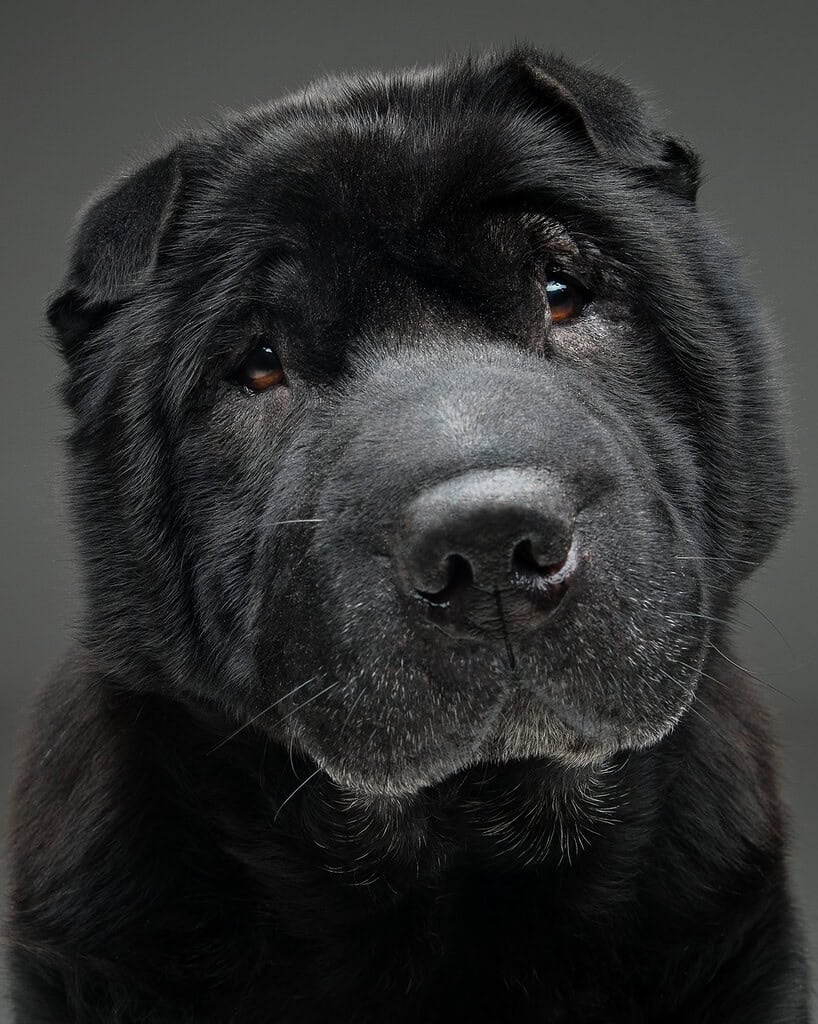
Dry skin is a symptom, not a diagnosis. The AKC lists allergies, parasites, bacterial and fungal infections, Cushing’s disease and hypothyroidism among its causes, along with autoimmune disease and cancer. These are the conditions vets most often need to rule out when a dog arrives with “winter dandruff.”
Allergies and atopic dermatitis. Allergies do not take the winter off. Dr. Tincher describes skin allergies as a year-round, chronic condition, and Texas A&M dermatologist Dr. Adam Patterson notes that dogs can be allergic to indoor triggers such as house dust mites and mold as well as fleas, food and pollen. He says itch can show up as licking, chewing, biting, rubbing, scratching, head shaking or scooting, most often on the face, ears, paws, armpits, groin and rump. Allergic dogs are also prone to bacterial and yeast infections. A dog who licks his feet all winter is worth reading about in our post on why dogs lick their paws.
Walking dandruff. Cheyletiella mites cause a condition nicknamed walking dandruff, because the “dandruff” you see moving is actually the mites. The Merck Veterinary Manual describes scaling along the back as a common sign, with itch that ranges from intense to none at all. The mites are very contagious in multi-pet homes, can spread to people, and can live up to 10 days off the dog. They are also hard to find on dogs who are bathed often, which is one reason a vet may use tape samples or combings rather than guessing. Many flea preventives help control them, so skipping flea treatment in winter carries a cost.
Bacterial and fungal infections. Infections can cause flaking, odor, pimples and scabs, and they are often secondary to another problem such as allergies. The AKC notes that vets usually diagnose them with skin scrapes and cytology, and that ringworm, a fungal infection, can pass to people.
Hypothyroidism. An underactive thyroid slows the whole body down. Merck lists dryness, excessive shedding, slow hair regrowth and hair loss that often appears in the same pattern on both sides of the body, alongside lethargy, weight gain without a bigger appetite and a tendency to seek out warm spots. Cornell’s Riney Canine Health Center notes that the hair loss is usually not itchy and that skin and ear infections can keep coming back.
Cushing’s disease. Too much cortisol causes increased thirst and urination, a bigger appetite, panting, a potbelly, thin skin, hair loss and bruising, according to Merck, mostly in middle-aged and older dogs. The skin can also darken and become greasy and scaly.
Seborrhea. This is a disorder of skin scaling that can be dry (seborrhea sicca, with white, loose scales and a dull coat) or greasy. Dr. Sargent writes that at least 80% of cases are secondary to another condition such as allergies, parasites or a hormone disorder, which is why treating the flakes alone rarely solves it.
Skin health is important because it may reflect disease limited to the skin or even signify a potentially more serious illness.
Dr. Adam Patterson, chief of dermatology, Texas A&M College of Veterinary Medicine
How to bathe a dog with dry winter skin
The single most useful change for most dogs is fewer baths. VCA advises bathing less often than usual in winter, and PetMD suggests a goal of once every two to four weeks for a dog with dry skin. Texas A&M’s Dr. Alison Diesel goes further for healthy dogs, saying they benefit from “a bath a couple of times a year or when they get dirty.” Our guide to how often to bathe a dog covers coat types in more detail.
Choose the product carefully. Use a shampoo made for dogs, never your own. VCA says even baby shampoo is too harsh for a dog’s skin, and Dr. Stickney explains that “human shampoos and conditioners have pH levels that can harm your pets’ skin and cause irritation.” For winter, PetMD recommends an oatmeal-based dog shampoo and suggests switching to a more hydrating shampoo and conditioner pair. Our roundup of the best dog shampoos includes gentle options.
Technique matters as much as the bottle. Rinse until the coat no longer feels slippery, because the AKC notes that leftover shampoo can make skin flaky. Bathe indoors in winter; PetMD says to skip outdoor baths unless it is above 55°F. Towel-dry thoroughly, and Gallant’s vets advise against using a hair dryer on a dog with dry skin.
If your dog’s skin is red, sore or broken, skip the bath and call your vet first, since a medicated shampoo may be needed instead of a regular one.
Humidity, brushing and comfort at home
Put moisture back into the air. PetMD recommends adding a humidifier to the area where your dog spends most of their time, and VCA advises keeping your home humidified through the heating season. The Gallant vets add a reminder to offer plenty of fresh water throughout the day.
Brush often. VCA says regular combing or brushing all winter removes mats, which cut airflow to the skin and trap moisture that can lead to irritation and infection. Gallant suggests brushing or combing at least once a day with a soft brush and light strokes, which also lifts dead skin out of the coat. PetMD adds that trimming the coat short in winter, with your vet’s advice, helps stop snow and ice building up against the skin.
Think about where your dog sleeps, too. Since PetMD flags sleeping near a heat source as a drying factor, a warm bed away from the radiator or wood stove is a better spot than the hearth rug. Thin-coated dogs who feel the cold may also be more comfortable in one of the best dog sweaters on short winter walks. PetMD notes that cold weather dries out paws and noses as well as skin, and recommends protective balms; a dog-safe paw balm is a better choice than anything from your own bathroom cabinet.
Omega-3s and diet, with your vet’s help
Omega-3 fatty acids from fish oil, mainly EPA and DHA, are the most common supplement for skin, and VCA recommends them to help prevent dry, flaky winter skin. There is some good evidence behind them. In a 2020 randomized, placebo-controlled trial in dogs with poor-quality coats, a daily fish-oil supplement significantly improved coat and skin scores, with the benefit reaching a plateau after about two months. The researchers advised giving it for at least two months, and found the improvement faded after the supplement was stopped.
That does not mean more is better. Today’s Veterinary Practice notes that concentrated EPA and DHA supplements have a “therapeutic or even pharmacological effect” and can cause stomach upset, affect platelet function and wound healing, and add calories. Veterinary nutritionist Dr. Craig Datz writes that starting at a high dose can lead to gastrointestinal upset and a fishy odor, and that it is better to start low and increase gradually over several weeks. Some veterinary skin and joint diets already contain enough EPA and DHA that an extra capsule could take a dog over the safe upper limit.
So bring the label to your vet. They can check what your dog’s food already provides, pick a dose based on EPA plus DHA rather than “fish oil,” and tell you whether a skin-support diet would make more sense. PetMD also recommends working with your vet if your dog’s current food may not be complete and balanced, since poor nutrition is a common cause of dry skin.
Human lotions and home remedies to skip
It is tempting to rub your own moisturizer into a flaky dog, but dogs lick off whatever you put on them. The Merck Veterinary Manual notes that pets are commonly exposed to human creams by chewing tubes, grooming product off their fur, or licking it off their owner’s skin.
Zinc oxide creams are another risk. They are found in diaper creams and some sunscreens, and Merck says swallowing them commonly causes vomiting and diarrhea within 2 to 4 hours. Repeated licking of a zinc cream applied to a pet over days or weeks can damage red blood cells. Medicated human creams can be even more dangerous, so stick to products made for dogs and ask your vet before using anything else. The same goes for a cracked, dry nose.
When to call the vet
PetMD says most dry skin is not an emergency, but your vet should hear about it if your dog is very uncomfortable, itching heavily, or has redness or bleeding. Call for an appointment if you see any of the signs in the right-hand column of the table above, or if a few weeks of fewer baths, a humidifier and regular brushing have not helped.
Expect your vet to ask when the problem started and how it has changed, examine the skin and ears, and run simple tests such as skin scrapes or a flea comb, according to PetMD. Blood tests may follow if a thyroid problem or Cushing’s disease is suspected. Treatment depends entirely on the cause, which is why getting the diagnosis right matters more than trying more products at home.
Not tagged yet?
Winter brings early dark evenings, snow that hides scent trails and more dogs slipping out during holiday visits. A Shiloh’s House smart tag puts your contact details one phone tap away if your dog ever wanders off in the cold.
Frequently asked questions
Why does my dog get dandruff in winter?
Usually because heated indoor air is dry, the dog is moving between warm rooms and cold weather, or baths are stripping the skin’s oils. Allergies, mites, infections and hormone problems can look the same, so see your vet if the flaking is heavy or comes with itching, hair loss or sores.
How often should I bathe a dog with dry skin in winter?
Less often than in summer. PetMD suggests once every two to four weeks for a dog with dry skin, and Texas A&M vets advise no more than once a week unless your vet prescribes medicated baths. Use a gentle dog shampoo, such as an oatmeal formula, and rinse well.
Does a humidifier help a dog’s dry skin?
Yes, when dry indoor air is the cause. PetMD and VCA both recommend adding humidity to the rooms where your dog spends most of their time during the heating season.
Can I put human lotion on my dog’s dry skin?
Dogs lick off what you apply, so skip human lotions and creams. Zinc oxide creams can cause vomiting and diarrhea, and pure tea tree oil has caused serious poisoning in dogs. Use a product made for dogs and ask your vet first.
Should I give my dog fish oil for dry skin?
Omega-3s can help, but talk to your vet before starting. A 2020 trial found benefits took about two months to build, and too high a dose can cause stomach upset and other side effects, especially if your dog’s food already contains fish oil.
How do I know if it is walking dandruff?
Walking dandruff is caused by Cheyletiella mites. Look for scaling along the back and flakes that seem to move, especially if other pets or people in the house get itchy. Your vet can confirm it with tape samples or combings and prescribe treatment for every pet in the home.
Sources
- VCA Animal Hospitals, “5 winter weather skin tips.”
- American Kennel Club, Anna Burke, “Dry Skin on Dogs: Signs, Symptoms, Treatments” (2016, updated 2025).
- PetMD, Sandra C. Mitchell, DVM, “Dog Dry Skin: Causes, Treatments, and Prevention” (2023, updated 2025).
- PetMD, Brittany Kleszynski, DVM, “Why Dog Grooming Is Important in Winter” (January 15, 2026).
- dvm360, “Skin allergies rank among the most common conditions in dogs and cats, pet insurance data shows” (2025), reporting Nationwide claims data.
- Sargent S., “Primary & Secondary Keratinization Disorders,” Clinician’s Brief (2017).
- Texas A&M College of Veterinary Medicine, Pet Talk, “Veterinary dermatologists help pets look and feel their best” (2017).
- Texas A&M College of Veterinary Medicine, Pet Talk, “Pets can have allergies too” (2018).
- Texas A&M College of Veterinary Medicine, Pet Talk, “Basic Pet Grooming Needs” (2014).
- Texas A&M College of Veterinary Medicine, Pet Talk, “Proper Pet Hygiene” (2017).
- Gallant, “Dry Winter Skin and Your Dog: What to Know” (2020).
- Dryden M.W., “Mite Infestation (Mange, Acariasis, Scabies) in Dogs,” Merck Veterinary Manual, Dog Owners edition (2018).
- Western College of Veterinary Medicine, University of Saskatchewan, “Cheyletiella species,” Learn About Parasites.
- White S.D., “Whole-body Disorders that Affect the Skin in Dogs,” Merck Veterinary Manual, Dog Owners edition (2018, updated 2024).
- Peterson M.E., “Disorders of the Thyroid Gland in Dogs,” Merck Veterinary Manual, Dog Owners edition (2018).
- Greco D.S., “Disorders of the Pituitary Gland in Dogs,” Merck Veterinary Manual, Dog Owners edition (2018).
- Cornell University College of Veterinary Medicine, Riney Canine Health Center, “Hypothyroidism.”
- Combarros D. et al., “A prospective, randomized, double blind, placebo-controlled evaluation of the effects of an n-3 essential fatty acids supplement (Agepi ω3) … in dogs with poor quality coats,” Prostaglandins, Leukotrienes and Essential Fatty Acids (2020).
- Walsh S., “Fish Oil Dosing in Pet Diets and Supplements,” Today’s Veterinary Practice (2020).
- Datz C., “Dermatology and nutrition: Beyond food allergy,” Veterinary Practice News (2019).
- Khan S.A., McLean M.K., Slater M.R., “Concentrated tea tree oil toxicosis in dogs and cats: 443 cases (2002–2012),” Journal of the American Veterinary Medical Association (2014).
- Stern L., “Toxicosis in Animals From Human Topical Agents,” Merck Veterinary Manual (2025).