You keep a cat out of the Christmas tree by making the tree boring and hard to reach, and by giving your cat something better to climb. Anchor a stable tree to the wall, skip tinsel, hang unbreakable ornaments up high, cover the water, and wrap the base with a texture cats dislike. Then add a cat tree nearby, schedule daily play, reward your cat for staying off, and close the door when no one can watch. Never punish or spray your cat.
Last updated: December 2025
Why is a Christmas tree risky for cats?
A Christmas tree is, from your cat’s point of view, a brand-new piece of climbing furniture that showed up overnight, covered in dangling toys and twinkling lights. That is why so many cat owners spend December picking ornaments off the floor. The mess is the small problem. The real risks are what your cat can pull down, chew or swallow.
Zoetis veterinarian Melody Conklin lists four main dangers: an unsecured tree that tips during a climb or a case of the zoomies, chewing hazards like broken ornament pieces and wire hooks, swallowed garland, tinsel and needles that can cause blockage, and light cords that can shock or burn a cat who chews them. VCA Animal Hospitals adds that pine needles can irritate skin and cause nausea and intestinal obstruction, and that tree water can hold fertilizers, pine oils and bacteria.
The single decoration veterinarians worry about most for cats is tinsel. Swallowed strands act as a linear foreign body, and the numbers from published case series show why.
| Study | Cases | Key finding |
|---|---|---|
| Hayes, 2009 | 208 dogs and cats | Cats survived 100% of solid foreign bodies but only 63% of linear ones |
| Felts, Fox and Burk, 1984 | 64 cats with linear foreign bodies | Surgery needed in 96.9%; most cats were under 4 years old |
| Felts, Fox and Burk, 1984 | Cats whose bowel was cut by the string | About 50% recovered |
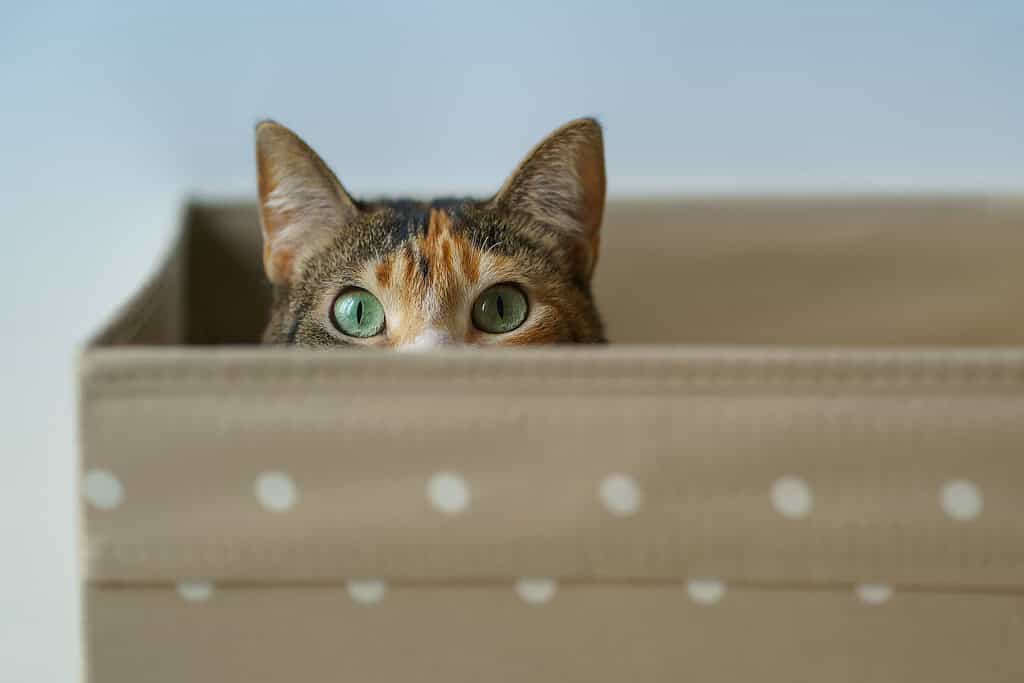
Why do cats climb Christmas trees?
Cats are not climbing the tree to annoy you. They are doing several perfectly normal cat things at once, and once you see which needs the tree is meeting, it gets much easier to meet them somewhere else.
Height feels safe. Veterinary behaviorists Meghan Herron and Tony Buffington write that because of their heritage as both a predator and a prey species, domestic cats naturally climb for observation and safety. A tall tree in the middle of the living room is the best lookout post your cat has ever been offered.
Anything new gets investigated. A tree arrives with new smells, new textures and a new shape in a room your cat thought they knew by heart. University of Illinois veterinary toxicologist Michael Biehl puts it simply:
“Animals will investigate anything new in their environment. They explore things with their mouth, which can get them into trouble.”
Dr. Michael Biehl, Veterinary Toxicologist, University of Illinois College of Veterinary Medicine
It looks like prey. Ornaments swing when touched, ribbons wiggle and tinsel flutters. Dr. Biehl notes that cats are drawn to tinsel because it is shiny and resembles string, a cat favorite. To a cat with unspent hunting energy, the whole tree is a toy box.
It is a good hiding place. Dr. Conklin points out that a tree checks off several cat favorites at once: climbing, bouncing ornaments, twinkling lights, string-like wires and a big blanket around the bottom. The tree skirt and the gifts underneath make a cozy den.
The useful takeaway is that most tree climbing is driven by needs your cat has all year: height, novelty and play. A cat who already has good perches and daily hunting games is usually far less interested in the tree.
Which kind of Christmas tree is easiest to cat-proof?
The tree you choose matters more than any spray or gadget. Here is what veterinarians suggest when you are shopping or setting up:
- Artificial or real. PetMD veterinarian Katie Grzyb notes that an artificial tree avoids the risks of tree water and dropped needles, though chewed plastic or aluminum can still irritate the mouth or block the gut. If you prefer a real tree, she suggests a low-drop variety such as a Nordmann fir.
- Smaller and slimmer. Dr. Conklin recommends a tall, skinny pencil tree, which offers fewer sturdy branches to climb. A tabletop tree in a room your cat cannot reach, or one placed inside a closed-off area, is the easiest option of all for kitten households.
- A wide, heavy base. Choose a broad stand, and add weight to the base if needed. Dr. Grzyb suggests a heavy base or attached weights so your cat cannot knock it over.
- An anchor line. Tie the tree to a wall or ceiling hook with wire, rope or heavy nylon line near the middle or top. Even a determined climber then cannot bring it down.
- Smart placement. Keep the tree away from shelves, bookcases and high-backed chairs that work as launch pads into the branches. A corner location also limits how many sides your cat can approach from.
How should you decorate a tree when you have a cat?

Once the tree is stable, think about the decorations the way your cat will: as things to bat, chew, carry off and swallow. The goal is a tree where nothing is worth stealing and nothing is dangerous if it does fall.
Start with the bottom third of the tree. That zone is within paw reach of a cat sitting on the floor, so leave it bare or hang only big, soft, unbreakable ornaments there that are too large to swallow. Put anything glass, heirloom or fragile on the top branches. PetMD warns that glass ornaments that fall and shatter can cut the mouth and gut, and that fragments can cause blockages or perforations that only surgery can fix. A simple rule: if it would break on a tile floor, it does not belong where a cat can knock it down. Shatterproof plastic, felt, wood and fabric ornaments are much safer choices.
Next, look at how ornaments are attached. Dr. Conklin points out that loop hangers hold ornaments more securely than metal hooks, and that wire hooks can poke into a cat’s cheeks and gums. Tying ornaments on with a short loop of ribbon and closing it tightly around the branch makes them harder to bat loose. Crimp any metal hooks you do use so they cannot slide off.
Leave tinsel out entirely. This is the one rule almost every veterinary source agrees on. The tiny backward-facing barbs on a cat’s tongue make it hard to spit out a strand once it is in the mouth, and Dr. Biehl explains that the more a cat tries to get rid of the tinsel, the more of it gets swallowed. PetMD describes how one end can catch under the tongue while the rest travels into the intestine, which then bunches up around it like fabric on a drawstring. VCA notes that with every intestinal contraction the material rubs against the gut wall, and it can eventually cut through it. Skip fuzzy garland and long ribbon for the same reason, and pick up gift ribbon and string as soon as presents are opened.
Skip edible and scented decorations too. Strings of popcorn or cranberries and cookie ornaments invite chewing. VCA warns that homemade salt dough ornaments can cause salt toxicity, with signs that may be delayed for several hours as the dough breaks down. Some ornaments and potpourri are scented with cinnamon or peppermint oils, which Dr. Conklin flags as scents to avoid around cats.
Lights need attention as well. Run cords up the back of the tree, tuck them behind furniture and cover the length near the floor with a cord protector. VCA notes that chewed cords can cause electrical burns to the mouth and tongue, and that old-fashioned bubble lights may contain irritating chemicals. Dr. Grzyb suggests battery-operated lights with the battery pack hidden in the tree. Unplug everything when you leave the house or go to bed.
Finally, deal with the water. A real tree needs it, and cats love a novel water bowl. Dr. Biehl notes that tree stand water is often topped up all season without being emptied, which makes it a good home for bacteria and mold. Dr. Grzyb adds that additives such as fertilizers and preservatives can be harmful. Use plain water, then cover the stand completely with a lidded tree base, a snug tree collar or a cut piece of cardboard taped down under the skirt. Keep your cat’s own water bowl fresh and easy to reach.
Which cat deterrents actually work around a Christmas tree?
A deterrent works best when it makes the tree area slightly unpleasant to walk on or touch, while the rest of the room stays welcoming. The MSD Veterinary Manual notes that a cat can be taught to avoid an area by changing the substrate, such as an upside-down carpet runner or double-sided sticky tape, or with a motion-activated device. Here is how the common options compare, based on that guidance and the sources below.
| Deterrent | How well it works | Safety for cats |
|---|---|---|
| Closed door or gated room | Most reliable | Safe; use gates with vertical bars, which are harder to climb |
| Upside-down carpet runner or double-sided tape around the base | Good for many cats | Safe |
| Aluminum foil on the floor or tree skirt | Fair; some cats get used to it | Safe if your cat does not chew it |
| Barrier around the lower branches | Good at stopping climbs from the bottom | Safe |
| Motion-activated air spray | Often effective | Physically safe but can frighten nervous cats |
| Fresh citrus peels at the base | Hit or miss | Use with caution; peels contain citrus oil |
| Essential oil sprays or diffusers | Not recommended | Unsafe; many oils are toxic to cats |
| Spray bottle or yelling | Poor; works only while you watch | Harms trust; veterinary guidelines advise against it |
Commercial cat deterrent sprays are another option. Read the label and pick one made for use around cats, and spray it on the floor covering or tree skirt rather than on the tree where your cat might lick it.
What should you give your cat to climb instead of the tree?
Deterrents tell your cat where not to go. Alternatives tell them where they can go, and that is the half of the plan that makes the tree lose its appeal. Dr. Conklin recommends giving cats perches so they can meet their need to climb, plus toys in the same room as the tree.
- A cat tree near, but not touching, the Christmas tree. Give your cat a tall, stable climbing spot with a view of the room. Place it a few feet away so it cannot be used to leap into the branches. Our guide to the best cat trees covers sturdy options for big cats and small spaces.
- Wall shelves. A stepped run of shelves gives your cat a high route around the room. See our picks for cat wall shelves and climbing walls.
- Daily hunting games. Herron and Buffington note that indoor cats deprived of predatory outlets miss out on mental and physical activity. Two short wand-toy sessions a day, ending with a catch and a treat, burn the energy that would otherwise go into stalking ornaments. Our guide on how to play with your cat shows how.
- Rewards near the tree. Dr. Conklin suggests giving treats, praise or play when your cat sits calmly near the tree or comes away when called. Toss a treat onto the cat tree every time your cat chooses it over the real one.
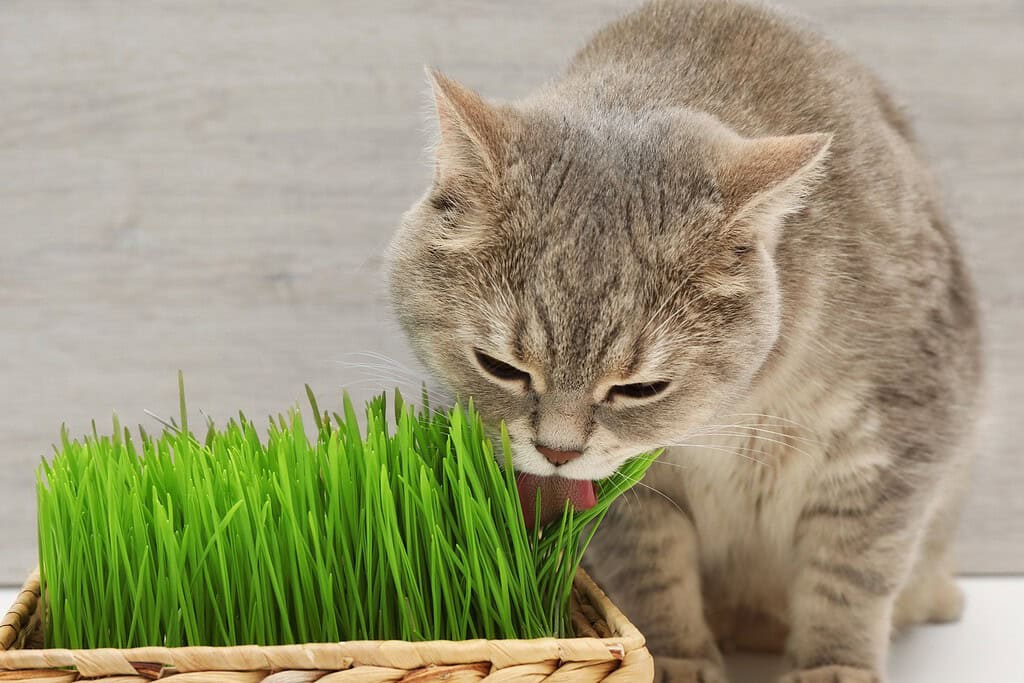
- A safe chewing plant. Cats who want to nibble needles may be satisfied by a pot of cat grass or catnip, which Dr. Conklin suggests as an outlet.
Expect a few days of testing. Cats learn by repetition, and a calm, consistent routine of blocking the tree and rewarding the alternatives usually wins within a week or two.
When should you close the door on the Christmas tree?
Whenever no one is watching. Even a well-anchored, well-decorated tree is a gamble with a curious young cat left alone overnight. Dr. Biehl recommends keeping pets out of decorated areas when they are home alone, or all the time if they cannot be trusted, and suggests baby gates to create a safe zone. Dr. Grzyb adds that if you cannot make the tree safe no matter what you try, the best choice is to keep your cat out of the tree room entirely.
That can be simpler than it sounds. If the tree is in a room with a door, close it at night and when you leave. If it is in an open-plan space, a tall pet gate or exercise pen around the tree works for many cats, though strong jumpers may clear it. A pet camera lets you check in when you are out. Kittens in their first holiday season are the group most worth confining, since they are the most playful and, per the 64-cat review, the most likely to end up with a string-type foreign body.
Think about the whole day, too. Gift wrapping sessions leave ribbon on the floor, Christmas morning creates piles of string and packaging, and guests arriving and leaving can mean an open front door. Clean up as you go, and give your cat a quiet room of their own with food, water, litter and a bed during the busiest hours.
Why shouldn’t you punish a cat for climbing the tree?
Because it does not work, and it can make things worse. The AAHA/AAFP Feline Life Stage Guidelines are direct: cats should not be punished. Yelling, startling the cat, spraying them with water or physical punishment only scare the cat and may lead them to run away or respond aggressively, and punishment impairs the bond between you. The MSD Veterinary Manual adds that punishment can cause fear and anxiety toward the owner and, at best, stops the behavior only when the owner is present.
That last point is the real problem with the spray bottle. Your cat learns that climbing the tree is unsafe when you are in the room, not that the tree is off limits. The climbing simply moves to 3 a.m. Meanwhile, your cat may start avoiding you, which is the opposite of what you want during a busy, stressful season.
What works instead is the combination in the sections above: make the tree inconvenient, make good choices rewarding and remove the opportunity when you cannot supervise. If your cat is knocking ornaments off on purpose to get your attention, the same approach applies, and our guide to why cats knock things off tables explains how to stop rewarding it by accident.
What should you do if your cat eats tinsel or gets out during the holidays?
If you see your cat swallow tinsel, ribbon or string, call your veterinarian right away, even if your cat seems fine. The FDA notes that signs can take a few hours or several days to appear and include vomiting, diarrhea, poor appetite and low energy. If you see a strand hanging from your cat’s mouth or bottom, do not pull it.
The tree is only one holiday hazard. Plants, food and guests bring their own risks, which we cover in our broader Christmas pet safety guide. Lilies in holiday bouquets are an emergency for cats, as explained in are lilies toxic to cats, and the list of foods cats can’t eat is worth a look before the holiday meal.
Holiday visitors also mean more chances for an indoor cat to slip outside, which is why we believe indoor cats need ID tags. The free Lohji app from Shiloh’s House (with optional in-app purchases) holds your cat’s Smart Tag profile, with up to three contacts, one-tap Call, Text, Email and Map, medical and behavior notes, and your vet and rabies ID. A finder just taps the tag with a phone, no app needed. It can also turn one clear photo of your cat into a 3D animated-movie-style character for stickers, including Christmas designs, and holiday wallpapers. Get the Lohji app on the App Store or Google Play.
Holiday guests, open doors, one tag
If your cat slips out while the house is full, a Shiloh’s House Smart Tag lets anyone tap it with a phone to see their profile and reach you with one tap.
Frequently asked questions
How do I stop my cat from climbing the Christmas tree?
Combine prevention and alternatives. Anchor a stable tree to the wall, keep it away from furniture your cat can jump from, cover the base with an upside-down carpet runner or double-sided tape, and leave the lower branches bare. Then place a cat tree nearby, play with your cat twice a day and reward them for choosing their own perch. Close the room when you cannot supervise.
Is an artificial or real Christmas tree better for cats?
An artificial tree is usually easier because there is no tree water and fewer dropped needles, but cats can still chew plastic pieces. If you prefer a real tree, choose a low-drop type such as a Nordmann fir, use plain water and cover the stand completely. Whichever you pick, a wide, heavy base and an anchor line matter most.
Is tinsel dangerous for cats?
Yes. Tinsel is one of the most dangerous decorations for cats. Swallowed strands can become a linear foreign body that bunches the intestine and can cut through it, usually requiring surgery. In one 208-case study, only 63% of cats with linear foreign bodies survived. It is safest to leave tinsel off the tree entirely if you have a cat.
Can Christmas tree water make cats sick?
It can. Tree water is often topped up all season without being emptied, which lets bacteria and mold grow, and additives such as fertilizers and preservatives can be harmful. Drinking it may cause stomach upset. Use plain water, cover the stand with a lid, tree collar or taped-down cardboard, and keep your cat’s own water bowl fresh.
Does citrus keep cats away from the Christmas tree?
Some cats dislike the smell of citrus peels, but results are inconsistent and citrus oil is one of the essential oils known to be toxic to cats. Never use citrus or other essential oil sprays or diffusers near your cat. Textured deterrents like double-sided tape or an upside-down carpet runner are safer and often work better.
Is it okay to use a spray bottle to keep my cat off the tree?
No. Veterinary guidelines advise against spraying cats with water, yelling or any other punishment. It scares cats, can cause aggression or avoidance, damages your bond and usually only stops the climbing while you are watching. Reward your cat for using a cat tree instead, and block access to the Christmas tree when you are not around.
Sources
- Holiday Safety Tips for Cat Owners, VCA Animal Hospitals, n.d.
- Holiday Toxins for Pets, VCA Animal Hospitals, n.d.
- How to Keep Cats Away from Your Christmas Tree, Zoetis Petcare, n.d.
- Are Christmas Trees Toxic to Cats?, PetMD, 2022
- Pets and Holiday Decorations Don’t Mix, University of Illinois College of Veterinary Medicine, 2018
- Take the “Oh No!” Out of Your and Your Pets’ Holiday, U.S. Food and Drug Administration, n.d.
- Gastrointestinal Foreign Bodies in Dogs and Cats: A Retrospective Study of 208 Cases, Hayes, Journal of Small Animal Practice, 2009
- Thread and Sewing Needles as Gastrointestinal Foreign Bodies in the Cat: A Review of 64 Cases, Felts, Fox and Burk, JAVMA, 1984
- Essential Oils and Cats, Pet Poison Helpline, 2018
- 2021 AAHA/AAFP Feline Life Stage Guidelines: Behavior and Environmental Needs, AAHA, 2021
- Behavior Problems of Cats, MSD Veterinary Manual, 2025
- Environmental Enrichment for Indoor Cats, Herron and Buffington, Compendium, 2010