Why Do Cats Eat Grass? What Science Says and When to Worry
 Shiloh’s House Team
·
·
15 min read
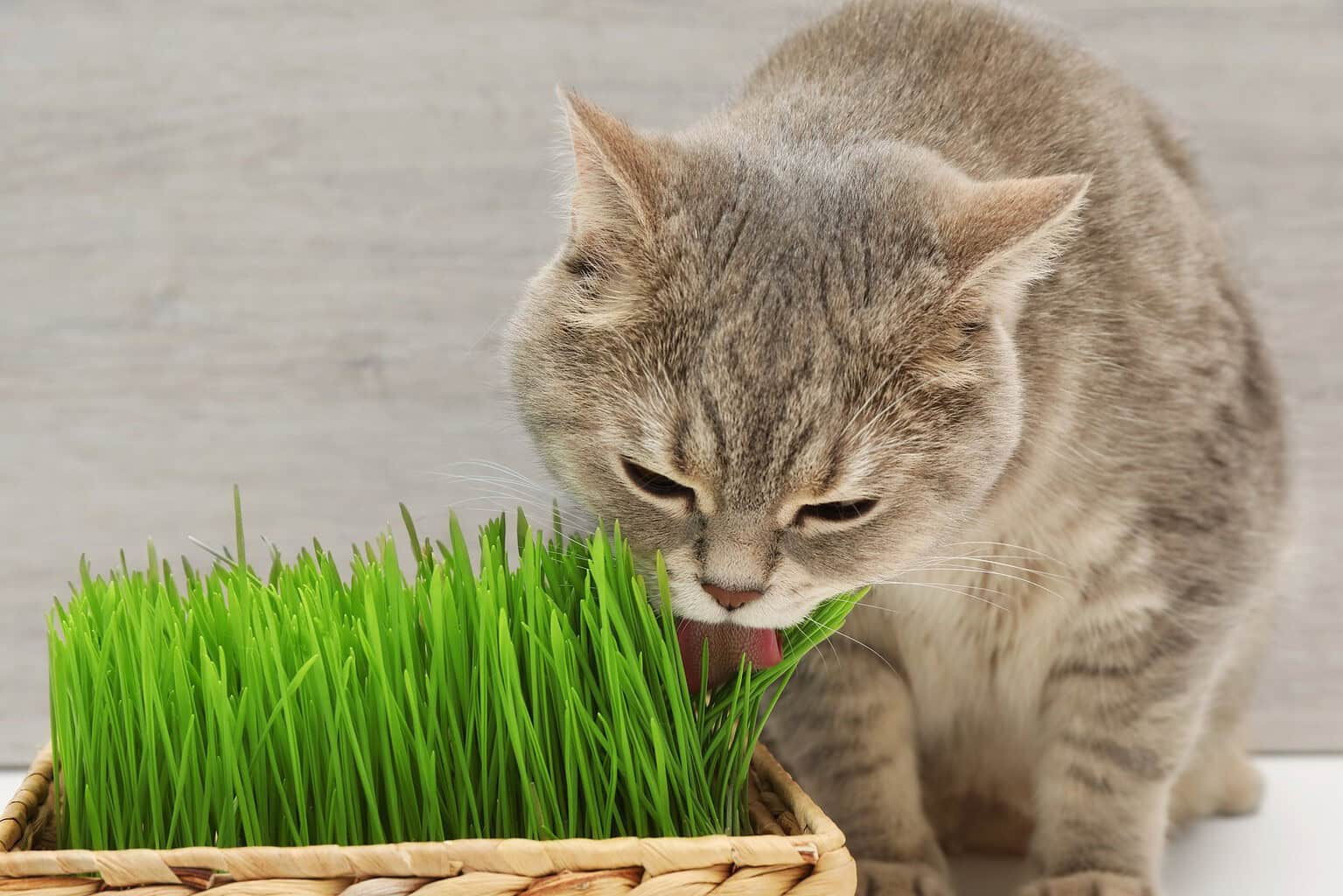
Cats eat grass mostly because it is a normal, inherited behavior, not because they feel sick. In a large UC Davis survey of cat owners, 71% of cats were seen eating plants at least six times, and about nine in ten looked perfectly healthy beforehand. The leading theory is that wild ancestors ate grass to help push out intestinal worms. Untreated grass and cat grass are generally safe in small amounts, but lilies, lawn chemicals and frequent vomiting are reasons to act.
Last updated: October 2026
Why do cats eat grass?
If you have ever watched your cat march outside, chew a mouthful of lawn and then trot back in looking pleased with themselves, you are in good company. Plant eating is one of the most common things cats do that owners ask veterinarians about, and for a long time the standard answer was simply “they must feel sick.” The research does not back that up.
Veterinary behaviorist Benjamin Hart and colleagues at the University of California, Davis School of Veterinary Medicine ran two large online surveys of cat owners, one launched in 2006 and one in 2016. They only counted cats whose owners had known them for at least 11 months, could watch them three or more hours a day, and (for indoor cats) gave them access to non-toxic plants. That filtering matters, because it means the owners were actually in a position to see the behavior.
The headline finding is that plant eating is ordinary. In the second survey, 71% of cats had been seen eating plants at least six times and 61% more than ten times. Among cats seen eating plants at least ten times, 67% were estimated to do it at least weekly. In the first survey, 65% of cats ate plants weekly. The authors concluded that, as in dogs, plant eating in cats mostly reflects a normal, common behavior.
So the honest answer to “why do cats eat grass” is that cats seem built to do it. Veterinarians still debate the exact purpose, and several theories probably overlap: an ancestral habit for clearing parasites, a bit of fiber that moves things along, the occasional urge to bring up something that does not sit well, and plain enjoyment. Dogs do it too, for many of the same reasons, which we cover in why your dog eats grass.

What did the UC Davis study find about cats eating plants?
The first UC Davis survey broke cats into age groups, and the pattern is striking. The youngest cats ate plants the most and almost never seemed sick or vomited afterward. Older cats ate plants less often but were far more likely to throw up afterward.
| Cat’s age | Eats plants weekly | Looks ill before eating | Frequently vomits after | Mostly eats grass |
|---|---|---|---|---|
| Under 1 year | 93.4% | 0% | 2.7% | 30.9% |
| 1 to 2 years | 75.1% | 3.8% | 19.8% | 52.5% |
| 3 to 9 years | 62.6% | 5.7% | 36.5% | 52.5% |
| Over 9 years | 57.5% | 9.4% | 57.1% | 62.8% |
Source: Hart et al., Survey 1, Animals, 2021. Kittens under a year actually chose non-grass plants more often than grass, which is worth remembering if you have a young cat and a windowsill full of houseplants.
The second survey added two more useful numbers. Overall, 9% of owners said their cat frequently looked ill before eating plants, and 27% said their cat frequently vomited afterward. In cats over a year old that ate plants often, owners reported plant material in the vomit 69.4% of the time and in the feces 34.4% of the time.
Is the parasite-purging theory the real reason cats eat grass?

It is the best-supported explanation we have, and it starts with what wild cats do. Researchers have been finding grass in the droppings and stomach contents of wild carnivores for decades. The UC Davis team points to a review of 352 studies that found evidence of fibrous plant eating in 124 species of carnivores, including 81 studies of the cat family, covering lynx, panthers, pumas and leopards. In nine of those reports, grasses or sedges turned up alongside intestinal parasites, which led the review authors to propose that the plant material helps expel the worms.
Some of the most vivid evidence comes from other animals. The biologist Adolph Murie, studying the wolves of Mount McKinley in the 1940s, found blades of grass wrapped around intestinal worms in wolf scats and suggested grass might have a “scouring effect.” Researchers studying the Chinese lesser civet in Taiwan found whole blades of grass in its feces with adult Toxocara roundworms trapped inside. The idea is that undigested grass increases gut movement and physically sweeps parasites along as it passes through.
Hart’s argument is that virtually every wild carnivore carries some intestinal parasite load, so a regular habit of eating plants would help keep that load tolerable, even though the animal cannot sense the worms. If that habit helped ancestors survive, it would be passed down as an instinct, and modern house cats would still feel the urge whether or not they have parasites. In the UC Davis paper, the authors write that this behavior is presumably innate and expressed in the domestic cat at some level.
The age pattern from the surveys fits this neatly. In the wild, young carnivores are more vulnerable to the nutritional cost of worms because they are still growing and have less immunity, so eating plants more often would pay off most for them. That is exactly what owners reported: cats under a year old ate plants most often and rarely seemed sick or vomited afterward. Hart also noted that young cats eating plants more than older cats suggests the habit is not simply copied from older cats in the home.
The surveys also help rule out other explanations. If cats ate grass mainly because they felt ill, most should look unwell beforehand, but more than 90% did not. If cats ate grass mainly to bring up hairballs, long-haired cats should do it more than short-haired cats. They did not. Domestic short-haired and long-haired cats ate plants at about the same rate, and the short-haired Siamese and long-haired Burmese showed no difference either. That is a blow to one of the most popular explanations online.
The theory is not proven, and the researchers say so. A true test would mean giving grass to cats with a measured worm load and checking whether more worms are expelled than in untreated cats, which they describe as not feasible. They also leave the door open to other factors, such as a stomach upset that sometimes triggers plant eating, or a deficiency in some trace nutrient. PetMD veterinarian Jamie Lovejoy, DVM, sums up the current view well: there is no sign that pet cats deliberately eat grass to deworm themselves, but the parasite benefit is a very likely reason the species held on to the trait.
For a modern indoor cat on a complete diet and regular parasite prevention, that ancient benefit is mostly gone. What remains is the urge, and the practical job for owners is to give that urge a safe outlet.
Why does my cat eat grass and throw up?
Because cats are carnivores, they cannot break down grass the way cows and horses can. PetMD notes that grass often comes back up in vomit or passes through unchanged in the stool. Texas A&M veterinarian Lori Teller explains one theory this way: grass is a source of fiber that can act as a mild laxative or trigger vomiting, and wild cats may have used it to bring up the indigestible parts of prey, like fur, bones and feathers.
The UC Davis data suggest the grass-then-vomit link is real for a minority of cats and grows with age. Overall, 27% to 37% of cats in the two surveys frequently vomited after eating plants, rising to 57.1% in cats over nine years old. The authors say that is high enough to suggest that a stomach upset sometimes triggers plant eating, followed by vomiting. In other words, some cats may reach for grass because their stomach already feels off.
What about hairballs? Grass may help some cats move hair along, and fiber can ease mild constipation, but the surveys found no difference in plant eating between long-haired and short-haired cats. If your cat brings up hair often, that deserves its own look. Our guide to why cats get hairballs covers grooming, diet and when hairballs point to a bigger problem.
An occasional pile of grass on the rug from an otherwise bright, hungry cat is not usually an emergency. A pattern is different. PetMD warns that a cat who frequently eats grass and then vomits may have a gastrointestinal disease such as inflammatory bowel disease or parasites, and recommends talking to your vet, especially if the behavior is new or increasing. For a full rundown of vomiting causes, see why your cat is throwing up.
Is it safe for cats to eat grass?
Usually, yes, as long as it is the right grass in the right amount. PetMD says grass should be safe for your cat as long as it is not treated with pesticides or fertilizers. The bigger risks are what is on the grass, what is growing next to it, and how much your cat eats.
“Cat grass is not a required part of a cat’s diet if the food they are eating is well-balanced, but it is something that many cats enjoy.”
Dr. Lori Teller, Clinical Associate Professor, Texas A&M College of Veterinary Medicine & Biomedical Sciences (Pet Talk)
Lawn chemicals. A Colorado State University fact sheet notes that pets can be exposed to lawn pesticides simply by eating grass, as well as by walking on treated lawns and licking their paws. The ASPCA advises keeping pets off areas treated with liquid products until they are dry and watering granular products in well. International Cat Care adds that cats are usually exposed to weed killers by brushing against wet plants or walking on treated grass and then grooming, and that it may be best to skip weed killers and pull weeds by hand if you have a free-roaming cat. Signs of herbicide or pesticide poisoning can include vomiting, drooling, tremors, weakness and trouble breathing.
Too much at once. PetMD cautions that eating large amounts or very long blades of grass could lead to an intestinal blockage, and VCA notes that overeating can cause excess vomiting. VCA suggests treats of any kind, including grass, stay under 10% of daily calories.
Dirt and mold. VCA warns that parasite eggs can survive in soil for long periods, so a cat that grazes down to the roots can pick up worms. Indoor cat grass that turns moldy or sickly should be tossed and regrown.
Which plants are safe for cats and which are toxic?
Cat grass is not one plant. Dr. Teller describes it as a combination of grasses such as rye, barley, oat and wheat, and VCA adds alfalfa to the list. Kansas State extension staff name barley, oat and wheat grass as safe options. The danger is that a cat used to nibbling greens may not tell the difference between a pot of oat grass and a toxic houseplant. As the UC Davis authors put it, most cats seem to have a consistent urge to eat plants, so indoor cats are likely to chew houseplants.
| Plant | Risk to cats | What can happen |
|---|---|---|
| Wheat, oat, barley, rye grass (cat grass) | Safe in moderation | Occasional vomiting if a cat overeats |
| Untreated lawn grass | Generally safe | Parasite eggs in soil; chemical exposure if treated |
| True lilies and daylilies (Easter, tiger, Asiatic, stargazer) | Deadly | Kidney failure in less than 3 days from a small bite, pollen or vase water |
| Sorrel and shamrock (Oxalis) | Serious | Low blood calcium; kidney injury within 72 hours |
| Kalanchoe | Serious in large amounts | Stomach upset; heart effects with big ingestions |
| Peace lily, calla lily, pothos, philodendron, dumb cane | Irritating | Mouth pain, drooling, vomiting from calcium oxalate crystals |
| Aloe (sap) | Mild to moderate | Vomiting, diarrhea, lethargy |
Lilies deserve special attention. The FDA warns that eating a small piece of a leaf or petal, licking pollen off the fur or drinking vase water can cause fatal kidney failure in less than three days, and that if treatment is delayed 18 hours or more, the damage is generally irreversible. Our guide to whether lilies are toxic to cats walks through exactly what to do. Toxic foods are a separate list, covered in foods cats can’t eat.
Does a grass-nibbling cat need an ID tag?
A cat who loves the lawn is a cat who wants to be outside, and that is worth taking seriously. Indoor-outdoor cats roam, and even strictly indoor cats who stare at the grass through the window may slip out the door the first chance they get. Dr. Teller notes that homegrown cat grass is safer for outdoor cats than whatever they nibble outside, and an indoor grass tray is also one of the easiest ways to make the inside more interesting than the yard. For more ideas, see how to keep an indoor cat from escaping.
The numbers on lost cats are sobering. In a national ASPCA-backed survey published in 2012, 15% of cats had been lost in the past five years, and only 74% to 75% of those cats were recovered, compared with 93% of dogs. Cats were less likely than dogs to wear any ID or even a collar, and of the 18 cats that were never found, 15 had no personalized ID. That is why we believe indoor cats need ID tags too.
A grass habit is also exactly the kind of detail a finder should know. If your cat vomits after eating grass but is otherwise healthy, or has a sensitive stomach, a note on their profile can save a worried stranger an unnecessary vet trip. The free Lohji app from Shiloh’s House (with optional in-app purchases) holds your cat’s Smart Tag profile, including medical and behavior notes, up to three contacts with Call, Text, Email and Map, and your vet and rabies ID. It also turns one clear photo of your cat into a 3D animated-movie-style character you can make into stickers and wallpapers. Get the Lohji app on the App Store or Google Play.
Let the finder know your cat’s quirks
A Shiloh’s House Smart Tag lets anyone who finds your lawn-loving cat tap it with a phone, no app needed, to see their live profile with medical notes and one-tap call, text and directions to you.
When should you call the vet about your cat eating grass?
Most grass eating needs no treatment at all. The time to call is when the grass is a clue to something else. Contact your veterinarian if you notice any of the following:
- Vomiting more than once a week, or vomiting with lethargy, weakness, poor appetite, blood, increased thirst, urination changes or diarrhea, per Cornell.
- A sudden new grass obsession, or eating it voraciously. Dr. Teller says that may be worth a vet visit to make sure the diet meets your cat’s needs.
- An older cat that suddenly vomits after eating plants. Cornell lists parasites, inflammatory bowel disease, kidney disease, hyperthyroidism, diabetes and foreign bodies among causes of feline vomiting.
- Any contact with lilies, lily pollen or vase water, which is an emergency.
- Recent lawn treatment followed by drooling, tremors, vomiting or wobbliness. Bring the product name and ingredients.
- Straining, no appetite or repeated retching after eating a lot of long grass, which could point to a blockage.
Your vet may suggest a fecal test, bloodwork or an abdominal ultrasound to rule out parasites and gut disease, especially if the behavior is new or getting more frequent. Keeping your cat on regular parasite prevention also takes away one of the possible ancient reasons for the habit.
Frequently asked questions
Why do cats eat grass if they are carnivores?
Cats cannot digest grass well, but eating it appears to be an inherited instinct. Wild cats such as lynx, pumas and leopards eat grass too, and the leading theory is that the fiber helped ancestors push out intestinal worms. UC Davis surveys found 71% of pet cats were seen eating plants at least six times, so it is a very normal behavior.
Is it safe for cats to eat grass?
Usually, in small amounts. Grass that has not been treated with pesticides, herbicides or fertilizers is generally safe. Cat grass grown indoors from wheat, oat, barley or rye seed is the safest choice. Too much grass, or very long blades, can cause vomiting or, rarely, an intestinal blockage, and outdoor soil can carry parasite eggs.
Why does my cat eat grass and throw up?
Grass is hard for cats to digest, so it often comes back up. In UC Davis surveys, 27% to 37% of cats frequently vomited after eating plants, and older cats did so more often. Occasional vomiting is normal, but vomiting more than once a week, or with other signs like lethargy or poor appetite, deserves a vet visit.
Do cats eat grass when they are sick?
Mostly no. In two large owner surveys, more than 90% of cats looked completely normal before eating plants. Some cats with an upset stomach may reach for grass, which would explain why some vomit afterward, but most grass eating happens in healthy cats. A sudden increase in grass eating is still worth mentioning to your vet.
What is cat grass?
Cat grass is not one species. It is usually a mix of cereal grasses such as wheat, oat, barley or rye, and sometimes alfalfa. You can buy grow kits at pet and garden stores. It is not catnip, which belongs to the mint family. Cat grass is not required in a balanced diet, but many cats enjoy it as enrichment.
Do indoor cats need grass?
No cat strictly needs grass, but indoor cats still feel the urge to chew plants, and that can lead them to toxic houseplants like lilies. The UC Davis researchers say giving indoor cats with no outdoor access a grass garden seems reasonable. A tray of cat grass gives them a safe outlet and makes the indoors more interesting.
Sources
- Characteristics of Plant Eating in Domestic Cats, Hart et al., Animals (UC Davis), 2021
- Plants and Pets Don’t Always Mix, K-State Research and Extension, Douglas County, n.d.
- Eating Your Greens: The Basics of Cat Grass, Texas A&M College of Veterinary Medicine, 2019
- Why Do Cats Eat Grass?, PetMD, 2023
- Where the Green Grass Grows: Grass Treats for Cats, VCA Animal Hospitals, 2025
- Plants That Are Toxic to Cats, VCA Animal Hospitals and Pet Poison Helpline, n.d.
- Lovely Lilies and Curious Cats: A Dangerous Combination, U.S. Food and Drug Administration, n.d.
- Vomiting, Cornell Feline Health Center, n.d.
- Tips for a Pet-Safe Yard and Garden, ASPCA, 2021
- Are Weed Killers Dangerous to Cats?, International Cat Care, n.d.
- Pets and Lawn Chemicals, Colorado State University Extension, n.d.
- Frequency of Lost Dogs and Cats in the United States, Weiss, Slater and Lord, Animals, 2012