Why Do Dogs Shake Off When Not Wet? What It Means and Why
 Shiloh’s House Team
·
·
16 min read
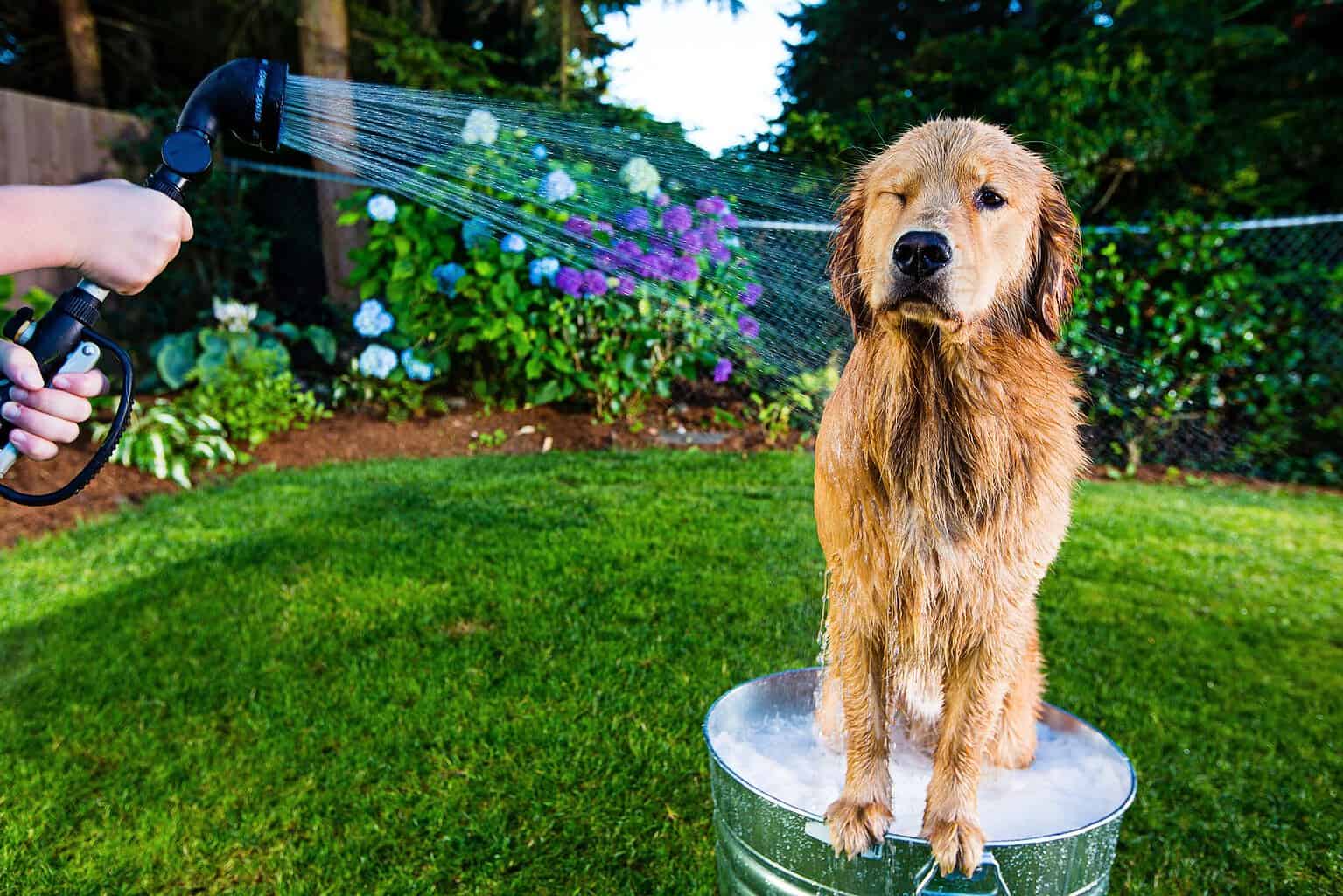
Dogs shake off when they are not wet to release tension and reset after a moment of stress or excitement, such as a hug, a vet exam, a greeting or a burst of play. The same head-to-tail shake that flings off bathwater doubles as a body-language signal that a moment is over. A wet-dog shake is a feat of physics, while trembling, shivering or constant head shaking is a different thing and can point to cold, fear, pain, ear disease or poisoning.
Last updated: October 2025
Why do dogs shake off when they are wet?
The wet-dog shake exists because wet fur is dangerous. Fur insulates by trapping warm air between the hairs, and water ruins that. In their 2012 paper, Andrew Dickerson, Zachary Mills and David Hu of the Georgia Institute of Technology point out that in cold, wet weather a mammal faces hypothermia if it cannot dry itself, and a rapid shake lets a furry animal get mostly dry within seconds instead of spending its own body heat evaporating the water.
To find out how it works, the team filmed 33 wet animals from 16 species and five dog breeds with high-speed cameras at 500 to 1,000 frames per second. Animals generally waited until the water stopped flowing, then shook.
“We think this has been evolving over millions of years of time to become so good.”
David Hu, biolocomotion researcher, Georgia Institute of Technology, Live Science (2012)
The American Kennel Club repeats the headline figure for owners: wet dogs can shake off about 70 percent of the water on their fur in roughly four seconds, which is far more efficient than any towel. That is also why the bathroom wall ends up wetter than the dog.
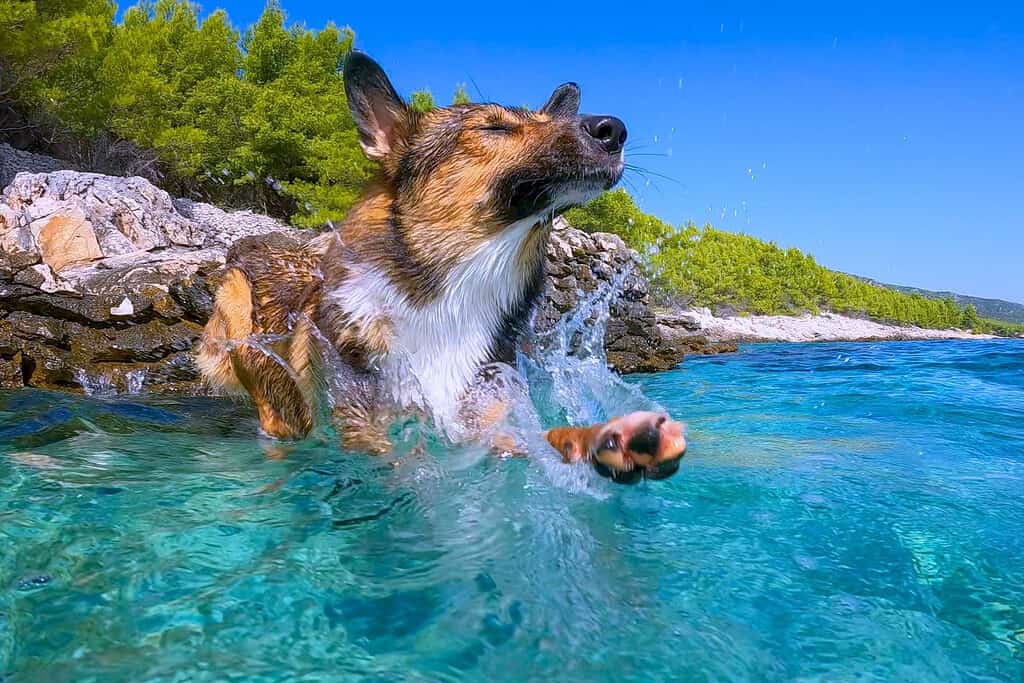
How fast does a dog shake, and does size matter?
Size matters a lot. Water clings to hair through surface tension, and a shake has to generate enough centrifugal force to fling drops loose. A big animal’s fur travels a wider arc with each twist, so it can shake more slowly and still produce the force it needs. A mouse has to whip its whole body back and forth far faster. Across animals from about 10 grams to 260 kilograms, the researchers found shake frequency fell with body mass in a tight, predictable curve.
Here is how the measured numbers line up. Each figure comes from Dickerson, Mills and Hu (2012) unless noted.
| Animal or group | Shake frequency | What it means |
|---|---|---|
| Mice | About 30 shakes per second | Tiny bodies need very fast twists to beat surface tension |
| Dogs (five breeds) | 4.5 to 8 shakes per second | Small dogs sit at the fast end, big dogs at the slow end |
| Labrador retrievers (about 32 kg) | About 4.5 shakes per second | Skin swings roughly 90 degrees each way per twist |
| Animals from 4 to 260 kg | 4 to 6 shakes per second | Large animals cluster in a narrow, slower band |
| Bears | About 4 shakes per second | Slightly faster than the best-fit curve predicted |
The forces involved are startling. Nature’s news coverage of the study reported that loose skin helps generate forces of 10 to 70 times gravity, high enough that animals close their eyes mid-shake. The researchers also concluded that shaking harder would bring diminishing returns, so a dog stops at a level of dryness that is good enough without wasting energy. The trick works poorly with liquids that behave differently from water, such as crude oil, which is one reason oiled wildlife cannot simply shake clean.
What triggers the shake in the brain?
For years the physics was better understood than the biology. That changed in November 2024, when a Harvard Medical School team led by Dawei Zhang and neurobiologist David Ginty published a study in Science titled “C-LTMRs evoke wet dog shakes via the spinoparabrachial pathway.” The work was done in mice, not dogs, but the shake is shared across hairy mammals.
The researchers placed tiny droplets of water or sunflower oil on the upper back of mice and traced what happened. The shake depended on a touch-sensing protein called Piezo2 and on a specific class of nerve endings called C-fiber low-threshold mechanoreceptors, or C-LTMRs. The Harvard Gazette describes these as some of the body’s most sensitive receptors. They wrap around the base of hair follicles, mostly the fine hairs of the undercoat, and respond to the slightest bend of a hair.
When the team switched those neurons on with light, mice shook with no droplet at all. When the neurons were removed, or when signals to a brainstem region called the parabrachial nucleus were blocked, droplets triggered fewer shakes. The signal path runs from the hair follicle into the spinal cord and up to the brainstem.
Ginty told the Gazette the response is innate but can be controlled, much like a person flicking at a bug that lands on an arm. The discovery was an accident: Zhang noticed a mouse shook every time he activated these neurons.
One more detail is worth noting for dog owners. C-LTMRs are usually linked to pleasant, gentle touch. It is tempting to connect that to the shake some dogs give after a long petting session, but nobody has tested that idea in dogs, so treat it as an interesting question rather than an answer.
Why do dogs shake off when they are not wet?
The dry shake-off is one of the most common things owners ask about, and the usual answer from trainers and veterinary sources is that the dog is releasing tension. The American Kennel Club puts it plainly: if your dog gives a whole-body shake for no obvious reason, like a bath or a good roll in the dirt, it could be stress related. The AKC gives two classic examples, a dog that shakes after hopping off the exam table at the vet and a dog that shakes after an encounter with a stranger. In both cases, it says, the dog is trying to relieve tension.
Many trainers describe the dry shake as a reset button. Something happened, it is over, and the dog shakes it off before moving on. Certified trainer Melissa Goodman explained it this way in an Instagram video covered by PetsRadar in 2024: dogs shake off to relieve stress and reset themselves. She added that a shake-off is not necessarily good or bad, just useful information about how the dog is feeling. In her example, one shake came after a noisy metal cart worried her dog, and another came when the smells and dogs in a pet store got a little overwhelming in a happy way.
That last point matters. A shake-off follows arousal of any kind, not only fear. Common moments include:
- After greetings. A dog may jump, wiggle, shake, then settle and greet you calmly once the first rush of excitement passes.
- During and after play. Dogs often shake off between rounds of wrestling or chasing, which trainers read as healthy self-regulation.
- After handling. Vet exams, nail trims, grooming, putting on a harness or being picked up are all frequent triggers.
- After a tense moment. A strange dog passes, a loud noise ends, a stranger reaches over the dog’s head.
- After waking up. Many dogs stand, stretch and shake before starting the day, the same way they often circle before lying down at night.
The shake-off also appears on lists of so-called calming signals. The term comes from Norwegian trainer Turid Rugaas, whose book On Talking Terms With Dogs describes around 30 behaviors dogs use in uncomfortable social moments, including looking away, lip licking, yawning, sniffing the ground and shaking off. Psychologist Stanley Coren notes that Rugaas is not a scientist and did not offer experimental evidence that these signals reduce aggression, so it is wise to treat the list as a helpful observation guide rather than settled science. The broader point holds up: the same few behaviors show up again and again when dogs are under mild pressure.
A shake rarely appears alone. Read it alongside the rest of the body. A loose, wiggly dog that shakes and trots off to play is probably just shedding excitement. A dog that shakes after yawning when it is not tired, licking its lips and turning its head away is telling you a situation was more than it liked. Some dogs also let out a big breath at the end of a moment, much like the contented sigh many dogs give when they settle.
The pattern is what makes the behavior useful. If your dog shakes every time a particular visitor lets go of him, or every time a certain game ends, the shake is pointing to the moments he finds most intense. Notice them, give him a little more space in those moments, and you will usually see fewer shakes over time.
Why does my dog shake after I pet him or hug him?
If the shake comes right after a hug, the most likely explanation is that the hug was more restraint than comfort. Dogs are built to move away from things that worry them, and wrapping arms around a dog takes that option away. Stanley Coren made this point in a 2016 Psychology Today analysis of 250 online photos of people hugging dogs. He scored 81.6 percent of the dogs as showing at least one sign of discomfort, stress or anxiety, only 7.6 percent as looking comfortable, and the rest as neutral or ambiguous.
That was an informal photo review, not a controlled experiment, so do not read it as proof that every dog hates every hug. Some dogs truly enjoy close contact, and many choose it on their own terms, which is why a dog may lean against your legs but squirm out of a full embrace. The difference is control. When the dog starts the contact, it can also end it.
Shaking after petting is usually milder. A long scratch session can leave a dog a little wound up, and a quick shake lets it settle. Watch what happens next. If your dog shakes, then comes back and nudges your hand or puts a paw on you for more, the petting was welcome. If it shakes and walks off, it may have had enough for now.
Is shaking off the same as trembling or shivering?
No. A shake-off is a quick, deliberate twist that starts at the head and rolls toward the tail, and then it is over. Trembling and shivering are ongoing, often fine, vibrating movements that the dog may not be able to stop. Those deserve a closer look, because the causes range from harmless to urgent.
Common causes of trembling include:
- Cold. Thin, short-coated, small and senior dogs shiver more easily. The AKC notes that older dogs may lose the ability to regulate body temperature well.
- Fear and anxiety. Thunderstorms, fireworks and vet visits are classic triggers. Stress trembling usually fades once the trigger is gone.
- Excitement. Some dogs quiver when you come home or when a ball comes out.
- Pain. The AKC says shivering can be a sign of pain, and PetMD lists pain, fever and nausea among the medical causes of muscle tremors.
- Nausea. The Scottish SPCA lists lip smacking, swallowing, drooling, yawning and hiding alongside shaking as signs a dog may feel sick.
- Toxins. Chocolate, xylitol, snail bait, cannabis, caffeine and certain flea and tick product overdoses can cause tremors.
- Low blood sugar. Toy breeds and young puppies are most at risk, according to the AKC.
- Generalized tremor syndrome. Also called white dog shaker syndrome, this causes whole-body tremors. It was first noticed in small white dogs but can affect any size or color, and it often responds to steroid treatment.
What does frequent head shaking mean?
A full-body shake now and then is normal. A dog that keeps shaking just its head, especially with scratching at the ears, is a different story. The AKC lists ear problems among the main causes of shaking and notes that breeds prone to ear infections, such as Cocker Spaniels, Basset Hounds, Labradors and Golden Retrievers, need extra watching. Head shaking after a bath or swim is a common sign that water and irritation have set up an infection.
Repeated head shaking can also cause its own injury. VCA Animal Hospitals explains that excessive or violent shaking can break blood vessels in the ear flap, letting blood pool between the cartilage and the skin. The result is an aural hematoma, a puffy, spongy, often painful swelling of the ear flap. Most dogs that develop one have an underlying infection, allergy, bite wound or a foreign object such as a grass seed or tick in the ear canal.
Signs that head shaking needs a vet visit include redness, a bad smell, dark or yellow discharge, a head tilt, crying when the ear is touched, or a swollen ear flap. Untreated hematomas tend to heal into a thickened, crinkled ear, so earlier treatment usually means a better result.
What does each kind of shake mean?
Context is the best clue. Use this table as a quick guide. The “what to do” column is our own suggestion based on the sources in this article, not a diagnosis.
| Situation | What it likely means | What to do (our suggestion) |
|---|---|---|
| After a bath, swim or rain | Drying off, about 4.5 to 8 shakes per second | Let it shake, then towel and dry the ears |
| Right after a hug or being held | Releasing tension from restraint | Swap hugs for side-by-side petting the dog can leave |
| After a vet exam, nail trim or grooming | Stress release and reset | Reward calm behavior and keep handling short |
| During greetings or play | Shedding excitement, self-regulating | Nothing needed; pause play if it keeps escalating |
| After waking up | Stretching and getting going | Nothing needed |
| Ongoing trembling in cold weather | Shivering to stay warm | Warm the dog up; consider a coat for small or thin dogs |
| Trembling with hiding, drooling or limping | Fear, nausea or pain | Remove the trigger; call your vet if it does not stop |
| Repeated head shaking, ear scratching | Ear infection, allergy or something in the ear | Book a vet visit before a hematoma forms |
| Tremors with vomiting, weakness or a possible toxin | Possible poisoning or serious illness | Treat as an emergency and call now |
An ID tag that stays readable through every shake
Shiloh’s House Smart Tags are laser engraved in waterproof, scratch-resistant acrylic. A finder taps the tag with any modern phone, no app needed, and gets your pet’s live profile with one-tap call, text and directions.
Why do tags jingle so loudly when a dog shakes?
A dog twisting four or more times per second turns a ring of metal tags into a bell. The jangle is harmless for most dogs, but noise-sensitive dogs may dislike it. Our guide on how to stop dog tags from jingling covers quiet fixes, from slide-on tags to silencers, that keep ID on the collar where it belongs.
A big shake is also a good moment for a quick collar check. A collar that slips over the ears during a shake can come off on a walk, and one that is too tight can rub. A common guideline is that you should be able to slide two fingers flat between the collar and your dog’s neck. While you are there, make sure the tag is still legible. Tags that bang together all day get scratched, and a worn engraving is no help to a finder.
If your dog shakes off reliably after certain events, such as being picked up by strangers or meeting other dogs, that is worth writing down. A Shiloh’s House Smart Tag profile has room for behavioral notes, so a finder or a pet sitter can read something like “Nervous with strangers, let her come to you” before reaching for your dog. You can edit those notes anytime in the free Lohji app on the App Store or Google Play.
The same app has a lighter side. If you ever catch a shake-off in a photo, with ears flying and jowls flapping, you can turn a clear picture of your dog into a Lohji, an animated-movie-style character of your pet. New accounts start with 10 free coins, and a Base Lohji costs 2.
Frequently asked questions
Why do dogs shake off when not wet?
Most dry shake-offs release tension or excitement after a moment ends. Dogs commonly shake after a hug, a vet exam, a greeting, a tense meeting with another dog, a play session or waking up. The American Kennel Club describes it as a dog trying to relieve tension. Read the rest of the body to tell happy excitement from stress, and watch for patterns in when it happens.
Why does my dog shake after I pet him?
A short shake after petting usually means your dog is settling after being touched, especially after a long or energetic session. It is not automatically a sign of dislike. If your dog shakes and then comes back for more, the petting was welcome. If it shakes and walks away, looks away or licks its lips, give it a break and let it start the next round.
Is it bad if my dog shakes off after a hug?
It is not dangerous, but it is useful feedback. Many dogs find a full hug restraining, and a shake-off afterward suggests the hug was more stressful than pleasant. Stanley Coren’s informal review of 250 photos found most hugged dogs showed at least one stress sign. Try gentle petting on the chest or shoulders instead, with your dog free to move away.
How much water does a wet dog shake off?
Research from Georgia Tech published in 2012 found that a shake removes about 70 percent of the water in a wet coat, which news coverage summarized as roughly four seconds for a dog. Dogs in the study shook at about 4.5 to 8 times per second, with larger dogs at the slower end. Loose skin helps by whipping water off faster than the spine alone could.
What is the difference between shaking off and trembling?
A shake-off is one quick, deliberate twist that rolls from head to tail and then stops. Trembling or shivering is ongoing and often fine, and the dog may not be able to stop it. Trembling can come from cold, fear or excitement, but also from pain, nausea, low blood sugar, toxins or generalized tremor syndrome, so persistent trembling deserves a call to your veterinarian.
When should I worry about my dog shaking its head?
Occasional head shakes are normal. Worry when head shaking is frequent, comes with ear scratching, redness, odor, discharge, a head tilt or pain when the ear is touched. Those signs point to an ear infection or something lodged in the ear. Repeated violent shaking can also break blood vessels in the ear flap and cause an aural hematoma, which needs veterinary treatment.
Sources
- Wet mammals shake at tuned frequencies to dry, Andrew K. Dickerson, Zachary G. Mills and David L. Hu, Journal of the Royal Society Interface, 2012
- How Dogs Shake Dry in One Second, Stephanie Pappas, Live Science, 2012
- Science: Dogs Can Shake 70% of the Water From Their Fur in 4 Seconds, Here’s How, Alexis C. Madrigal, The Atlantic, 2012
- Scientists do the wet-dog shake, Kathryn Lougheed, Nature, 2012
- C-LTMRs evoke wet dog shakes via the spinoparabrachial pathway, Dawei Zhang, David D. Ginty and colleagues, Science, 2024
- Ever wonder why your dog does this?, Alvin Powell, Harvard Gazette, 2024
- Why Is My Dog Shaking? Causes and Solutions, Harriet Meyers, American Kennel Club, 2022
- This is why dogs shake off when they’re not wet, according to an expert, Adam England, PetsRadar, 2024
- The Data Says “Don’t Hug the Dog!”, Stanley Coren, Psychology Today, 2016
- What Are Canine Calming Signals and Do They Work?, Stanley Coren, Psychology Today, 2017
- Dog Muscle Spasms: Common Causes and When To Call Your Vet, Barri J. Morrison, DVM, PetMD, 2024
- Hematoma of the Ear in Dogs, VCA Animal Hospitals, accessed 2025