Most cats suck on blankets because it feels like nursing, and the habit soothes them the way thumb-sucking soothes a toddler. Veterinarians call it wool sucking. It is most common in Siamese, Birman, Burmese and other Oriental breeds, and early weaning, stress or a recent move can make it worse. Gentle sucking with no fabric swallowed is usually harmless. A cat that chews holes, eats threads, vomits or stops eating needs a vet, because swallowed fabric can block the intestines.
Last updated: November 2025
Why does my cat suck on blankets?
Blanket sucking is a leftover from kittenhood. A nursing kitten kneads its mother’s belly with its paws and suckles for milk, warmth and comfort. When a grown cat settles onto a soft fleece, kneads, and starts rhythmically sucking a corner, it is running the same program, just without the milk.
PetMD compares it to human thumb-sucking: kittens instinctively suckle anything soft, warm and fuzzy, and the habit can carry into adulthood. Many cats purr and half-close their eyes while they do it.
Most cats that keep the habit have more than one of these reasons at work:
- Comfort. Suckling is calming, so cats often do it before a nap or next to you.
- Genetics. Oriental breeds such as Siamese, Birman and Burmese are far more likely to suck wool than the average house cat.
- Early life. Kittens taken from their mother too soon may keep a stronger urge to nurse.
- Stress. A move, a new pet, or long stretches alone can bring the habit on or make it worse.
- Health. Some medical problems, including dental pain and digestive disease, are linked to sucking and chewing on fabric.
Wool is the classic target, but fleece throws, sweaters and even your earlobe can get the treatment. If your cat also kneads you like dough, our guide to why cats knead explains how the two behaviors are connected.
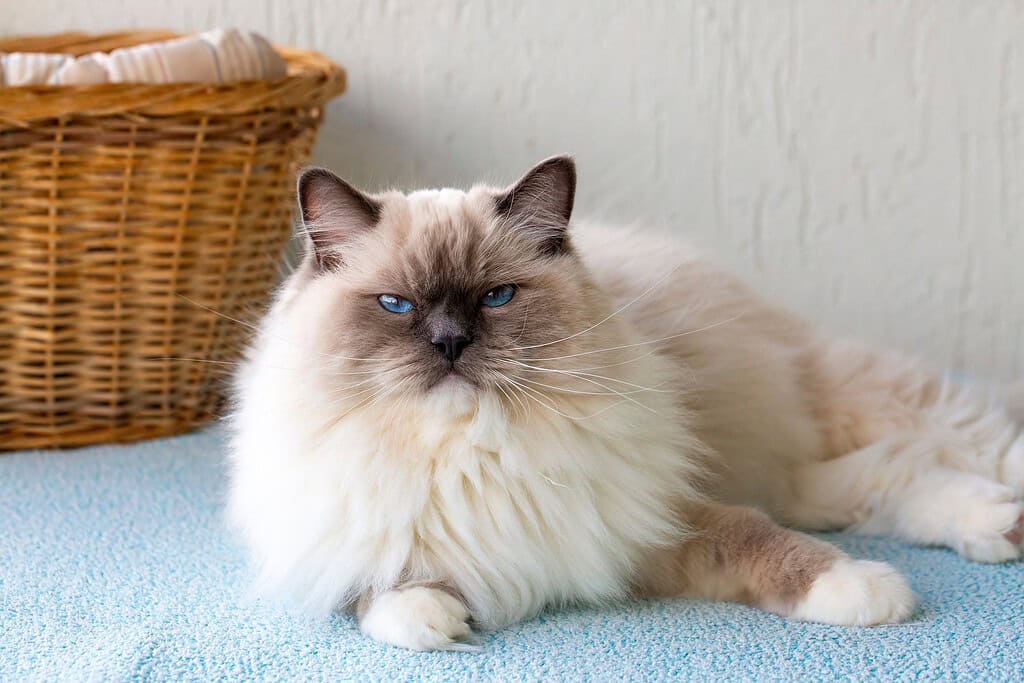
Is it normal for an adult cat to suck on blankets?
For a lot of cats, yes. Occasional, gentle blanket sucking is a quirk, not a disorder. VCA Animal Hospitals notes that sucking on wool or other fabrics may be seen occasionally in any cat, and that some cats grow out of it within a few years while others keep it for life.
Dr. Ken Lambrecht, writing for PetMD, says that because suckling is a soothing, instinctive response that signals comfort and contentment, it is probably best to accept it as a normal cat behavior in most cases. If your cat sucks a corner of the couch throw for a few minutes before a nap, leaves no holes, and eats, plays and uses the litter box normally, you likely have a happy, slightly babyish cat.
Age matters. Young kittens explore with their mouths, and Dr. Nicholas Dodman, a veterinary behaviorist, has described comfort nursing as normal kitten behavior up to about 6 months of age. Sucking that grows more intense or starts to involve swallowing is when veterinarians take a closer look.
Two things separate a quirk from a problem: how much time the cat spends doing it, and whether anything gets eaten.
It can also be a compliment. Many cats save this behavior for the people they trust most, often while lying on their lap or snuggled into their clothes. Your scent on a blanket or hoodie is part of the appeal.
Does early weaning cause wool sucking?
Early weaning seems to raise the odds, but it is not the whole story. Kittens normally nurse actively for about 7 weeks, according to Dr. Dodman. The theory is simple: a kitten pulled off the nipple while its drive to nurse is still strong redirects that drive onto things that feel like mom.
The research backs that up in some cats and not others. Here is what the main studies found:
| Study | Cats studied | Key finding |
|---|---|---|
| Bradshaw, Neville and Sawyer, 1997 | 152 cats with pica, mostly Oriental breeds | Wool was the target in 93% of cases. Onset was most common in the 2 months after rehoming, otherwise mostly between 6 and 18 months of age. |
| Borns-Weil et al., 2015 | 204 Siamese and Birman cats | Early weaning and small litters raised the risk in Birmans only. In Siamese, having a medical condition raised the risk. Every affected cat had an unusually intense appetite. |
| Demontigny-Bédard et al., 2016 | 91 cats with pica, 35 controls | Cats that sucked fabric ate fabric in 56% of cases, versus 23% of cats that did not suck it. Pica was not linked to early weaning. |
| Ahola, Vapalahti and Lohi, 2017 | 5,726 cats, 40 breeds | Cats weaned before 8 weeks were more likely to have an owner-reported behavior problem (18% vs 7.9% for cats weaned at 12 to 13 weeks). Cats weaned as adults were less likely to suck wool. |
The Finnish team behind the largest study concluded that weaning later is a simple, inexpensive way to improve cat welfare. If you are choosing a kitten, a breeder or shelter that keeps kittens with their mother and littermates until at least 12 weeks is a good sign, especially for Oriental breeds.
If you adopted your cat as a tiny kitten, though, there is no need for guilt. Plenty of early-weaned cats never suck wool, and plenty of late-weaned Siamese do.
Why are Siamese, Birman and Burmese cats more likely to suck wool?
Genes appear to load the dice. VCA lists Burmese, Siamese and Oriental mixed breeds as the cats most likely to have a problem with wool and fabric sucking. A peer-reviewed review in Clinician’s Brief by veterinary behaviorist Dr. Karen Sueda adds Birmans to the list, and notes that analysis of family trees of wool-sucking Siamese and Birman cats points to a dominant mode of inheritance with possible incomplete penetrance. In plain terms, the trait seems to run in families, though not every cat that carries it will show it.
Oriental cats also tend to start younger. In the 2015 Tufts study, the average age when fabric sucking began was about 41.6 weeks in Siamese and 67.6 weeks in Birmans, so roughly 10 months and 15 months. Clinician’s Brief puts the average onset of feline compulsive disorders overall at about 2 years.
PetMD adds Balinese and Tonkinese, both Siamese relatives. Ordinary house cats can still suck wool. It is simply less common.
If you share your home with a Siamese or Birman, watch more closely, and treat any shift from sucking to chewing holes as a reason to act sooner.
Can stress make a cat start sucking on blankets?
Yes. Stress is one of the most common triggers for a cat that suddenly starts, or restarts, sucking fabric. In the 1997 UK survey, the single most common time for pica to begin was the 2 months after a cat moved to a new home. Clinician’s Brief notes that wool sucking has also been triggered by being left alone for long stretches.
Dr. Dodman has described how a cat whose kitten habit seemed to fade can fall back on it during stress or conflict later in life, the way an adult might bite their nails before a big meeting.
Common triggers include:
- Moving house or rearranging furniture
- A new cat, dog or baby in the home
- Tension between cats who share food, litter boxes or sleeping spots
- A strange cat outside the window
- Long workdays, travel or a change in your schedule
- Boredom in an indoor cat with few toys or climbing spots
The holidays bring several of these at once, so note the timing if sucking ramps up.
The fix starts with the stressor, not the blanket. Calming pheromone diffusers can help some cats, and our roundup of cat calming aids compares the main options. Never punish a cat for sucking. Veterinary behaviorists agree that yelling or swatting raises anxiety and can make the habit worse, or simply teach the cat to do it when you are not looking.
When does blanket sucking turn into pica?
Pica is the medical term for eating things that are not food. It becomes a concern the moment fabric goes down the throat instead of just getting wet. VCA defines pica in cats as persistently eating non-food items such as plastic, paper, fabric, string or thread, and warns that the most common problem it causes is a blockage in the esophagus, stomach or intestines.
Sucking and eating are closely linked. In the 2016 University of Montreal study, cats that sucked on fabric were more than twice as likely to swallow it. Dr. Dodman has warned that a wool sucker can, gradually or suddenly, move on to eating the material and broaden its tastes to shoelaces, exercise gear and plastic shower curtains.
“Living with a wool sucker of this degree is like living with a 10-pound moth.”
Dr. Nicholas Dodman, veterinary behaviorist, PetPlace (2014)
Threads and yarn are the biggest danger. VCA explains that a linear foreign body, such as string, yarn or a long thread pulled from a blanket, can anchor under the tongue or in the stomach while the rest trails into the intestines. The gut then bunches up along it, and the thread can saw through the intestinal wall, which can be life-threatening.
Pica can also be a sign of illness. Cats with pica in the Montreal study vomited more often than other cats.
How can you help a cat that sucks on blankets?

If your cat sucks gently and swallows nothing, the goal is to keep the comfort and take away the risk. If your cat is chewing holes or eating fabric, start with a vet visit, then work through these steps together.
Start by giving your cat a blanket of its own. PetMD recommends a designated blanket the cat is allowed to suck on, so it leaves your clothing and pillows alone. Pick a tightly woven fabric with no fringe, tassels or loose knit, and check it every week. Retire it as soon as it frays, since loose threads are what turn a harmless habit into an emergency.
Next, put temptation away. Fold knit throws into a closet, keep sweaters and socks in drawers, and close the laundry room. Clinician’s Brief suggests childproof locks for cats that break into closets to chew clothes. Shoelaces, hair ties, yarn and sewing thread should always be out of reach. A cat cannot swallow what it cannot reach.
Offer a better thing to chew. VCA suggests chew toys or chew treats, dry or high-fiber foods, and dental diets or dental treats. Dr. Dodman suggests a sock with a ball inside or a sturdy cat toy as a substitute, plus a steady supply of high-fiber food so the cat has a choice between wool and real food. Ask your vet before changing diets.
Make meals more like hunting. The Montreal study found that cats with pica were less likely to be free-fed than healthy cats. That is not proof that free-feeding prevents pica, but it is a hint that hunger may play a part. VCA recommends feeding toys and food puzzles instead of bowls, which slow eating, keep the mind busy and satisfy the urge to work for food. For a food-obsessed wool sucker, spreading meals across the day can also help.
Play with your cat every day. VCA recommends scheduled play periods and rotating toys every 1 to 3 days so they stay interesting. Wand toys that mimic prey burn off energy, and short training sessions give a busy mind a job. Our guide on how to play with your cat covers how long and how often. Put string and wand toys away after every session so they never become an unsupervised snack.
Cover the basics of a calm home. The 2013 AAFP and ISFM Feline Environmental Needs Guidelines list five pillars: a safe place to retreat, separate key resources such as food, water, litter and scratching areas, chances to play and hunt, positive and predictable interaction with people, and respect for the cat’s sense of smell. A cat whose needs are met has fewer reasons to self-soothe.
Interrupt kindly, then redirect. If you catch your cat working on something it should not have, toss a toy across its line of sight or make a noise from out of view, then offer the approved blanket or a play session. Clinician’s Brief notes that rewarding the cat with food or attention while it is actively sucking can accidentally reinforce the habit, so redirect first and praise the new activity.
Finally, track what you see. A note about when the sucking happens and what came just before helps you and your vet spot triggers, and a short video is even better.
What signs mean a blanket-sucking cat needs a vet?
Use this side-by-side check. If anything in the right column sounds familiar, call your veterinarian, and treat vomiting with a known fabric habit as urgent.
| Usually normal | Concerning, call the vet |
|---|---|
| Sucks a blanket for a few minutes, then naps | Sucks or chews for long stretches, many times a day |
| Fabric is damp but intact | Holes in blankets, sweaters or socks, or missing pieces |
| Kneads and purrs while sucking | Seems frantic, hard to interrupt, or ignores food and play to keep going |
| Kitten under about 6 months who is easing off over time | Adult cat who suddenly starts, or a habit that is getting worse |
| Eats, drinks and uses the litter box normally | Vomiting, poor appetite, lethargy, hiding or a tender belly |
| Nothing unusual in vomit or stool | Fabric, thread or plastic in vomit or stool |
| Healthy mouth and fresh breath | Bad breath, drooling, broken teeth or pale gums |
| Normal appetite | Sudden extreme hunger along with new chewing |
VCA lists the most common signs of a linear foreign body as vomiting, not eating, dehydration and lethargy, and some cats also show belly pain, cannot get comfortable or hide more than usual. Fast action matters.
At the visit, your vet will likely examine the mouth, including under the tongue, and may suggest bloodwork, X-rays or ultrasound. If a medical cause is found, treating it can ease the behavior. If the cause is behavioral, your vet may refer you to a veterinary behaviorist. For true compulsive cases, VCA notes that the same drugs used for human compulsive disorders can help some cats, alongside the home changes above.
Make sure anyone who finds your cat knows their quirks
A Shiloh’s House Smart Tag opens your cat’s profile with a tap of any phone, no app needed, so a finder can call or text you in one tap and read the medical and behavior notes you add, like “eats fabric, no blankets with fringe.”
Should you stop your cat from sucking on blankets?
Usually not. If your cat sucks a safe blanket now and then, swallows nothing and is otherwise healthy, letting it be is kind. Taking away every comforting object from an anxious cat can raise its stress, and Clinician’s Brief notes that strict confinement measures may perpetuate compulsive behavior. For some persistent suckers, VCA even suggests leaving the cat one or two woolen items to suck on, as long as no significant amount of wool is swallowed.
What you do want to stop is fabric eating. That means safe fabrics, a tidy home, more play and food puzzles, and a vet check if anything changes. A pet sitter may not know that a fleece throw is a hazard, and neither will a neighbor who finds your cat after a door slips open.
That is one place the Lohji app helps. When you set up a Shiloh’s House Smart Tag in the free app, you can add medical notes and behavior notes to your cat’s profile, along with up to 3 emergency contacts. A finder taps the tag with their phone and sees those notes right away, plus one-tap buttons to call or text you. You can download the Lohji app on the App Store or Google Play.
Even indoor-only cats benefit from that kind of backup, which we cover in why indoor cats need ID tags. The same changes that set off wool sucking, like moves and houseguests, are the moments doors get left open.
Cats that suck fabric are also more likely to go after plastic bags, and swallowing plastic is a bigger emergency than swallowing wool; see why cats chew on plastic for the medical checks and cat-proofing steps.
Frequently asked questions
Why does my cat knead and suck on blankets at the same time?
Kneading and suckling go together from the very first days of life. Nursing kittens knead their mother’s belly to help the milk flow while they suckle. An adult cat that kneads and sucks a blanket is repeating that comforting nursing routine. It usually means your cat feels relaxed and safe, and there is no need to stop it unless fabric gets swallowed.
Is blanket sucking a sign that my cat was weaned too early?
It can be, but not always. A 2015 study found early weaning raised the risk of wool sucking in Birman cats, but not in Siamese, and a 2016 study found no link between early weaning and fabric eating. Genetics, stress and health problems also play a role. Many cats weaned at a normal age still suck blankets, so it is not proof of anything about your cat’s past.
Will my cat grow out of sucking on blankets?
Many kittens do, and VCA says some cats grow out of it within a few years. Others keep the habit for life, especially Oriental breeds like Siamese and Birmans. A lifelong, gentle habit is usually fine. What matters is whether your cat starts swallowing fabric or the habit gets more intense over time.
What should I do if my cat swallowed part of a blanket?
Call your veterinarian right away, even if your cat seems fine. Watch for vomiting, poor appetite, lethargy, hiding or belly pain, which can signal a blockage. If a thread or piece of yarn is hanging from your cat’s mouth or bottom, do not pull it, because it may be anchored inside and pulling can injure the intestines. Your vet may recommend X-rays or ultrasound to check.
Is it bad to let my cat suck on my clothes or earlobe?
It is not harmful to your cat, and many cats only do it with people they trust. If it bothers you, gently redirect your cat to an approved blanket or a toy instead of scolding. Punishment can increase anxiety and make sucking more frequent. Avoid letting your cat suck on knit sweaters or fuzzy fabrics that shed fibers, since swallowed threads are the real risk.
Can a diet change help a cat that sucks or chews fabric?
Sometimes. VCA suggests that dry, high-fiber or dental foods and dental treats may help some cats that suck and chew wool, and food puzzles can turn mealtime into an activity. Cats with pica in one study were less likely to be free-fed, which hints that hunger may play a part. Always talk to your veterinarian before changing your cat’s diet, especially if your cat has health conditions.
Sources
- Borns-Weil et al., A Case-Control Study of Compulsive Wool-Sucking in Siamese and Birman Cats (n = 204), Journal of Veterinary Behavior (2015)
- Bradshaw, Neville and Sawyer, Factors Affecting Pica in the Domestic Cat, Applied Animal Behaviour Science (1997)
- Demontigny-Bédard et al., Characterization of Pica and Chewing Behaviors in Privately Owned Cats, Journal of Feline Medicine and Surgery (2016)
- Ahola, Vapalahti and Lohi, Early Weaning Increases Aggression and Stereotypic Behaviour in Cats, Scientific Reports (2017)
- Clinician’s Brief, Feline Compulsive Disorder, Karen Sueda, DVM, DACVB (2019)
- VCA Animal Hospitals, Cat Behavior Problems: Chewing and Sucking
- VCA Animal Hospitals, Pica in Cats
- VCA Animal Hospitals, Linear Foreign Body in Cats
- Merck Veterinary Manual, Gastrointestinal Obstruction in Small Animals
- PetPlace, Wool Sucking, Dr. Nicholas Dodman (2014)
- PetMD, Is Your Cat Suckling Blankets as an Adult?, Ken Lambrecht, DVM (2018)
- Ellis et al., AAFP and ISFM Feline Environmental Needs Guidelines, Journal of Feline Medicine and Surgery (2013)