Dog Paw Care in Winter: How to Protect Paws From Salt, Ice and Cracking
 Shiloh’s House Team
·
·
16 min read
Winter paw care comes down to four habits. Trim the fur between the pads and keep nails short so ice and salt have nowhere to lodge. Put a thin layer of paw balm or petroleum jelly on before walks, or use well-fitted boots once there is ice or snow on the ground. Rinse or wipe paws, legs and belly the moment you come inside so your dog can’t lick off de-icer. Then check between the toes for cracks, redness or snowballs. Most winter paw problems, from salt burns to clumps of ice, are prevented by that routine rather than treated after the fact.
Why winter is so hard on a dog’s paws
Paw pads are tough, but they are also bare skin on the coldest, wettest, saltiest surface your dog touches all day. Veterinarian Jennifer Coates, writing for PetMD, lists the winter hazards plainly: sharp ice that can cut deeply, snow that packs into painful clumps between the pads and in the fur around the feet, dampness that raises the risk of frostbite, slick footing that leads to strains and sprains, and ice-melting chemicals that irritate skin and upset the stomach when licked off. The risks grow the longer a dog is out and the farther it walks.
Indoor air makes it worse. The American Kennel Club notes that the dry air in your home combined with the cold air outside can crack a dog’s pads, and the Cornell Riney Canine Health Center adds that ice and road salt cause the cracks and cuts it sees most often in winter. A pad that is already dry splits more easily, and a split pad stings every time it meets salt.
What road salt and ice melt do to pads
Rock salt is the most common de-icer on sidewalks, and the ASPCA Animal Poison Control Center says it is harsh on dogs’ paws and causes irritation. The other common ingredients, calcium chloride, potassium chloride and magnesium chloride, can be even more irritating to the gut if a dog licks them off, sometimes causing bloody vomiting or diarrhea and electrolyte changes. Pet Poison Helpline singles out the calcium salts as the most severe irritants of all, both when eaten and on contact with skin and paws.
The dose matters. ASPCA Pro reassures owners that a couple of licks of a treated paw or a salted sidewalk will not cause serious problems beyond some self-limiting drooling, vomiting or diarrhea. The worrying cases are dogs that get into the bag or lap up slush in quantity, which can bring on serious vomiting, dehydration and electrolyte problems, and calcium chloride in larger amounts can ulcerate the mouth and stomach. Cornell makes the same point: de-icers irritate paws on contact and, if swallowed, can ulcerate or inflame the mouth and digestive tract.
There is also no official standard behind the words on the bag. The ASPCA points out that there are no specific requirements for labeling a de-icer “pet safe,” so follow the same precautions with any chemical product and use sand or clay cat litter for traction where you can. We compared the common products in our guide to ice melt that is safer for dogs; this post is about protecting the paws that walk through everyone else’s.
Trim the fur and the nails before the first snow
Long fur between the pads is a snowball factory. The AVMA explains that a sudden limp during a winter walk is often ice building up between the toes, and that clipping the hair between the toes reduces the chance of it forming. The Ontario SPCA’s advice is to trim that fur level with the pads, which also cuts down the salt and chemicals the feet pick up and makes paws easier to clean and balm afterwards. Cornell adds that a little strategic clipping around the hind end and belly helps shorter dogs that drag through drifts. Just don’t shave the coat itself; a dog needs that insulation.
Nails matter more in winter than people expect. The Ontario SPCA notes that long nails splay the toes as a dog walks, opening gaps where grit and salt collect, and AAHA recommends keeping nails trimmed because long nails make slippery surfaces harder to walk on. If you are not confident with clippers, a groomer can do the toe fur and nails in one visit, and our step-by-step guide to trimming dog nails covers the quick and the angle.
Do this before the first storm, not after. Fur that is already matted with ice is painful to cut, and a dog that has been hurt by an ice ball once will fight you over its feet all season.
Paw balm and petroleum jelly, and what to skip
A balm is the easiest protection to add. PetMD describes how wax-based paw balms form a barrier against dampness and chemicals and stop snow clumping between the pads, while also moisturizing skin that the cold has dried out. Cornell says applying certain balms or petroleum jelly may both prevent and relieve cracking pads, and the ASPCA recommends massaging petroleum jelly or a vet-approved paw balm into the pads before heading out. Our tested picks are in the best dog paw balms.
Technique is simple. PetMD’s instructions are to apply a thin layer on and between the pads, between the toes and onto the fur along the sides of the feet, ideally in the garage or on the porch so the dog doesn’t track wax through the house, and to reapply on long outings. Keep a towel by the door to wipe off the excess and whatever the balm has picked up. Balm does not protect against sharp ice or give traction, so on hard-frozen, rutted sidewalks it is a complement to boots rather than a replacement.
Skip human hand creams and lotions. The Ontario SPCA warns that moisturizers made for people can soften pads and leave them vulnerable to injury, which is the opposite of what you want on a dog that walks on gravel and ice. And watch the jar: ASPCA Pro notes that some dogs find paw wax tasty and will lick it off or help themselves to the whole container, which is messy and mildly upsetting to the stomach rather than dangerous.
Do dogs need boots in the snow
Not every dog, but once there is ice or snow on the ground they are the best protection there is. PetMD calls boots the most reliable way to protect paws in winter, a near-impenetrable barrier against sharp ice, snow, dampness and chemicals that also improves traction, and recommends them at or below freezing whenever ice or snow could pack between the pads. Cornell and the AVMA both suggest booties as well, with the same caveat each time: they must fit properly. Too loose and they twist off in the first drift; too tight and they cut off circulation.
Fit and material are worth getting right. PetMD’s checklist is lightweight, adjustable, waterproof but breathable, easy to clean and non-slip, and it advises avoiding latex or rubber boots because they trap moisture and leave paws itchy. Introduce boots indoors for a few minutes at a time with treats before the first real walk, take them off as soon as you are home so the dog can’t lick salt off the outside and doesn’t develop pressure sores, and rinse the outsides daily. We sized and tested the main styles in our dog boot guide.
Boots earn their keep for two groups in particular. Older dogs and dogs with arthritis get the traction: Cornell notes that arthritic dogs often struggle in winter because of instability on slippery ice and snow, and veterinarian Jessie Miller of Autumn Trails in Charlottesville told UVA Today that letting these dogs take their time and using booties for grip helps if they will tolerate them. The other group is any dog that walks city blocks of heavily salted pavement, where balm alone gets scrubbed off within a few minutes.
Overall, snow can be an awesome experience for your pup, as long as you pay attention to how they are doing and take appropriate precautions.
Dr. Jessie Miller, Autumn Trails Veterinarian Center, in UVA Today
Not tagged yet?
Cornell’s winter checklist ends with ID for a reason: fresh snow covers the scents that would normally lead a loose dog home. A Shiloh’s House smart tag puts your phone number on the collar for anyone to read, and a tap of any phone opens your dog’s profile, so a neighbor who finds a shivering dog in a snowbank can reach you in seconds. No app for the finder, no battery, no subscription.
The after-walk routine that prevents most problems
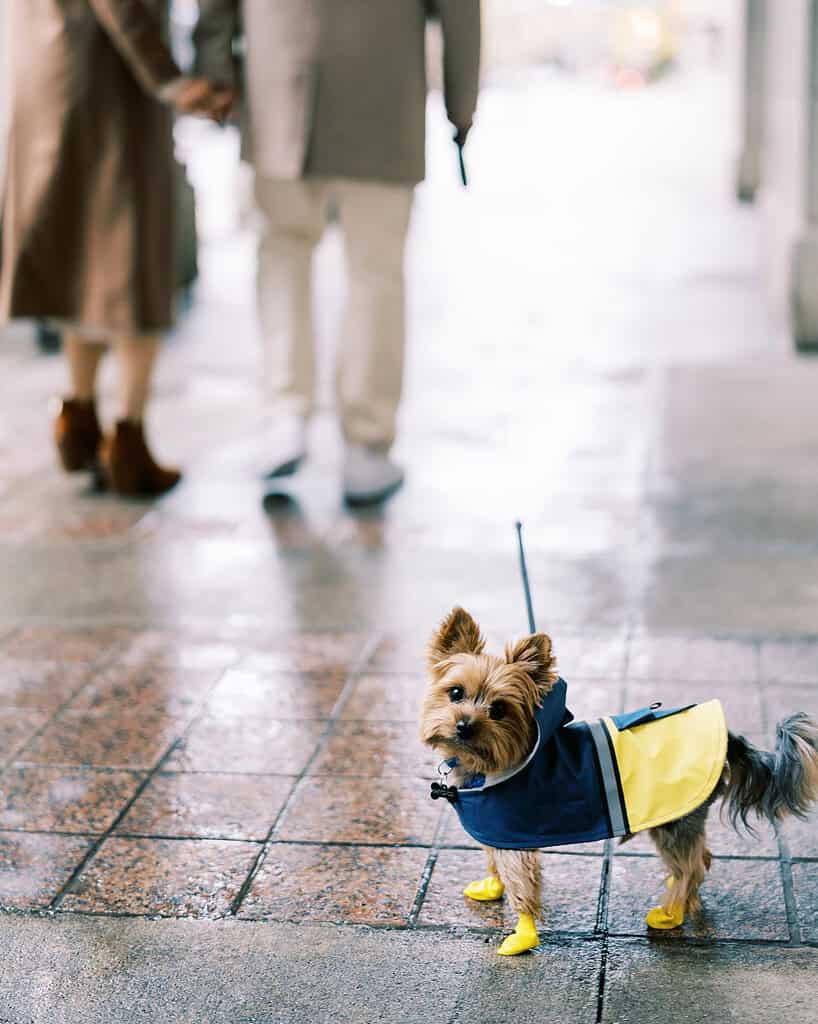
Whatever goes on before the walk, what you do in the ninety seconds after it matters more. Every major veterinary source gives the same instruction. The AVMA says to wipe down or wash your dog’s feet, legs and belly as soon as you come inside, because that is where de-icers, antifreeze and other chemicals ride home, and the dog will lick them off otherwise. Cornell says the same, down to the legs and belly, and AAHA recommends a warm, damp cloth with a careful look between the toes and pads so nothing is missed.
Set the station up before the season. A shallow basin or a wide bowl by the door, filled with lukewarm water, is the fastest way to rinse four feet; Bond Vet suggests dipping each paw and towel-drying, which also keeps the floors clean. For short walks on dry snow a damp microfiber towel or a pack of pet-safe wipes does the job, and the AKC recommends carrying wipes on longer outings so salt can be dealt with before it has twenty minutes to work. Keep the water lukewarm, not hot, since cold paws are easy to scald.
If the door is a long way from the sidewalk, bring the routine with you. PetMD’s suggestion for short walks is simply to carry a hand towel or a grooming glove and wipe chemicals and snow clumps off before you get home, which suits apartment dogs who would otherwise lick their feet in the elevator. Antifreeze deserves the same urgency as salt: the AVMA lists it among the things paws pick up on winter walks, and even a small amount licked off a foot is dangerous, so a puddle with a greenish sheen in a parking lot is a reason to rinse immediately.
Work slowly between the toes. The AKC points out that salt and dirt accumulate between the toes, around and between the pads and under the nails, and that a quick rinse misses them; gently part the toes as you clean, then dry thoroughly. If you find an ice ball, don’t pull it. Dr. Miller advises either brushing the paw gently with a warm washcloth or soaking it in lukewarm water until the ice loosens, and the AKC’s version is a towel soaked in warm water pressed against the icy pad and massaged until it melts. Pulling takes fur with it and can split the skin between the toes.
Use the same minute to inspect. The AVMA advises checking paws often for cracked or bleeding pads, and the ASPCA tells owners to look for cracks and for redness between the toes after every walk. You are also feeling for warmth and swelling, for a pad that is tacky or tender when pressed, and for any smell that suggests a sore has been licked for days. Catching a small split now, when it needs a dab of balm and a few days off salted pavement, is far better than finding a deep crack that needs a vet.
Then dry and moisturize. Thorough drying matters for two reasons: wet fur between the toes freezes on the next trip out, and damp skin is more prone to frostbite and to yeast. Once the feet are clean and dry, a thin layer of paw balm or petroleum jelly soothes irritation and treats dryness, which Ontario SPCA and Bond Vet both recommend as an after-walk step as well as a before-walk one. Dogs that fuss about their feet usually settle if the routine is quick, identical every time and ends with a treat, so resist the urge to skip it on tired nights.
Finally, watch what the dog does in the next hour. A dog that goes straight to licking one paw, that chews at its toes on the rug or that is suddenly limping on a hardwood floor is telling you something was missed. Go back and look again, between every toe, before assuming it is nothing. Persistent licking after walks is one of the commonest winter complaints at the vet, and we wrote about the other causes in why dogs lick their paws.
Cracked pads, limping and frostbite
Most winter paw trouble is minor and resolves with rest, cleaning and balm. Some of it is not, and the signs below separate the two. A dog that lifts its paws off the ground, refuses to walk, whines or tucks its tail on a cold walk is telling you it has had enough, per Cornell’s list of cold-intolerance signs; head home and warm up rather than finishing the loop. Our guide to how cold is too cold for dogs covers the temperature cut-offs by size and coat.
| What you see | Likely cause | What to do |
|---|---|---|
| Sudden limp mid-walk, holding up a foot | Ice ball or salt crystal between the toes | Stop, check between the toes, melt ice with warmth, never pull |
| Licking paws after every walk, pink skin between toes | De-icer irritation | Rinse after walks, balm or boots, choose less-salted routes |
| Dry, rough or split pad edges, no bleeding | Cold plus dry indoor air | Balm or petroleum jelly daily, a few days off salted pavement |
| Deep crack or cut that bleeds, swelling, odor | Laceration from ice, possible infection | Clean, cover loosely, see the vet |
| Pale, gray or bluish pads or toes, cold and firm, painful as they warm | Frostbite | Warm (not hot) water, no rubbing, no heating pad, vet the same day |
| Vomiting, drooling, tremors after a salty walk or a bag of ice melt | De-icer ingestion | Call your vet or ASPCA Animal Poison Control, (888) 426-4435 |
Frostbite is the one to respect. VCA Animal Hospitals explains that below 32°F the blood vessels near the skin narrow to protect the core, and in long or extreme cold that can starve the extremities, which is why paws, ears and tails freeze first and why a wet dog is at greater risk. The Merck Veterinary Manual adds that frostbite is more likely in wet or windy conditions and that affected skin may look pale or red, swollen and painful, with severe cases turning black. Cornell cautions that frostbite is hard to spot at first and the full extent of the damage can take days to show.
First aid is gentle warmth and nothing clever. VCA’s guidance is to move the dog somewhere warm and dry, warm the area with water you can comfortably hold your hand in, around 98.6 to 113°F, pat dry rather than rub, and never use a hair dryer or heating pad or massage the tissue. Don’t give human painkillers, and don’t rewarm a paw if the dog will be back out in the cold before you reach the vet, because refreezing does more damage. Then get seen the same day.
Frequently asked questions
Is it OK to put Vaseline on my dog’s paws?
Yes. Cornell says petroleum jelly or certain balms may prevent and relieve cracking pads, and the ASPCA recommends massaging petroleum jelly or a vet-approved paw balm into the pads before going outside. Apply a thin layer, wipe the excess at the door, and skip human lotions, which the Ontario SPCA says can soften pads too much.
How do I get ice balls out of my dog’s paws?
Don’t pull them. Press a towel soaked in warm water against the icy pad and massage gently until it melts, or soak the paw in lukewarm water, as the AKC and Dr. Jessie Miller advise. Then dry thoroughly. Trimming the fur between the pads level with the pads stops most ice balls forming in the first place.
How cold is too cold for a dog’s paws?
PetMD’s rule is that at or below 32°F, paws should be protected with boots whenever there is ice or snow that could pack between the pads. Watch the dog rather than the thermometer: lifting paws, reluctance to walk, whining and a tucked tail are Cornell’s signs that it is time to go in.
Can road salt hurt my dog if he licks his paws?
A couple of licks usually causes nothing worse than brief drooling or an upset stomach, according to ASPCA Pro. Larger amounts, or the calcium and potassium chloride blends, can cause serious vomiting, bloody diarrhea and electrolyte problems. Rinse paws, legs and belly after every walk and call your vet if a dog vomits repeatedly or seems wobbly.
Should I trim the hair between my dog’s paw pads in winter?
Yes. The AVMA says clipping the hair between the toes reduces ice buildup, and the Ontario SPCA recommends trimming it level with the pads so less salt and slush clings to the feet. Keep nails short too, since long nails splay the toes and make ice harder to walk on.
What does frostbite look like on a dog’s paw?
Pale, gray or bluish skin that feels cold and firm, swelling, and pain as the area warms, according to VCA; blisters or blackened skin can follow, and signs may take days to appear. Warm the paw with water around 98.6 to 113°F, don’t rub it, and see a vet the same day.
Sources
- PetMD — How To Protect Your Dog’s Paws in the Winter (Jennifer Coates, DVM)
- Cornell Riney Canine Health Center — Winter Safety Tips
- American Veterinary Medical Association — Cold Weather Animal Safety
- UVA Today — Q&A: How Do You Keep Your Dog Safe in the Snow and Cold? (Dr. Jessie Miller)
- AAHA — Frosty Walks: How to Safely Walk Your Dog in the Winter
- American Kennel Club — How to Care for and Clean Dog Paws and Paw Pads
- Ontario SPCA — Winter Care for Your Dog’s Paws and Skin
- ASPCA — Tips for Safely Using De-Icers Around Your Canine
- ASPCA Pro — Ice Melt Toxicity in Pets
- Pet Poison Helpline — Ice Melts Safe for Dogs
- VCA Animal Hospitals — Frostbite in Dogs
- Merck Veterinary Manual — Keeping Pets Safe During Cold Winter Months
- Bond Vet — 9 Tips for Protecting Your Dog’s Paws in the Winter
- Ninomiya et al., Veterinary Dermatology, 2011 — Functional anatomy of the footpad vasculature of dogs