Indoor Exercise for Dogs in Winter: How to Tire Out Your Dog Without Going Outside
 Shiloh’s House Team
·
·
13 min read
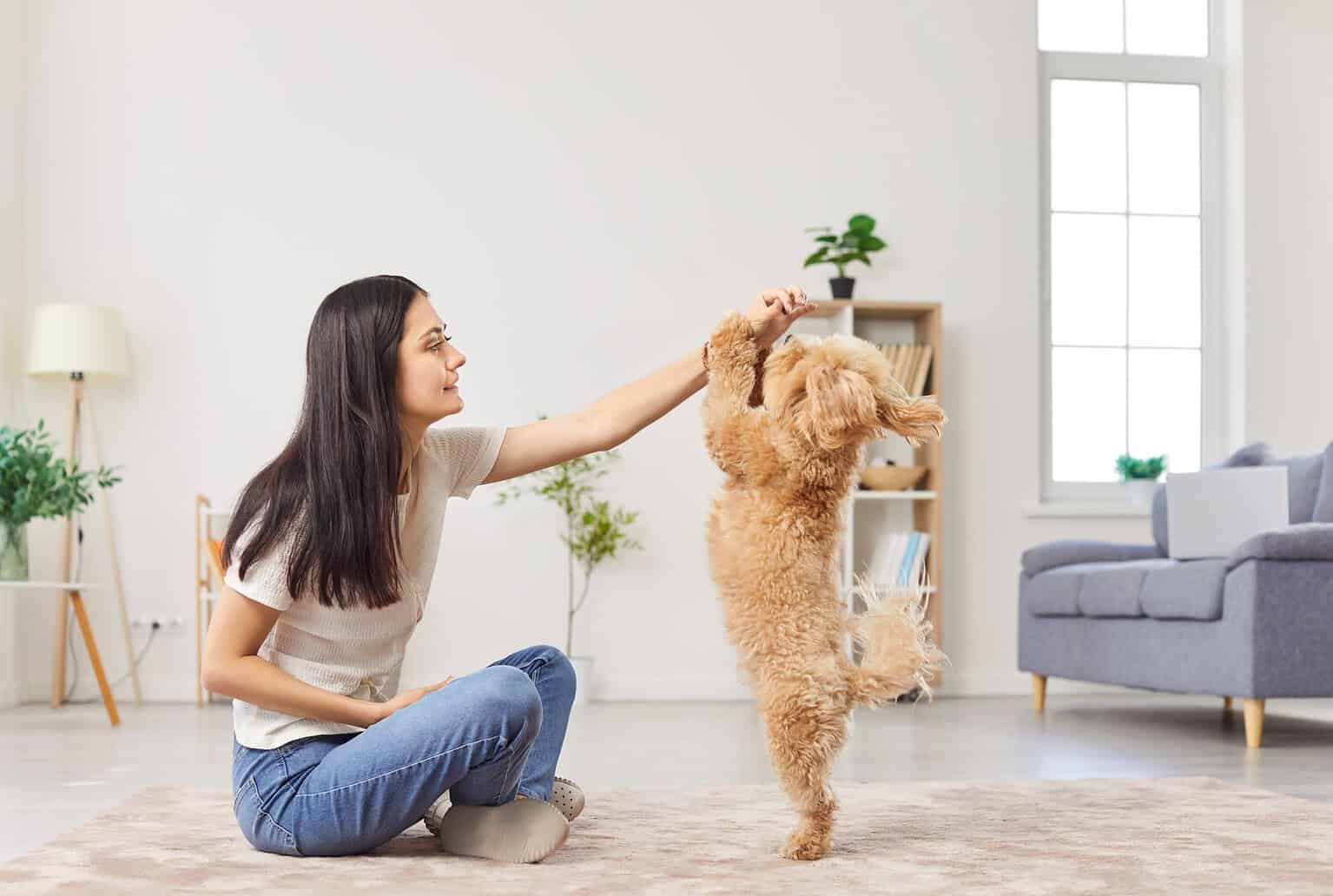
You can tire out a dog indoors in winter without a yard, a treadmill or a big house. The fastest results come from combining short bursts of movement (hallway fetch, tug, stair recalls, a homemade obstacle course) with “brain work” such as scent games, puzzle feeders and five-minute trick sessions. A dog’s exercise needs do not drop when the temperature does, so the goal is to meet them in a different way until the sidewalks thaw.
Why a bored dog in January becomes a problem dog by February
Most dogs were already under-exercised before the snow arrived. In a University of Liverpool survey of 17,028 UK dog owners, 9,025 dogs (53 percent) fell short of the Kennel Club’s daily exercise guidance for their breed, and the gap was widest for big dogs: only 18 percent of large-breed dogs met their target, and just 8 percent of Labrador retrievers did. Winter makes that worse, because the easiest form of exercise, the walk, gets shorter, colder and less frequent.
The cost shows up as behavior. Jamie Lovejoy, DVM, writes for PetMD that boredom and inactivity in dogs can lead to unwelcome behaviors, anxiety and weight gain. Terri Bright, director of behavior services at MSPCA-Angell, notes that most dogs benefit from 30 to 45 minutes of large-muscle exercise every day and the same amount of mental exercise, and that an over-tired dog is as much of a problem as an under-exercised one, so the right amount and type matter more than sheer volume.
Some dogs feel the winter slump harder than others. Mark Freeman, clinical associate professor of community practice at the Virginia Tech Veterinary Teaching Hospital, points out that working breeds such as border collies, Australian shepherds, huskies, German shepherds and Belgian Malinois need a great deal of both physical and mental stimulation, and that terriers, schnauzers and sighthounds like whippets and greyhounds were also bred to have a job. If your dog is on that list, the ideas below are not optional extras; they are the winter plan.
Many breeds of dogs were bred to be workers, and as such, demand a much higher level of both physical and mental stimulation.
Mark Freeman, Virginia Tech Veterinary Teaching Hospital
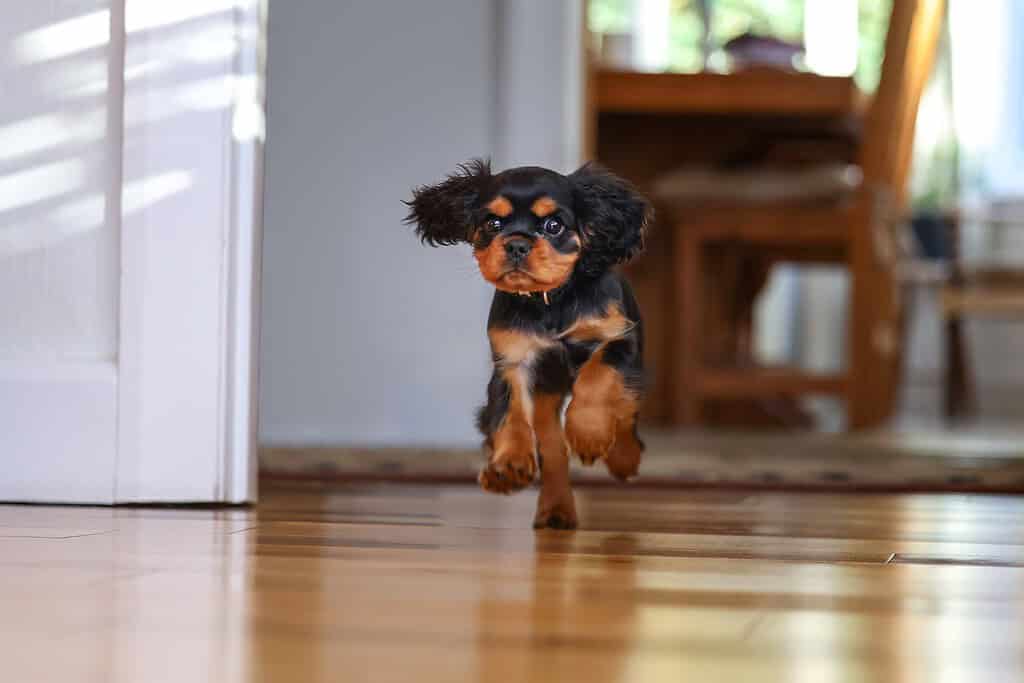
How much exercise your dog really needs
There is no single number. PetMD’s general guidance is 30 minutes to two hours of activity every day depending on age, breed, size and health, with hunting, working and herding breeds at the top of that range and short-nosed breeds such as bulldogs at the bottom. The American Kennel Club adds that puppies do better with several short play and training sessions than one long outing, and that senior dogs still need daily, gentle movement even when the run has become a walk.
If you have heard the “five minutes of exercise per month of age” rule for puppies, treat it as a loose reminder rather than a prescription. The UK veterinary charity PDSA states plainly that there is no scientific evidence behind the rule and that it is not appropriate for most puppies; what matters is avoiding repetitive, high-impact activity (jumping, twisting, skidding) while the growth plates are still open, and letting the puppy rest when they tire.
Scent games are the cheapest way to tire a dog indoors
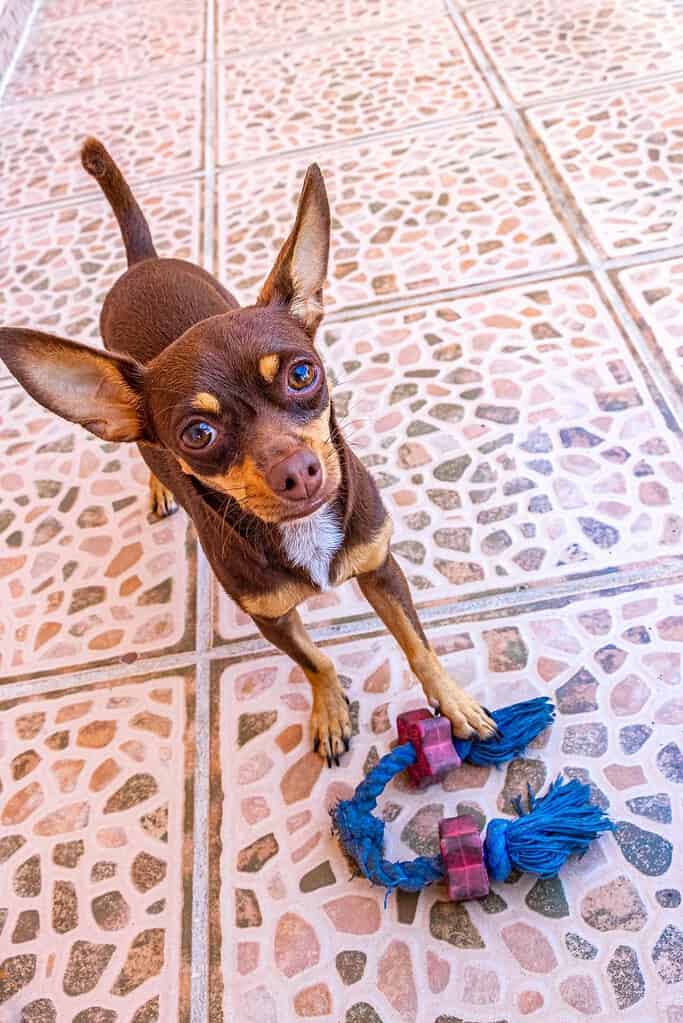
If you only try one thing from this article, make it nosework. Dogs process the world through smell, and searching uses a surprising amount of mental energy. In a 2019 study published in Applied Animal Behaviour Science, Charlotte Duranton and Alexandra Horowitz had 20 pet dogs practice either nosework (finding hidden treats) or heelwork (walking at the owner’s side for treats) once a day for two weeks. Only the nosework group became measurably more “optimistic” on a standard cognitive-bias test afterward, which the authors attribute to letting dogs forage, problem-solve and make their own choices.
You do not need a class to start. Bright’s “sniffer dog” progression at MSPCA-Angell goes like this: with your dog in a sit, put a treat on the floor about six feet away, release with “find it,” then place the next treat farther away, then two treats, then treats under objects or around a corner. From there, hide food in one cardboard box among several, add more boxes, and move them to different heights. Zoetis veterinarian Sam Gilbert suggests letting the dog sniff the target before you hide it, using the stinkiest treats you have and helping with the search once the hiding spots get hard.
Hide-and-seek is scent work with a bonus. Have someone hold the dog while you hide behind a door or in a closet, call once, and reward hard when you are found. The AKC points out that it doubles as recall practice, and Zoetis suggests hints (a whistle, a foot tap) when the dog gets stuck so the game stays fun.
Games that get the heart rate up without a yard
Hallway fetch. Freeman recommends a hallway because you are less likely to knock things over, and carpeted areas over hardwood or tile, which are slippery. PetMD adds that soft, low-bounce toys (a tennis ball counts) protect both the dog and the house. Roll rather than throw for puppies and seniors so there is no leaping or hard stopping.
Tug. Lovejoy calls tug a great indoor game because it raises the heart rate in very little space. Her rules: use one designated tug toy only (never hands or clothing), do not pull too hard or play too long, because both can damage teeth. The AKC notes that tug played properly builds muscle and the human-animal bond.
Stair recalls. Bright’s stair recall is simple: stand at the top, toss a treat to the bottom, let the dog chase it down, then call them back up and repeat. The AKC cautions that stairs are as strenuous for dogs as for people and that long-backed, short-legged breeds should take special care, and Hill’s suggests skipping stairs entirely for dogs prone to joint or back problems. A long hallway works for everyone else.
Flirt pole. A flirt pole is a wand toy for dogs: a lure on a cord on a stick. PetMD recommends it for indoor exercise because the dog does the running while you stand still. Keep the lure low to the ground to avoid jumps, and let the dog “win” it regularly.
A living-room agility course. Both PetMD and the AKC describe building one from household items: a broom handle across two books or buckets for a low jump, water bottles or paper-towel rolls as weave poles, a row of chairs with a blanket over them as a tunnel, a dog bed as the “stay” station. Introduce one obstacle at a time with treats before stringing them together.
Not tagged yet?
Winter is when doors get propped open for deliveries and dogs bolt after a cooped-up week. A Shiloh’s House smart tag lets anyone who finds your dog tap it with any phone, no app needed, and see your contact info plus the notes you keep in the free Lohji app. No battery, no subscription.
Training sessions and tricks count as exercise
Five minutes of learning something new tires most dogs more than a lap around the block. The AKC’s winter training advice is to pick a Canine Good Citizen skill your dog does not have yet (sit, down, come, stay, “leave it”) and run a short session every day, then move on to tricks such as spin, shake, “get in the box” or jumping through a hoop. Lovejoy suggests stringing known cues together in quick succession (sit, down, stand, spin, come) as a drill once the dog knows them.
Some tricks are workouts in disguise. Gilbert describes “two feet up,” where the dog puts both front paws on a book and later a stool, as a hind-end strength exercise, and “sit pretty” (holding a beg position on a yoga mat for a few seconds) as core and balance work. Bright’s “floating dinner bowl,” where the dog has to hold a sit while the bowl is lowered to the floor, teaches impulse control at the one moment of the day the dog cares about most. Her “101 things to do with a box” game, where you reward any new interaction with a cardboard box (nose touch, paw in, two paws in, back feet in), is pure problem-solving.
Use tiny rewards so the calories do not undo the exercise; our picks for the best dog training treats are pea-sized for that reason, and a portion of the day’s kibble works just as well for food-motivated dogs.
Dog treadmills: useful, with rules
A treadmill is the one piece of equipment that genuinely replaces a walk’s cardio, and the AKC lists it as a strong option for high-energy breeds, with the caveat that it does not replace being outside. Trainer Pamela Johnson, quoted by the AKC, suggests starting with five-minute sessions and adding a few minutes a week up to a maximum of about 20 minutes, increasing speed separately from duration, and always holding the safety cord. Preventive Vet’s guidance caps a mastered session at 30 minutes, says long-backed breeds such as dachshunds and corgis should stay at a zero-percent incline, and warns never to tether a dog to the treadmill with a leash, because a slip can mean strangulation.
If you only have a human treadmill, think twice: Small Door Veterinary advises against using them for dogs, and Hill’s notes that large dogs in particular may need a machine built for dogs. For most families, the hallway and the stairs do the same job for free.
Match the plan to the dog: puppies, seniors and flat faces
Puppies need the most frequent breaks. The AKC advises against repeated jumping (tossing a ball straight up, for example) until the growth plates close, which is around 6 to 8 months for small breeds and 18 to 24 months for giants, and the PDSA adds that over-exercise damage to a puppy’s joints usually shows no signs until it has already happened. Three or four five-minute games spread through the day beat one long romp.
Seniors benefit from the opposite of hibernation. Stacey Oke, DVM, writing for the AKC on winter joint health, notes that even low-level exercise maintains the muscle that stabilizes arthritic hips and shoulders and helps with weight loss, and recommends introducing anything new slowly rather than playing weekend warrior. Scent games, slow hallway fetch on a rug and short training sessions are ideal; stairs and tug usually are not. If your older dog seems stiff after play, our guide to the best dog joint supplements covers what the evidence supports, and a warm spot to recover (see our heated pet bed picks) matters more in January than any other month.
Flat-faced breeds (bulldogs, pugs, Frenchies, Boston terriers) overheat easily even indoors, especially in a warm house with the heat running. PetMD’s long-standing advice is that short-nosed dogs will not tolerate a lot of hard exercise once grown, so keep games short, build in water breaks, and favor sniffing and trick work over sprinting.
A sample winter day for a bored dog
| When | What | Why it works |
|---|---|---|
| Morning (10 min) | Breakfast from a snuffle mat or scattered on the floor, then a short bundled-up walk | Sniffing and foraging settle a dog before the day starts |
| Midday (10 min) | Hallway fetch or stair recalls, then a frozen stuffed toy | Cardio burst, then a calm chew to come down |
| Afternoon (5 min) | One trick or CGC skill, five minutes, tiny treats | Learning is tiring; short sessions keep it fun |
| Evening (15 min) | Find-it with boxes, then dinner in a puzzle feeder | Nosework before bed; puzzle feeders slow eating |
That is about 40 minutes of real engagement in a day, close to Bright’s 30-to-45-minute target for most dogs, without a single long walk. Young working breeds will want a second tug or flirt-pole session; seniors can drop the midday burst and keep the sniffing. When the weather breaks, go back outside. The AKC’s winter advice is to grab every clear-sidewalk afternoon, with a coat and boots where needed (our guides to the best dog winter coats and best dog boots can help), and to wash salt off paws afterward, since road salt and ice melt irritate pads.
One last winter note: a dog who has been cooped up all week is primed to bolt the moment a door opens. Make sure the collar and ID tag are on even indoors; our guide to the first 60 minutes after a dog goes missing explains why the tag is what gets most dogs home.
Frequently asked questions
How do I tire out my dog indoors fast?
Pair a cardio game with a thinking game: five minutes of hallway fetch, tug or stair recalls, then ten minutes of find-it, a snuffle mat or a new trick. Scent work in particular tires dogs out of proportion to the movement involved.
Is it okay to skip walks in winter?
Short-term, yes, when it is dangerously cold or icy; veterinarians at Virginia Tech note that frostbite can set in within 5 to 10 minutes when wind chill drops below zero. But your dog’s exercise needs do not change, so replace the walk with indoor activity rather than dropping it.
Can I use my own treadmill for my dog?
Small Door Veterinary advises against human treadmills for dogs, and Hill’s says large dogs may need a machine built for them. Whatever you use: get a vet’s okay first, start with five-minute sessions, never tether the dog with a leash, keep the incline flat for long-backed breeds, and never leave the dog unattended.
How much exercise does a puppy need indoors?
Several short sessions a day, with rest in between. The AKC recommends against repeated jumping until the growth plates close, and the PDSA says the “five minutes per month of age” rule has no scientific backing; watch for tiredness and stop early.
Are puzzle toys really exercise?
Mental exercise, yes. A 2019 study found two weeks of daily nosework made pet dogs measurably more optimistic, and its authors recommend giving pet dogs more foraging time through nosework or food-dispensing toys. Pair puzzles with some movement for a complete plan.
Sources
- Virginia Tech Veterinary Teaching Hospital, Beating the winter blues: How to stay active with your pet in cold weather (Mark Freeman)
- MSPCA-Angell, Boredom Busters: 10 Indoor Exercises to Train and Tire Your Dog (Terri Bright, PhD)
- PetMD, 12 Indoor Exercises for Dogs When You Can’t Get Outside (Jamie Lovejoy, DVM)
- Zoetis Petcare, 6 Indoor Activities for Dogs to Keep Them Fit in Winter (Sam Gilbert, DVM)
- American Kennel Club, How Much Exercise Does a Dog Need Every Day?
- American Kennel Club, How to Keep Your Dog Entertained Indoors
- American Kennel Club, Keep Up With Your Dog’s Training Through the Winter
- American Kennel Club, How to Use a Treadmill to Exercise Your Dog (Pamela Johnson, CPDT-KA)
- American Kennel Club, Maintaining Dog Joint Health in Winter (Stacey Oke, DVM)
- Preventive Vet, Dog Treadmills: What You Need to Know
- Cornell University College of Veterinary Medicine, Treadmill training for dogs (Christopher Frye, DVM)
- Hill’s Pet Nutrition, How to Keep Dogs Active in Winter
- PDSA, Exercising your puppy
- PetMD, Exercising With Your Dog 101
- Small Door Veterinary, Exercise Needs for Puppies, Adults and Senior Dogs
- Duranton C, Horowitz A. Let me sniff! Nosework induces positive judgment bias in pet dogs. Applied Animal Behaviour Science, 2019
- Pickup E, German AJ, et al. Variation in activity levels amongst dogs of different breeds: results of a large online survey of dog owners from the UK. Journal of Nutritional Science, 2017