Can Dogs Get Frostbite? Signs, First Aid and Prevention
 Shiloh’s House Team
·
·
14 min read
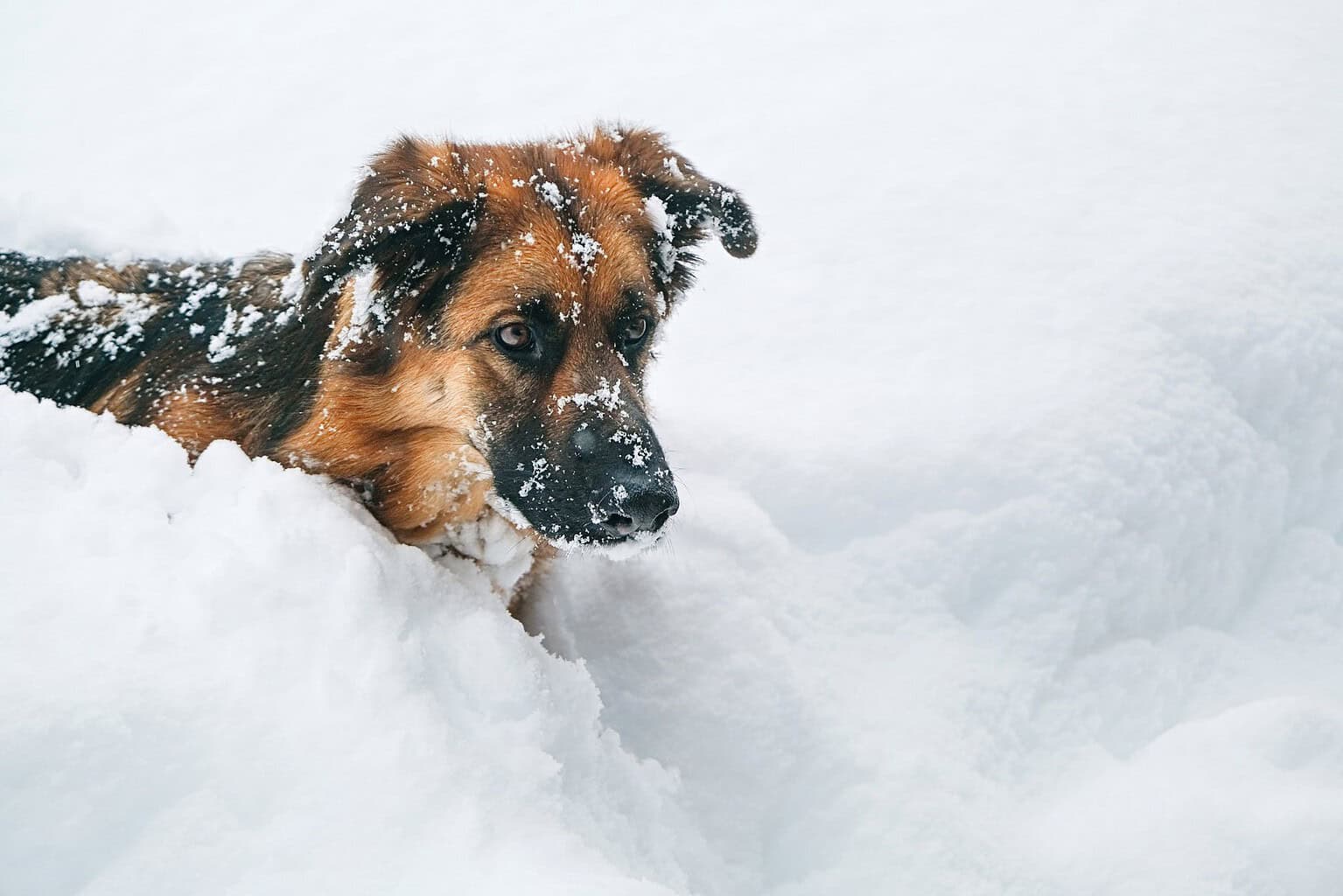
Yes. Dogs can get frostbite once the temperature falls below freezing, and it comes on faster in wind and wet weather and in small, short-coated, very young or old dogs. The ear tips, tail, toes, paw pads, nose and scrotum are most at risk. Frostbitten skin looks pale or grey and feels cold at first, then turns red, swollen and painful as it thaws. Bring your dog inside, warm the area gently with warm (not hot) water, never rub it, and call your vet.
Last updated: January 2026
What frostbite is and where dogs get it
Frostbite is a cold injury in which skin and the tissue under it actually freeze. VCA Animal Hospitals explains the chain of events: once the air drops below 32°F, the blood vessels near the skin narrow so the body can keep its core warm. That is a smart survival move, but it starves the parts farthest from the heart of warm blood. If the cold lasts long enough, ice crystals form in the tissue itself, and PetMD’s Dr. Kelly Sulik compares the result to a thermal burn.
A fur coat is less protection than most owners assume. The American Veterinary Medical Association calls the idea that fur makes dogs more resistant to cold than people a common belief that is untrue. The danger zones are the places with thin fur and a lot of exposed surface. PetMD lists the ear tips, tail, toes, nose and scrotum. The RSPCA adds the foot pads, and a Texas A&M veterinarian, Dr. Christine Rutter, includes the lips. An Iditarod race vet notes that genitals are vulnerable in both sexes: the vulva and nipples in females, and the prepuce and testicles in males.
Frostbite on its own is rarely fatal, but it seldom travels alone. The American Kennel Club’s chief veterinarian, Dr. Jerry Klein, notes that it is often followed by hypothermia, which can kill. If you want a general guide to safe walking temperatures, see our post on how cold is too cold for dogs. This page is about what to do when the cold has already done damage.

What to do if you think your dog has frostbite
First aid for frostbite is mostly about avoiding the wrong kind of help. The table pulls together the advice from VCA, PetMD, the AKC, the American Red Cross and the RSPCA.
| Do | Don’t |
|---|---|
| Move your dog somewhere warm and dry straight away | Thaw a frozen area outdoors if it could freeze again |
| Warm the area with warm (not hot) water or a warm, moist compress | Use a heating pad, hair dryer or other direct dry heat |
| Pat the skin dry very gently afterwards | Rub or massage the skin, even with a towel |
| Wrap your dog’s body in dry blankets or towels warmed in the dryer | Warm your dog quickly or put anything hot directly on the skin |
| Call your vet or an emergency clinic and head there | Give human pain relievers such as aspirin or acetaminophen |
Order matters. If your dog is cold all over, sluggish or weak, VCA advises dealing with the low body temperature first, slowly, by wrapping the body in warm, dry towels or blankets with towel-wrapped hot water bottles nearby. Then turn to the ears, tail or paws. The Red Cross suggests spraying the area with warm water or lightly applying a warm compress. Both groups say not to rub, because rubbing frozen tissue makes the damage worse.
Items such as heating pads should never be applied directly to pets as this can cause thermal burns.
Dr. Stacy Eckman, lecturer, Texas A&M College of Veterinary Medicine & Biomedical Sciences, in Pet Talk
Signs of frostbite in dogs, from the first hour to the first weeks
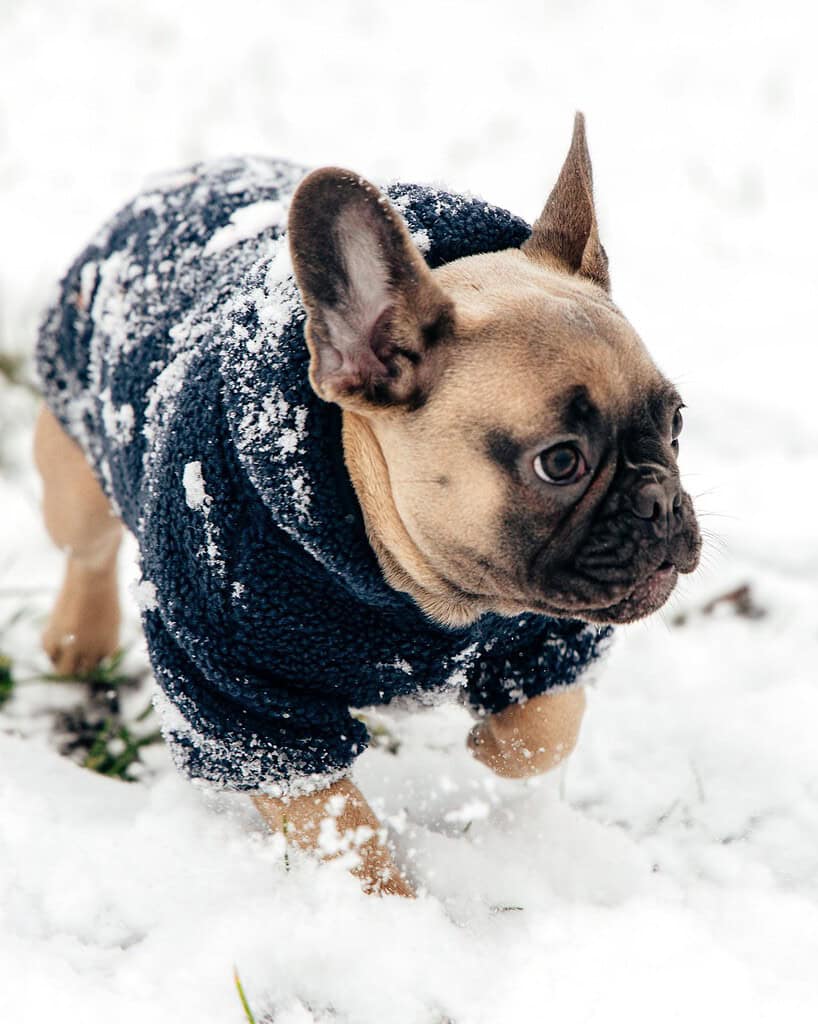
Frostbite is sneaky because it changes over time. The AVMA notes that it is harder to spot than hypothermia and may not be fully recognised until a few days after the damage is done. Cornell’s Riney Canine Health Center says much the same: it can take a few days to work out how much tissue is affected. So it helps to know what to look for at each stage, and to keep looking after your dog seems fine.
While the skin is still cold, the main clue is colour. PetMD, VCA and the AKC all describe skin that is pale, grey or bluish, and it feels cold, hard or brittle to the touch. You may see ice on or around the area. A veterinary textbook chapter by Lagutchik and colleagues describes the mildest grade as grey to white, waxy-looking skin. Frozen tissue can also be numb, so the American Red Cross warns that some dogs show no pain at all at this point, while others are very sore.
Your dog’s behaviour often gives the game away before you spot the skin change. Washington State University’s veterinary hospital says frostbitten dogs may seem to prance as they walk. Guide Dogs in the UK lists limping or not wanting to put weight on a leg, and the AKC mentions stiffness and clumsiness. Licking or chewing at one spot is another sign that both VCA and the RSPCA describe. If your dog is limping after a snowy walk and you cannot find a cut or a stone, our guide on why a dog limps covers the other possibilities, but check the pads and toes for colour change first.
As the tissue thaws, the picture changes. The skin turns red and swells, and it usually becomes painful as it warms. The Red Cross and the textbook chapter both say the pain can be intense during rewarming. Blisters can appear, and PetMD notes a moist discharge may be present. Hill’s Pet adds that shallow frostbite can make the skin peel and lose hair, while deeper freezing leaves skin that stays hard and cool even after your dog is back indoors.
Severe frostbite shows itself over the following days and weeks. According to VCA, dying tissue turns dark blue and then black, and it can slough or fall off over several days to weeks. It may produce pus or smell bad if bacteria move in. The Merck Veterinary Manual says the outer tips of the ears are the most likely part to fall off. VCA also notes that small patches and areas that do not bear weight, such as the tail tip and ear tips, may take several days to show any sign at all.
Which dogs are most at risk
Any dog can get frostbite, but some get it much sooner. The AKC names small dogs, short-haired dogs, puppies and seniors as the groups at greatest risk. The RSPCA explains why size matters: small dogs lose heat faster, while bigger dogs are better insulated and stand higher off the ground. Short-legged dogs have a similar problem, the AVMA says, because their bellies brush through the snow.
Age cuts both ways. PetMD notes that very young puppies cannot regulate their body temperature well, and very old dogs often have less muscle to generate heat. Texas A&M’s Dr. Stacy Eckman adds that some medicines older dogs take can affect how well they control their temperature and blood flow. Dr. Rutter also lists underweight dogs and dogs with shaved fur.
Health matters as much as coat. VCA says dogs with heart disease, diabetes or any condition that reduces blood flow to the paws, ears and tail are more likely to get frostbite. The AVMA adds kidney disease and hormone disorders such as Cushing’s disease to the list of conditions that make temperature control harder. Wet dogs are at extra risk whatever their breed, because damp fur loses its insulation, which is why the AKC advises making sure your dog is dry before a cold walk.
Thick-coated northern breeds such as Huskies and Malamutes cope far better, but they are not immune. An Iditarod veterinarian writes that even fully acclimated sled dogs do get frostbite, especially in extreme cold, wind and moisture.
How cold it has to be, and why wind and wet matter
Most vet sources put the starting line at freezing. The AKC and VCA both say dogs are at risk once the air falls below 32°F. From there, time and weather decide how quickly damage happens. PetMD says that in a small, short-haired dog, the timing is likely to be similar to people: at 0°F exposed tissue can freeze in about 30 minutes, and at 15 degrees below zero in about 15 minutes. In wind or damp, it can happen within 30 minutes at 32°F.
That is why there is no single safe number. Dr. Rutter at Texas A&M says frostbite does not happen at a set temperature but comes from a combination of cold, heat loss and reduced blood flow. PetMD explains that wind hampers the body’s ability to stay warm and that moisture, such as wet bedding, stops a dog warming up properly. It adds that higher altitudes, with less oxygen in the air, can make frostbite more likely at milder freezing temperatures.
Washington State University’s Dr. Linda Martin recommends that most dogs, especially thin-coated ones, spend no more than 10 to 15 minutes in freezing temperatures without somewhere warmer to go. Cold can still hurt above freezing too. The Lagutchik textbook chapter describes a non-freezing cold injury to the ears, paws, tail tip and scrotum after more than 12 hours of exposure to cold, damp conditions, with intense redness, pain and itching.
Frostbite and hypothermia often happen together
Hypothermia is a drop in core body temperature, and it is the bigger threat to your dog’s life. The American Red Cross describes frostbite as a common finding in dogs with acute hypothermia, because, as PetMD explains, a body in danger of getting too cold redirects blood away from the extremities to protect the vital organs. A search-and-rescue veterinary lecture by Dr. Lori Gordon lists a body temperature below 93°F as one of the conditions in which frostbite may occur.
Vets grade hypothermia by rectal temperature. Washington State University, the AKC and Texas A&M use the same scale: mild hypothermia is 90 to 99°F, moderate is 82 to 90°F and severe is anything below 82°F. WSU says owners can check with a rectal thermometer, and Dr. Gordon notes that rectal readings are among the most accurate while ear thermometers have proven unreliable.
The early signs are easy to miss. The AVMA lists whining, shivering, anxiety, slowing down or stopping, weakness and looking for warm places to burrow. As it worsens, Dr. Eckman says the shivering stops and dogs become more neurologically affected, and the Merck Veterinary Manual describes weakness, confusion, shallow breathing, a slow pulse and collapse. Shivering on its own can have many causes, which we cover in why is my dog shaking, but a cold, shaky, sluggish dog after time outdoors needs warming up now.
The PDSA’s first aid advice is to dry your dog off, put blankets underneath and over them, raise the room or car temperature slowly, offer lukewarm water if they are alert enough to drink, and get them to a vet even if they seem to recover.
How vets treat frostbite and what recovery looks like
At the clinic, your vet will deal with hypothermia or shock first, then turn to the frozen tissue. One veterinary textbook protocol warms frostbitten areas in a 104 to 108°F water bath for at least 20 minutes, or with warm wet towels changed every five minutes, followed by loose protective bandages, rest and a cone to stop licking. Rewarming is very painful, so pain relief is standard. VCA says antibiotics are used when tissue death is suspected, to head off infection, and lists other treatments some vets use, including pentoxifylline, aloe vera, oclacitinib and hyperbaric oxygen.
The hardest part for owners is the wait. The Merck Veterinary Manual says any amputation should be delayed until the vet can clearly see the line between living and dead tissue. Hill’s veterinarian Dr. Laci Schaible explains that frostbite does not spread once the injury has happened; the full damage simply takes time to become visible. Dr. Gordon’s lecture notes that much tissue that looks bad early may return to normal over the next few days.
The outlook depends on how deep the freeze went. VCA says mild frostbite usually heals with little lasting damage. PetMD notes that mild cases with quick return of blood flow may heal within a few days, while severe cases often look worse before they get better, can take months to heal and may leave permanent cosmetic changes. Surgery to remove dead tissue, or amputation of a tail tip or toe, is reserved for tissue that does not survive.
How to prevent frostbite on winter walks
Prevention comes down to limiting exposure and covering the parts that freeze first. Keep walks short on the coldest days, and on bitter or windy days swap some outdoor time for indoor exercise. The AKC recommends a warm coat, sweater and boots for short-coated, older and more fragile dogs. Our picks for the best dog winter coats and best dog boots cover the options for short-coated and small dogs.
Dry your dog before you head out and again when you get home, and wipe the paws to remove snow, ice balls, salt and de-icers, as Cornell advises. Our winter paw care guide walks through the full routine. Never leave a dog outside unattended in freezing weather, and the AKC is clear that clothing is an extra layer, not a substitute for bringing your dog in.
It also helps to carry a small towel on winter walks, as the PDSA suggests. If your dog gets soaked by snow or a puddle partway round, drying the ears, tail, paws and belly on the spot means you are not walking home with a wet dog in freezing air.
Not tagged yet?
Washington State University’s vet hospital says many of the frostbitten pets it treats were lost and out in the cold too long. A Shiloh’s House smart tag lets whoever finds your dog reach you with one phone tap, so a winter escape ends in minutes, not hours.
Frequently asked questions
Can dogs get frostbite on their paws?
Yes. Paw pads have a clever heat-saving blood supply, but the toes, pads and the skin between them can still freeze, especially when wet. Washington State University lists paw pads among the most common sites, along with the nose and ears.
At what temperature can a dog get frostbite?
The risk starts once the air falls below 32°F, according to the AKC and VCA. Wind, wet fur, small size and a thin coat all make it happen sooner and at milder temperatures.
How quickly can a dog get frostbite?
Faster than most people expect. PetMD says frostbite can occur in as little as 15 minutes, and that a small, short-haired dog may develop it in about 30 minutes at 0°F or within 30 minutes at 32°F in wind or damp.
What does frostbite look like on a dog’s ears?
At first the ear tip looks pale, grey or bluish and feels cold and stiff. As it thaws it turns red, swollen and sore, and in severe cases it darkens to black over the following days and can eventually fall off.
Can I treat my dog’s frostbite at home?
Only as first aid on the way to the vet. Warm the area gently with warm, not hot, water, pat it dry and keep your dog wrapped up. Hill’s warns that warming the skin too fast at home can do more harm than good, so let your vet take over.
Does frostbite in dogs heal?
Mild frostbite usually heals within days with little lasting damage. Severe frostbite can take months, may leave permanent changes and sometimes needs surgery once the vet can see which tissue has died.
Sources
- VCA Animal Hospitals, “Frostbite in Dogs” (2024).
- Sulik K., DVM, “Frostbite in Dogs,” PetMD (2022).
- Klein J., DVM, “Can Dogs Get Frostbite?” American Kennel Club (2021, updated 2023).
- Merck Veterinary Manual editorial staff, “Keeping Pets Safe During Cold Winter Months,” Merck Veterinary Manual (2025).
- American Veterinary Medical Association, “Cold weather animal safety.”
- Cornell University College of Veterinary Medicine, Riney Canine Health Center, “Winter safety tips.”
- Washington State University Veterinary Teaching Hospital, “When is it too cold for your pet?” with Dr. Linda Martin (2025).
- Texas A&M College of Veterinary Medicine & Biomedical Sciences, “Dashing Through the Snow: Signs of Hypothermia,” Pet Talk with Dr. Stacy Eckman (2012).
- Texas A&M College of Veterinary Medicine & Biomedical Sciences, “Keep Outdoor Pets Safe and Warm From The Cold,” Pet Talk with Dr. Christine Rutter (2019).
- American Red Cross, “Dog Frostbite,” Pet First Aid, information provided by Dr. Deborah Mandell, University of Pennsylvania.
- RSPCA, “Winter and cold weather care for dogs.”
- PDSA, “Hypothermia in pets,” Pet Health Hub.
- Guide Dogs (UK), “How to keep your dog safe in cold weather.”
- Schaible L., DVM, “Understanding and Treating Dog Frostbite,” Hill’s Pet (2021).
- Lagutchik M.S., Frederick R.W., Barclay J.O., “Care of the Environmentally Injured Animal,” Wiley veterinary textbook chapter 72 (2023).
- Gordon L.E., DVM, “Hypothermia and Frostbite in the Canine,” USAR veterinary lecture notes.
- Ninomiya H. et al., “Functional anatomy of the footpad vasculature of dogs: scanning electron microscopy of vascular corrosion casts,” Veterinary Dermatology (2011).
- Iditarod Trail Committee, “Do sled dogs get frostbite?” (2020) and “Do sled dogs wear protective clothes when they run?” (2021).