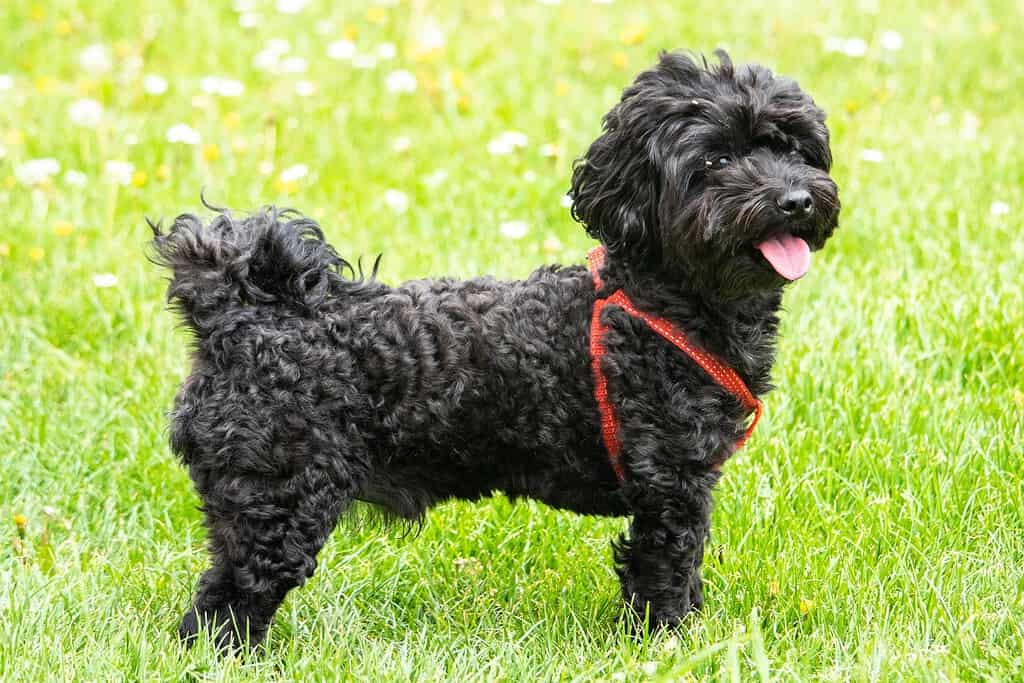
The ID that stays on a hunting dog in the field is a nameplate riveted flat to a snug, bright collar, engraved with two cell numbers. Hanging tags snag in brush and can tear off, so keep them short and tight or save them for the truck and home collar. Add a registered microchip as the permanent backup, a GPS collar if your dog ranges far, and a smart tag profile for medical notes and extra contacts.
Last updated: November 2025
Why do hunting dogs get lost so easily?
A national phone survey published in the journal Animals found that 14% of dogs had gone missing at least once in five years, and 93% of those dogs made it home. That survey covered all dogs, most of them family pets lost from home. Field dogs face the same risks plus a few that pet dogs rarely meet.
The first is range. Pointers, setters and hounds are bred to cover ground, and a dog working a quarter mile out can be over a ridge or through a creek bottom before you notice the bell has gone quiet. The second is scent. Ducks Unlimited retriever columnist Tom Davis puts it plainly: a stray whiff of scent can prompt a dog to follow its nose no matter where it takes him, because that is what hunting dogs do. He adds that the most common lost-retriever story is a dog chasing a crippled duck or goose over the horizon and not coming back.
The third is noise and chaos. Gunshots, a flush of birds or a run-in with a deer can rattle even a steady dog, and young dogs are the most likely to bolt.
Then there is the terrain itself. Heavy cover, barbed wire, beaver dams and ice can pull a collar off or trap a dog where no one can see it. And field dogs are often hundreds of miles from home, on leased ground, public land or a friend’s farm, where a finder has no idea who owns them.
That last point is why ID matters so much for working dogs. The person who finds your setter is usually a landowner, a hunter in the next field or a driver on a county road. They will look at the collar first. Whatever is written there, and whether it is still attached, decides how fast you get the call.

Which ID tag stays on a hunting dog in the field?
Not every tag survives a day in briars and cattails. Here is how the common ID types compare for working dogs, from what sits on the collar to what sits under the skin.
| ID type | How it attaches | Snag risk in cover | Noise | Info it holds | Approx. cost |
|---|---|---|---|---|---|
| Riveted brass or steel nameplate | Riveted flat to the collar | Very low | Silent | 2 to 4 short lines | About $20 to $45 with collar |
| Embroidered collar | Stitched into the webbing | Very low | Silent | 1 to 2 lines | About $20 to $35 |
| Slide-on tag | Slots onto flat collar webbing | Low | Silent | 2 to 4 lines | About $10 to $25 |
| Hanging tag on a split ring | Dangles from the D-ring | Moderate to high | Metal jingles; acrylic is quiet | 2 to 5 lines | About $8 to $40 |
| NFC smart tag | Split ring, kept short and tight | Moderate | Quiet | Engraved lines plus a full online profile | About $38 |
| Microchip | Implanted under the skin | None | Silent | An ID number linked to a registry | About $25 to $60 at a vet |
| GPS or e-collar with tracking | Its own collar and receiver or app | Low to moderate | Silent unless set to tone | Location, not owner contact | About $150 to $800+, some with monthly fees |
Prices are rough ranges from common retailers and vary by brand and size. The pattern is what matters. Anything riveted, stitched or slid flat onto the collar has almost nothing to catch on a branch. Ducks Unlimited calls a collar nameplate and a microchip “mandatory” for retrievers, and that pairing is the backbone of field ID.
Hanging tags still have a place. They hold more lines, they are easy to swap, and an NFC tag can carry far more than any plate. The trick is to keep them close to the collar and use them where snag risk is lower: the truck, camp, the yard and the walk to the field.
Are hanging tags a snag risk in brush and water?
They can be. A tag that hangs an inch below the collar acts like a small hook. In multiflora rose, blackberry canes, cattails or downed timber it can catch, twist the split ring open and drop into the cover. Most owners never see it happen. They just notice at the truck that the tag is gone.
Wire fences are the bigger worry. A dangling ring can catch on a barb or a woven-wire gap as a dog squeezes through. Brad Fitzpatrick, writing for American Hunter, explains why many hound and upland hunters use center-ring safety collars: the two halves are joined by an O-ring, so the collar can flex when it hangs on brush, fence wire or limbs, and a loose enough collar lets the dog pull free. Any ID you add should not defeat that design by wrapping around the ring.
Water adds its own wear. Mud, sand and salt grind away at shallow engraving and corrode cheap rings. Our waterproof dog tags guide explains which materials survive a season of ponds and marshes and which ones fade.
If you do run a hanging tag in the field, a few habits cut the risk. Use one heavy split ring, attached directly to the collar, with no extension ring or S-hook in between. Keep the tag count low, since three tags banging together catch more than one. Check the ring before every hunt and squeeze it closed if it has started to gap. A silicone tag silencer or a slide-on pouch can also keep the tag flat.
For many working dogs the simplest answer is a slide-on dog tag or riveted plate for hunting days, plus the hanging tags on the everyday collar. If tags keep vanishing no matter what you try, why dog tags fall off walks through the usual culprits.
What should you engrave on a hunting dog’s ID?

Space on a nameplate is tight, so every line has to earn its place. Start with the thing a finder needs most, a phone number that someone will answer. That means a cell number, not a landline. When you are three states from home on a bird trip, a home phone rings in an empty kitchen. Ducks Unlimited makes the same point, recommending your mobile number and other up-to-date information on a collar nameplate now that nearly everyone carries a cell phone.
Put two numbers on the plate if you can. The moments when a dog gets loose are often the same moments your phone is out of reach. You may be in a dead zone, wading a marsh, or dealing with the emergency that spooked the dog in the first place. A second number for a spouse, a hunting partner or a family member back home gives the finder a real chance of reaching someone. Pick a person who picks up calls from unknown numbers.
Your last name or full name is worth a line too. If a finder calls a vet clinic or the local game warden, a name helps them trace the dog to a person. City and state can also help, because a plate that reads “Bozeman, MT” on a dog found in South Dakota tells the finder this dog is a long way from home and someone is out searching. A full street address is less useful for traveling dogs and goes stale every time you move.
Short phrases can change how a finder acts. “If found call” or “Please call” right above the number turns a plate into an instruction instead of a label. “Needs meds” can push a finder to act fast and may prompt a trip to a vet, where the dog will be scanned for a chip. “Microchipped” tells a finder there is a backup if the call does not connect.
“Reward” is a judgment call. Some acrylic tag makers advise against it, arguing that it may encourage theft. Plenty of hunters see it the other way, since a reward line gives a landowner a reason to make the call instead of keeping a nice-looking dog. Trained gun dogs can be valuable, and theft does happen, so think about where you hunt. If you are on the fence, leave “reward” off the plate and list it on a smart tag profile instead, where you control it and can turn it off.
The dog’s name is the line most people want and the one many hunters skip. A name helps a finder call the dog in and calm it down. It also takes up space a second number could use. If you only have room for three lines, two phone numbers and your name usually beat the dog’s name.
Keep the lettering large and the contrast high. Fancy script looks great in a product photo and turns to mush after a season of mud. Block letters, deep engraving and a dark fill on a light background stay readable longest. Look at the plate every few weeks in daylight. Orvis suggests checking tag surfaces every couple of months and replacing worn ones, and keeping a spare collar ready in case one is lost in the bramble.
Last, update everything when your life changes. A new cell number, a new hunting partner or a move means a new plate, a new microchip registry entry and a new tag profile. Out-of-date ID is one of the most common reasons found dogs do not make it home.
Does a microchip replace a collar ID for field dogs?
No, but every field dog should have one. A collar can come off in brush, break on wire or be removed by a thief. A microchip cannot. It is the only ID that is guaranteed to still be with your dog when it reaches a shelter or a vet clinic.
“Bottom line? A nameplate and a microchip should be considered mandatory. They won’t prevent your dog from getting lost, but they’ll vastly improve the odds of a successful reunion.”
Tom Davis, Retrievers Columnist, Ducks Unlimited (DU Magazine, 2024)
A chip only works if it is registered and current. In a 2009 study of 53 shelters published in the Journal of the American Veterinary Medical Association, only 58.1% of microchipped animals were registered when shelters called the registry. The top reason owners could not be found was an incorrect or disconnected phone number. Still, microchips helped a lot. The median return-to-owner rate for stray dogs was 21.9%, and for microchipped stray dogs it was 52.2%.
The catch for field dogs is that a chip needs a scanner. A farmer who finds your pointer at 6 a.m. on a Saturday cannot read it. They can read a collar. That is why the two work as a team, not as substitutes. Our microchip vs smart tag breakdown goes deeper on what each one does.
Give your field dog a profile a finder can tap
Pair your riveted nameplate with a waterproof Shiloh’s House Smart Tag on the truck and home collar, so a finder gets your contacts, medical notes and a one-tap call.
Is a smart tag the same as a GPS collar?
No, and we want to be clear about that. Our Smart Tag is not a GPS tracker. It cannot show you where your dog is on a map, it has no battery, and it will not ping you when your dog crosses a ridge. If your dog ranges far, a GPS collar or a GPS-enabled e-collar is the tool for finding the dog. Ducks Unlimited notes there are two basic kinds: phone-app collars that need cell coverage and usually carry a monthly fee, and dedicated collar-and-handheld systems that work outside cell range and start around $430.
A GPS collar answers “where is my dog?” A smart tag answers a different question: “who does this dog belong to, and what does the finder need to know?” Once someone has your dog in hand, the tracker has done its job. The ID takes over.
The Shiloh’s House Smart Tag is a laser-engraved acrylic tag with a “Tap Phone Here” NFC back. A finder taps it with a phone, no app needed, and a live profile opens with one-tap call, text and directions for up to three contacts. You can add medical and behavior notes, such as “on seizure medication” or “gun shy, do not chase,” note a reward, and record voice messages from the family. The tag is waterproof, scratch-resistant and UV-stable, made in the USA, and sells for $38 with 30-day returns.
You manage that profile in the free Lohji app, available on the App Store and Google Play. Heading to a lease in another state with a buddy? Add his number as a contact before you leave and remove it when you get home, no new engraving needed.
For hunting days, keep the riveted nameplate as your always-on field ID and run the GPS collar if you use one. Put the Smart Tag on the everyday collar for the truck, the hotel, the dog park and home, where a dangling tag is low risk and a detailed profile is most useful.
Do hunting dogs need rabies tags and a license?
In most places, yes. Rabies vaccination is required for dogs across most of the US, and many counties and cities require dogs to wear a license or rabies tag. Rules vary by state and locality, so check the rules where you live and where you hunt. Our guide to whether dog tags are required by law covers license, rabies and ID rules in more depth.
Some states go further for hunting dogs specifically. Virginia law, for example, says that anyone hunting with a dog must make sure the dog has a tag identifying the name of the owner or custodian and a current phone number, securely fastened to a substantial collar. If you travel to hunt, look up the wildlife code for that state before opening day.
A visible rabies tag also helps the finder. Orvis notes that an up-to-date rabies tag reassures the person who finds your dog, and that matters when a stranger is deciding whether to reach for a muddy, scared dog. Rabies tags are usually hanging tags, so they add snag risk. Many hunters keep the rabies tag and license on the everyday collar and carry proof of vaccination in the truck for hunting days. If your local rules require the tag at all times, keep it on a short, tight ring.
How do you keep a dog visible during hunting season?
Visibility is safety. In thick cover and low light, a brown or liver-colored dog can look a lot like game. Hunters wear blaze orange so other hunters see them, and Orvis recommends putting bright vests on sporting dogs for the same reason. Blaze orange is traditional, though neon yellow and pink work too.
Start with the collar. A blaze orange or neon collar with a reflective band is easy to spot when a dog pops out of cover and easy to see in headlights on a dark road back to the truck. A bright collar also tells a passing driver that this is someone’s dog, not a stray.
Add a vest for thick cover. Upland hunters who work grouse and woodcock coverts often run bright safety vests, and retriever owners use neoprene vests for warmth and protection from underwater stumps. A blaze vest over the neoprene covers both.
Use sound, too. A bell or beeper collar helps you follow a dog you cannot see and lets other hunters know a dog is nearby. That is the one place where a jingle is a feature.
Off-season walkers need the same gear. Orvis advises that any dog in or near woods, fields or wetlands during hunting season should wear orange, family pets included. If your house dog hikes the same ground in November, give it a bright collar and current ID before you head out.
Frequently asked questions
What is the best ID for a hunting dog?
A brass or steel nameplate riveted flat to a bright, snug collar is the most reliable field ID because there is nothing to snag. Engrave two cell numbers and your name. Back it with a registered microchip, a GPS collar if your dog ranges far, and a smart tag profile on the everyday collar for medical notes and extra contacts.
Should I take ID tags off my dog while hunting?
Do not go tagless. If a dangling tag worries you, swap it for a riveted nameplate, an embroidered collar or a slide-on tag for hunting days, so contact details stay on the dog. Keep hanging tags on the everyday collar for the truck and home, and check that the field collar fits snugly before every hunt.
Is “reward” a good idea on a hunting dog tag?
It depends on where you hunt. A reward line can motivate a landowner to call, but some tag makers warn it may invite theft of a valuable trained dog. If you are unsure, leave it off the engraving and list the reward on a smart tag profile, where you can add or remove it at any time from your phone.
Can a smart tag track my hunting dog’s location?
No. The Shiloh’s House Smart Tag is an NFC ID tag, not a GPS tracker. It has no battery and cannot show your dog on a map. It works once someone has your dog in hand: they tap the tag with a phone and see your contacts, medical notes and directions. Use a GPS collar if you need live location.
Do microchips work for hunting dogs found in rural areas?
They work once the dog reaches a vet clinic, shelter or animal control officer with a scanner. A rural finder usually cannot read a chip on the spot, which is why a collar nameplate matters. Keep the registry entry current, since a 2009 JAVMA study found only 58.1% of chipped shelter animals were registered when shelters called.
What color collar is best for a hunting dog?
Blaze orange is the classic choice because it stands out against brush, timber and marsh grass and helps other hunters see your dog. Neon yellow and pink also work. Choose one with a reflective band for dawn, dusk and roadsides, and add a bright vest when working thick cover or hunting alongside other parties.
Sources
- Frequency of Lost Dogs and Cats in the United States and the Methods Used to Locate Them, Weiss, Slater and Lord, Animals, 2012
- How Many Pets Are Lost? How Many Find Their Way Home? ASPCA Survey Has Answers, ASPCA, 2012
- Characterization of Animals With Microchips Entering Animal Shelters, Lord et al., Journal of the American Veterinary Medical Association, 2009
- Retrievers: Lost Dog!, Tom Davis, Ducks Unlimited, 2024
- 4 Safety Tips for Hunting Dogs, Brad Fitzpatrick, American Hunter (NRA), 2019
- Dog Safety During Hunting Season, Orvis, 2024
- The Best Way to Find a Lost Dog, Orvis, 2024
- Code of Virginia § 29.1-516.2, Hunting With Dogs; Dogs to Wear Tags, Virginia General Assembly, 2022
- 5 Safety Tips to Practice With Hunting Dogs, Lindsay Stordahl, dogIDs, 2022