Why Does My Cat Show Me Her Belly? What It Really Means
 Shiloh’s House Team
·
·
16 min read
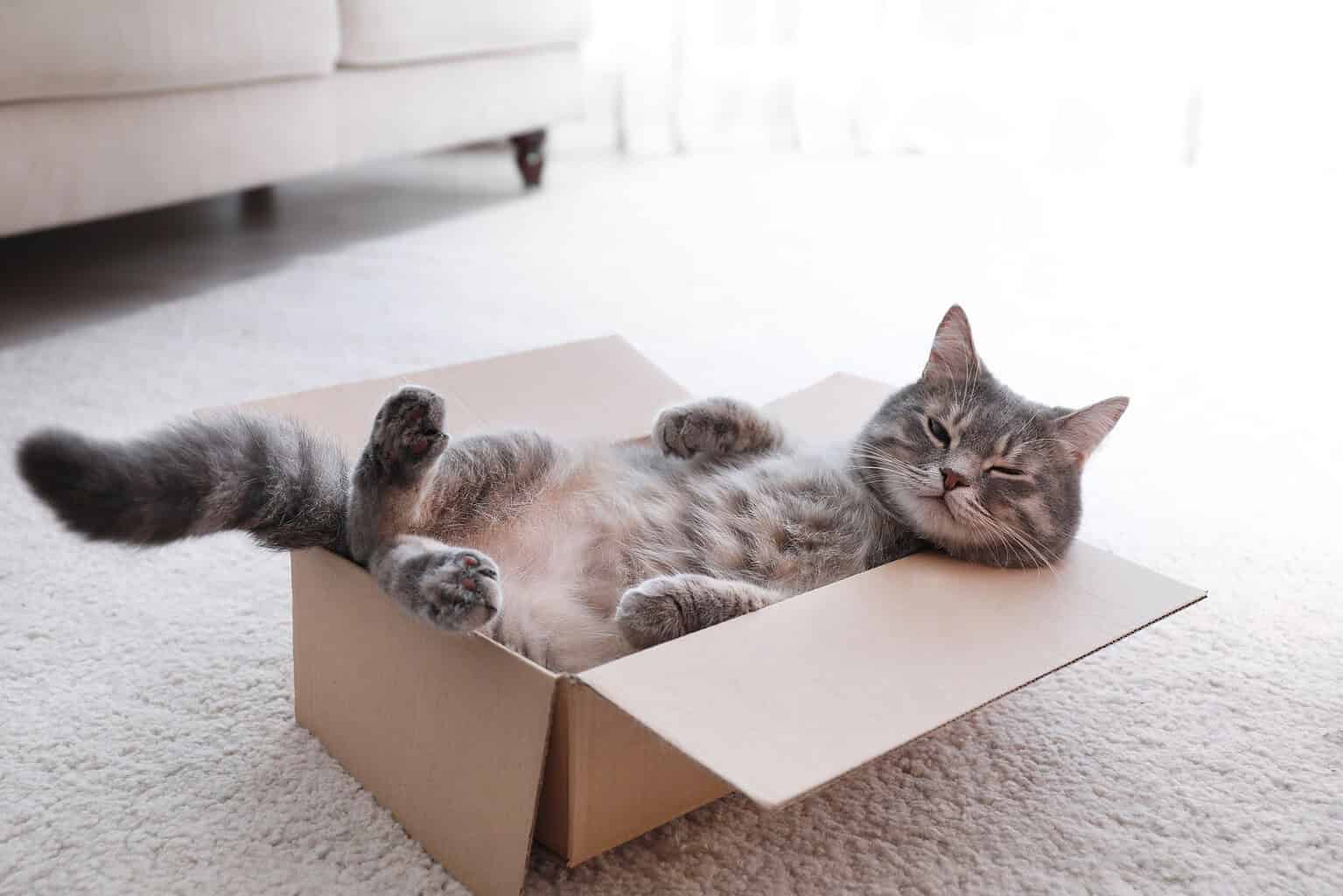
When your cat rolls over and shows you her belly, she is almost always saying “I feel safe with you,” not “rub my tummy.” The belly is a cat’s most vulnerable spot, so exposing it near you is a trust signal and often a greeting, sometimes a play invite or a sunbathing pose. Most cats still dislike belly rubs, so the best reply is a slow blink and a gentle scratch on the cheeks or head.
Last updated: November 2025
What does it mean when a cat shows you her belly?
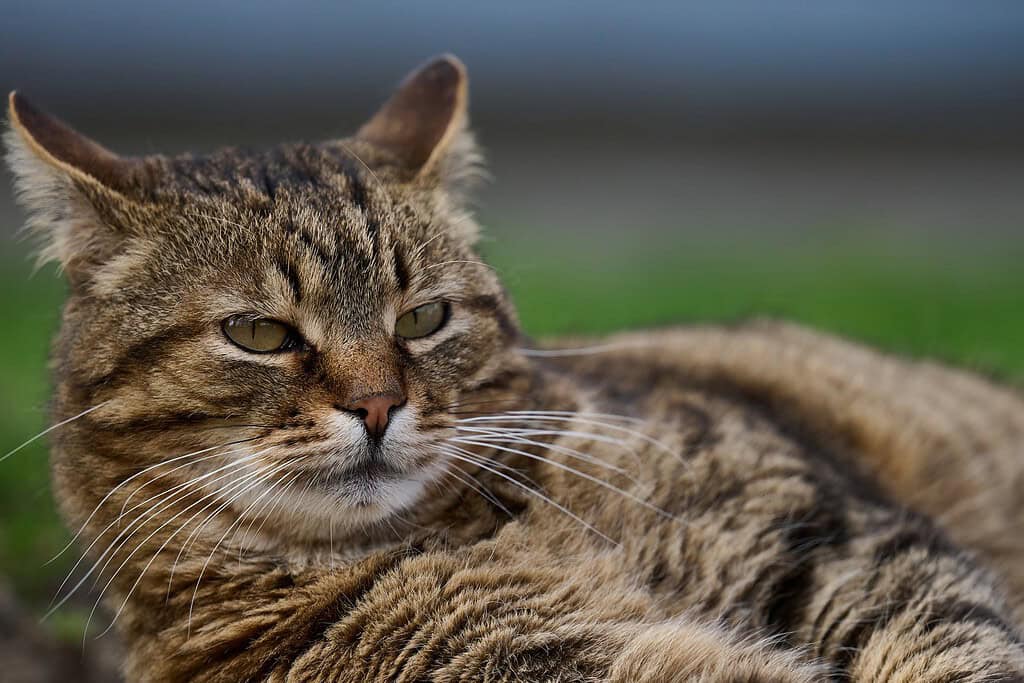
A cat on her back is a cat with her guard down. Her throat, chest and abdomen hold the organs a predator would go for, and in the wild a small cat is both hunter and prey. So when your cat flops over at your feet, stretches out with her paws curled and her belly fluffed toward the ceiling, she is showing you the one part of her body she normally keeps tucked away.
Veterinary behaviorists read that as comfort and trust. PetMD’s cat body language guide, written by board-certified veterinary behaviorist Dr. Alison Gerken, notes that happy, relaxed cats have a loose posture and may expose their bellies, which “probably means that they feel safe,” though it is “not necessarily an invitation for a belly rub.” Cats Protection, the UK cat charity, puts it the same way: a cat who rolls over and shows you her belly is telling you she is comfortable around you.
That roll often shows up at predictable moments. Many cats do it when you walk through the door, when you first come downstairs in the morning, or when you sit on the floor near them. It works like a hello. It is often paired with other friendly signals you may already know, such as a tail held straight up on approach, a soft trill, a slow blink or a headbutt against your shin a moment later.
The important part is what the roll is not. It is not the same as a dog flipping over for a belly scratch. With cats, the belly display is mostly information: “I am relaxed, I trust you, I am not a threat.” Whether she also wants to be touched is a separate question, and for most cats the answer is “yes, but not there.”
What is the social roll, and which cats do it?
Researchers call this behavior the social roll. In 1994, Hilary Feldman of Cambridge University’s Sub-Department of Animal Behaviour published one of the few formal studies of it in the journal Animal Behaviour. She watched two groups of semi-feral cats in a large outdoor enclosure for six months and defined rolling as a cat rolling onto its back, “with forepaws held cocked, often with the legs splayed and abdomen exposed.”
Feldman logged 175 rolls, and 138 of them had an obvious recipient. Two patterns stood out. Females rolled mostly while they were in heat, and almost always toward adult males, which signals readiness to mate. But males did a substantial share of the rolling, 61% of it, and most of their rolls were aimed at other males, usually young males rolling toward older ones. The older males tended to ignore or tolerate them, which led Feldman to conclude that rolling may work as passive submission that keeps tension from turning into a fight.
A smaller Japanese study by Naomi Ohkawa and Toshitaka Hidaka at Kyoto University added another piece. Juvenile cats in their colony began rolling after their mother was removed, and rolling showed up more often when a human observer appeared. The authors described rolling belly up as “a safe way for cats to show no hostility to other cats and humans,” and noted it often came before rubbing, as a lower-contact way to make friendly contact.
| Study | Cats observed | Key number | What it means for you |
|---|---|---|---|
| Feldman, 1994 | Two semi-feral groups | 175 rolls; 79% in front of another cat | Rolling is a social signal |
| Feldman, 1994 | Same groups | 61% of rolls by males | Not just a heat behavior |
| Ellis et al., 2015 | 34 cats, then 20 cats | Tail base scored highest for negative reactions | Where you touch matters |
| Haywood et al., 2021 | 100 shelter cats, 535 sessions | Head-focused, cat-led petting cut aggression | Let the cat choose |
Our own reading of this research: when your spayed or neutered house cat rolls for you, she is borrowing the friendly, “no threat here” version of the roll, not the mating version.
Why do most cats dislike belly rubs?
If the roll means “I trust you,” why does a hand on the tummy so often end in claws? The short version is that trusting you near her belly and wanting you to touch it are two very different things.
“The number one spot to avoid is the belly. Even if they expose it, it’s not an area to touch. They’re just saying ‘hello,’ but they’re not saying ‘pet me’.”
Dr. Ilona Rodan, DVM, feline veterinarian, in conversation with Dr. Natalie Marks (Zoetis Petcare, 2024)
Dr. Rodan adds that this misunderstanding is exactly why some cat owners get bitten.
Part of the reason is anatomy. The belly holds vital organs, and the fur there is often thinner and more sensitive than on the back. Part of it is instinct. Cat behavior consultant Pam Johnson-Bennett explains that a cat who has her stomach touched tends to “spring into defensive mode,” grabbing with her front paws and sometimes biting, and that this is a natural protection reflex rather than spite. And part of it is simple preference: some cats tolerate a brief touch, a few genuinely enjoy it, and many put up with it only until they suddenly do not.
What is the belly trap, and why does it happen?
Cat people have a nickname for the moment a relaxed, belly-up cat suddenly wraps all four legs around your arm: the belly trap, sometimes called the tummy trap. One second she is stretched out like a sunbathing tourist, the next she has your wrist in a bear hug, her teeth on your fingers and her back feet pedaling against your forearm. It feels like an ambush. From her side, it is a reasonable response to a hand landing on the softest, least protected part of her body.
The rapid back-leg pedaling has a name too: the bunny kick. Cats use it in play-fights with each other and in real fights, when a cat on her back can rake an opponent with all four sets of claws at once. Pam Johnson-Bennett points out that in a face-off between two cats, rolling onto the side or back is not a white flag at all. It is a defensive posture that frees up teeth and every claw if the fight turns physical. That is why the same position can mean “I feel safe” on your living room rug and “come closer and see what happens” in a standoff with the neighbor’s tomcat. The body is identical; the context changes the message.
Cats even have built-in armor for this kind of tussle. The loose, swinging flap of skin and fat that hangs under many cats’ bellies is called the primordial pouch. Cats Protection explains that all cats have one, male and female, neutered or not, and that it usually develops around six months of age. One theory is that it protects the organs during fights, adding a buffer between an opponent’s back claws and the cat’s insides. It is not a sign that your cat is overweight, although an overweight cat will also carry fat in that area, and a true pouch tends to sway when she walks, while a fat belly feels firmer.
The research on petting backs up what the belly trap teaches. In a 2015 study at the University of Lincoln, Sarah Ellis and colleagues stroked 34 cats in eight body areas, both by their owners and by a stranger, and videotaped the reactions. The area around the base of the tail drew the most negative responses, such as ears flattening, quick head turns, swatting, biting and tail swishing, while areas around the face scored better. A surprise finding was that cats showed more negative reactions with their own owners than with the unfamiliar handler, which the authors flagged for more research.
A 2021 study from Battersea Dogs and Cats Home and Nottingham Trent University tested the practical side. Researchers taught members of the public a simple set of guidelines built around the letters CAT: give the cat choice and control, pay attention to her body language, and limit touch, mainly to the areas around the face and ears. Across 100 shelter cats and 535 filmed sessions, cats interacting with trained people showed more friendly behavior and less aggression toward people. The same paper notes that in a large survey of Brazilian cat owners, almost 50% reported cat aggression, most often during petting or play.
Put together, the belly trap is a misunderstanding, not a trick. Your cat offered a social signal, you answered with a touch in her most guarded spot, and her reflexes answered for her. Reply instead with a slow blink and a hand offered near her face, and let her choose.
Is my cat rolling because she is in heat?
If your female cat is not spayed and suddenly starts rolling all over the floor, heat is a strong possibility. VCA Animal Hospitals lists rolling on the floor more often as one of the classic signs of estrus, along with persistent rubbing against people and furniture, loud vocalizing, and raising the hindquarters and treading with the back legs when stroked along the spine. Many cats in heat also become unusually affectionate and demanding.
Timing helps you tell the difference. According to VCA, cats usually reach puberty at about six months of age. Each heat generally lasts several days, about seven on average, with a range of 1 to 21 days, and if she is not mated she will come back into heat after a short break. In the Northern Hemisphere cats usually cycle from about January until late fall, and indoor cats exposed to long hours of artificial light may cycle year-round.
Spayed females and neutered males do not have those hormonal cycles, so their rolling is almost always social, playful or comfort-related. Feldman’s study is a useful reminder here: males did most of the rolling in her colonies, and much of it had nothing to do with mating. A neutered male who flops over when you come home is using the friendly version of the roll.
Is she inviting play, or just soaking up the sun?
Not every roll is a hello. Two other common reasons cats go belly up are play and warmth, and they look different once you know what to watch for.
A play roll is bouncy. Ohkawa and Hidaka observed rolling in play situations and described it as a signal of no hostility during play-fights between cats old and strong enough to hurt each other. At home, a play roll often comes with wide eyes, a twitching tail tip, paws batting the air and a quick wriggle toward your hand or a toy. That is your cue to grab a wand toy, not to put your hand on her stomach. A toy keeps the bunny kicks off your skin. Our guide to how to play with your cat has game ideas and session lengths.
A sunbathing roll is the opposite: limp, slow and sleepy. Cats run warmer than we do. PetMD notes that a cat’s thermoneutral zone, the outside temperature range where her body does not have to work to stay warm or cool, is around 86 to 101 F, far above the temperature most of us keep our homes. A sunny patch of floor or a warm windowsill lets her bring her body into that comfort range without spending energy, and stretching out belly up exposes the thinly furred underside to the heat. Pam Johnson-Bennett describes a cat stretched on her back in a sunny spot as one who feels comfortable and unthreatened enough to enjoy the warmth on her tummy.
Her quirks belong on her ID tag
A Shiloh’s House Smart Tag lets anyone who finds your cat tap a phone and see your contacts plus behavior notes like “don’t touch my belly” or “will bolt,” so a stranger knows how to handle her safely.
How should you respond when your cat shows her belly?
Read the whole cat, not just the belly. The roll tells you she is relaxed; the ears, eyes and tail tell you what she wants next. Use this table as a quick guide. The “what to do” column is our suggestion based on the research above.
| Body-language signal | Likely meaning | What to do |
|---|---|---|
| Slow roll at your feet, soft eyes, ears forward | Greeting and trust | Say hi, slow blink, offer a hand near her face |
| Belly up in a sunbeam, eyes closed, limp body | Warming up, resting | Let her be |
| Wriggling, paws batting, tail tip twitching | Play invitation | Bring out a wand toy |
| Rolling, yowling, rear raised (unspayed female) | Likely in heat | Keep indoors, ask vet about spaying |
| Tail thumping or lashing, skin rippling | Overstimulated | Stop touching, give space |
| Ears flattened, pupils wide, claws out | Defensive | Back off slowly, do not reach in |
| Rubs cheek on your hand, purrs, kneads | Wants contact | Pet cheeks, chin and between the ears |
The safest zones are the ones Dr. Rodan lists as cats’ favorites: between the eyes and ears, the cheeks, the area around the mouth and the chin, where facial scent glands sit. Let her come to you, pet in short bursts, and pause every few strokes. If she leans in or nudges your hand, keep going. If she kneads and purrs, you are doing it right.
Write her rules down, too. In the free Lohji app (App Store and Google Play), you can add behavioral notes such as “don’t touch my belly” or “will bolt” to the pet profile linked to her Smart Tag, so a neighbor or shelter worker who finds her sees them along with your contacts. The app can also turn one photo of your cat into a Lohji character for stickers, so her signature belly flop can live in your group texts.
When do belly changes mean a vet visit?
A happy roll is never a medical concern. Changes to the belly itself, or to how your cat reacts when it is touched, can be.
Overgrooming is the most common one. Cats spend a lot of their waking time grooming, but a bald or thinning belly is a sign something is off. Cornell’s Feline Health Center describes cats who lick until the fur is gone as “fur mowers,” and says licking focused on one area can point to pain, while allergies to pollen or food can show up as licking on the belly and other areas. Stress can play a role, but a study in the Journal of the American Veterinary Medical Association found medical causes of itching in 76% of cats first thought to have purely behavioral hair loss. Our guide to why cats lose hair covers the full list.
A bigger belly deserves a look too. VCA lists intestinal worms (especially in kittens), obesity, pregnancy, enlarged organs and free fluid in the abdomen among the causes of abdominal enlargement, and says fluid buildup is always a cause for concern. A pouch that swings is normal; a belly that is firm, tight, growing or paired with low energy is not.
Finally, watch for new sensitivity. PetMD notes that a cat with abdominal pain may hunch her back and tuck her belly in a protective posture.
While she is on her back you may notice a loose, swinging flap of skin low on her belly. That is the primordial pouch, not fat, and we explain what it is for and how to tell it from a weight problem in why your cat has a saggy belly.
Frequently asked questions
Why does my cat show me her belly and then attack my hand?
Showing the belly is a trust signal, not a request for a rub. When a hand lands on that vulnerable area, many cats switch into a defensive reflex: they grab with their front paws, bite and bunny kick with their back legs. It is not spite or a trick. Respond by calmly withdrawing your hand and offering a chin or cheek scratch instead, which most cats find far more pleasant.
Is it a compliment when my cat rolls over in front of me?
Yes. A cat only exposes her belly when she feels safe, because that area protects vital organs and wild cats guard it closely. Rolling over near you, especially when you arrive home or sit down nearby, usually means she sees you as no threat. Many experts describe it as a feline greeting. Answer with a soft voice, a slow blink and a gentle head scratch if she approaches.
Do any cats actually like belly rubs?
Some do. A minority of cats relax completely and even push into a hand on their belly. The way to find out is to start by stroking her side, watch closely for relaxed eyes, loose body and purring, and move toward the belly only if she stays calm. Stop at the first tail flick, ear swivel or skin twitch. Many cats tolerate a brief touch but will not enjoy a long rub.
Why does my unspayed cat keep rolling on the floor and yowling?
She is most likely in heat. Rolling on the floor, loud calling, extra rubbing and raising her rear when stroked along the back are classic estrus signs in female cats. Each heat lasts about a week on average and can return every few weeks during the breeding season. Keep her indoors so she cannot get pregnant, and ask your veterinarian about spaying if you do not plan to breed her.
What is the saggy flap on my cat’s belly?
That loose flap of skin and fat is called the primordial pouch, and all cats have one, male or female, neutered or not. It usually develops around six months of age. It may protect the organs during fights, give the body extra stretch when running and jumping, and leave room after a big meal. A pouch sways when the cat walks; a firm, round belly is more likely extra weight.
Where do cats like to be petted most?
Most cats prefer the head and face: the cheeks, the chin, the area around the mouth and the spot between the eyes and ears, where scent glands sit. Research shows the base of the tail draws the most negative reactions, and veterinarians rank the belly as the top area to avoid. Let your cat approach, pet in short sessions, and pause often so she can choose to ask for more.
Sources
- The Rolling of Domestic Cats (summary of Feldman, Animal Behaviour, 1994), Marc Abrahams, Improbable Research via Neatorama, 2015
- Rubbing and Rolling Behavior in the Domestic Cat, Felis catus, Naomi Ohkawa and Toshitaka Hidaka, Kyoto University, 1999
- The influence of body region, handler familiarity and order of region handled on the domestic cat’s response to being stroked, Ellis, Thompson, Guijarro and Zulch, Applied Animal Behaviour Science, 2015
- Providing Humans With Practical, Best Practice Handling Guidelines During Human-Cat Interactions Increases Cats’ Affiliative Behaviour and Reduces Aggression and Signs of Conflict, Haywood et al., Frontiers in Veterinary Science, 2021
- Helping Clients Build a Better Bond with Their Cat Through Body Language Learnings, Dr. Natalie Marks and Dr. Ilona Rodan, Zoetis Petcare, 2024
- How To Read a Cat’s Body Language, Alison Gerken, DVM, DACVB, PetMD, 2023
- Cat primordial pouch, Cats Protection, 2024
- Why You Shouldn’t Pet Your Cat’s Belly, Pam Johnson-Bennett, Cat Behavior Associates, 2013
- Estrous Cycles in Cats, VCA Animal Hospitals
- Cats that Lick Too Much, Cornell Feline Health Center
- Underlying medical conditions in cats with presumptive psychogenic alopecia, Waisglass et al., JAVMA, 2006
- Testing for Abdominal Enlargement in Cats, VCA Animal Hospitals
- How To Tell If a Cat Is in Pain, Jessica Vogelsang, DVM, PetMD, 2022
- How Hot Is Too Hot for Cats?, Michael Kearley, DVM, PetMD, 2024