Why Do Cats Slow Blink? What the Cat Smile Really Means
 Shiloh’s House Team
·
·
15 min read
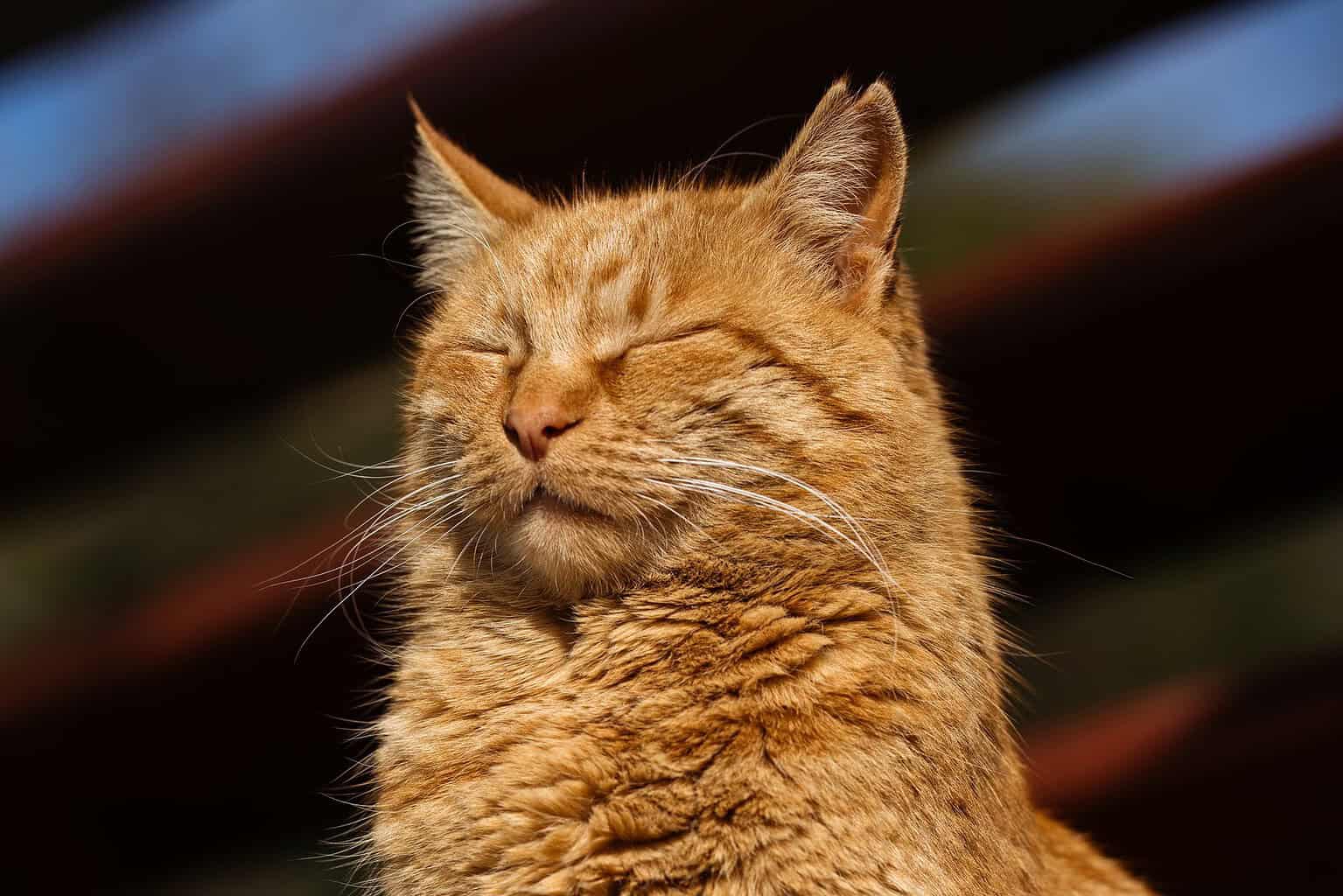
Cats slow blink to show they feel relaxed and safe with you. A slow blink is a run of half-closed blinks that ends in narrowed or closed eyes, and researchers at the University of Sussex found that cats return it when people do it to them, and are more likely to walk up to a stranger who has slow blinked at them. It is often called the cat smile. You can do it back, and it works.
Last updated: January 2026
If your cat has ever looked at you from across the room, let their eyes drift half shut, and then held that sleepy look for a second or two, you have been slow blinked at. Cat people have traded this trick for years. In 2020 it finally got a proper scientific test, and the results were good news for anyone who wants a closer bond with a cat.
Below we explain what a slow blink is, what the research actually measured, how to do it the right way, and when a squinty cat is not being friendly at all but is telling you something hurts. We also cover the other ways cats show trust, and how to use slow blinks with shy, shelter and stray cats.
What does it mean when a cat blinks slowly at you?
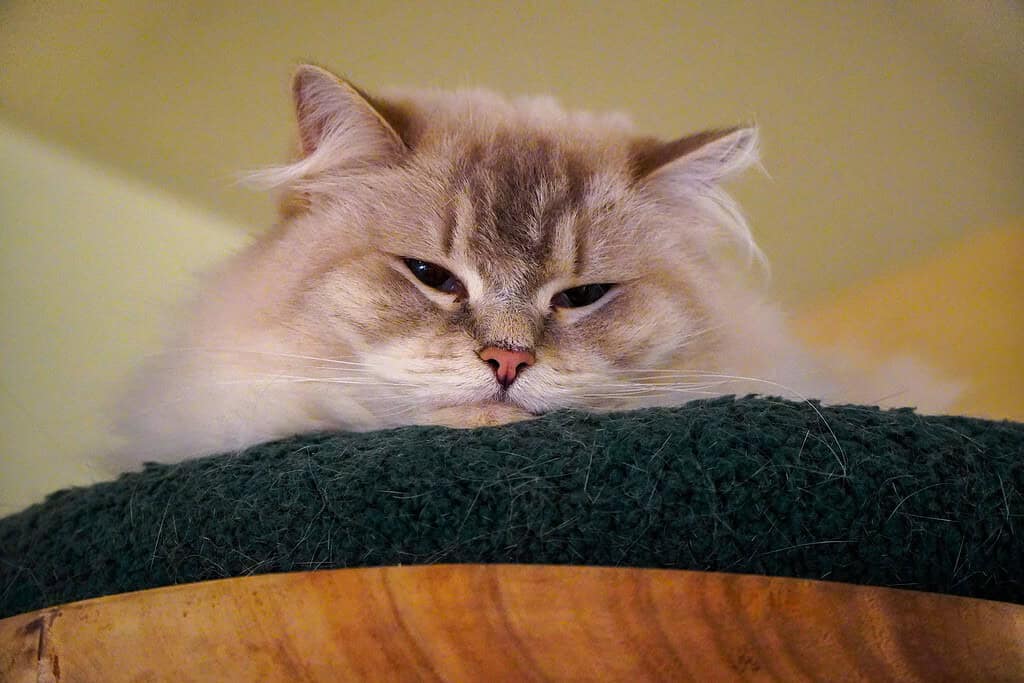
A slow blink is not the quick, reflexive blink that keeps the eyes moist. Researchers describe it as a sequence: a series of half-blinks, where the lids move toward each other without fully closing, followed by either a long narrowing of the eyes or a full eye closure. The whole thing looks drowsy and soft, a little like a person smiling with their eyes.
That comparison is not just cute. The Sussex team pointed out that eye narrowing shows up in positive displays across many species, including the relaxed faces of dogs at play, horses and cows being stroked, and the genuine human smile known as the Duchenne smile. Their conclusion was that the slow blink “appears to be an indicator of positive emotion in cats.”
International Cat Care, the feline welfare charity, puts it this way: cats aim slow blinks at people they feel comfortable and relaxed around, often as a friendly greeting or a way to acknowledge you. In plain terms, a slow blink usually means:
- “I am relaxed.” A cat that feels threatened keeps its eyes open and alert. Closing them near you is a small act of trust.
- “I see you, and we are fine.” Many cats slow blink as a low-key hello when you walk into a room.
- “I am not a threat.” A steady, unbroken stare can feel confrontational between cats. A slow blink softens or interrupts that gaze, which may be how the behavior started.
There is one nuance worth knowing. International Cat Care notes that slow blinking can also happen in cats that feel vulnerable, possibly to signal friendly intentions and avoid conflict. A 2020 shelter study backed this up, finding that nervous cats tended to spend more time slow blinking. So a slow blink means “I come in peace,” but it is not always an invitation to pick the cat up or pet it.
What did the slow blink study actually find?
The key paper is “The role of cat eye narrowing movements in cat-human communication” by Tasmin Humphrey, Leanne Proops, Jemma Forman, Rebecca Spooner and Karen McComb, published in Scientific Reports in October 2020. It was the first experiment designed to test whether slow blinking works as communication between cats and people. The researchers filmed cats in their own homes and scored every eye movement frame by frame using CatFACS, a coding system based on the facial muscles cats use.
They ran two experiments, and the same group later repeated the test with shelter cats. Here are the numbers from all three.
| Study | Who slow blinked | Cats | What happened |
|---|---|---|---|
| Experiment 1 (2020) | The cat’s own owner, sitting about 1 meter away | 21 cats from 14 homes (18 cat-owner pairs analyzed) | Cats narrowed their eyes about twice as often (0.06 vs 0.03 per second) and half-blinked more (0.21 vs 0.15 per second) than when the owner did not interact. Ordinary blinks did not change. |
| Experiment 2 (2020) | A researcher the cat had never met | 24 cats (18 analyzed) from 8 homes | In one-minute trials, cats gave 5.33 half-blinks vs 1.94 and 2.78 eye narrowings vs 0.33. Cats were also more likely to approach her offered hand afterward (score 2.78 vs 2.39 on a 1 to 3 avoid-to-approach scale). |
| Shelter follow-up (2020) | A researcher, through the pen door | 18 adult cats at a Cats Protection adoption center | Cats gave more half-blinks (4.22 vs 1.89) and eye narrowings (3.39 vs 2.17). Cats that closed their eyes more, and for longer, in response were reserved for adoption sooner. |
A few details from the methods are useful for anyone trying this at home. Owners were coached to do eye closures lasting more than half a second, and on average they delivered about 14.6 slow blinks per minute. In pilot trials, a neutral face with direct eye contact seemed to make some cats uneasy, which is why the researchers switched to looking slightly away as the control. In other words, staring is not neutral to a cat.
The authors are careful about limits. The samples were small, the tests were done in real homes rather than a lab, and they say more research is needed before drawing firm conclusions about exactly what cats feel. Still, three separate tests pointed the same way: cats answer a human slow blink with their own, and they seem to like the person more for it.
“This study is the first to experimentally investigate the role of slow blinking in cat-human communication. And it is something you can try yourself with your own cat at home, or with cats you meet in the street.”
Professor Karen McComb, School of Psychology, University of Sussex
How do you slow blink at a cat?
The good news is that it takes about ten seconds to learn. Professor McComb’s own advice is to narrow your eyes as you would in a relaxed smile, then close them for a couple of seconds. Here is the full routine, based on the study methods and guidance from International Cat Care and Cats Protection.
- Wait until the cat is settled. In the study, owners started once the cat had settled in one place. A cat that is playing, eating or on high alert is not in the mood for a chat.
- Get comfortable and low. Sit or crouch about a meter away, roughly the distance used in the research. Do not loom over the cat.
- Soften your face. Relax your forehead and jaw. Think “sleepy,” not “squint.”
- Catch their eye briefly. Look toward the cat until it looks at you. Do not hold a hard stare.
- Narrow, then close. Let your eyes go half shut, then close them for one to two seconds. Open them slowly.
- Look slightly away. Cats Protection suggests turning your face a little to the side after the blink, which reassures the cat you are not a threat.
- Watch and repeat. If the cat narrows or closes its eyes back, you are having the conversation. Repeat a few times, then let the cat decide what happens next.
Do not worry if your cat ignores you the first time. In the experiments, some cats walked away and trials simply ended. Try again later when your cat is drowsy on the couch, which is when many cats are most likely to blink back.
How do you build trust with a shy or newly adopted cat?
Slow blinking is at its most useful with a cat that does not trust you yet. A newly adopted cat, a rescue with a rough past, or simply a cat with a cautious personality can take days, weeks or even months to relax in a new home. Shelter guidance is consistent on this point: some cats settle in about a week while others need much longer, and pushing the timeline almost always slows it down.
Start with space rather than attention. Cats Protection and other welfare groups recommend setting a new cat up in one quiet room with food, water, a litter tray placed well away from the food, a bed, a scratching post, and at least one hiding place, ideally a cardboard box or a covered bed and somewhere high to look out from. Hiding is not a sign that something has gone wrong. It is how a frightened cat copes, and a cat that knows it can retreat calms down faster. If you are worried about how long the hiding is lasting, our guide to why cats hide covers what is normal and what is not.
For the first day or two, keep visits short and quiet. The Wisconsin Humane Society suggests going in only to feed, refill water and clean the litter box during the first 24 to 72 hours, and leaving a small, tasty treat behind as you go.
Once the cat has had time to decompress, spend longer stretches sitting quietly in the room without asking for anything. Read a book or talk softly. Cats Protection suggests ignoring the cat while you do this, so it never feels pressured. Place a small plate of strong-smelling food a short distance from the cat and sit on the other side of the room. If the cat comes out to eat while you are there, stay put and stay calm. Over several sessions you can move the plate a little closer to you.
This is where slow blinks come in. When the cat looks at you, do not hold the gaze. Give a slow, exaggerated blink, then turn your head slightly away. You are telling the cat in its own language that you are not a predator and not a rival. Remember the shelter research: nervous cats in that study actually spent more time slow blinking in response to a person, which suggests the gesture means something to them even when they are not ready to be touched. A blink returned from under the bed is real progress.
Let the cat set the pace for touch. International Cat Care advises letting cats start interactions and decide how long they last. If the cat approaches, offer your hand and let it sniff. If it rubs against you, stroke the cheeks or chin for three to five seconds, stop, and wait. If it rubs again, it wants more. If it moves away, the conversation is over for now. Never pull a cat out of a hiding place or block its exit. A cornered cat may feel it has no choice but to hiss or swat.
Play is another bridge, since a wand toy lets a shy cat engage with you from a safe distance. Keep a steady routine for meals, play and quiet visits, and when the cat is comfortable, let it explore the rest of the house on its own schedule. Our first 30 days with a new pet checklist covers the bigger picture. If a new cat is still hiding constantly after a week or so, or stops eating, talk to your veterinarian.
When is squinting or blinking not affection?
A slow blink is brief and deliberate. The cat narrows or closes its eyes, then opens them again, and both eyes look clear and comfortable. Squinting that does not stop is different. Cornell’s Feline Health Center lists squinting and frequent blinking among the main signs of conjunctivitis, the most common eye disorder in cats, along with discharge that can be watery or thick and dark. VCA Animal Hospitals adds that a cat may squint or keep its eyes closed because of pain or sensitivity to light.
Watch for these signs that point to a medical problem rather than a friendly greeting:
- One eye squinting while the other stays open
- Squinting that lasts for minutes or keeps coming back throughout the day
- Tearing, crust, or yellow, green or dark discharge
- Red or swollen tissue around the eye
- The third eyelid, a pale membrane in the inner corner, showing across part of the eye
- Pawing or rubbing at the face, cloudiness, or pupils of different sizes
- Sneezing or a runny nose alongside eye symptoms
Cornell describes healthy cat eyes as bright and clear, with equal-sized pupils, no squinting, little or no tearing, and no protruding third eyelid. Feline herpesvirus is a frequent cause of eye inflammation, and corneal ulcers, uveitis and other conditions can also show up first as squinting.
Trust goes both ways, so protect it
A newly trusting cat can still slip out an open door. A Shiloh’s House Smart Tag is laser-engraved with your cat’s name and number, and a finder can tap it with any phone to open a live profile with call and text buttons, medical notes and multiple contacts. No app or battery needed.
What other signs show your cat trusts you?
The slow blink rarely shows up alone. Cats layer several friendly signals, and learning them helps you read your cat’s mood at a glance. International Cat Care and Cats Protection both list these as signs a cat wants to interact or feels content.
- Tail held straight up. A vertical “question mark” tail as a cat walks toward you signals friendly intent. Our cat tail language guide decodes the other positions.
- Headbutts and cheek rubs. Rubbing deposits scent from glands on the face and marks you as part of the cat’s safe group. Read more in why your cat headbutts you.
- Kneading. That rhythmic paw pressing is linked to contentment. See why cats knead you.
- Purring, trilling and chirruping. These friendly sounds often come with a greeting. Purring has more than one meaning, which we cover in why cats purr.
- Rolling over. International Cat Care calls the social roll a friendly, relaxed greeting, but not an invitation for a belly rub.
- Soft, relaxed eyes. Blinking, half-closed eyes and small pupils are non-threatening signals of a content cat.
The opposite signals matter just as much. Wide eyes with large pupils, ears flattened or turned back, a crouched body, a thumping tail or rippling skin on the back all say “give me space.” A long, wide-eyed stare can mean several things, from curiosity to wanting breakfast, which we unpack in why your cat stares at you.
If you love capturing these moments, the Lohji app (App Store and Google Play) turns a photo of your cat into a cartoon avatar or stickers, and it doubles as the place to keep your cat’s profile for its Shiloh’s House tag.
Can you slow blink at shelter cats, strays and cats you meet outside?
Yes, and this may be where the slow blink matters most. In the second Sussex experiment, the person doing the blinking was a total stranger to every cat, and the cats still blinked back and were more willing to approach her. That is exactly the situation you are in with a shelter cat or a cat on the sidewalk.
The shelter follow-up adds a hopeful twist. Cats at the Cats Protection adoption center that answered human slow blinks with more and longer eye closures were reserved for adoption sooner. The authors suggest adopters may respond to those soft, closed-eye moments without realizing it. If you volunteer at a shelter, slow blinking at the cats in their pens is a small, free way to help them practice friendly contact with people.
A slow blink does not make an unknown cat safe to handle. Outdoor and community cats may be frightened, unwell or unused to people. Keep your hands to yourself unless the cat clearly rubs against you, and never try to pick up or corner an unfamiliar cat. If you want to help cats living outside during cold months, our guide on how to help stray cats in winter covers shelter, food and water.
Frequently asked questions
Why do cats slow blink at you?
Cats slow blink to show they feel relaxed and non-threatened around you. It works like a friendly greeting or a cat smile. Research from the University of Sussex found that cats return slow blinks from people and are more likely to approach someone who slow blinked at them, which suggests the exchange is a positive experience for cats.
Should I slow blink back at my cat?
Yes. Slow blinking back is one of the easiest ways to communicate friendly intent in a cat’s own language. Narrow your eyes as in a relaxed smile, close them for a second or two, then open them slowly and glance slightly away. Many cats will answer with a slow blink of their own.
Does a slow blink mean my cat wants to be petted?
Not necessarily. International Cat Care says slow blinking is generally positive but is not always an invitation to touch. Nervous cats may slow blink to signal they mean no harm. Let the cat come to you, and only stroke it if it rubs against your hand first.
Why does my cat squint at me with one eye?
A slow blink usually involves both eyes and passes in a second or two. Squinting with one eye, or squinting that lasts, can be a sign of pain from conjunctivitis, a corneal ulcer or another eye problem, especially with discharge, redness or a visible third eyelid. Have your veterinarian check it promptly.
Do cats slow blink at other cats?
International Cat Care notes that relaxed eyes, blinking and half-closed eyes are non-threatening signals between cats, while a wide-eyed stare is used in tense encounters. The Sussex researchers said the role of slow blinking between cats themselves still needs more study, since their work focused on cats and people.
Will slow blinking work on a cat that does not know me?
Often, yes. In the Sussex study, an unfamiliar researcher slow blinked at cats she had never met, and they responded with more eye narrowing and were more likely to approach her hand. It will not win over every cat right away, so stay calm, keep your distance and let the cat decide.
Sources
- The role of cat eye narrowing movements in cat-human communication, Scientific Reports (2020)
- Slow Blink Eye Closure in Shelter Cats Is Related to Quicker Adoption, Animals (2020)
- Feline friendly? How to build rap-paw with your cat, new psychology study, University of Sussex via EurekAlert! (2020)
- How to build rap-paw with your cat, University of Portsmouth (2020)
- Handling and interactions, International Cat Care (2025)
- Cat communication, International Cat Care (2024)
- How to greet a cat, International Cat Care (accessed 2026)
- Cat body language, Cats Protection (accessed 2026)
- Shy cats, Cats Protection (accessed 2026)
- Conjunctivitis, Cornell Feline Health Center (accessed 2026)
- Feline vision problems, a host of possible causes, Cornell Feline Health Center (accessed 2026)
- Conjunctivitis in cats, VCA Animal Hospitals (accessed 2026)
- Caring for fearful cats, Wisconsin Humane Society (accessed 2026)