Kitten First Collar and ID Tag: When to Start and How to Fit
 Shiloh’s House Team
·
·
16 min read

A kitten can start wearing a light breakaway collar at around 8 to 10 weeks, as long as you supervise the first sessions and check the fit every few days. Use a kitten-sized safety buckle, leave room for two fingers, and add a small, light tag with one phone number you answer. Ask your vet to microchip her at a vaccine visit or at spay or neuter, then register the chip in your name the same day.
Last updated: November 2025
Does a kitten really need a collar and ID tag?
Yes, and a kitten needs one more than an adult cat does. Kittens are small, fast and have no idea that an open door is a boundary. “Indoor only” is a plan, not a guarantee.
In that 2007 Ohio study of 138 lost cats, only 53% were ever recovered, and only 19% were wearing any identification at all when they went missing. A national ASPCA-funded survey published in 2012 found that 15% of cats in surveyed homes had been lost in the previous five years, and only about three in four of those cats came home. Of the 18 cats who were never found, 15 had no personalized ID.
The ASPCA survey also showed how lost cats usually come back: 59% simply returned home on their own, and only one owner said an ID tag was the main reason the cat was returned. That says less about tags than about how few cats wear one. If you want the longer version of this argument, read our guide on whether indoor cats need ID tags.
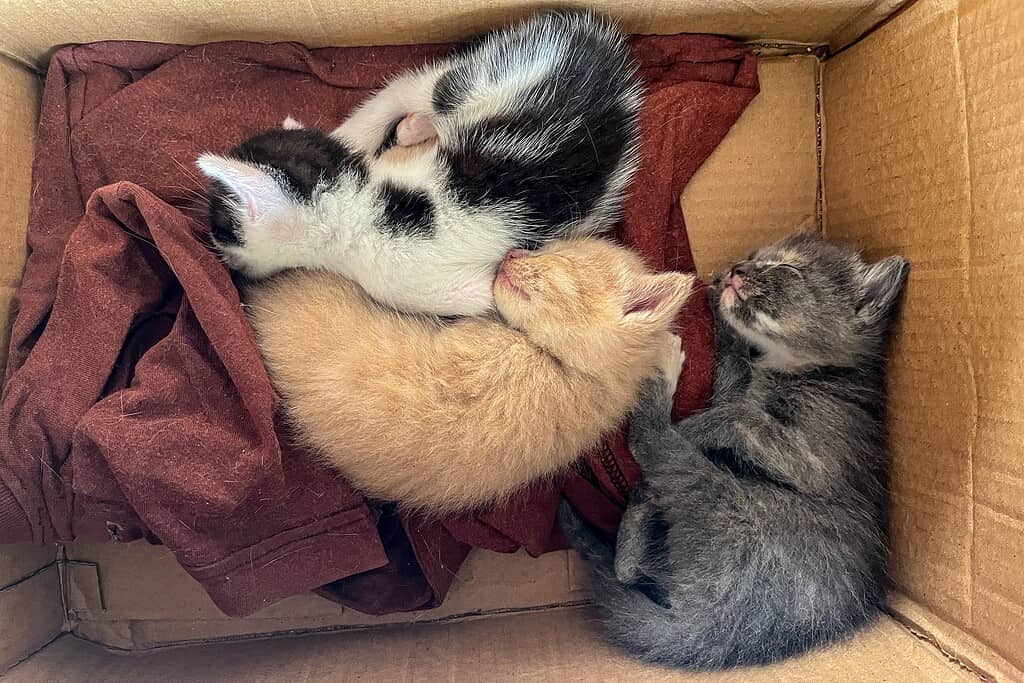
When can a kitten wear a collar?
There isn’t one official start date, and that is why advice online ranges from “8 weeks” to “6 months.” What decides it is your kitten’s size, the collar’s hardware and how closely you can supervise, not a birthday.
Here is how the evidence lines up:
- Socialization favors starting early. Kitten guides from veterinary hospitals list “get them used to wearing a collar” in the 2-to-3-month window, alongside first vaccines. That matches the 8-to-10-week age when most kittens go to new homes.
- Breakaway buckles need weight to work. Collar maker Coastal Pet notes that its Li’l Pals breakaway collar is designed to release on cats or kittens of about 6 to 8 pounds. A 2-pound kitten in an adult breakaway collar may not be heavy enough to pop it open if it snags.
- Growth is fast. The Merck Veterinary Manual says kittens gain 50 to 100 grams a week through the first three to four months. A collar that fits on Monday can be tight within a week or two.
So the practical answer has two stages. From about 8 weeks, a kitten can wear a very light, kitten-sized breakaway or stretch-panel collar while you are home and watching, for short sessions. Around 12 to 16 weeks, once she is roughly 3 to 4 pounds, steady on her feet and used to it, she can usually wear it all day. Overnight and unsupervised wear comes last, once you trust the fit and the buckle.
Still gathering basics? Our new kitten checklist covers the rest.
Breakaway or buckle collar for a kitten?
Breakaway, almost always. A breakaway (or “safety”) collar has a plastic clasp that pops open under pressure, so a kitten who catches the collar on a cabinet handle, branch or crate wire can pull free instead of hanging by the neck. American Humane, RSPCA Australia and most veterinary sources recommend a breakaway clasp for cats for this reason.
The best data on collar types comes from a 2010 randomized trial in the Journal of the American Veterinary Medical Association. Researchers fitted 538 pet cats with one of three collars: a plain plastic buckle, a breakaway plastic buckle or an elastic stretch collar. After six months, 72.7% of the cats were still wearing their collars.
The trial also counted the risks honestly. Eighteen cats (3.3%) caught a front leg in the collar, caught the collar on an object or got it stuck in their mouth. No serious injuries were reported, but those are the two failure modes to plan for:
- Leg-through. A loose collar lets a kitten slip a front paw under it, often while grooming. The collar then sits across the chest and armpit and can rub the skin raw.
- Mouth-catch and snagging. A kitten grooming her chest can hook her lower jaw under a loose collar.
Breakaway clasps came off more often in the trial. The plain buckle stayed on for 85.9% of cats, compared with 60.9% for the breakaway. That’s the trade-off: you will find a breakaway collar on the floor now and then. Keep a spare and put it back on.
“I would make an argument that a cat is much more likely to get lost and not be recovered than it is to be injured by a collar.”
Linda Lord, DVM, PhD, assistant professor of veterinary preventive medicine, The Ohio State University, 2010
How should a kitten collar fit, and how often should you check it?
Use the two-finger rule. You should be able to slide two fingers flat between the collar and your kitten’s neck, but the collar should not slip over her head when you pull it gently forward. American Humane warns that collars don’t expand as pets grow, and that a forgotten kitten collar can grow into the skin. It recommends checking at least every week until the cat is full grown.
Because kittens grow so quickly early on, we suggest checking more often than weekly at first. The weights below follow the common veterinary rule of thumb that kittens weigh about 1 pound per month of age for the first four months. Collar and check schedules are our own suggestions.
| Age | Typical weight | Collar (our suggestion) | Fit check (our suggestion) | Tag notes |
|---|---|---|---|---|
| 8 weeks | About 2 lb | Kitten-size breakaway or stretch panel, roughly 6 to 8 in. range; supervised sessions only | Every 2 to 3 days | Collar only at first, or a tiny tag with one phone number |
| 10 weeks | About 2.5 lb | Same collar, let out a notch as needed; longer daytime wear | Every 2 to 3 days | Add a small, light tag once she ignores the collar |
| 12 weeks | About 3 lb | Kitten breakaway; all-day wear if the fit is right | Twice a week | Phone number plus “Microchipped” once the chip is registered |
| 4 to 6 months | About 4 to 6 lb | Move up when the adjuster runs out; adult breakaway near 6 lb | Weekly | Good time for a long-term tag or smart tag |
| Adult (about 7 months on) | Often 6 to 10 lb | Adult breakaway, replaced when frayed | Monthly, and after weight changes | Check engraving and contact details every year |
The Merck Veterinary Manual puts the end of kitten growth at about 200 to 220 days, roughly seven months, which is why weekly checks can relax after that. Big breeds such as Maine Coons grow longer, so keep checking weekly. Our best cat collars guide compares breakaway models if you are shopping for the adult size.
Give her a tag that keeps up as she grows
Shiloh’s House Smart Tags are lightweight acrylic with an NFC back. A finder taps with any modern phone, no app needed, and sees your live profile with one-tap call, text and directions. Update the photo and contacts anytime without re-engraving.
How big and heavy should a kitten’s ID tag be?
Small and light. A kitten’s neck is a fraction of an adult cat’s, and anything that swings, clinks or pulls the collar forward makes her more likely to paw at it. Coastal Pet’s kitten guidance says a lightweight collar is recommended while kittens are growing, to avoid added strain on the neck, and the same logic applies to whatever hangs from it.
A few practical rules:
- Size it to the kitten. Choose a tag in the smallest size a maker offers for cats. Our in-app size guide uses an “Under 7 lbs” class for exactly this stage.
- One tag, one ring. Every extra charm, bell or split ring adds weight, noise and another edge to catch on. Attach the tag directly to the collar’s D-ring.
- Choose quiet materials. Metal tags clink against each other and the buckle. Acrylic and silicone are quieter, which matters to an animal whose hearing is far sharper than ours. Our comparison of silicone vs acrylic pet tags covers the trade-offs.
- Flat beats dangly. A tag that sits flat against the collar is less likely to end up in her mouth during grooming.
If the tag bothers her, start with the collar alone, or one with your number embroidered on it, and add the tag later.
What should you put on a kitten’s ID tag?
A tag is tiny, and every extra line shrinks the text. Put the most useful information first:
- Your mobile number. The one you actually answer, with area code. This is the line that does the work. If there’s room, add a second number for a partner or a nearby friend.
- “Microchipped” once the chip is registered in your name. It tells a finder that a vet or shelter can scan her if they can’t reach you.
- “Indoor cat” or “I’m lost.” A neighbor who sees a kitten under a car may assume she lives outside. This line tells them she doesn’t.
- Her name, if it has settled. Plenty of kittens go through a few names in the first month. The phone number works either way.
- “Needs meds” if she is on medication, so a finder knows to call right away.
Leave off your street address, since the phone number is faster and the collar is public. Leave off the microchip number too. Finders can’t use it, and the vets and shelters who can will scan for the chip anyway.
Keep one more fact in mind. The 2009 microchip study found that the most common reason shelters couldn’t reach owners was an incorrect or disconnected phone number, at 35.4% of failed cases. Engraved tags go stale the same way when you change numbers.
How do you get a kitten used to wearing a collar?

Most kittens adjust within a few days to a week if sessions stay short and pleasant. The 2010 Ohio State trial found that owners’ expectations predicted success, and owners of 56.3% of the cats said their cat tolerated the collar better than expected. The researchers also said problems are most likely in the first few days, so stay close during that window. Here is the plan we suggest.
Step 1: Let the collar smell like home (day 1). Leave the new collar next to her food bowl or in her bed for a day, and rub it on a blanket she sleeps on so it carries her scent. Let her sniff and bat at it. You are not asking her to wear anything yet.
Pick a calm moment just before she eats, when she is focused on food rather than you. Fasten the collar, do the two-finger check and put the bowl down at once. Leave it on for 5 to 10 minutes, then take it off while she is still calm, not while she is scratching at it. Ending on a good moment teaches her that the collar comes with good things.
Put the collar on two or three times a day and follow each fitting with something she loves: a lickable treat, a wand toy or a short brushing. Stretch each session from 10 minutes to 30 minutes to an hour. If she scratches at it, distract her with the toy instead of removing it right away, or she learns that complaining works.
Step 4: Watch for the two warning signs. Look for a front leg slipping under the collar and for her lower jaw catching on it while she grooms. Either usually means it is a bit loose, so tighten it a notch and try again. Frantic scratching, drooling or hiding means you moved too fast. Go back a step for a day.
Step 5: Add the tag (around days 4 to 7). Once she ignores the collar for an hour or more, clip on the tag. Some kittens react to the new sound or the light tap against the chest, so repeat the meal-and-treat routine for a day or two.
Step 6: All-day wear, then overnight (week 2 and on). When she wears collar and tag through a full day without fuss, leave them on while you are home. Move to overnight and unsupervised wear only after several fit checks and after you have watched her climb, sleep and groom without problems, usually closer to 12 to 16 weeks of age.
Step 7: Put it back on every time it comes off. A breakaway collar will turn up under the couch now and then. That is the clasp doing its job. Put it back on the same day, with a treat. In the Ohio State study, cats whose collars had to be reapplied were more likely to stop wearing one, often because owners gave up.
Collar practice fits neatly alongside other early routines. Our guide on how to litter train a kitten uses the same short, rewarded sessions, and puppy owners can follow a similar plan in our puppy ID tag guide.
When should a kitten be microchipped and registered?
As early as your vet is comfortable, which is often 8 weeks. The Royal Veterinary College’s general practice microchips kittens from 8 weeks of age, and many U.S. clinics chip at 6 to 8 weeks during a vaccine visit. Others wait for spay or neuter surgery so the chip goes in while the kitten is under anesthesia. Rescue kittens are often chipped before adoption, so ask for the number.
The chip itself is the easy part. The AVMA explains that a microchip holds only an ID number. It isn’t a GPS tracker, and it only reunites you if the number is registered to your current contact details.
That last step is where most systems fail. In the 2009 study of 7,704 microchipped animals entering 53 U.S. shelters, the median return-to-owner rate for microchipped stray cats was 38.5%, compared with 1.8% for stray cats overall. But when shelters contacted a microchip registry, only 58.1% of the chips were registered there. Some chips were still registered to the shelter or rescue that implanted them, which accounted for 17.2% of the owners shelters couldn’t find.
A simple order of operations:
- Get the chip number from the vet, shelter or breeder on day one.
- Register it in your name the same day, with your mobile number and a backup contact.
- Ask your vet to scan the chip at each checkup to confirm it can still be read.
- Update the registry whenever you move or change numbers.
Our five-minute walkthrough on how to check a pet’s microchip registration shows how to confirm the record is actually in your name. A chip helps only once someone reaches a scanner; the tag tells a neighbor who to call.
Where does a lightweight NFC smart tag fit?
An engraved tag holds a few characters that never change. A kitten’s details change constantly in the first year: her name settles, her photo stops matching, her vet changes after spay or neuter, and your contacts may change with a move. An NFC smart tag handles that better because the information lives online and the tag just opens it.
Shiloh’s House Smart Tags are laser-engraved premium acrylic with a “Tap Phone Here” NFC back. They are waterproof, scratch-resistant and UV-stable, and they are made in the USA, at about $38 with 35 designs. A finder taps the tag with any modern phone, no app needed, and a live profile opens with one-tap call, text and directions for up to three contacts, medical notes and even short voice messages from you.
You manage that profile in the free Lohji app (App Store or Google Play). As your kitten grows, swap in a new photo so a finder can match her to the profile, or turn her photo into a cartoon Lohji character and choose which image the finder sees. New accounts get 10 free coins, and a Base Lohji costs 2.
Frequently asked questions
Can an 8-week-old kitten wear a collar?
Yes, with supervision. A very light, kitten-sized breakaway or stretch-panel collar is fine for short sessions while you are home and watching. Many adult breakaway buckles need more force than a 2-pound kitten can produce, so don’t leave her alone in one yet. Move to all-day wear once she is used to it and around 3 to 4 pounds, and check the fit every few days.
Should a kitten wear a collar at night?
Not at first. Keep collar time to periods when you are home and awake until she has worn it through several full days without catching a leg or jaw. Once the fit is reliable and the buckle suits her weight, usually around 12 to 16 weeks, overnight wear is reasonable. That’s when a slipped-out kitten is hardest to spot, so the ID matters.
Are bells safe on a kitten collar?
A bell isn’t dangerous in itself, but it adds weight, noise and another part that can snag. In the 2010 collar trial, researchers removed bells before fitting. For a kitten’s first collar we suggest skipping the bell and keeping only one small, quiet tag on a single ring.
How tight should a kitten collar be?
Snug enough that it won’t slip over her head, loose enough that two fingers slide flat underneath. If a front leg or her lower jaw keeps getting caught, it is too loose. If two fingers won’t fit or the skin looks red, it is too tight. Re-check every few days while she is growing fast.
What is the difference between a breakaway and an elastic cat collar?
A breakaway collar has a plastic clasp that pops open under pressure. An elastic collar stretches so a cat can wriggle free. In the 2010 JAVMA trial, elastic collars frayed far more often, with 60% of the frayed collars being elastic, and RSPCA Australia warns that elastic loses stretch with age. Most vets prefer a breakaway clasp.
Do I still need a tag if my kitten is microchipped?
Yes. A chip works only after someone takes your kitten to a vet or shelter with a scanner and the registration is current. A visible tag lets the neighbor who finds her call you within minutes. The AVMA says a microchip does not replace ID tags. Use both, and write “Microchipped” on the tag once it is registered.
Sources
- Evaluation of collars and microchips for visual and permanent identification of pet cats, Lord LK, Griffin B, Slater MR, Levy JK, Journal of the American Veterinary Medical Association, 2010
- Ohio State study: 3 out of 4 cats will wear a collar, making it worth a try, The Ohio State University News, 2010
- Characterization of animals with microchips entering animal shelters, Lord LK, Ingwersen W, Gray JL, Wintz DJ, Journal of the American Veterinary Medical Association, 2009
- Search and identification methods that owners use to find a lost cat, Lord LK et al., Journal of the American Veterinary Medical Association, 2007
- Frequency of Lost Dogs and Cats in the United States and the Methods Used to Locate Them, Weiss E, Slater M, Lord L, Animals, 2012
- How Many Pets are Lost? How Many Find Their Way Home? ASPCA Survey Has Answers, ASPCA, 2012
- Choosing a Cat Collar, American Humane, 2016
- The Importance of Kitten Collars, Coastal Pet Products, 2018
- Feeding Practices in Small Animals, Sherry Lynn Sanderson, Merck Veterinary Manual, 2024
- What type of cat collar should I use?, RSPCA Australia Knowledgebase, accessed 2025
- Pet microchipping, Royal Veterinary College, accessed 2025
- Microchipping: FAQs for pet owners, American Veterinary Medical Association, accessed 2025