Why Does My Cat Chew on Plastic? Pica, Stress, Teeth and How to Stop It
 Shiloh’s House Team
·
·
16 min read
Most cats chew plastic because it crinkles, smells faintly of food (grocery bags are often said to carry animal-fat-based slip agents) or soothes stress and boredom, and the habit is usually harmless as long as nothing gets swallowed. Actually eating plastic is pica, which needs a vet check for anemia, hyperthyroidism, dental pain or gut disease and carries a real risk of intestinal obstruction. Lock the bags away, add play and safe chews, and call the vet if your cat swallows pieces or starts vomiting.
Last updated: October 2025
Why does my cat chew on plastic?
If you have ever found your cat with its head in a grocery bag, grinding away at the handle, you are not alone. When veterinary behaviorists at the University of Montreal surveyed owners of cats that chew or eat things that are not food, plastic topped the chewing list, ahead of paper, rubber and wood.
The reasons sort into three buckets. The first is sensory: plastic film is smooth, cool and crinkly, it carries the smell of whatever food it touched, and chewing it makes a satisfying noise. The second is emotional: chewing is a self-soothing behavior, and bored or anxious cats pick it up. The third is medical: a cat that has started swallowing plastic, licking concrete or eating litter may be anemic, hyperthyroid, diabetic or living with a painful mouth or an inflamed gut.
The line that matters is between chewing and swallowing. A cat that gnaws a bag and walks away is doing something odd but mostly safe once you take the bag away. A cat that tears pieces off and eats them has pica, a behavior that fills veterinary surgical schedules with intestinal blockages. This guide covers both, from the harmless end to the signs that mean an emergency visit.
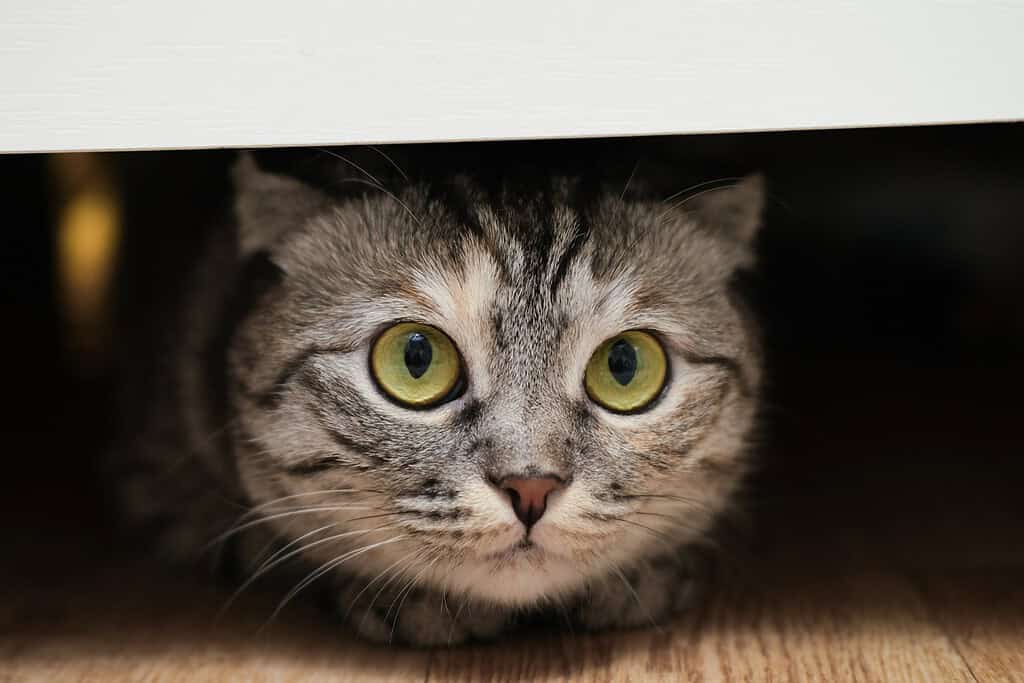
Is it the smell, the sound or the texture?
The animal-fat theory comes up first. Thin plastic film is made with slip agents so bags do not stick together on the roll, and those slip agents are said to be stearates derived from rendered animal fat, so the bag tastes like dinner. Behaviorist Pam Johnson-Bennett repeats the explanation on her Cat Behavior Associates site, as do many veterinary blogs. We could not find a manufacturer or peer-reviewed source confirming which bags use animal-derived stearates, so treat it as a plausible, common explanation rather than a settled fact.
What is not in dispute is that grocery bags smell like groceries. A bag that carried raw chicken or fish is a scent trail your cat can follow for days. Add the texture, slick and cool against the tongue, and the sound, which some veterinarians compare to prey rustling in leaves, and you have an object that hits several feline senses at once.
| What the cat does | Likely reason | What to do |
|---|---|---|
| Licks grocery bags, no holes | Food smell, slip-agent taste, texture | Put bags away; low concern if it stays licking only |
| Bites and crinkles bags, then drops them | Play, sound, boredom | Two daily play sessions, crinkle toys that cannot be swallowed |
| Chews plastic at night or when you leave | Stress or separation-related soothing | Find the trigger, add predictability, ask the vet about anxiety |
| Tilts head and grinds with back teeth, swallows pieces | Pica (behavioral or medical) | Vet exam with blood, urine and fecal tests; strict cat-proofing |
| New habit in an adult cat, plus weight or appetite change | Anemia, hyperthyroidism, diabetes, GI disease | Vet visit this week, not next month |
| Kitten under 7 months chewing everything | Teething | Soft chew toys, supervise, remove anything that sheds pieces |
| Chews on one side, drools, drops food | Dental pain | Dental exam; chewing can be self-medication |
The table is our suggestion for sorting what you see at home, not a diagnosis. Only a vet visit rules out the medical column.
Is chewing plastic the same as pica?
No, and the difference matters. Pica means eating things that are not food. Chewing, licking and sucking are related, and researchers treat them as a spectrum, but it is ingestion that puts a cat on the operating table. International Cat Care describes the pica cat precisely: it holds the item in its mouth, tilts its head to one side and grinds repeatedly with its back molars before swallowing. That is not play.
The Montreal study led by Dr. Isabelle Demontigny-Bédard is the best picture we have of what pica cats eat. Among 91 cats that swallowed inedible items, shoelaces and thread topped the list at 51 cats, then plastic at 41, fabric at 39, rubber at 28 and paper or cardboard at 24. Cats that sucked on fabric were far more likely to also eat it (56 percent versus 23 percent). Pica cats vomited more often than healthy controls (59 percent versus 31 percent) and were less often free-fed (30 percent versus 51 percent). Early weaning and a poor environment did not predict pica. If your cat is a fabric sucker, see why cats suck on blankets.
The older study everyone cites is John Bradshaw, Peter Neville and Diana Sawyer’s 1997 survey of 152 cats, mostly Oriental breeds. Wool was the target in 93 percent of those cats and rubber or plastic in only 22 percent. Burmese cats swallowed material as often as Siamese, and onset clustered in the two months after rehoming, with a second wave between 6 and 18 months. A 2015 Tufts study of 204 Siamese and Birman cats led by Stephanie Borns-Weil and Nicholas Dodman found that early weaning and small litters raised the risk of wool sucking in Birmans but not Siamese.
“If this cat has always licked unusual things ever since it was a young cat and it doesn’t do it for an extraordinary part of the day, I worry less about that.”
Valarie Tynes, DVM, veterinary behaviorist (Live Science, 2025)
Dr. Tynes added one condition: as long as the cat is not eating it.
What medical problems can make a cat eat plastic?

Every veterinary source on pica, from VCA Animal Hospitals to International Cat Care to the UC Davis veterinary school, says the same thing first: rule out disease before you call it a behavior problem. Pica is a symptom with a long list of possible causes, and several of them are common in middle-aged and older cats.
Anemia is the classic one. A cat with too few red blood cells may lick concrete, eat litter or chew plastic, apparently in response to a craving the body cannot name. Pale gums, weakness and sleeping more than usual are the signs to look for at home, and a complete blood count is how the vet confirms it.
Hyperthyroidism is the next suspect in any cat over about eight years old. An overactive thyroid speeds up metabolism, so the cat is ravenous, loses weight anyway, drinks and urinates more and often seems restless. A cat that is suddenly hunting for things to put in its mouth fits that picture, and a total T4 blood test is routine. Diabetes mellitus causes a similar mix of hunger, thirst and weight loss, and VCA lists it among the medical causes of pica, so a glucose reading and urinalysis sit in the same workup.
Gastrointestinal disease is the cause researchers have chased hardest. In a 2019 pilot study, Dr. Demontigny-Bédard and colleagues worked up eight cats that ate fabric at least weekly and found eosinophilic infiltrates in the stomach or intestine of six, suspected delayed gastric emptying in four and Giardia in one. Four of the eight improved partially once those conditions were treated. Inflammatory bowel disease, exocrine pancreatic insufficiency, liver shunts, parasites and chronic diarrhea all appear on VCA’s list of pica triggers. The theory is that an uncomfortable gut makes some cats chew or swallow odd materials the way a nauseated person reaches for crackers, and the 2016 finding that pica cats vomit more than healthy cats points the same way.
Dental pain is easy to miss and easy to check. A cat with a resorptive lesion, a fractured tooth or gingivitis may chew plastic because the pressure feels better, or may drop food, chew on one side, drool and paw at its mouth. Our guide to how to tell if your cat is in pain lists the subtle signs cats show when their mouths hurt.
So what does the vet actually do? The visit begins with a detailed history, so arrive with notes on what the cat chews, how often, whether pieces disappear, and any changes in appetite, thirst, weight or litter box habits. The exam checks body condition, gum color, the thyroid gland in the neck, the teeth and the belly. The standard panel is a complete blood count, serum chemistry, total T4 in older cats, urinalysis and a fecal test. If the cat is vomiting or losing weight, X-rays or ultrasound come next, and if those point to intestinal disease, endoscopy with biopsies is how the inflammation in the Montreal cats was found. Only when that workup is clean does a good vet label the pica behavioral and start talking about environment, diet and, in some cases, medication. If your cat has also gone off its food, our article on why a cat stops eating explains why that combination needs a same-week appointment.
Is my cat stressed or bored?
Once disease is off the table, the usual suspects are stress and under-stimulation. Bradshaw’s cats most often started within two months of moving into a new home. In the 2021 Bristol Cats study, moving house, renting rather than owning and living without a dog all raised the odds that a cat kept up pica through 18 months. Dr. Karen Sueda’s 2020 review in Clinician’s Brief notes that wool sucking can be triggered by stressful events, including long stretches alone.
Start by asking what changed around the time the chewing began. Give that cat predictability: set feeding times, a quiet room to retreat to, vertical space and hiding spots. For the science on why a cardboard box calms a cat, read why cats like boxes.
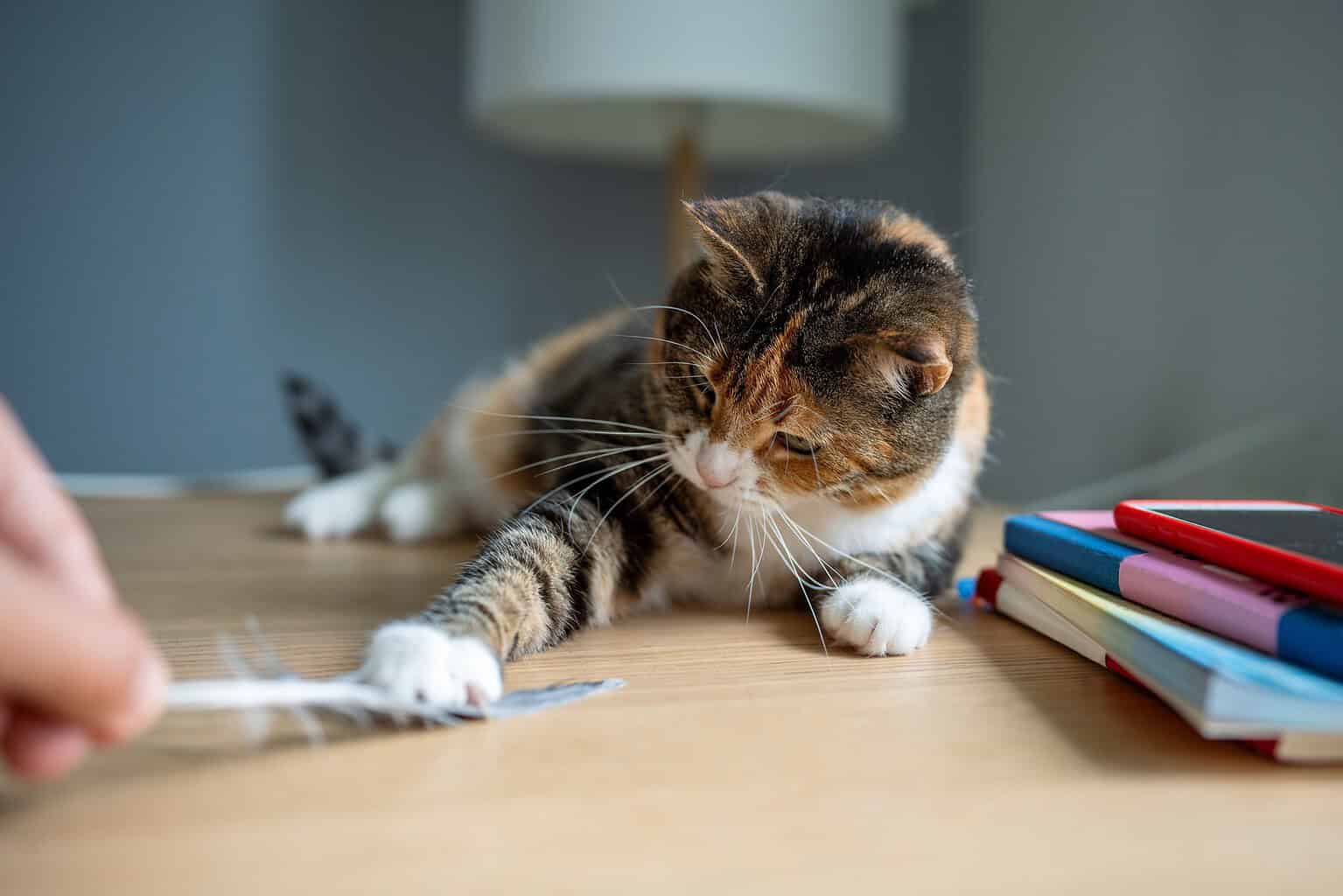
Boredom responds to a schedule of real play. Two sessions a day of wand-toy hunting, each ending with a catch and a small meal, meets the predatory need a plastic bag was standing in for. Our guide on how to play with your cat covers timing and technique, and our best cat toys roundup points you to the ones that survive heavy chewers. VCA recommends puzzle feeders in place of a bowl and trick training for mental exercise.
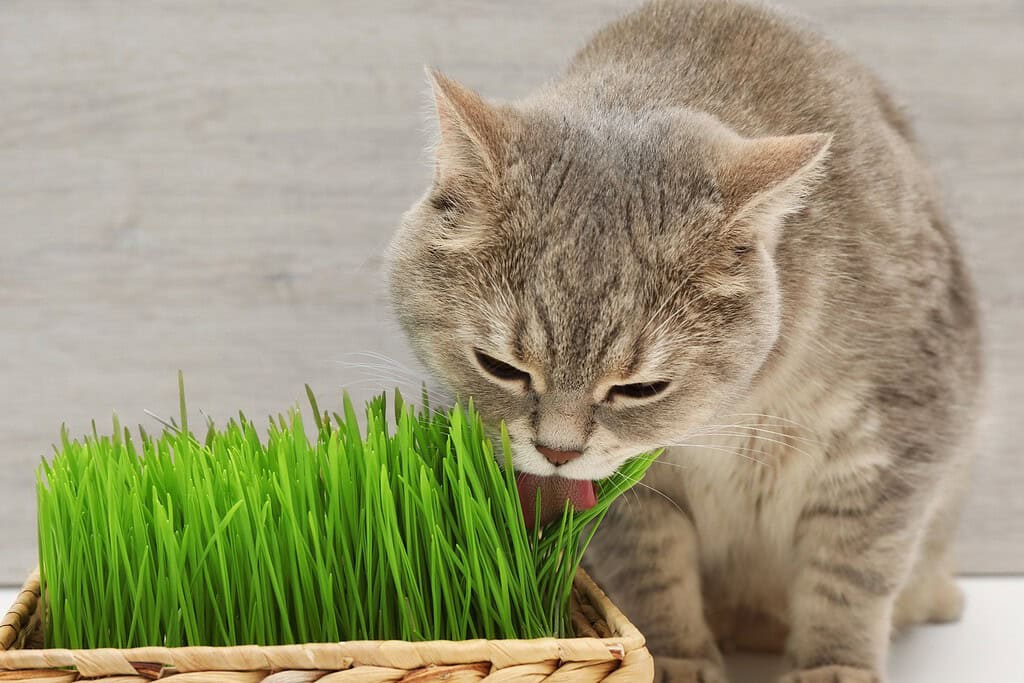
Then give the mouth something legal to do. Dr. Tynes suggests growing cat grass or offering a soft dog chew toy as a stand-in for plastic; see why cats eat grass for how to grow a safe pot. Silvervine chew sticks are another option. In a 2017 BMC Veterinary Research study of 100 cats, 79 percent responded to silvervine and 68 percent to catnip. Never punish the chewing; International Cat Care and VCA both warn that punishment raises anxiety and tends to make pica worse.
Put your cat’s pica history where a finder or sitter can see it
A cat that eats plastic needs anyone caring for it to know. Shiloh’s House Smart Tags pair a laser-engraved name and number with a tap-to-open profile that holds medical notes, medications and multiple contacts, so a sitter or finder reads “eats plastic, keep bags away” before it matters. $38 one-time, no subscription, made in the USA.
What happens if my cat swallows plastic and when is it an emergency?
Many small pieces of plastic pass through a cat and show up in the litter box. The trouble is that you cannot tell in advance which piece will stop. VCA describes foreign body obstruction as a common, potentially life-threatening condition in which surgery is the only treatment once a blockage forms, and warns that an obstructed stretch of intestine can lose its blood supply within a few hours.
Bag handles, ribbon and the stringy strips a cat shreds from a bag can behave as linear foreign bodies, the most dangerous kind. One end anchors under the tongue or in the stomach while the intestine bunches up along the rest like fabric on a drawstring, and the sawing motion can perforate the gut wall. The signs VCA and PetMD list for any obstruction are repeated vomiting, refusing food, lethargy, a tender or hunched belly, straining in the litter box or producing little stool, hiding, and growling when picked up.
Here is a simple timeline. If you saw your cat swallow plastic and it is acting normally, call your vet the same day for advice and watch closely for 48 hours. If the cat vomits more than once, stops eating or seems painful at any point, go in now, not tomorrow. VCA’s emergency guidance says vomiting that persists beyond 6 to 12 hours, blood in vomit or stool, or a weak or unresponsive cat is an emergency. At the hospital, expect X-rays, possibly with contrast dye since plastic often does not show on a plain film, and sometimes ultrasound; an object still in the stomach may be retrieved by endoscope, while one lodged in the intestine needs surgery.
How do I cat-proof my home against plastic?
Management is the single most effective treatment for plastic chewing, and every veterinary source lists it first. Think like a cat at nose height and go room by room.
In the kitchen, empty grocery bags the moment you get home and store them in a closed cabinet or lidded bin, not on a hook or under the sink where a paw can hook them out. Switch to cloth totes if your cat is a bag fiend. Bread bags and their twist ties and clips, produce bags, cling film, snack wrappers, straws, bottle rings and jar seals all go into a trash can with a locking lid.
Elsewhere, tie up the cords on window blinds, which are both a strangulation and a swallowing hazard, or switch to cordless blinds. Chargers, earbuds, pen caps, rubber bands and hair ties should live in drawers. Check the bathroom for cotton swabs and dental floss, both of which appeared in the lists of ingested items owners reported to the Montreal researchers, and keep the lid down on bins.
If your cat has a diagnosed pica habit, tell everyone who might care for it, because a sitter who leaves a grocery bag on the counter can undo months of management in an afternoon. The free Lohji app from Shiloh’s House gives you a pet profile with medical notes, voice notes and emergency contacts that a Shiloh’s House NFC tag links to, plus a Share Profile card you can send to a sitter before you travel. It also turns your cat’s photos into cartoon Lohji avatars, stickers and wallpapers. Get it on the App Store or Google Play.
Is my kitten just teething?
Possibly, if your cat is under about seven months old. Kittens cut 26 baby teeth between roughly 2 and 6 weeks, then replace them with 30 adult teeth. VCA puts the incisors first at around 3 months, the canines at about 5 months and the premolars and molars between 4 and 7 months. During that stretch the gums are sore and almost every kitten wants to chew, and VCA notes that for some kittens the habit lingers for months after the adult teeth are in.
Teething chewing is usually indiscriminate: shoelaces, fingers, the corner of a box, your charger cable and the plastic bag on the floor. Redirect rather than suppress. Offer soft toys you can dent with a fingernail, chill a damp washcloth in the freezer for a tender mouth, and reward the kitten every time it picks the right thing. Avoid very hard chews such as nylon bones, which can fracture new teeth, and supervise any toy that could shed pieces.
Two things should prompt a vet visit even in a teething kitten. The first is swallowing rather than chewing, which is pica at any age; International Cat Care notes that some kittens who chew bedding at three months carry the habit into adulthood. The second is a baby tooth still in place once the adult tooth beside it has erupted. If the chewing is still intense at eight or nine months, or you find teeth marks in plastic and pieces missing, stop calling it teething and ask the vet to look.
Frequently asked questions
Is it bad if my cat licks plastic bags but never chews them?
Licking alone is low risk. Veterinary behaviorist Dr. Valarie Tynes told Live Science she worries little about a cat that has always licked odd things for short stretches, as long as it is not eating them. Still put bags away: suffocation and escalation to chewing are the practical risks.
Why does my cat eat plastic but not fabric?
Preferences vary by cat. In the 2016 Montreal survey, 41 of 91 pica cats ate plastic while 39 ate fabric, and in the 2021 Bristol Cats study plastic was the most commonly targeted material at every age checked. What matters more than the material is whether your cat swallows it.
Can a cat pass a piece of plastic on its own?
Often, yes. Many small, soft pieces travel through within a day or two and appear in the litter box. The problem is that nobody can predict which piece will lodge, and once an obstruction forms, surgery is the only treatment. Call your vet the day it happens and watch for vomiting, appetite loss, lethargy or straining over the next 48 hours.
What tests will the vet run for pica?
Expect a detailed history, a physical and dental exam, a complete blood count to check for anemia, a chemistry panel and urinalysis for diabetes and organ function, a thyroid test in cats over about eight, and a fecal test for parasites. Vomiting or weight loss adds X-rays or ultrasound, and persistent gut signs may lead to endoscopy with biopsies before a behavioral diagnosis is made.
Does early weaning cause plastic chewing?
The evidence is mixed. The 2016 Montreal case-control study found no link between early weaning and pica. A 2015 Tufts study found that early weaning and small litters raised the risk of wool sucking in Birman cats but not in Siamese. Bradshaw’s 1997 survey tied onset to rehoming rather than weaning age. Genetics and stress appear to matter more than when a kitten left its mother.
Will my cat grow out of chewing plastic?
Many do. In the 2021 Bristol Cats study, 42.9 percent of cats showed some pica at about 6 months, falling to about 31 percent by 18 months, and just over half of the early chewers had stopped by then. Cats that still chew intensely past a year, swallow pieces, or belong to Oriental breeds are more likely to keep the habit and need active management.
Sources
- Isabelle Demontigny-Bédard, Guy Beauchamp, Marie-Claude Bélanger, Diane Frank, “Characterization of pica and chewing behaviors in privately owned cats: a case-control study”, Journal of Feline Medicine and Surgery 18(8):652-657, 2016 — https://pmc.ncbi.nlm.nih.gov/articles/PMC10816388/
- Isabelle Demontigny-Bédard, Marie-Claude Bélanger, Pierre Hélie, Diane Frank, “Medical and behavioral evaluation of 8 cats presenting with fabric ingestion: An exploratory pilot study”, Canadian Veterinary Journal, 2019 — https://pmc.ncbi.nlm.nih.gov/articles/PMC6741829/
- John W. S. Bradshaw, Peter F. Neville, Diana Sawyer, “Factors affecting pica in the domestic cat”, Applied Animal Behaviour Science 52:373-379, 1997 — https://www.sciencedirect.com/science/article/pii/S0168159196011367
- Stephanie Borns-Weil, Nicholas H. Dodman et al., “A case-control study of compulsive wool-sucking in Siamese and Birman cats (n = 204)”, Journal of Veterinary Behavior 10(6):543-548, 2015 — https://doi.org/10.1016/j.jveb.2015.07.038
- Rachel Kinsman, Rachel Casey, Jane Murray, “Owner-Reported Pica in Domestic Cats Enrolled onto a Birth Cohort Study”, Animals 11(4):1101, 2021 — https://pmc.ncbi.nlm.nih.gov/articles/PMC8070519/
- International Cat Care, “Pica in Cats”, icatcare.org, updated September 2025 — https://icatcare.org/articles/pica-in-cats
- Krista Williams, DVM, “Pica in Cats”, VCA Animal Hospitals, accessed 2025 — https://vcahospitals.com/know-your-pet/pica-in-cats
- Ryan Llera, DVM, Malcolm Weir, DVM, Ernest Ward, DVM, Amy Panning, DVM, “Ingestion of Foreign Bodies in Cats”, VCA Animal Hospitals, accessed 2025 — https://vcahospitals.com/know-your-pet/ingestion-of-foreign-bodies-in-cats
- VCA Animal Hospitals, “Linear Foreign Body in Cats”, accessed 2025 — https://vcahospitals.com/know-your-pet/linear-foreign-body-in-cats
- VCA Animal Hospitals, “How To Tell If Your Kitten Is Teething”, accessed 2025 — https://vcahospitals.com/pediatric/kitten/health-wellness/kitten-teething
- Kohava Mendelsohn, “Why do cats lick plastic bags?” (interviews with Nicholas Dodman, DVM, and Valarie Tynes, DVM), Live Science, March 2025 — https://www.livescience.com/animals/domestic-cats/why-do-cats-lick-plastic-bags
- Pam Johnson-Bennett, “Why Does My Cat Chew or Lick Plastic Bags?”, Cat Behavior Associates, 2017 — https://catbehaviorassociates.com/why-does-my-cat-chew-or-lick-plastic-bags/
- Karen Sueda, DVM, DACVB, “Feline Compulsive Disorder”, Clinician’s Brief, 2020 — https://www.cliniciansbrief.com/article/feline-compulsive-disorder
- Sebastiaan Bol et al., “Responsiveness of cats (Felidae) to silver vine, Tatarian honeysuckle, valerian and catnip”, BMC Veterinary Research 13:70, 2017 — https://link.springer.com/article/10.1186/s12917-017-0987-6