Why Does My Dog Sneeze When Playing? Play Sneezes, Signals and When to Worry
 Shiloh’s House Team
·
·
17 min read
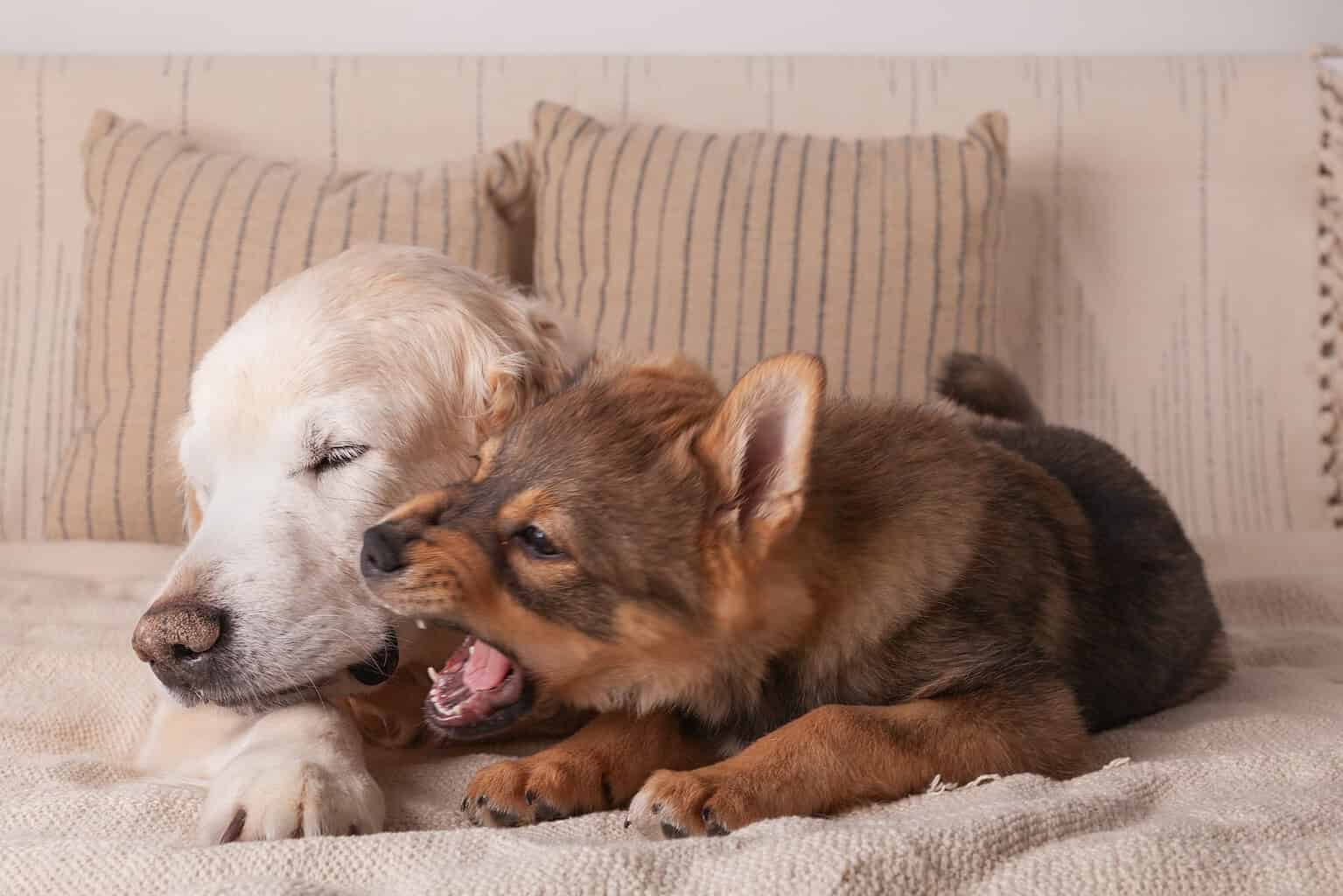
Play sneezing is normal: it is a short, soft “fake” sneeze that dogs use as a friendly signal during play, helped along by wrinkled noses and fast, excited breathing that tickle the nasal passages. Behaviorists read it as a message that the wrestling is a game, or that things are getting a little intense. It only becomes a concern when sneezing is repeated, forceful or bloody, or comes with nasal discharge, pawing at the face, or sneezing at rest. Those dogs need a vet visit, not more play.
Last updated: October 2025
What is a play sneeze?
A play sneeze is the small, breathy snort a dog lets out mid-wrestle, usually with a wrinkled muzzle and a loose, wiggly body. It is technically a sneeze, but not the kind that clears a nose. Dr. Jennifer Bailey, a veterinarian writing for Whole Dog Journal, draws the line clearly: a sneeze caused by irritation is forceful, often comes with nasal discharge and a jerk of the head, while a social sneeze is “small and delicate with no nasal discharge and very little head movement.”
Behaviorists group the play sneeze with the other signals dogs use to keep a game a game. Play is built from actions borrowed from fighting, hunting and mating, performed in jumbled forms, which is why ethologist Marc Bekoff describes social play as using “actions from other contexts in modified forms and in altered sequences.” Because a play bite and a real bite can look alike, dogs punctuate play with signals that say “still just playing.” The play bow is the best studied; the sneeze is one of the quieter ones.
That is why a play sneeze shows up at specific moments: as two dogs collide, when one grabs the other’s neck, or when you get on the floor and start a game of tag. It is a laugh that keeps everyone clear on the mood. If your dog also yawns or shakes off during rowdy play, the same logic applies, and our guide to why dogs yawn covers the other common calming signals.
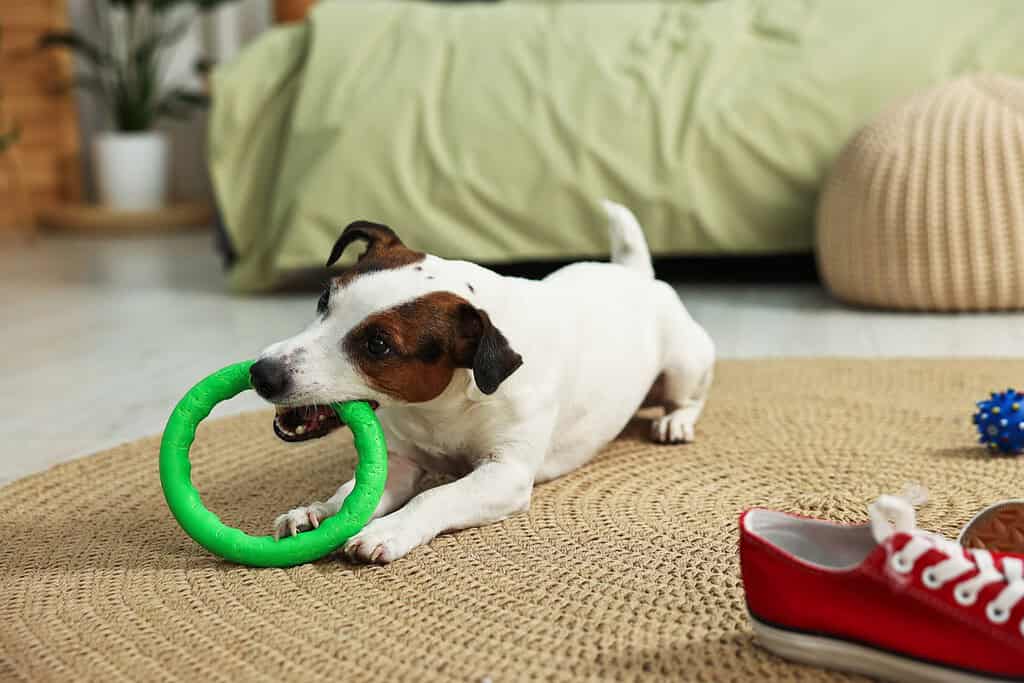
Why do dogs sneeze when they play?
There are two layers to the answer, communication and plumbing, and in most dogs they stack.
The communication layer is the one behaviorists care about. Alexandra Horowitz filmed 39 bouts of rough-and-tumble play among 78 dogs at a California off-leash park and found that dogs aimed play signals almost exclusively at partners who were facing them: 376 of 397 signals went to a forward-facing dog. When a partner looked away, dogs switched to attention-getters such as a paw or a nose poke, and play resumed 88 percent of the time afterward. Dogs time their signals for when the message can land, and a soft sneeze at a dog who is nose to nose fits that pattern. PetMD’s veterinary team says play sneezing “alerts the other dog that they are exerting play behavior,” and in Rover’s 2024 explainer Dwight Alleyne, DVM, notes that playful sneezes are “quick, shallow, and associated with other playful behaviors such as wagging tails.”
The plumbing layer is simpler. When a dog curls its lip and wrinkles its nose, the lower face crinkles and the nasal passages narrow, which PetMD lists as a direct trigger for a sneeze. Add rapid, excited breathing that pulls dust, grass seed and toy fluff toward the nose, and a sneeze becomes likely with no message attached. Chinonyerem Ukweni, DVM, told Rover that play sneezing is common in all dogs “although it is more frequent in active and toy breeds,” which tracks with smaller airways and more face-wrinkling during play.
Dogs also sneeze at people. A dog that sneezes at you while bouncing with a toy is usually asking you to join in or to notice something. Some dogs learn that a sneeze gets a laugh and keep doing it. That is a dog that has found a word that works. The same channel carries louder signals, and why dogs howl explains that end of the vocabulary.
How is a play sneeze different from a reverse sneeze?
Owners mix these up constantly, and it matters because a reverse sneeze can look like choking. A play sneeze pushes air out through the nose in one quick puff. A reverse sneeze pulls air in, hard, over and over. Veterinarians call it paroxysmal respiration, or the pharyngeal gag reflex, and it is triggered by irritation at the back of the nose and throat.
Cornell’s Riney Canine Health Center describes the posture: the dog stands with its neck extended, head tilted back and elbows pointed outward, lips pulled back, mouth closed, making a loud snorting noise while the opening to the windpipe stays closed. VCA notes that most episodes last from a few seconds to a minute and the dog is normal before and after. AKC Chief Veterinarian Dr. Jerry Klein adds two details that fit play directly: reverse sneezing “can occur after periods of over-excitement,” and it is more common in smaller dogs, terriers and flat-faced breeds. So a toy breed that snorts for twenty seconds after a frantic game is probably reverse sneezing, and probably fine.
Cornell also lists leash pulling and drinking too fast among the triggers, which is why some dogs reverse sneeze when fetch ends at the water bowl. Our guide to reverse sneezing in dogs covers how to stop an episode and when it needs a workup.
If you are not sure which one you are seeing, film it. Dr. Bailey’s advice is to take a video and share it with your veterinarian, who can usually tell a social sneeze from a medical one in seconds. In the free Lohji app from Shiloh’s House, the pet profile behind a Shiloh’s House NFC tag has medical notes and voice notes, so you can log “reverse sneezes after fetch, resolves in 30 seconds” where a sitter or finder will see it, and send the Share Profile card to your vet before an appointment. Lohji also turns your dog’s photos into cartoon avatars, stickers and wallpapers. Get it on the App Store or Google Play.
Which sneezes point to a medical problem?
Dr. Klein’s one-line summary is the right starting point: “Sneezing is a normal response to stimulation of irritant receptors in the nasal passage.” The question is what is doing the stimulating. For play sneezes it is a wrinkled nose and fast breathing, and the sneezing stops when play stops. Medical sneezing has a different signature. The table below is our summary of veterinary sources, not a diagnosis.
| Sneeze type | What you see | Likely cause | What to do |
|---|---|---|---|
| Play sneeze | Soft, short puff; wrinkled muzzle; loose body; only during play; no discharge | Social signal plus nose-wrinkling and excited breathing | Nothing. Offer a short break if play is escalating. |
| Reverse sneeze | Loud repeated inward snorts; neck extended; stands still; seconds to a minute; normal afterward | Throat or nasopharynx irritation; excitement; leash pull; elongated soft palate in flat-faced dogs | Calm the dog, gently stroke the throat. See the vet if episodes become frequent. |
| Sudden violent sneezing fit | Abrupt start, often after time outdoors; pawing at the nose; sometimes blood; often one nostril | Foreign body such as a grass awn or seed | Same-day vet visit. Awns migrate and rarely come out on their own. |
| Seasonal sneezing with itching | Sneezing plus scratching, paw licking, watery eyes or ear trouble; worse in certain months | Environmental allergies or airborne irritants (dust, smoke, sprays) | Remove irritants; ask the vet about allergy management if itching is present. |
| Sneezing with thick discharge | Yellow or green discharge; sometimes coughing, fever, low energy | Bacterial, viral or fungal infection; infected tooth root spreading into the nose | Vet visit within a day or two. Ask for a dental check if one side is affected. |
| Sneezing with nosebleeds and face rubbing | Sneezing, reverse sneezing, head shaking, facial itching, bleeding | Nasal mites (Pneumonyssoides caninum) | Vet visit. Treatment with antiparasitics works in more than 85 percent of cases. |
| Slow-building sneezing in an older dog | Weeks of sneezing or discharge from one nostril, noisy breathing, sometimes facial swelling or a bulging eye | Nasal tumor (median age about 10, more common in long-nosed breeds) | Prompt vet visit for imaging and rhinoscopy. |
Two threads run through that table. First, one-sided signs matter. The AKC notes that discharge from a single nostril points toward a foreign body, mass or fungal infection rather than a general irritant, and radiation oncologist Dr. Rachel St-Vincent tells owners to take asymmetric nasal signs seriously, especially in dogs over 7. Second, timing matters. Sudden onset tends to mean an irritant or an awn, while slow onset over weeks raises the odds of infection or a growth.
Foreign bodies deserve a special mention because playful dogs spend their time nose-down in grass. In a 2020 Journal of Small Animal Practice series of 42 dogs with nasal foreign bodies retrieved by rhinoscopy, 90.5 percent of the objects were grass awns, sneezing was the presenting sign in 78.6 percent, and most of the dogs weighed more than 10 kg and were under 7 years old: young, mid-sized dogs who play outdoors.
If the sneezing comes with scratching, read the allergy row, and see our guide to why dogs scratch so much for how vets separate environmental allergies from fleas and food.
Do flat-faced breeds sneeze differently during play?
Yes, and the difference is mostly about the reverse sneeze. Pugs, French bulldogs, bulldogs, Boston terriers and shih tzus have shortened nasal passages, narrow nostrils and, often, a soft palate too long for the mouth it sits in. That combination makes the back of the throat easy to irritate, so excitement that produces a dainty play sneeze in a Labrador can produce a honking reverse-sneeze episode in a pug.
The scale of the issue is well documented. In a 2016 University of Cambridge study in the Journal of Veterinary Internal Medicine, researchers assessed 266 pugs, French bulldogs and bulldogs with exercise tests and respiratory grading. Among the owner-volunteered dogs, clinically significant brachycephalic obstructive airway syndrome was present in about 60 percent of pugs, 46 percent of French bulldogs and 40 percent of bulldogs, and more than half of the pugs and French bulldogs had narrowed nostrils. Those dogs work harder to breathe at rest, so hard play pushes them toward noisy breathing faster than a dog with a normal muzzle.
Practically, that means two things for flat-faced play. Keep sessions shorter and watch for the shift from happy snorting to open-mouthed, effortful breathing, a blue-tinged tongue, or a dog that stops and will not restart. And treat reverse sneezing in these breeds as a cue to pause, offer water and let the dog settle. If episodes are frequent, long or paired with exercise intolerance, your vet can evaluate the soft palate and nostrils; surgery helps many of these dogs.
Dog park playdates go better when a stranger can read your dog’s ID
A game of chase can carry a dog through an open gate. Shiloh’s House Smart Tags pair a laser-engraved name and number with an NFC chip; a finder taps with any phone and sees your contacts, directions and medical notes, including “reverse sneezes when excited, not choking.” $38 one-time, no subscription, made in the USA.
When should you call the vet about sneezing?
Start with the simplest test of all, which is context. A dog that sneezes while wrestling, bouncing at the door or being tickled, and then stops the moment the excitement ends, is play sneezing. There is nothing to treat. The same dog sneezing on the couch at nine in the evening, or waking you with a sneezing fit, is doing something else, and that is the shift worth paying attention to. Veterinarians who answer this question for a living say the same thing: sneezing confined to play is nothing to worry about, while sneezing at rest or sneezing that persists after play has ended deserves a closer look.
The second test is force and frequency. A play sneeze is a single soft puff, maybe two, often so light that the dog barely moves its head. A medical sneeze is forceful enough to snap the head down, tends to come in volleys, and may leave a spray on the floor. If your dog has sneezed hard five or six times in a row, especially after coming in from a field, the odds that something is physically inside the nose go up sharply. Grass awns are the classic culprit. They are barbed, they travel in one direction only, and they almost never fall out on their own. A dog that suddenly erupts into violent sneezing, rubs its face along the carpet and pokes at one nostril with a paw should be seen the same day, because the longer an awn sits, the deeper it migrates.
The third test is what comes out of the nose. Nothing at all is the expected result of a play sneeze. A little clear moisture after a hard sneeze is usually fine. Thick yellow or green discharge suggests infection and warrants an appointment within a day or two. Blood changes the calculation. A drop or two after a violent sneeze is rarely an emergency, but repeated nosebleeds, bleeding from one side only, or blood combined with weeks of sneezing or noisy breathing are the signs that make veterinarians think about foreign bodies, fungal infection, nasal mites and, in older dogs, tumors. Nasal tumors make up only about 1 percent of canine cancers, but the median age at diagnosis is around 10 and owners typically report about three months of signs before the diagnosis is made. Any dog over 7 with new, one-sided nasal signs should be examined promptly rather than watched.
The fourth test is the rest of the dog. A sneezing dog that is eating well, playing normally and breathing quietly between sneezes can be observed for a few days. A sneezing dog that is also coughing, feverish, off its food, tired, pawing at its face, shaking its head or breathing loudly through its mouth should not wait. Those combinations point to infection, dental disease that has broken through into the nasal cavity, parasites or airway obstruction, and each of those is treated more easily early.
Finally, trust your sense of change. You know what your dog’s normal play sneeze looks and sounds like. If the sound has changed, if the sneezes have become more frequent over a few weeks, or if a dog that never sneezed outside of play has started doing it, make the call. Take a short video on your phone before you go. A ten-second clip of the actual event is worth more to your veterinarian than the best description you can give in the exam room.
How do you keep play healthy once the sneezing starts?
A play sneeze is often a volume knob, not a stop button. Dr. Bailey’s reading is the one to keep in mind.
“A dog sneezing during play with another dog is telling the other dog to tone down the energy level a notch or two.”
Jennifer Bailey, DVM, veterinarian (Whole Dog Journal, 2023)
So when you hear the sneeze, look at the rest of the picture. Healthy play has loose, curvy movement, role reversals where the chaser becomes the chased, self-handicapping by the bigger dog, and short pauses that both dogs choose to end. Overarousal looks different: one dog doing all the pinning, a tucked tail or stiff body on the other, attempts to leave that get cut off, hackles up, high-pitched yelps, or a sneeze followed by a head turn and a step backward. Rover’s experts flag that last combination, sneezing with backing away or turning the head, as a request for a break. Honor it. Call the dogs apart for ten or fifteen seconds, let them shake off, and see whether both go back in willingly. If only one does, the game is over for today.
With you as the playmate, the same rules apply. Tug is a terrific outlet for a dog that sneezes with excitement, as long as it has a clear start and stop; our guide to the best tug toys for dogs covers the rules that keep it safe. Rotate durable toys from our best dog toys roundup so fetch and chewing replace some of the face-to-face wrestling, and make sure a dog who turns every greeting into a wrestling match is getting enough exercise; how often you should walk your dog gives age-based targets.
Play sneezes usually arrive alongside play growls, which worry owners far more. Our guide to why dogs growl when playing walks through the research on play growls versus warning growls and the body language that tells them apart.
Frequently asked questions
Why does my dog sneeze when excited to see me?
The same two forces are at work as in play: a wrinkled, excited face narrows the nasal passages, and dogs use a soft sneeze as a friendly, attention-getting signal. A dog that sneezes at the door with a wagging tail is greeting you. If the sneezing continues after the excitement fades or comes with discharge, call the vet.
Is a play sneeze a real sneeze?
Physically, yes: air leaves through the nose in a quick puff. But it is much lighter than a sneeze that clears an irritant. Whole Dog Journal’s Dr. Jennifer Bailey describes the social sneeze as small and delicate, with no discharge and very little head movement, while an irritant sneeze is forceful and often jerks the head.
Why does my dog sneeze when I tickle or rub their belly?
Dogs can be ticklish, and since they cannot laugh, a sneeze is a common response to tickling and rough petting. The face scrunches, breathing speeds up and a soft sneeze pops out. Watch body language to confirm your dog is enjoying it: a loose body and wagging tail mean yes, while a stiff body or attempts to move away mean stop.
Is it reverse sneezing or play sneezing?
A play sneeze pushes air out in one quick, quiet puff while the dog keeps moving. A reverse sneeze pulls air in with loud, repeated snorts while the dog stands still with its neck stretched out, and it lasts from a few seconds to about a minute. Both can follow excitement and both are usually harmless, but frequent reverse sneezing deserves a vet check.
Should I stop play when my dog sneezes?
Not necessarily. A single sneeze during loose, bouncy play is just commentary. If the sneeze is paired with a head turn, backing away, stiff posture or a yelp, treat it as a request to dial things down and call a short break. Let both dogs shake off and see whether they return to play willingly. If one does not, end the session on a calm note.
When is sneezing during play a sign of allergies?
Suspect allergies when sneezing happens outside of play too, follows a seasonal pattern, or comes with itching, paw licking, ear infections or watery eyes. Play by itself does not cause allergy sneezing, but running through grass or dusty areas can expose an allergic dog to triggers. A vet can help sort environmental allergies from irritants like smoke or sprays, and from parasites such as nasal mites.
Sources
- Jennifer Bailey, DVM, “Why Dogs Sneeze When They Play”, Whole Dog Journal, 2023 — https://www.whole-dog-journal.com/behavior/why-dogs-sneeze-when-they-play/
- Marc Bekoff, “Play Signals as Punctuation: The Structure of Social Play in Canids”, Behaviour 132(5-6): 419-429, 1995 — https://doi.org/10.1163/156853995X00649
- Alexandra Horowitz, “Attention to attention in domestic dog (Canis familiaris) dyadic play”, Animal Cognition 12: 107-118, 2009 — https://doi.org/10.1007/s10071-008-0175-y
- Marc Bekoff, “Playful fun in dogs”, Current Biology 25(1), 2015 — https://www.cell.com/current-biology/fulltext/S0960-9822(14)01122-1
- Heather Hoffmann, DVM (reviewed by Barri J. Morrison, DVM), “Why Is My Dog Sneezing a Lot?”, PetMD, updated 2024 — https://www.petmd.com/dog/symptoms/why-my-dog-sneezing-a-lot
- Brooke Helton (with Chinonyerem Ukweni, DVM, and Dwight Alleyne, DVM), “Why Does My Dog Sneeze During Play?”, Rover, 2024 — https://www.rover.com/blog/dogs-sneeze-play/
- Caroline Coile, PhD (with Jerry Klein, DVM), “Why Does My Dog Keep Sneezing, and Why Do Dogs Sneeze?”, American Kennel Club, updated 2024 — https://www.akc.org/expert-advice/health/why-do-dogs-sneeze/
- Jerry Klein, DVM, “What Happens When a Dog Reverse Sneezes?”, American Kennel Club, updated 2024 — https://www.akc.org/expert-advice/health/what-happens-when-a-dog-reverse-sneezes/
- Brian Collins, DVM, “Reverse Sneezing”, Cornell Richard P. Riney Canine Health Center (undated, accessed 2025) — https://www.vet.cornell.edu/departments-centers-and-institutes/riney-canine-health-center/canine-health-topics/reverse-sneezing
- Kayla Hyland, DVM, et al., “Reverse Sneeze in Dogs”, VCA Animal Hospitals (undated, accessed 2025) — https://vcahospitals.com/know-your-pet/reverse-sneeze-in-dogs
- VCA Animal Hospitals, “Testing for Sneezing and Nasal Discharge” (undated, accessed 2025) — https://vcahospitals.com/know-your-pet/testing-for-sneezing
- Maria Joana Dias et al., “Nasal foreign bodies identified by rhinoscopy in dogs: 42 cases”, Journal of Small Animal Practice 61(12): 752-756, 2020 — https://doi.org/10.1111/jsap.13220
- Ned F. Kuehn, DVM, “Canine Nasal Mites”, Merck Veterinary Manual, updated 2024 — https://www.merckvetmanual.com/dog-owners/lung-and-airway-disorders-of-dogs/canine-nasal-mites
- Veterinary Society of Surgical Oncology, “Nasal Cavity Tumors – Canine” (undated, accessed 2025) — https://vsso.org/nasal-cavity-tumors-canine
- Stephanie Gibeault (with Rachel St-Vincent, DVM), “Nasal Tumors in Dogs: Signs, Symptoms, Treatment”, American Kennel Club, 2024 — https://www.akc.org/expert-advice/health/nasal-tumors-in-dogs/
- Nai-Chieh Liu et al., “Whole-Body Barometric Plethysmography Characterizes Upper Airway Obstruction in 3 Brachycephalic Breeds of Dogs”, Journal of Veterinary Internal Medicine 30(3): 853-865, 2016 — https://doi.org/10.1111/jvim.13933