How Often Should I Walk My Dog? A Vet-Backed Daily Walk Guide
 Shiloh’s House Team
·
·
15 min read
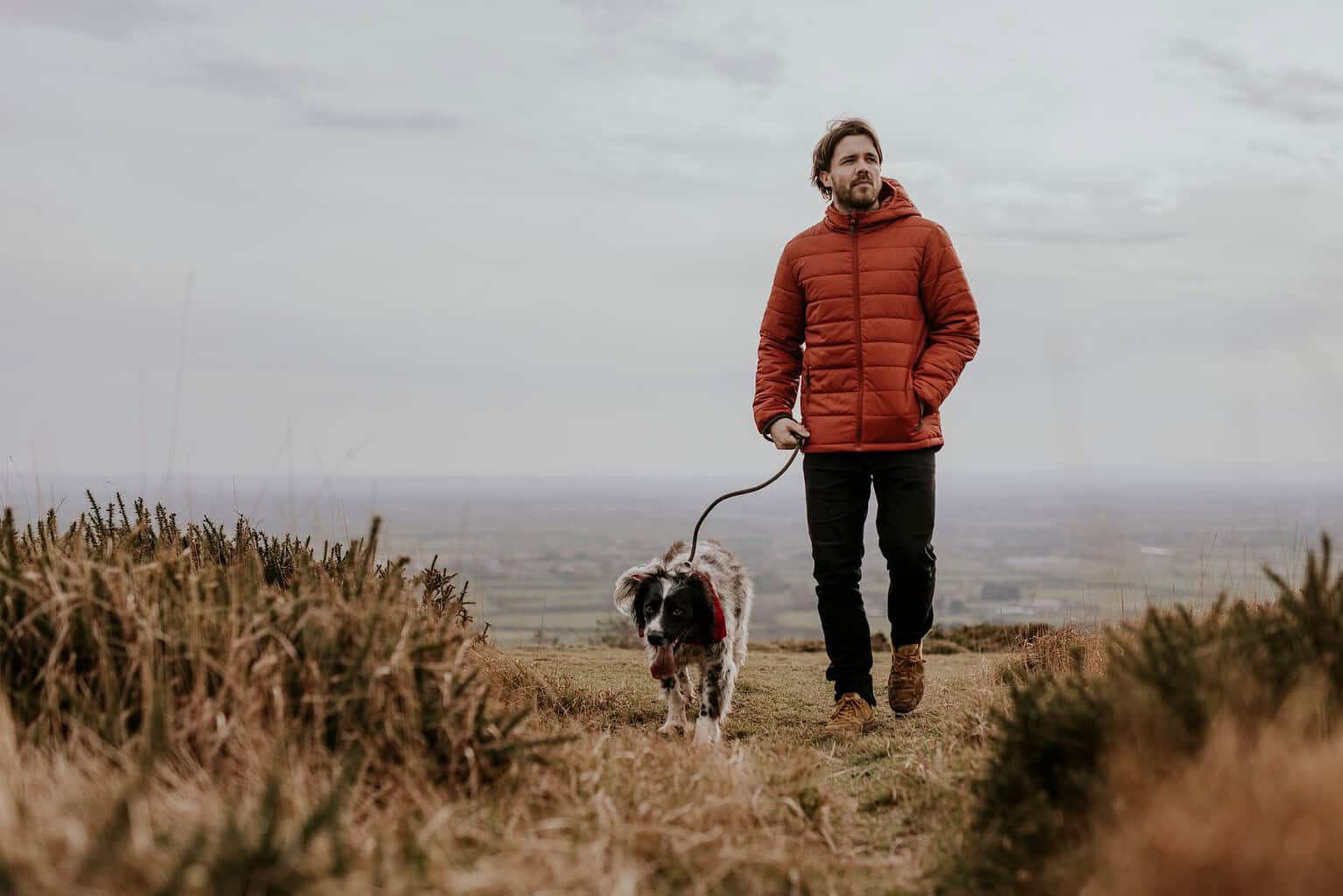
Most healthy adult dogs need at least one walk a day, and do better with two, adding up to somewhere between 30 minutes and two hours depending on breed, age and fitness. The PDSA’s vets put the floor at one to two walks daily, and PetMD’s Dr. Wailani Sung says most dogs in good body condition can handle a daily 20–30-minute walk, with fit dogs managing far more. Puppies need shorter, more frequent outings; seniors need slower, steadier ones. And with the clocks going back on November 1, the real question for a lot of families this month is not how often but when.
How many walks a day does a dog need?
Every major veterinary and welfare body lands in the same place. The PDSA says walking should be part of every dog’s daily routine and that most dogs need at least one to two walks per day unless a vet says otherwise. The Royal Kennel Club puts it as “at least one walk a day, often two.” Dr. Stacy Eckman of the Texas A&M College of Veterinary Medicine & Biomedical Sciences is blunter still: “Unless their health prohibits it, all dogs need some form of daily exercise.” The amount changes with breed and age, but the daily part does not.
Two walks is also what most owners actually do, at least where walking is the norm. In the UK’s Generation Pup cohort, published in Applied Animal Behaviour Science in 2022, dogs were most commonly walked twice a day at 16 weeks, 9 months and 15 months old. In the RSPCA’s #DogKind survey of 3,049 owners, 44% walked their dog twice daily, 24% three times and 25% once, while 6% admitted they did not walk the dog every day. The PDSA’s 2025 PAW Report found 75% of UK owners walk once a day or more, but nearly two in five keep the whole day’s walking to half an hour or less, most often because they think the garden is big enough or that the dog does not need more.
In the US the gap between what owners believe and what they do is wider. Rover’s national dog-walking report found 79% of owners think a dog should be walked at least twice a day, yet 57% skip walks every week and 38% walk their dog once a day or less. The top excuse, at 57%, was that it was too cold out. That is worth remembering as the evenings close in: a consistent short walk is the one most dogs lose first.
How long should each walk be?
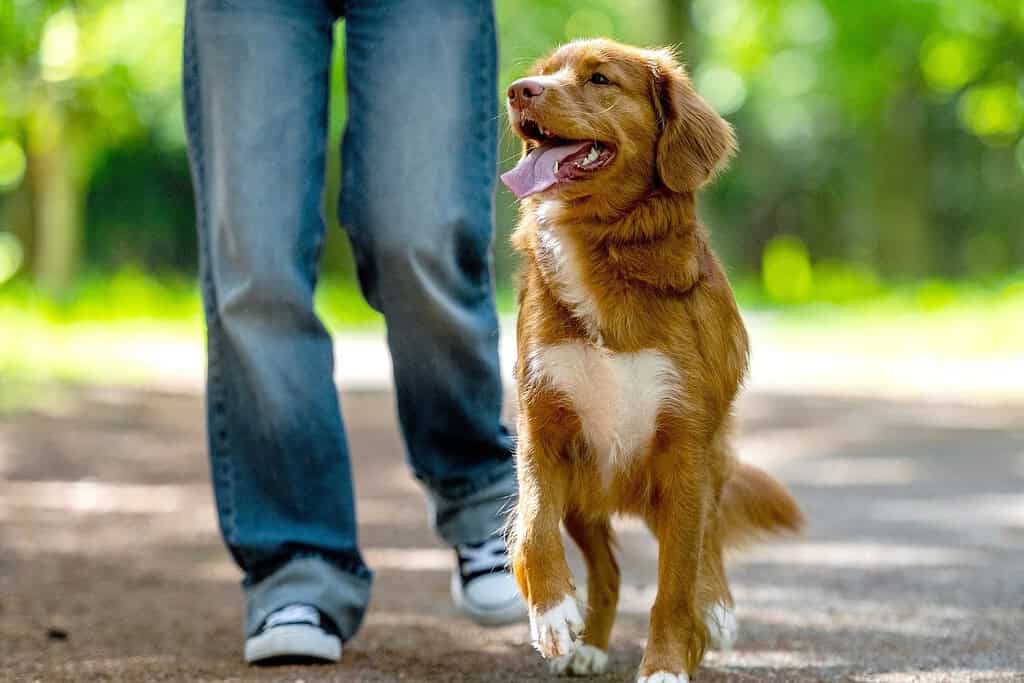
Length depends on the dog in front of you more than on any chart, but there are useful anchors. PetMD’s Dr. Sung says most dogs with a good body condition can tolerate a daily 20–30-minute walk, dogs in great physical shape can walk for up to two hours or hike for hours, and overweight dogs may struggle to go 10 minutes without panting heavily or stopping. The PDSA notes that some breeds need a minimum of one to two hours of exercise a day and working breeds significantly more. The AVMA suggests starting with short, frequent walks and building to one or more 15-minute periods of brisk walking with cool-down time afterwards.
30 minutes a day helps keep the veterinarian away!
Dr. Ernie Ward, Association for Pet Obesity Prevention
Dr. Ward’s advice, which he has given clients for 30 years, is that most dogs require about 30 minutes of aerobic activity a day, and that dogs with normal heart and lung function can start with 30-minute walks at least five times a week, ideally every day. If time is tight he suggests two 15-minute walks instead of one, and he is clear that shorter daily activity beats inconsistent longer efforts. The table below pulls those anchors together by life stage.
| Dog | Walks per day | Total walking time | What the experts say |
|---|---|---|---|
| Puppy under 6 months | 2–3 short outings | About 10 minutes each, building slowly | Short and frequent; potty breaks every 2–4 hours (AKC, Dr. Emily Wilson) |
| Average adult | 1–2 | 30–60 minutes | 20–30 minutes is tolerated by most dogs in good condition (PetMD); 30 minutes aerobic (APOP) |
| High-energy or working breed | 2 or more | 1–2 hours plus play or training | Some breeds need 1–2 hours minimum, working breeds more (PDSA) |
| Flat-faced or overweight dog | 2 shorter walks | 10–20 minutes each, more rests | Overheat easily; more frequent rests and shorter walks (AVMA, PetMD) |
| Senior or arthritic dog | 2–3 short walks | Slower pace, as tolerated | “Slow and frequent movement is beneficial” (AKC, Dr. Wilson); low impact only (PDSA) |
Watch the dog rather than the clock. Dr. Sung’s test is simple: if your dog starts slowing, panting more and sniffing around more about 25–30 minutes in, she is tiring, and the walk back has to be shorter than the walk out. A dog that drinks and then crashes for hours, or limps during or after a walk, got too much.
Puppies need little and often
A puppy’s walking schedule is the opposite of an adult’s: more outings, far shorter ones. The AKC’s Dr. Emily Wilson points out that puppies have less endurance and need a potty break every two to four hours, so with a 10-week-old you might go out for a 10-minute walk two or three times a day. “If you have a little teacup, poodle puppy, don’t go around the block,” she says. “That’s a long way for them to go.” Pairing walks with the after-meal toilet trip also speeds up potty training.
You will hear the “five-minute rule” everywhere: five minutes of formal exercise per month of age, up to twice a day, so 15 minutes at three months and 20 at four. The Royal Kennel Club still offers it as a rough guide. The PDSA, on the other hand, says plainly that there is no scientific evidence behind it and that it is not appropriate for most puppies. Both agree on the thing that matters, which is protecting growing joints: no long marches, no repetitive ball chasing, no jogging on pavement until the growth plates have closed.
That takes longer than most people think. The PDSA says most dogs are fully grown by a year, but Labradors, Dobermans, Greyhounds and Great Danes can take 18 months to two years. The AKC’s guidance for running with a dog is similar: wait until about 6–8 months for small breeds, 12 for medium, 12–18 for large and 18–24 for giant breeds.
For a picture of normal, the Generation Pup cohort is useful. Its 16-week-old puppies were commonly walked for a total of 30 minutes a day, mostly on the lead, while by 9 and 15 months the same dogs were getting about an hour on weekdays and two hours at weekends, mostly off it. If your adolescent dog seems to want more than the puppy schedule allowed, that is the pattern most owners follow too. Our new puppy checklist covers the gear side.
What a good walk actually looks like
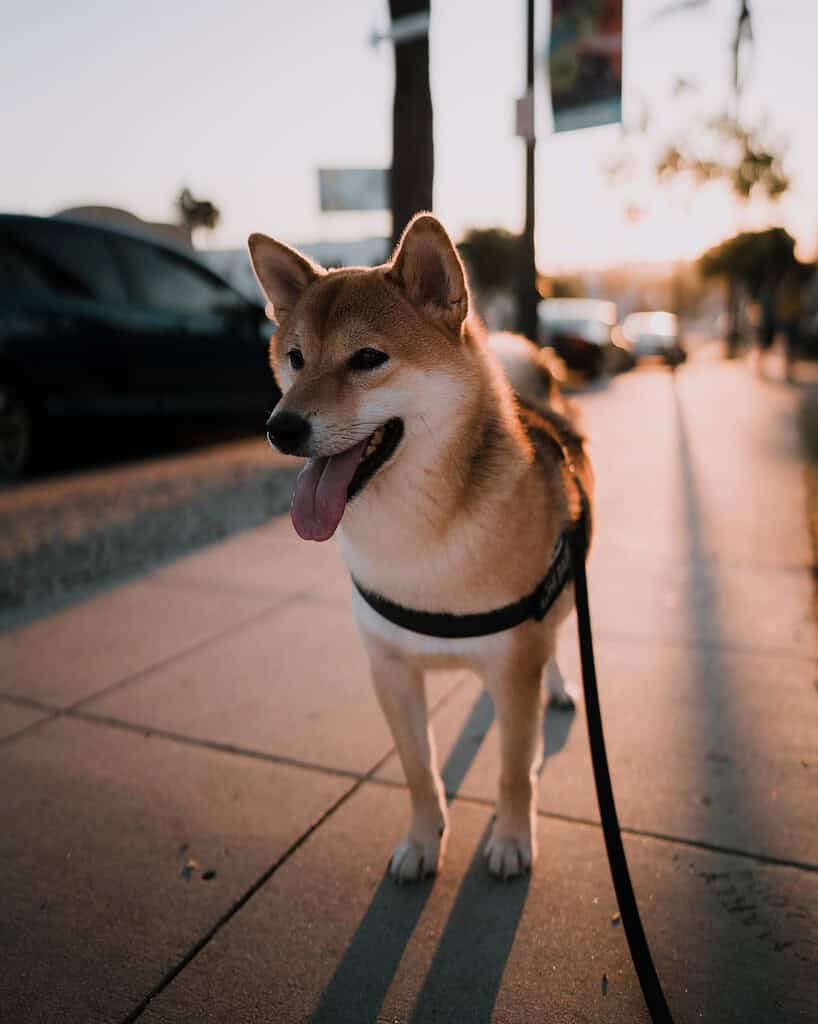
Not all walks do the same job, and the best weekly schedule mixes two kinds. The PDSA describes them neatly: a brisk walk burns off energy, while a slow, meandering walk full of sniffing and exploring is what does the most for a dog’s mental health. Dr. Ward’s observation is that the average dog-walking pace is about 25 minutes per mile, a sedentary stroll with a pause every minute or two to smell something or mark it. That stroll is good for the dog’s brain, but it is not aerobic exercise for either of you. If weight is the goal, he suggests setting out at a brisk pace from the first step, because a walk that starts with sniffing is hard to speed up later.
The AVMA’s version is to let the dog take “sniff breaks” within reason and to build gradually toward 15-minute stretches of brisk walking with time to cool down afterwards. In practice that might mean a purposeful morning loop and a slower evening wander, or a brisk first half and a sniffy second half of the same walk. The PDSA’s 2025 survey found that about seven in ten owners already give their dog unrestricted sniffing and the chance to meet other dogs on walks, and that is the part to protect when you are short of time, not the part to cut.
Consistency is the other half. The AKC’s Dr. Wilson says a routine is “really comforting to the dog and helps them anticipate what the schedule is,” and that dogs regulate their emotions better when walks happen at roughly the same time each day. VCA’s advice to owners building fitness makes the same point in numbers: a 20-minute walk every day does more than a two-hour walk on Sunday, and a slow, steady increase in time and intensity is what avoids injury. The Liverpool dog-walking study we cite below found that UK owners walk their dogs a median of seven times a week for a median 220 minutes, which is a decent benchmark for a healthy adult dog.
Timing is about to matter more than usual. Daylight saving time ends at 2 a.m. on Sunday, November 1, 2026, and sunset jumps an hour earlier overnight, which means the after-work walk most dogs rely on will suddenly be in the dark. If you can, move the longer, sniffier walk to the morning or lunchtime this month and keep the evening outing short and well lit. Our guide to walking your dog in the dark covers reflective gear, route choice and why a light-up collar earns its place from now until March.
The walk itself should be comfortable for both of you. A front-clip harness and a fixed-length leash make a loose-leash walk easier to teach, and teaching it is worth the effort: Rover found that a third of owners say pulling and chasing put them off walking at all, and the Royal Canin Academy’s review of dog walking lists loose-leash walking and recall as the two skills that make owners most likely to keep going. If pulling is your problem, start with our leash-pulling guide before you try to add distance.
Finally, give the walk a destination now and then. The AVMA suggests driving to a park or a less familiar area when a dog just wants to turn for home, and the AKC’s Dr. Wilson notes that older dogs in particular benefit from new sights, sounds and smells. A new route is the cheapest enrichment there is, and it is the easiest way to turn a dutiful 20 minutes into the part of the day your dog waits for.
Walks and behavior problems
Owners have always said a tired dog is a good dog, and the research mostly backs them up. A 2014 review of dog-walking studies by Carri Westgarth and colleagues found that the amount dogs are walked is negatively associated with fear of strangers and noises, aggression, poor obedience, pulling on the lead, excessive barking and escaping, with the honest caveat that two studies found no link at all.
A small Italian study is more specific. Giulia Panizzolo and Valeria Sergi of the University of Pisa surveyed the owners of 260 adult dogs and split them into 157 dogs walked for more than an hour a day and 103 walked for an hour or less. The long-walk dogs were significantly less likely to pull on the leash, jump up at people or chase cats, and every dog reported to have escaped from home was in the short-walk group. The authors’ advice was to prescribe long daily walks to the owners of excitable dogs, no sports required.
None of this makes walking a cure for separation anxiety or destructive chewing, which usually need their own plan. But if your dog is chewing, barking at the window or struggling with time alone, the first question any trainer will ask is how much the dog walked today. Puzzle toys and training sessions fill the gaps, but as the PDSA puts it, play does not replace a good walk.
What the walk does for you
The dog is not the only one who benefits. In a 2019 study in Scientific Reports, Westgarth’s team surveyed 191 dog owners and 455 non-owners in West Cheshire and found the dog owners were about four times as likely to meet the 150-minutes-a-week physical-activity guideline. Sixty-four percent of owners met it through dog walking alone. Dog walking did not replace other exercise; it was added on top.
That holds across countries. A 2014 systematic review in the Journal of Physical Activity and Health pooled nine studies and 6,980 dog owners: almost two in three walked their dog, and those who did were 2.74 times more likely to reach the recommended activity level than owners who did not. And a Cambridge study of 3,123 older adults in the EPIC-Norfolk cohort found that regular dog walkers were more active on the worst-weather days than non-owners were on the best ones, with about 20% higher activity and 30 minutes less sitting a day in bad conditions.
When to shorten, skip or swap a walk
Daily does not mean identical. The AVMA says tolerance to heat and cold varies with size, body condition, coat and health, and recommends timing walks away from the hottest and coldest parts of the day. Flat-faced and overweight dogs need shorter walks and more rests in warm weather, and small, thin-coated, very young and very old dogs feel the cold first. Our guides to how cold is too cold, winter paw care and winter coats cover the details for the months ahead.
Illness and injury are reasons to rest, not push through. The PDSA says a dog that is unwell may not need its usual exercise and that rest is part of recovery, with puzzle feeders and snuffle mats keeping the brain busy in the meantime. Arthritic dogs are the exception that proves the rule: they should keep moving, but gently and often, on predictable surfaces, with no chasing, jumping or steep hills. Ask your vet about joint support if a senior dog is stiff after walks.
And on the genuinely awful days, swap rather than skip. A 15-minute training session, a hallway game of fetch or a scent game around the house keeps the routine intact when the weather does not. Our indoor exercise guide has a full week of ideas. Just do not let the swap become the habit; by the PDSA’s and the AVMA’s reckoning, the walk should come back the next day.
Not tagged yet?
Two walks a day is more than 700 chances a year for a collar to slip or a gate to be left open. A Shiloh’s House smart tag puts your phone number and your dog’s details one tap away for whoever finds them, no app or battery needed, so the daily walk stays the safe habit it should be.
Frequently asked questions
Is one walk a day enough for a dog?
For many adult dogs, one good 30–60-minute walk plus play at home meets the minimum the PDSA and the Royal Kennel Club describe. Two walks is better for most dogs, and essential for high-energy breeds and dogs that are home alone during the day.
Is it OK to skip a walk sometimes?
An occasional missed walk is not a crisis if you replace it with indoor play or training, but Rover found 57% of US owners skip walks every week, and vets consistently say a short daily walk beats long weekend ones. Make the skip the exception.
Do small dogs need to be walked every day?
Yes. The Royal Canin Academy reports that small dogs are less likely to be walked than large ones, with Chihuahuas and Papillons among the breeds least likely to get daily exercise, and says most dogs are capable of at least 30 minutes a day as long as their health allows.
Does a backyard replace a walk?
No. A big garden was the most common reason PDSA respondents gave for short walks, but the Royal Kennel Club is clear that time in the garden is no substitute for exploring new environments and meeting other dogs.
How often should I walk a senior dog?
Often, but slowly. The AKC’s Dr. Wilson says slow and frequent movement helps arthritic dogs, so two or three short, gentle walks tend to suit seniors better than one long one. Watch for limping, stopping or lying down, and let your vet set the limits.
Should I walk my dog before or after eating?
Walk before meals or wait at least an hour after. The Royal Kennel Club warns against exercising on a full stomach because of the risk of bloat, and the AKC suggests leaving an hour after a meal before a walk.
Sources
- PDSA, “Exercise for dogs”; “Exercising your puppy”; PDSA Animal Wellbeing (PAW) Mini Report 2025 (2,566 dog owners, fieldwork Dec 2024–Jan 2025).
- Maharaj, N., “How Often Should You Walk Your Dog?”, American Kennel Club, updated Nov 19, 2025 (quotes from Dr. Emily Wilson, DVM).
- Sung, W., “How Often Should You Walk Your Dog?”, PetMD.
- American Veterinary Medical Association, “Walking or running with your dog.”
- VCA Animal Hospitals, “Healthy Exercise for Dogs.”
- Ward, E., “Being Active With Your Dog,” Association for Pet Obesity Prevention, June 2023.
- The Royal Kennel Club, “Puppy and dog walking tips.”
- Texas A&M College of Veterinary Medicine & Biomedical Sciences, “Exercise With Your Dog This New Year,” Pet Talk, Jan 2018 (Dr. Stacy Eckman).
- Kinsman, R.H. et al., “Dog walk frequency and duration: Analysis of a cohort of dogs up to 15 months of age,” Applied Animal Behaviour Science, May 2022.
- RSPCA, “Being #DogKind” report (survey of 3,049 dog owners, July 2017).
- Rover, “Rover Releases New Research on American Dog Walking Habits.”
- Westgarth, C., Christley, R.M., Jewell, C., German, A.J., Boddy, L.M., “Dog owners are more likely to meet physical activity guidelines than people without a dog,” Scientific Reports, 2019.
- Westgarth, C., Christley, R.M., Christian, H.E., “How might we increase physical activity through dog walking?: A comprehensive review of dog walking correlates,” International Journal of Behavioral Nutrition and Physical Activity, 2014.
- Soares, J. et al., “Odds of Getting Adequate Physical Activity by Dog Walking,” Journal of Physical Activity and Health, 2014 (systematic review of 9 studies, 6,980 owners).
- Panizzolo, G., Sergi, V., “Does walking the dog reduce behavioral problems?”, Dog Behavior, 2019.
- “Dog ownership supports the maintenance of physical activity during poor weather in older English adults,” Journal of Epidemiology & Community Health, 2017.
- Royal Canin Academy, “Dog walking: one health, one welfare.”
- National Institute of Standards and Technology, “Daylight Saving Time Rules” (DST ends November 1, 2026).