Why Do Dogs Get the Zoomies? FRAPs, Triggers, Age and Safety
 Shiloh’s House Team
·
·
17 min read
Dogs get the zoomies, officially called frenetic random activity periods or FRAPs, to release a sudden surge of energy, excitement or stress, and in a healthy dog the behavior is normal and harmless. Zoomies are most common in puppies and young dogs and fade with age, though many dogs keep them for life. Common triggers include baths, bedtime, pooping, crate release and your arrival home. The real risks are slippery floors, stairs and a dog that bolts near a road, so clear the path and keep the ID tag on.
Last updated: September 2025
What are the zoomies and why do they happen?
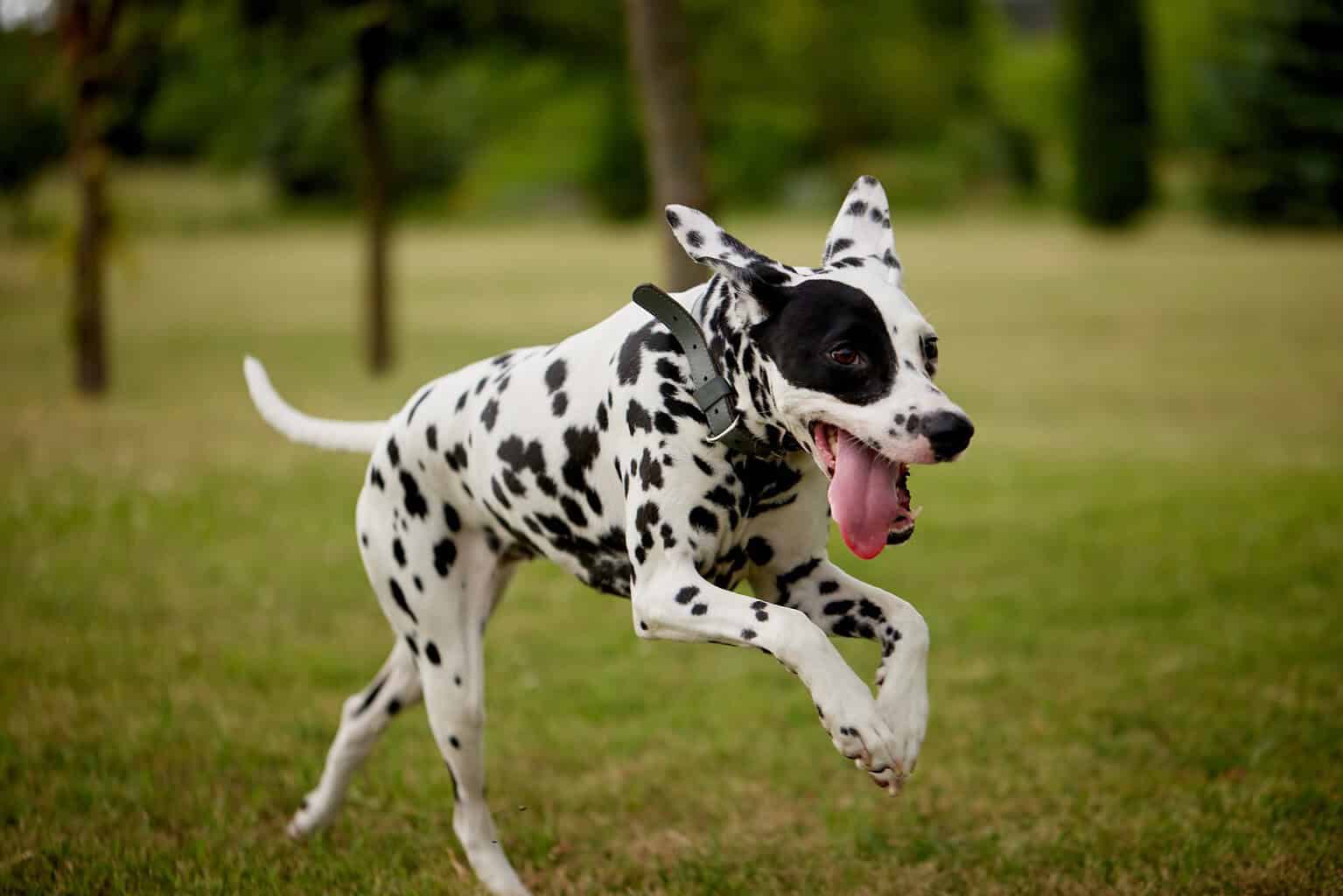
One minute your dog is lying on the rug. The next, the eyes go wild, the back end tucks, and the dog is tearing laps around the coffee table, sometimes with a play bow or a bark thrown in. Owners call it the zoomies or crazy eights. Veterinarians call it a FRAP, short for frenetic random activity period.
Nobody knows exactly why dogs do it. Cornell University’s College of Veterinary Medicine puts it plainly: there is no known specific cause of FRAPs in dogs, but they appear to be a way to release pent-up energy or perhaps to alleviate stress. PetMD, in an article reviewed by veterinary behaviorist Wailani Sung, DVM, DACVB, calls zoomies a quick way for dogs to release excess energy, excitement, or even stress and nervous energy.
What is striking is how little formal research exists. Susan Hazel and colleagues at the University of Adelaide wrote in The Conversation in 2023 that there is a real lack of scientific research on what causes zoomies, how often they occur, or even an official definition. Marc Bekoff, the ethologist behind the 200-episode dataset above, knew of no formal studies either. His own data, never published in a journal, found that zoomies started with no clear reason and ended just as unpredictably.
What the experts agree on is the emotional tone. Hazel’s team notes that zoomies share many characteristics with play, which would make them intrinsically pleasurable. Bekoff’s data supported psychologist Stanley Coren’s view that zoomies are more likely expressions of excitement and positive emotion. Your dog is simply having fun.

What triggers the zoomies in dogs?
Zoomies look random, but most owners can predict them. Lili Chin, author of Doggie Language, told Discover Magazine in 2023 that a zoomie usually follows a period of boredom, being restrained, a challenging experience, or over excitement. That covers nearly every trigger below.
| Trigger | What it usually looks like | What to do |
|---|---|---|
| After a bath or grooming | Full-body shake, then laps and rolling on the carpet or grass | Towel first, close doors to slick floors |
| Late evening, 5 to 8 p.m. | The “witching hour” dash, often with nipping in puppies | Move dinner or a walk earlier, then a chew |
| After pooping | A short sprint right after squatting, sometimes with a kick | Keep the leash on outdoors; nothing to fix |
| Crate or car release | Burst out the door and loop the yard | Open the crate into a fenced area, not toward the street |
| You come home | Spins, jumping, laps through the house | Greet calmly, head straight outside for a potty break |
| Play or training gets too exciting | Play bow, keep-away with a toy, zigzag running | Pause the game, scatter a few treats, resume when calm |
| Stress, like the vet lobby or nail clippers | Tense body, tucked tail, wide eyes, panting | Create distance, lower the pressure, ask your vet |
The bath trigger gets the most questions. José Arce, DVM, then president-elect of the American Veterinary Medical Association, told Live Science in 2021 that post-bath zoomies are probably about releasing nervous energy or excitement, not drying off, because a dog’s shake already does that job. PetMD adds that wet fur and a new shampoo smell are odd enough to send most dogs into the zoom zone.
Post-poop zoomies are a close second. Hazel’s team describes a theory called poo-phoria, where a large bowel movement stimulates the vagus nerve and produces a brief feeling of well-being, though they raise it mainly for cats. PetMD takes the simpler view that relief feels good. If your dog also scrapes the grass afterward, see why dogs kick after pooping.
Then there is the evening dash. PetMD notes that many dogs have a witching hour between 5 and 8 p.m. that coincides with dinner, your arrival home and, for young puppies, bedtime. The American Kennel Club’s Stephanie Gibeault, MSc, CPDT, says night zoomies are especially common in puppies crated all day or short on exercise.
Do puppies get the zoomies more than adult dogs?
Yes, and this is the one point where every source lines up. Cornell says FRAPs are most common in puppies and young dogs, but other dogs continue to get the zoomies once in a while for their whole lives. PetMD says zoomies occur most frequently in puppies, though adult and senior dogs still enjoy a dash, particularly after a bath. The AKC puts it as a trend line: the younger the dog, the more often it happens, and as a dog ages and its energy level drops, the frequency usually drops too.
We should be honest about what that rests on. There is no published survey that counts zoomies per week by age. The closest thing to data is Bekoff’s unpublished field study of 200 episodes, which found that dogs under a year old performed more zoomies than older dogs on average, while some seniors still zoomed regularly. The same study found no differences between breeds or between males and females.
A related study points the same direction. In a 2016 paper in the journal Animals, Anastasia Shabelansky and Seana Dowling-Guyer analyzed surveys from 175 owners of highly excitable dogs and found a weak but statistically significant negative correlation between a dog’s age and how excitable the owner rated it. The dogs averaged about three years old, so the trend was not just puppies versus adults. The authors cautioned that the relationship was weak and the sample self-selected.
Why would age matter? The AKC’s explanation is the most practical: puppies nap a lot but also have huge bursts of activity each day, and they are simply more energetic than older dogs. PetMD adds that the growth and change of puppyhood can trigger arousal, and zoomies are one way to drain it. Adolescence tends to be the peak, which is also when nipping is at its worst; our guide to stopping puppy biting covers the overlap.
If your senior dog still zooms after a bath, enjoy it. Bekoff’s take was that the older dogs in his study kept doing it because, clearly, they were having fun.
Are zoomies a sign my dog is not getting enough exercise?
Sometimes, but the occasional zoomie is not a verdict on your walking schedule. Dr. Pamela J. Perry, DVM, a behavior resident at Cornell, draws the line at frequency and timing: if your dog zooms frequently or at inopportune times, such as when you are asleep, it may be telling you it needs more exercise and mental stimulation. Otherwise, she says, enjoy the antics.
The AKC agrees that frequent zooming is more likely a sign that a puppy is not getting enough exercise than anything serious, and PetMD notes that under-exercised dogs often pair extra zoomies with nipping and vocalization. GoodRx, in a 2022 piece reviewed by Ghanasyam Bey, DVM, says regular or overnight zoomies mean a dog needs more physical exercise and mental enrichment.
Excitement, not boredom, is still the bigger driver. The 2016 Animals study measured which daily moments set excitable dogs off. The numbers below come from its 175-dog sample, where owners rated how often their dog jumped up uncontrollably in common scenarios.
| Daily scenario | Dogs jumping up “frequently” or “always” | Other findings |
|---|---|---|
| Owner arrives home | 60.0% (28.0% frequently, 32.0% always) | Only 6.3% of dogs never jumped up at homecoming |
| Owner plays with the dog | About 60% | 11% frequently or always mouthed hard enough to cause discomfort |
| Owner prepares the dog’s meal | Low | Nearly 70% of dogs never or rarely jumped up |
The pattern is telling. The same two moments that light up excitable dogs, homecomings and play, are the top zoomie triggers in every veterinary source we opened. Zoomies are mostly about arousal spikes, not a daily energy surplus.
So the fix is twofold. First, get the baseline right with daily walks plus play; our guide to how often to walk your dog lays out a schedule by age and breed. Second, add brain work. Dr. Natalie Marks, DVM, of VCA Blum Animal Hospital in Chicago told GoodRx to try longer or more frequent walks, or a new activity like nose work, agility or swimming. Cornell suggests scent games and new tricks. When weather keeps you inside, our indoor exercise ideas fill the gap.
How do zoomies differ from seizures or compulsive behavior?

This is the question that keeps new owners up at night, and it deserves a careful answer. The reassuring news is that true zoomies, seizures and compulsive spinning look different once you know what to watch for.
Start with what a zoomie is. According to Cornell, a happy zooming dog is loose and even wiggly, bouncing around you when it slows down, often with its tongue flapping and a play bow thrown in. The dog is aware of you. It steers around furniture, responds to its name even if it ignores you, and the episode ends on its own. Discover Magazine reports that FRAPs typically last a few minutes and that anything beyond ten minutes is rare. When the dog stops, it is panting and pleased with itself, not dazed.
A seizure is a different animal. VCA Animal Hospitals explains that a generalized seizure involves loss of consciousness, with all the muscles moving spastically and erratically. The legs may paddle ineffectively, the head is often drawn backward, and the dog may urinate, defecate or drool. A generalized seizure usually lasts one to two minutes. Afterward comes the post-ictal phase, with confusion, disorientation, pacing and sometimes temporary blindness. VCA also notes that seizures often occur at times of changing brain activity, such as play or feeding time, which is one reason owners confuse the two. The tell is consciousness: a zooming dog is in there, and a seizing dog is not. If a seizure lasts more than five minutes, VCA calls it status epilepticus, a life-threatening emergency.
Focal seizures are subtler. VCA describes them as involving only certain muscle groups, with twitching on one side of the body and behavioral changes, with or without loss of consciousness. These are the episodes most likely to be mistaken for odd behavior, which is why a video is so valuable. Dr. Arce told Live Science that if you are unsure whether your pet is doing zoomies or showing compulsive symptoms, record the behavior and show your veterinarian.
Compulsive behavior is a third category. VCA behaviorists Ellen Lindell, Debra Horwitz and Gary Landsberg define a compulsive disorder as a behavior repeated frequently enough to disrupt a dog’s daily routine, performed almost automatically, as if the dog has no control. The classic examples are tail chasing, spinning in tight circles, shadow chasing and air snapping, with spinning most common in bull terriers. The key difference from a zoomie is the shape of the movement and how hard it is to stop. A zoomie covers ground in big, varied loops and ends when the dog is done. Compulsive spinning stays in one spot, repeats the same tight pattern, happens with little or no trigger and resists interruption. VCA’s rule for tail chasing applies: occasional, situational and easy to interrupt is a safe displacement behavior, while behavior that causes injury, appears without triggers or crowds out normal life is compulsive and needs a workup for pain and neurologic disease. Hazel’s team flags the same signs, spinning and behavior during confinement, as a possible repetitive behavior disorder. If your dog’s circling is tail-focused, our guide to why dogs chase their tails walks through the medical causes a vet checks first.
Dr. Arce was direct about the most common worry. Dogs with compulsive disorder may chase their tails, follow shadows or snap at the air, he told Live Science, but zooming around the house is not a sign of OCD in dogs. Big happy laps followed by a nap are a FRAP, not a disorder.
How do I keep my dog safe during the zoomies?
Zoomies themselves will not hurt your dog; Dr. Arce told Live Science he had never heard of a pet seriously injured by one. The hazards are what the dog runs into, slides on or runs toward.
“Although FRAPs are normal, a dog zooming around the house or yard may be in danger of injuring themselves (or breaking something). Owners should keep zooming dogs away from stairs, slippery floors, obstacles and the road.”
Pamela J. Perry, DVM, behavior resident, Cornell University College of Veterinary Medicine (Cornell Riney Canine Health Center, DogWatch, 2016)
Indoors, footing comes first. Cornell says grass is the best surface for hard running, with carpet and packed dirt close behind, while hard floors, ice, gravel and sand raise the risk of a slip or fall. PetMD’s practical version is throw rugs on slick floors until a puppy grows out of the phase. Move the vase off the coffee table, close the door to the stairs, and steer small children and elderly relatives out of the lane.
Outdoors, the stakes go up. A zoomie near a street is the one situation where Hazel’s team says to interrupt the behavior. PetMD recommends keeping outdoor play in a fenced area or on a long leash, with a well-fitting collar and ID tag in case the dog does escape.
The lost-dog angle is real. A dog in full FRAP is not thinking about recall, and a dog that clears the yard at a sprint can be blocks away before you reach the sidewalk. Our roundup on how far a lost dog can travel explains why the first hour matters most, and our first-60-minutes plan tells you what to do in it. The simplest insurance is a tag a finder can read instantly; see our checklist of what to put on a dog ID tag.
When a zoomie turns into a bolt, make the tag do the talking
A Shiloh’s House Smart Tag is laser-engraved acrylic with a “Tap Phone Here” NFC back, so whoever catches your dog two streets over taps it with any modern phone and sees your live profile with call, text, directions, voice notes and medical notes. Waterproof, no battery, no subscription, about $38 one-time, made in the USA, 30-day returns.
How do I calm a dog with the zoomies and when should I call the vet?
Most of the time, you do not need to calm anything. Bekoff’s advice was that there is no reason to stop zoomies, only to make sure the dog cannot get hurt. Hazel’s team adds that if your dog play bows at you mid-zoomie, you have been invited.
When you do need to redirect, use the nose, not the voice. Dr. Marks told GoodRx you can intervene with a toy or game or other type of enrichment, and scattering treats on the grass works because sniffing is calming and incompatible with sprinting. Chasing a zooming dog turns the episode into keep-away, which PetMD lists as a trigger in its own right. A solid recall is the long-term tool.
For puppies, think about timing. The AKC recommends a routine with play, training, activity and plenty of naps, and notes that a crate should not be the whole day. Overtired puppies zoom and nip, and PetMD calls that punchiness a stress release, not a request for more play. If the evening dash arrives on schedule, move dinner and the last walk earlier and end the night with a chew.
Call your veterinarian in a few specific cases. Cornell’s Dr. Perry says that if a zooming dog appears in pain, frightened or anxious, the owner should seek veterinary help to find the cause. The AKC flags constant frapping as a possible compulsive or stress problem. Hazel’s team adds extended episodes, tight spinning, behavior during confinement, episodes you cannot interrupt, and any injury. Collapse, paddling, drooling or a dazed recovery is a seizure until a vet says otherwise.
One more piece of zoomie-proofing happens on your phone. The free Lohji app from Shiloh’s House keeps a live pet profile with your contacts, medical notes, voice messages and name pronunciation, and a Shiloh’s House NFC tag links to it, so a finder who taps the tag sees the profile with call, text and directions. The app also makes cartoon Lohji avatars, stickers, wallpapers, slideshows and mini movies, with unlimited pets. Get it on the App Store or Google Play.
Frequently asked questions
What does FRAP stand for?
FRAP stands for frenetic random activity period, the term veterinarians use for the zoomies. Cornell University’s College of Veterinary Medicine describes it as a sudden burst of high-energy running and play bowing with no known specific cause, most likely a release of pent-up energy or stress. Rabbit owners call the same behavior binkies.
Why does my dog get the zoomies after a bath?
Baths combine restraint, odd sensations and relief when it is over. Dr. José Arce of the AVMA told Live Science that post-bath zoomies likely release nervous energy or excitement, not water, since a dog’s shake already dries it. PetMD adds that wet fur and a new shampoo smell feel strange enough to set most dogs off. Towel off first.
Do dogs grow out of the zoomies?
Mostly. Cornell, PetMD and the AKC all say zoomies are most common in puppies and young dogs and become less frequent as energy levels drop with age. Many adult and senior dogs still zoom occasionally, especially after a bath or a long day alone. A sudden increase in an older dog is worth mentioning to your vet.
Are zoomies a sign of a happy dog?
Usually, yes. PetMD calls them an expression of joy, and University of Adelaide researchers note they share features with play. But body language matters: a happy zoomer is loose and wiggly with a flapping tongue, while a stressed one is tense with wide eyes, pinned ears and a tail tucked tight even when it stops, according to Cornell. Zooming when the nail clippers appear is stress.
How can I tell zoomies from a seizure?
Consciousness is the key. A zooming dog steers, responds to you and stops on its own, panting and pleased. VCA Animal Hospitals explains that a generalized seizure involves loss of consciousness, paddling legs, a head drawn back and possibly urination or drooling, lasting one to two minutes and followed by confusion or temporary blindness. Film the episode and call your vet if you are unsure.
Should I stop my dog from doing zoomies?
Only when there is immediate danger, such as a road, stairs or small children. Otherwise, researchers at the University of Adelaide and Cornell’s behavior team both say to let the dog enjoy it in a safe space. To redirect, scatter treats or offer a toy rather than chasing. Frequent or overnight zoomies mean the dog needs more exercise and enrichment.
Sources
- Pamela J. Perry, DVM, “What are zoomies?”, Cornell University College of Veterinary Medicine, Riney Canine Health Center (DogWatch), 2016 — https://www.vet.cornell.edu/departments-centers-and-institutes/riney-canine-health-center/canine-health-information/what-are-zoomies
- PetMD Editorial, reviewed by Wailani Sung, MS, PhD, DVM, DACVB, “Why Do Dogs Get the Zoomies?”, PetMD, 2024 — https://www.petmd.com/dog/behavior/why-do-dogs-get-the-zoomies
- Stephanie Gibeault, MSc, CPDT, “Why Does My Puppy Go Wild at Night?”, American Kennel Club, 2022 — https://www.akc.org/expert-advice/training/why-does-my-puppy-go-wild-at-night/
- Marc Bekoff, PhD, “Dogs Do Zoomies Because It’s Fun”, Psychology Today, 2023 — https://www.psychologytoday.com/us/blog/animal-emotions/202302/dogs-do-zoomies-because-its-fun
- Susan Hazel, Ana Goncalves Costa and Julia Henning, “Why do cats and dogs get the zoomies?”, The Conversation, 2023 — https://theconversation.com/why-do-cats-and-dogs-get-the-zoomies-197790
- Tyler Santora, with José Arce, DVM, “Why do dogs and cats get the zoomies?”, Live Science, 2021 — https://www.livescience.com/why-pet-dogs-cats-race-around.html
- Lavanya Sunkara, reviewed by Ghanasyam Bey, DVM, with Natalie Marks, DVM, “Dog Zoomies: Why Your Pup Rockets Around at High Speed”, GoodRx Health, 2022 — https://www.goodrx.com/pet-health/dog/dog-zoomies-fraps
- Sean Mowbray, with Lili Chin, “Why Do Dogs Suddenly Get the Zoomies?”, Discover Magazine, 2023 — https://www.discovermagazine.com/why-do-dogs-suddenly-get-the-zoomies-45351
- Anastasia Shabelansky and Seana Dowling-Guyer, “Characteristics of Excitable Dog Behavior Based on Owners’ Report from a Self-Selected Study”, Animals, 2016 — https://pmc.ncbi.nlm.nih.gov/articles/PMC4810050/
- Courtney Barnes, DVM, Malcolm Weir, DVM, Ernest Ward, DVM and Rania Gollakner, DVM, “Seizures in Dogs”, VCA Animal Hospitals, accessed 2025 — https://vcahospitals.com/know-your-pet/seizures-general-for-dogs
- Ellen Lindell, VMD, DACVB, Debra Horwitz, DVM, DACVB and Gary Landsberg, DVM, DACVB, “Compulsive Disorders in Dogs”, VCA Animal Hospitals, accessed 2025 — https://vcahospitals.com/know-your-pet/compulsive-disorders-in-dogs