Best Christmas Gifts for Cats (Vet-Backed, Safe Ideas)
 Shiloh’s House Team
·
·
16 min read
The best Christmas gifts for cats are the ones that let them hunt, climb, scratch, rest and stay safe. Vets and feline behaviorists point to wand toys, puzzle feeders, window perches or cat trees, sturdy scratchers, a warm bed and small edible treats as the top picks, because they meet core needs in the AAFP and ISFM environmental guidelines. Skip string, tinsel, ribbon and lilies, and consider a breakaway collar with an ID tag, the gift that helps a lost cat get home.
Last updated: December 2025
What makes a cat Christmas gift vet-approved?
A good gift for a cat is anything that lets them do what their bodies and brains were built for, without putting them at risk. That is the bar veterinarians use.
The clearest framework comes from the American Association of Feline Practitioners (AAFP) and the International Society of Feline Medicine (ISFM). Their Feline Environmental Needs Guidelines say that meeting a cat’s environmental needs is “essential (not optional)” and organize those needs into five pillars: a safe place, multiple and separated key resources (food, water, litter, scratching, play and resting areas), opportunities for play and predatory behavior, positive and predictable human interaction, and respect for the cat’s sense of smell. The guidelines apply to every pet cat, indoor or outdoor.
That list doubles as a shopping list: wand toys for play, puzzle feeders for hunting, perches for a safe place, scratchers and beds as key resources, and catnip for scent.
The second filter is safety. Cornell’s Feline Health Center advises avoiding toys with small pieces or linear, strand-like parts such as feathers and string that can separate and be swallowed, and anything with an electrical cord your cat can chew.
Which cat Christmas gifts are worth buying, and how much do they cost?
Here is a quick comparison of the gift types vets and behaviorists recommend most often, with approximate US prices as of December 2025. Prices vary by retailer and size, so treat these as ballpark ranges rather than quotes.
| Gift | Approx. price range | Best for |
|---|---|---|
| Wand toy (Da Bird style) plus spare lures | About $10–$25 | Every cat, especially young, bored or overweight cats |
| Puzzle feeder or treat ball (Catit, PetSafe, KONG) | About $8–$35 | Fast eaters, food-motivated cats, cats home alone |
| Window perch | About $20–$50 | Indoor cats, small apartments, bird watchers |
| Cat tree | About $50–$250 | Climbers, multi-cat homes, cats who raid counters |
| Scratcher (cardboard pad or tall sisal post) | About $10–$60 | Furniture scratchers, every home |
| Heated or self-warming bed (K&H style) | About $25–$70 | Seniors, thin or arthritic cats, chilly homes |
| Water fountain (Catit, PetSafe) | About $25–$60 | Cats who like running water or play in bowls |
| Cat grass kit | About $5–$15 | Plant chewers, stocking stuffer |
| Catnip or silver vine toys, small treats | About $3–$15 | Stocking stuffers, training rewards |
| Breakaway collar plus Shiloh’s House Smart Tag | About $8–$15 collar, $38 tag | Every cat, including indoor-only cats |
| Lohji cartoon of your cat (digital) | Free app, 10 welcome coins | Cat lovers, last-minute gifts, family cards |
If you buy one thing, buy a wand toy and use it daily. Shopping for a dog too? Our separate guide to the best Christmas gifts for dogs covers the canine side.
Why are wand toys the best gift for most cats?
A wand toy (a stick, a line and a lure you move like prey) checks two AAFP and ISFM pillars at once: predatory play and positive interaction with you.
Veterinary behaviorists Meghan Herron and Tony Buffington explain that play in cats is closely tied to the natural predatory sequence of stalking, chasing, pouncing and biting. They recommend toys that keep distance between the cat and your body, because playing with hands and feet can teach a cat that it is rewarding to stalk and bite people. With a wand, the lure takes the hits.
The Ohio State University Indoor Pet Initiative lists the benefits of daily play: a stronger bond, better quality of life, less obesity, fewer “wild frenzies” in the late evening, and a cat who sleeps longer at night. It suggests a set play time each day.
Da Bird is a classic pick. Choose a wand with swappable lures, since Herron and Buffington advise rotating toys every few days to keep interest high.
Store the wand in a closet after play, because the string is exactly the kind of linear object vets warn about. End each game with a “catch,” and finish any laser session with a treat or toy to prevent frustration. More options are in our full guide to the best cat toys.
Are puzzle feeders a good Christmas gift for cats?
Yes. Wild cats work for many small meals, while house cats get dinner free in a bowl. Puzzle feeders close that gap by making your cat paw, roll or fish for food.
A 2016 review in the Journal of Feline Medicine and Surgery by Leticia Dantas, Mikel Delgado, Ingrid Johnson and Tony Buffington looked at food puzzles as enrichment. The authors note that current care guidelines suggest cats be allowed to express the predatory sequence, including active acquisition of food. In case studies from their own practices, cats using food puzzles alongside other behavior changes showed weight loss, less aggression toward people and other cats, reduced fear and anxiety, fewer attention-seeking behaviors and resolution of litter box avoidance. They called food puzzles easy to implement, with few risks.
Colorado State University veterinarian Dr. Elena Contreras made the same point in a holiday gift roundup, recommending food puzzles and food-dispensing toys to help keep cats’ weight down, and even hiding kibble around the house:
“This is fun and stimulating for the cat and helps them to engage in normal activities such as hunting.”
Dr. Elena Contreras, Veterinarian, Center for Companion Animal Studies, Colorado State University SOURCE
Catit, PetSafe and KONG all make starter treat balls and trays. Start with large openings and high-value treats, then move to harder designs. Our guide to the best cat puzzle feeders sorts them by difficulty. Remember that kibble in a puzzle counts toward the day’s food, so measure it from the daily portion.
Which gifts help a cat feel safe and at home all year?
The gifts your cat will use most change their environment: somewhere high to sit, something to scratch and somewhere warm to sleep. These cover the “safe place” and “key resources” pillars in the AAFP and ISFM guidelines.
Window perches and cat trees
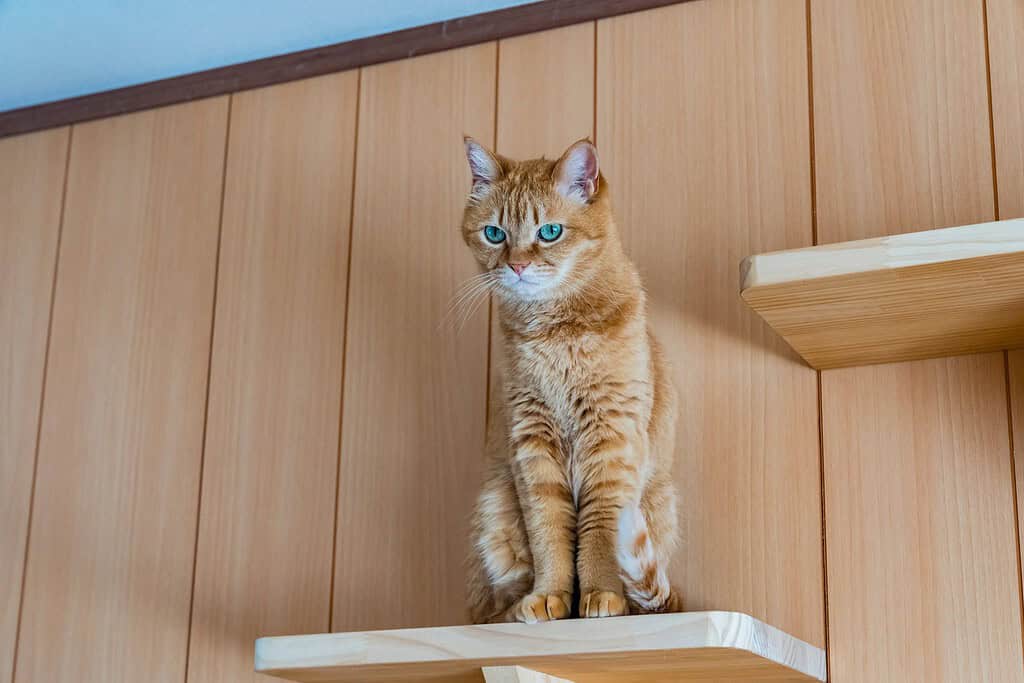
Height matters to cats. Herron and Buffington write that because of their heritage as both a predator and a prey species, domestic cats naturally climb for observation and safety, and that indoor cats need perching options throughout the home that offer vantage points safe from people and other animals. The Ohio State Indoor Pet Initiative puts it more simply: everyone likes a pleasant view, and cats are no exception. Its enrichment examples include a fleece-covered perch near a window so a cat can watch birds and squirrels at a strategically placed feeder.
A window perch is the budget version of that idea. Look for one rated well above your cat’s weight, with a frame that braces against the sill instead of relying only on suction cups, and test it before your cat does. A cat tree is the bigger gift. Choose one with a wide, heavy base and at least one enclosed hideaway, which gives a nervous cat a safe retreat when holiday visitors arrive. The AAFP and ISFM guidelines also recommend safe spaces with more than one exit so one cat cannot trap another.
Scratchers
Scratching is not a bad habit. According to the Indoor Pet Initiative, cats scratch to stretch their muscles, shed old claw sheaths, sharpen their claws and leave scent marks. A scratcher is a gift that also saves your sofa. Match it to your cat’s style: cats who scratch chair legs and couch corners usually prefer a tall vertical post, while rug scratchers prefer a flat or angled pad. Sisal is the material Ohio State calls ideal, because it is satisfying to shred and tough enough to last. The post must be tall enough for a full stretch and sturdy enough not to wobble, since a post that tips over once may never be used again.
Placement is half the gift. Cats tend to scratch near sleeping areas, because they like to stretch after a nap, and near room entrances, where a scent mark tells other cats they have passed through. Put the new post right next to the furniture your cat already targets. Once it is in steady use, Ohio State suggests moving it gradually, no more than three inches a day, if you want it somewhere else.
Heated and self-warming beds
A warm bed is a lovely winter gift, especially for older cats. Preventive Vet notes that senior cats tend to lose muscle and fat, making it harder to stay warm, and that heated beds can be especially comforting for cats with arthritis or other painful conditions. Self-warming beds, which reflect the cat’s own body heat, need no electricity at all. If you choose a plug-in model, buy one made specifically for pets, with a low-wattage heater and a chew-resistant cord. Never put a human heating pad under your cat, because those are not designed for hours of continuous use and can get much too hot. K&H is a well-known brand here. Place the bed so your cat can step off the heat when they want to, and check the cord now and then for wear. Our roundup of the best heated pet beds compares heated and self-warming styles side by side.
Is a cat water fountain worth giving as a gift?
Many cats enjoy fountains, but the research is worth knowing before you buy.
In a 2010 study in the Journal of Feline Medicine and Surgery, veterinarian David Grant tested a fountain against a standard bowl in 13 healthy cats living in their own homes. Measured water intake was slightly higher from the fountain, but urine concentration did not change, and after removing one cat whose diet shifted during the study, the difference in intake disappeared. One cat disliked the fountain so much that it refused to drink from it, vomited and became aggressive toward it. Grant concluded that a fountain failed to substantially increase water intake or dilute urine, while noting that individual cats may still prefer one.
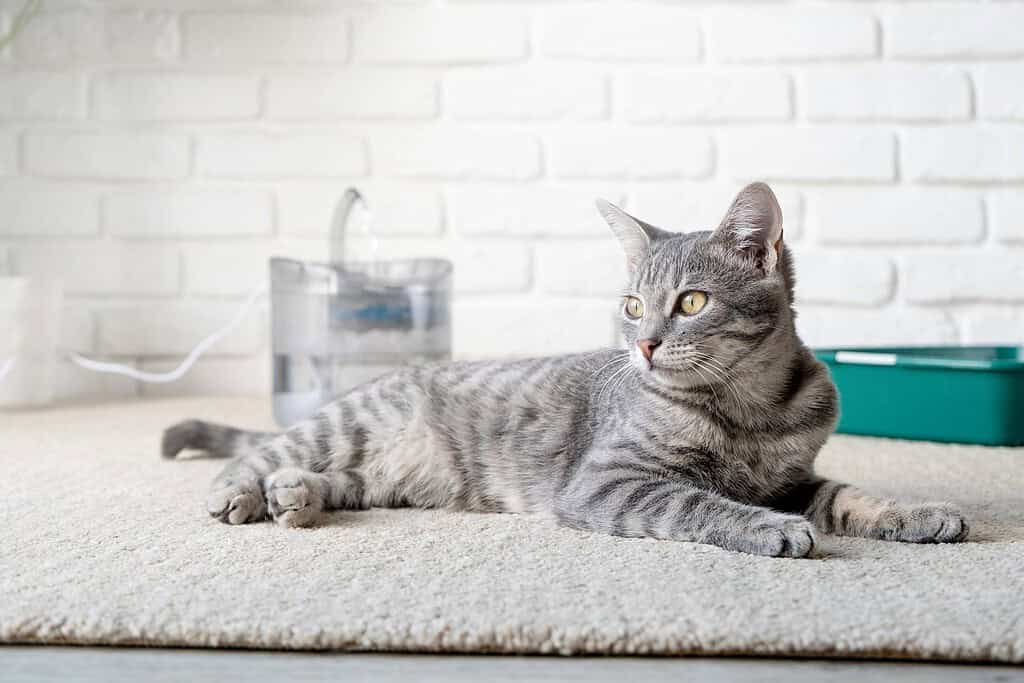
So a fountain is not a medical treatment; for urinary or kidney issues, ask your vet about wet food. As a gift, it suits cats who love dripping taps, and it adds the extra water station the AAFP and ISFM guidelines recommend.
Pick one that is easy to clean, with a quiet pump and replaceable filters; Catit and PetSafe are common choices. Keep the old bowl out too.
What are the best cat stocking stuffers?
The best cat stocking stuffers are cheap, safe and smell or taste interesting.
Catnip and silver vine. Scent is one of the five AAFP and ISFM pillars, and these plants are the easiest way to deliver it. Just do not assume every cat will react. In a 2017 study of 100 domestic cats published in BMC Veterinary Research, 68% responded to catnip and 79% responded to silver vine. Of the cats that ignored catnip, 71% did respond to silver vine.
Cat grass. A small tray of oat or wheat grass gives plant-chewing cats a safe option and may spare your houseplants. Zoetis veterinarian Melody Conklin lists cat grass as safe for cats to chew and ingest.
Small, safe treats. Lickable purees and freeze-dried single-protein treats are popular stocking stuffers. Keep portions small. VCA Animal Hospitals notes that the general rule is 90% of a cat’s daily calories from complete and balanced food, with no more than 10% from treats.
Crinkle balls, felt mice and paper bags. Cornell reminds owners that cheap items can be tremendously entertaining. Cut the handles off any paper bag first.
Why is a breakaway collar and ID tag a smart Christmas gift for a cat?
Holiday guests, deliveries and travel mean open doors, exactly when cats slip out. A collar with ID is the gift that can bring your cat home.
In a randomized trial of 538 cats published in the Journal of the American Veterinary Medical Association, 72.7% of cats wore their collars successfully for the full six months. The authors concluded that because even house cats can become lost, veterinarians should recommend that all cats wear identification collars, since they are the most obvious way to identify an owned pet. They also stressed that microchips remain an important backup, because collars can come off. Of the microchips scanned at the end of that study, 99.8% were working.
For cats, choose a breakaway collar, which is designed to release if it snags on something. Fit it so two fingers slide comfortably underneath, as the researchers did, and check it often. In the study, 3.3% of cats snagged a leg, mouth or object in the collar, so fit checks matter. Our guide to the best cat collars compares breakaway styles.
Then add a tag that does more than list a phone number. A Shiloh’s House Smart Tag is a personalized acrylic tag, laser engraved, with a “Tap Phone Here” NFC back. A finder taps it with any modern phone, no app needed, and your cat’s live profile opens with one-tap call, text and directions, multiple contacts, medical notes, a reward and a voice note from you. It is waterproof, scratch-resistant and UV-stable, made in the USA, available in 35 designs and costs $38, with 30-day returns. Because you update the profile anytime in the free Lohji app, the tag never goes out of date when you travel for the holidays or change numbers.
Give the gift that brings them home
Pair a breakaway collar with a Shiloh’s House Smart Tag, and anyone who finds your cat can call or text you with a single tap.
Can you give a digital Christmas gift for a cat?
Some of the best cat gifts are for the humans who love the cat, with zero safety risks and zero clutter. A cartoon of the cat is a favorite last-minute gift.
The Lohji app, from Shiloh’s House, turns one photo of a pet into a 3D animated-movie-style character. From that character you can create phone wallpapers, watch faces, stickers, collector cards and short videos starring the cat. The sticker library includes seasonal designs such as Christmas and New Year’s Eve, which work nicely in holiday texts. The app is free to download, new accounts get 10 welcome coins, coins never expire and it is not a subscription. Get it on the App Store or Google Play.
Gift ideas using a Lohji cartoon:
- A custom lock-screen wallpaper of the recipient’s cat, sent on Christmas morning.
- A collector card of the cat as the hero of their own story, printed and slipped into a card.
- Holiday stickers of the family cat to use in group chats all season.
For more ways to turn a pet into art, see our guide on how to cartoon your pet.
Which cat gifts and holiday items should you avoid?
Keep these common gifts and decorations away from your cat.
String, ribbon, yarn and tinsel. A swallowed strand can anchor under the tongue while the intestines bunch up around it. In the Hayes study of 208 foreign body cases, cats recovered from every discrete object, but only 63% survived linear ones. Our guide on keeping your cat out of the Christmas tree covers decorating safely.
Toys with small or loose parts. Glued-on eyes, bells, beads and feathers that pull out easily can be chewed off and swallowed.
Too much catnip. Catnip is safe in normal amounts, but the ASPCA notes it can cause vomiting and diarrhea, and it makes some cats sedated and others stimulated. Offer it occasionally rather than every day, and keep loose catnip sealed so your cat cannot raid the whole bag.
Lilies in gift bouquets. Holiday flower arrangements often include lilies. According to the FDA, the entire plant of true lilies and daylilies is toxic to cats, including the pollen and the vase water, and a small amount can cause fatal kidney failure in less than three days. If a bouquet arrives with lilies, remove them from the house. Read more in our guide, are lilies toxic to cats.
Human heating pads and corded toys. Use only heated beds made for pets, and skip toys with cords your cat can chew.
Frequently asked questions
What is the best Christmas gift for a cat?
For most cats, the best Christmas gift is a wand toy you use together every day. It meets the play, predatory behavior and social interaction needs in the AAFP and ISFM guidelines, burns energy and strengthens your bond. If you have a larger budget, a sturdy cat tree or window perch is the gift your cat will use most often all year. Always put wand toys away after play.
What are good cat stocking stuffers?
Good cat stocking stuffers include catnip or silver vine toys, a cat grass kit, crinkle balls, felt mice, a beginner treat ball and a few small treats. Keep treats under about 10% of your cat’s daily calories, as VCA recommends. Remove any ribbon, pom-poms or tinsel trim from the stocking itself, and hang it out of reach until gift time so nobody eats the wrapping.
Are wand toys with string safe for cats?
Wand toys are safe when you are holding them. The danger is the string, which can cause a serious linear foreign body if a cat chews and swallows it. VCA and the AAFP and ISFM guidelines both advise putting string toys away after play. Store wands in a closed closet or drawer, and replace lures that are fraying or losing feathers before they come apart.
Why doesn’t my cat react to catnip?
Catnip sensitivity is inherited, and not every cat has it. In a 2017 study of 100 cats, about one in three did not respond to catnip at all. Silver vine is the best alternative: 79% of cats in the same study responded to it, including 71% of the cats that ignored catnip. Try a small silver vine stick or toy before deciding scent toys are not for your cat.
Do indoor cats need a collar and ID tag?
Yes. Researchers in a 538-cat JAVMA trial concluded that because even house cats can become lost, veterinarians should recommend ID collars for all cats. Most cats in the study wore their collars for six months. Use a breakaway collar fitted with two fingers of space, add an ID tag, and keep your cat’s microchip registration current as a permanent backup.
Are cat water fountains worth it?
A fountain is a nice gift for cats who love running water, but research shows it is not a guaranteed way to raise water intake. A 2010 study found no meaningful change in urine concentration with a fountain versus a bowl, and one cat refused to use it. Keep a regular bowl available too, clean the fountain weekly, and ask your vet about wet food for hydration needs.
Sources
- AAFP and ISFM Feline Environmental Needs Guidelines, Journal of Feline Medicine and Surgery (2013)
- Basic Indoor Cat Needs, The Ohio State University Indoor Pet Initiative (n.d.)
- Environmental Enrichment for Indoor Cats, Herron and Buffington, Compendium on Continuing Education for Veterinarians (2010)
- Food Puzzles for Cats, Dantas, Delgado, Johnson and Buffington, Journal of Feline Medicine and Surgery (2016)
- Holiday Gift Ideas for Furry and Feathered Friends, Colorado State University (2017)
- Safe Toys and Gifts, Cornell Feline Health Center (n.d.)
- Gastrointestinal Foreign Bodies in Dogs and Cats, Hayes, Journal of Small Animal Practice (2009)
- Evaluation of Collars and Microchips for Identification of Pet Cats, Lord et al., JAVMA (2010)
- Responsiveness of Cats to Silver Vine, Tatarian Honeysuckle, Valerian and Catnip, Bol et al., BMC Veterinary Research (2017)
- Effect of Water Source on Intake and Urine Concentration in Healthy Cats, Grant, Journal of Feline Medicine and Surgery (2010)
- Lovely Lilies and Curious Cats, US Food and Drug Administration (n.d.)
- Cat Treats, VCA Animal Hospitals (n.d.)