Can Dogs Eat Bell Peppers? Red vs Green, Seeds and How Much Is Safe
 Shiloh’s House Team
·
·
16 min read

Yes, dogs can eat plain bell peppers, red, yellow, orange or green, raw or cooked, once the seeds and stem are removed and the pieces are cut small. Bell peppers contain no capsaicin, so they are not spicy, and red peppers carry the most vitamin A and beta-carotene of the colors. Never give hot peppers, seasoned or fried peppers, or any pepper cooked with onion or garlic, and keep the serving inside the usual 10 percent treat budget.
Last updated: September 2025
Can dogs eat bell peppers safely?
Bell peppers are one of the easy yeses, and the veterinary sources agree with unusual consistency. Megan Conrad, DVM, told The Dodo that bell peppers of every color are safe for dogs in moderation, as long as you remove the stems and seeds and slice them thin. Chewy’s guide, written with input from Lisa Fiorenza, DVM, says none of the colors are toxic. The Spruce Pets, in an article by registered veterinary technician Liz Waynick, calls them by far the pepper with the least spice, and veterinarians Jessica Tartof, DVM, and Leah Talesnick, DVM, writing for DogCancer.com, add that bell peppers do not contain capsaicin.
“Bell peppers (green, red, yellow or orange) are safe for dogs to eat in moderation.”
Megan Conrad, DVM, licensed veterinarian with Hello Ralphie (The Dodo, 2022)
The conditions are the ones that apply to every vegetable missing from our list of foods dogs cannot eat: serve it plain, cut it small, start with a piece or two, and keep it to a treat. The pepper-specific rules are few: seeds, stem and core out, no chilies, and no pepper cooked with onion or garlic.

Are red bell peppers better for dogs than green?
Here is what USDA FoodData Central reports for raw red bell pepper (SR Legacy, FDC ID 170108), green (FDC ID 170427) and yellow (FDC ID 169383), per 100 grams and per USDA’s 149-gram cup chopped. USDA lists no cup weight for yellow, and a few nutrients are missing from its record.
| Nutrient (raw) | Red, per 100 g | Red, per cup chopped | Green, per 100 g | Green, per cup chopped | Yellow, per 100 g |
|---|---|---|---|---|---|
| Calories | 26 kcal | 39 kcal | 20 kcal | 30 kcal | 27 kcal |
| Dietary fiber | 2.1 g | 3.1 g | 1.7 g | 2.5 g | 0.9 g |
| Total sugars | 4.2 g | 6.3 g | 2.4 g | 3.6 g | not listed |
| Vitamin C | 128 mg | 191 mg | 80.4 mg | 120 mg | 184 mg |
| Vitamin A (RAE) | 157 mcg | 234 mcg | 18 mcg | 27 mcg | 10 mcg |
| Beta-carotene | 1,620 mcg | 2,414 mcg | 208 mcg | 310 mcg | 120 mcg |
| Lutein and zeaxanthin | 51 mcg | 76 mcg | 341 mcg | 508 mcg | not listed |
Red wins on most lines, and the reason is ripeness. The DogCancer.com veterinarians explain that green bell peppers are unripe fruit, while yellow, orange and red are ripe, and Chewy adds that red peppers mature longest on the vine. Red has about eight times the beta-carotene of green (1,620 versus 208 micrograms), nearly nine times the vitamin A and over half again as much vitamin C.
Two honest footnotes. USDA’s yellow sample actually tops red on vitamin C at 184 milligrams, though it trails badly on vitamin A and beta-carotene, which is why The Spruce Pets and Chewy still call red the most nutritious overall. And green holds the lutein crown, 341 micrograms to red’s 51.
Temper the vitamin excitement either way. The Spruce Pets points out that dogs make their own vitamin C and that a balanced commercial diet already supplies these vitamins. What a bell pepper really offers is water, crunch and sweetness for 20 to 27 calories per 100 grams.
Are bell peppers a nightshade, and is solanine a worry?
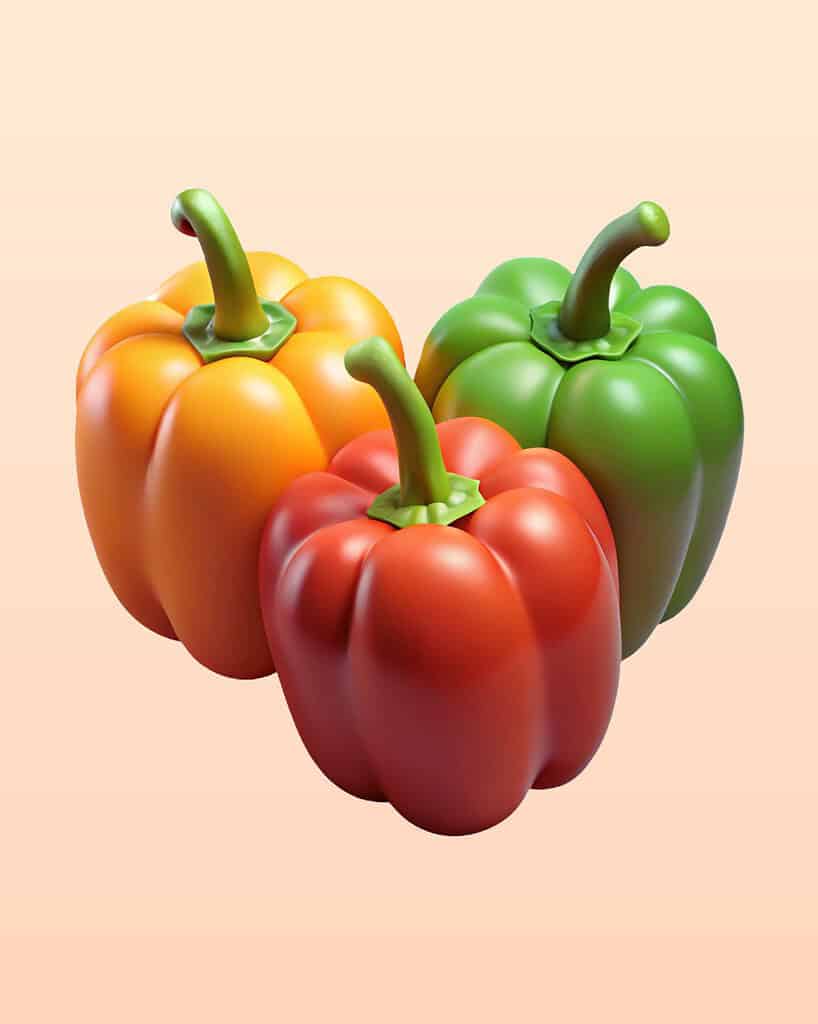
This is the question that keeps pet parents hovering over the search bar, and it deserves a straight answer. Bell peppers are Capsicum annuum, and Capsicum belongs to the Solanaceae, the nightshade family. The DogCancer.com veterinarians state this plainly in the same article in which they call bell peppers safe to feed, and the two statements do not conflict. Family membership tells you about botany, not about what is in the part of the plant you are holding.
The compound people worry about is solanine, a glycoalkaloid some nightshades use to defend themselves. The ASPCA Animal Poison Control Center’s toxic plant list for dogs includes several nightshades, among them black and climbing nightshade, the tomato plant and the ornamental pepper, and its ornamental pepper entry names solanine as the toxic principle, with clinical signs that include gastrointestinal disturbances, possible ulceration of the gut, seizures and depression. That sounds alarming until you read the scientific name on the entry: Solanum pseudocapsicum, the Jerusalem cherry, a decorative houseplant that is not a Capsicum at all and shares nothing with a bell pepper except a shape and a misleading name.
The bell pepper itself does not appear on the ASPCA list of plants toxic to dogs. The closest entry in the veterinary literature is in the Merck Veterinary Manual, whose table of houseplants and ornamentals toxic to animals, reviewed by veterinary toxicologist Renee Schmid, DVM, DABT, DABVT, of Pet Poison Helpline, does include Capsicum annuum under the names cherry pepper, chili pepper and ornamental pepper. Read the detail, though. Merck puts the capsaicinoids in the mature fruits and the solanine and scopoletin in the foliage, describes the effect as irritation of the gastrointestinal tract with vomiting and diarrhea, and adds four reassuring words: not likely to be lethal. The leaves and stems are where the solanine lives, the fruit of a hot pepper is where the burn lives, and a ripe sweet bell pepper, with no capsaicin, has neither problem.
The same logic explains why our guide to whether dogs can eat tomatoes draws such a sharp line between the ripe fruit and the green parts of the plant. The ASPCA flags the tomato plant, not the tomato. Peppers follow the same pattern. A green bell pepper was picked before it turned color, but it is a mature, fully formed fruit that people eat by the ton, and no veterinary source we opened treats it as a solanine risk for dogs. The practical rule is about the garden rather than the kitchen: keep pepper plants out of reach along with tomato plants and potato vines, and call your vet if a dog has chewed through a lot of foliage.
One more nightshade worry comes up constantly online: the idea that nightshades worsen inflammation and arthritis in dogs. We could not find a veterinary study showing that, and the sources we read lean the other way. The Spruce Pets notes studies linking beta-carotene with arthritis as a possible application for senior dog care, and The Dodo’s vet-informed guide says red bell peppers can even act as an anti-inflammatory that may help older dogs with arthritis. That does not make bell pepper a treatment, but it means there is no good reason to withhold a plain, ripe bell pepper on nightshade grounds alone. If your dog is on a specific diet, ask before adding any new food, but ask because of the diet, not the family tree.
Why are bell peppers not spicy, and what happens if a dog eats a hot pepper?
Spice in a pepper comes from capsaicinoids, chiefly capsaicin, measured on the Scoville scale. The National Institute of Standards and Technology explains that the scale starts at 0 Scoville heat units with the bell pepper, which has no capsaicin compounds, and runs up through the jalapeño at 2,000 to 8,000 and Pepper X at 3.2 million. A bell pepper and a jalapeño are the same species. They differ in one chemical, and the bell pepper has none of it.
Dogs feel the burn. Rover notes that chili peppers cause the same burning sensation in dogs that they do in us, and the Merck Veterinary Manual describes capsaicinoids as irritating to the gastrointestinal tract, with vomiting and diarrhea. NIST adds that they concentrate in the white lining of a pepper, so the ribs and seeds of a jalapeño are the hottest part.
So what if your dog grabs a jalapeño ring off the counter? The good news, per Dr. Conrad, is that peppers of any kind are not toxic. Samantha Henson, a certified clinical pet nutritionist, told The Dodo that capsaicin can irritate a dog’s mouth and gut, leading to vomiting, diarrhea and excessive water drinking that can cause bloating. Chewy adds panting, drooling and stomach pain.
Dr. Schmid of Pet Poison Helpline gave Rover the first-aid step: offer water, pet food or treats, because that helps dilute the pepper in the stomach and reduces the chance of irritation and vomiting. Henson’s rule for a pepper of unknown heat: if it is too spicy for a toddler, it is too spicy for your dog.
Should you remove the seeds, stem and core, and is raw or cooked better?
Seeds and stems are not poisonous. Dr. Schmid told Rover that a dog can eat the entire pepper without toxic effects, and Chewy agrees they are not toxic but are difficult to digest. Every source still says to remove them. The Spruce Pets tells you to completely remove the seeds, stems and inner core, and Rover rates the stem as non-toxic but a possible cause of gastrointestinal blockage. PetMD’s guide to vegetables for dogs, reviewed by Sandra Mitchell, DVM, gives the general rule: remove stems, seeds, cores and pits, anything that could become a choking hazard or an intestinal blockage.
So the prep is the one you would do for a salad: wash, cut off the top with the stem, pull out the seed cluster and white ribs, and slice the flesh small, since Chewy warns that large pieces can choke smaller dogs.
Raw or cooked is mostly a question of the skin. The Spruce Pets notes that the outer skin of a raw bell pepper may be tough for a dog to chew and digest, and suggests steaming to soften it. Rover calls steaming the safest option and reports that Dr. Schmid is fine with a little olive oil for roasting, while butter, grease, charring and seasoning are out. Chewy’s method: steam bite-sized pieces for a few minutes until soft but not mushy, cool, and serve as is, over the regular food, or pureed. Raw has its fans too, and both Chewy and Rover suggest freezing small pieces as a summer treat.
Put “plain veggies only, no seeds” where the sitter will actually see it
A Shiloh’s House Smart Tag is laser-engraved acrylic with a “Tap Phone Here” NFC back. A sitter, walker or finder taps it with any modern phone and sees your live profile with contacts, medical notes and your feeding and treat rules, so “no table scraps” travels with the dog. About $38 one-time, no subscription, no battery, waterproof, made in the USA, 30-day returns.
How much bell pepper can a dog eat?
Chewy says a few small pieces for a small dog and up to half a small pepper for a large one; Rover and the DogCancer.com veterinarians land in the same range, and everyone agrees bell pepper counts toward the 10 percent of daily calories that all treats share.
To turn that into grams, we used the American Animal Hospital Association’s 2021 nutrition guidelines, which set resting energy requirement at 70 times body weight in kilograms raised to the 0.75 power, times a life-stage factor of 1.4 to 1.6 for a neutered adult. We ran the math at 1.6, took 10 percent as the treat budget and converted it to raw red bell pepper at 26 calories per 100 grams. The table is our suggestion, not a prescription: the third column is what the calorie budget would allow, the fourth is what we would actually feed. USDA weighs a tablespoon of chopped pepper at about 9 grams and a medium pepper at 119 grams.
| Dog weight | Daily treat budget (10%) | Red bell pepper if it were the only treat | Our suggested serving (a few times a week) |
|---|---|---|---|
| 10 lb (4.5 kg) | About 35 kcal | About 135 g (nearly a cup) | 1 to 2 tablespoons, diced small |
| 25 lb (11.3 kg) | About 69 kcal | About 265 g (1 3/4 cups) | 2 to 4 tablespoons, diced |
| 50 lb (22.7 kg) | About 116 kcal | About 450 g (3 cups) | A quarter cup, about a quarter of a medium pepper |
| 80 lb (36.3 kg) | About 166 kcal | About 635 g (4 1/4 cups) | A third to a half cup, about half a medium pepper |
The gap between the third and fourth columns is the whole story. A medium red pepper is only about 31 calories, so calories never limit bell pepper; fiber and sugar do, and Chewy and The Dodo both warn that too much at once brings diarrhea or vomiting. Our dog feeding chart by weight shows how meals fit around that treat budget.
How do bell peppers compare with carrots, cucumbers and green beans?
Here is how bell pepper stacks up against the other crunchy vegetables pet parents reach for, raw, per 100 grams, from USDA.
| Vegetable (raw, per 100 g) | Calories | Fiber | Sugars | Vitamin C | Beta-carotene | USDA FDC ID |
|---|---|---|---|---|---|---|
| Red bell pepper | 26 kcal | 2.1 g | 4.2 g | 128 mg | 1,620 mcg | 170108 |
| Green bell pepper | 20 kcal | 1.7 g | 2.4 g | 80.4 mg | 208 mcg | 170427 |
| Carrot | 41 kcal | 2.8 g | 4.7 g | 5.9 mg | 8,280 mcg | 170393 |
| Cucumber, with peel | 15 kcal | 0.5 g | 1.7 g | 2.8 mg | 45 mcg | 168409 |
| Green beans | 31 kcal | 2.7 g | 3.3 g | 12.2 mg | 379 mcg | 169961 |
Bell pepper sits mid-pack on calories and on top for vitamin C, with more than twenty times the vitamin C of a carrot. Carrots strike back with five times the beta-carotene at 41 calories, so a carrot is the better chew and the pepper the lighter snack. Cucumber is the lightest and gentlest of the group and the best choice for a touchy stomach.
Green beans are the classic swap for a dog on a diet, with as much fiber as a carrot for fewer calories and less sugar than a red pepper. Only the carrot carries more sugar than red pepper’s 4.2 grams per 100 grams, one more reason to keep portions modest for an overweight or diabetic dog. For a cooked, starchy treat, see our guide to sweet potatoes for dogs.
Which dogs should skip bell peppers?
For a healthy adult dog, plain bell pepper is an easy yes. For these dogs, ask your veterinarian first.
Dogs with sensitive stomachs. The Spruce Pets observes that some dogs tolerate bell peppers and some do not, and Chewy’s advice is to stop the pepper and call the vet if vomiting, diarrhea or a poor appetite follows. For a dog with chronic gut trouble, steamed is gentler than raw.
An elimination trial only works if nothing outside the prescribed food passes the dog’s lips, so bell pepper waits until it ends. The DogCancer.com veterinarians note that allergic reactions to bell peppers are rare, but a dog allergic to birch pollen or mugwort has a higher risk of reacting.
Dogs on prescription diets. PetMD’s standing note applies: no food or treats outside the diet unless the veterinarian says it is fine.
Puppies, toy breeds and gulpers. No source we opened calls bell pepper unsafe for puppies, but a puppy’s gut is less forgiving and a chunk is a bigger choking risk in a small mouth. Steam it, dice it fine, and ask your vet whether it fits the growth diet.
Write the rule where other people will see it. In the free Lohji app from Shiloh’s House, you keep a live pet profile with contacts, medical notes and voice messages that a Shiloh’s House NFC tag links to, so a sitter who taps the tag reads “elimination diet, no treats” first. The app also turns your pet into cartoon Lohji avatars, stickers, slideshows and mini movies. Get it on the App Store or Google Play.
Frequently asked questions
Can dogs eat raw bell peppers?
Yes. Chewy, Rover and The Spruce Pets all say plain raw bell pepper is safe for dogs, and many like the crunch. The raw skin can be tough to chew and digest, so The Spruce Pets suggests steaming it for dogs that struggle. Remove the seeds and stem and cut the flesh small.
Can dogs eat bell pepper seeds and stems?
They are not toxic. Dr. Renee Schmid of Pet Poison Helpline told Rover a dog can eat the entire pepper without toxic effects, but the stem is tough to digest and can cause a blockage, and the seeds and core are hard to digest too. Remove them and feed only the flesh.
Which color bell pepper is best for dogs?
Red, by most measures. USDA data shows raw red pepper has 128 milligrams of vitamin C, 157 micrograms of vitamin A and 1,620 micrograms of beta-carotene per 100 grams, against 80.4, 18 and 208 for green. Yellow edges red on vitamin C at 184 milligrams, and every color is safe.
Are bell peppers nightshades, and is that a problem for dogs?
Bell peppers are in the nightshade family, but the fruit is not a solanine concern. The Merck Veterinary Manual places solanine in the foliage of the pepper plant and capsaicin in hot fruits, and notes the plant is not likely to be lethal. The ASPCA’s toxic plant list for dogs names nightshade, tomato plant and ornamental pepper, but not bell pepper.
What should I do if my dog eats a jalapeño or chili pepper?
Hot peppers are not toxic, but their capsaicin burns, and dogs may drool, pant, vomit or get diarrhea. Dr. Schmid recommends offering water, pet food or treats to dilute the pepper in the stomach. Call your vet or the ASPCA Animal Poison Control Center at (888) 426-4435 if the dish had onion or garlic, or if vomiting continues.
How much bell pepper can I give my dog?
Keep bell pepper and all other treats under 10 percent of daily calories, and in practice feed far less. Our suggestion, a few times a week: 1 to 2 tablespoons diced for a 10-pound dog, 2 to 4 tablespoons for a 25-pound dog, about a quarter cup for a 50-pound dog, and up to half a medium pepper for an 80-pound dog.
Sources
- USDA Agricultural Research Service, “Peppers, sweet, red, raw (SR Legacy, FDC ID 170108)”, USDA FoodData Central, 2019 — https://fdc.nal.usda.gov/food-details/170108/nutrients
- USDA Agricultural Research Service, “Peppers, sweet, green, raw (SR Legacy, FDC ID 170427)”, USDA FoodData Central, 2019 — https://fdc.nal.usda.gov/food-details/170427/nutrients
- USDA Agricultural Research Service, “Peppers, sweet, yellow, raw (SR Legacy, FDC ID 169383)”, USDA FoodData Central, 2019 — https://fdc.nal.usda.gov/food-details/169383/nutrients
- USDA Agricultural Research Service, “Carrots, raw (SR Legacy, FDC ID 170393)”, USDA FoodData Central, 2019 — https://fdc.nal.usda.gov/food-details/170393/nutrients
- USDA Agricultural Research Service, “Cucumber, with peel, raw (SR Legacy, FDC ID 168409)”, USDA FoodData Central, 2019 — https://fdc.nal.usda.gov/food-details/168409/nutrients
- USDA Agricultural Research Service, “Beans, snap, green, raw (SR Legacy, FDC ID 169961)”, USDA FoodData Central, 2019 — https://fdc.nal.usda.gov/food-details/169961/nutrients
- Ellen Schmidt, with Megan Conrad, DVM, and Samantha Henson, certified clinical pet nutritionist, “Can My Dog Eat Peppers Safely?”, The Dodo, 2022 — https://www.thedodo.com/dodowell/can-dogs-eat-peppers
- Liz Waynick, RVT, reviewed by Lauren Smith, “Can Dogs Eat Peppers?”, The Spruce Pets, 2021 — https://www.thesprucepets.com/can-dogs-eat-peppers-4706946
- Katie Koschalk, with expert input from Lisa Fiorenza, DVM, “Can Dogs Eat Bell Peppers?”, Chewy, 2025 — https://www.chewy.com/education/dog/food-and-nutrition/can-dogs-eat-bell-peppers
- Jessica Tartof, DVM, and Leah Talesnick, DVM, reviewed by Susan Recker, DVM, “Bell Peppers for Dogs”, DogCancer.com, 2023 — https://www.dogcancer.com/articles/diet-and-lifestyle/bell-peppers-for-dogs/
- Rover, with Renee Schmid, DVM, DABT, DABVT, and Kevin Puzycki, DVM, “Can Dogs Eat Bell Peppers? Yes, But Hold The Heat”, Rover, 2025 — https://www.rover.com/blog/can-dogs-eat-peppers/
- Renee D. Schmid, DVM, DABT, DABVT, “Houseplants and Ornamentals Toxic to Animals”, Merck Veterinary Manual, 2024 — https://www.merckvetmanual.com/toxicology/poisonous-plants/houseplants-and-ornamentals-toxic-to-animals
- ASPCA Animal Poison Control Center, “Toxic and Non-Toxic Plant List — Dogs”, ASPCA, accessed 2025 — https://www.aspca.org/pet-care/animal-poison-control/dogs-plant-list
- ASPCA Animal Poison Control Center, “Toxic and Non-toxic Plants: Ornamental Pepper”, ASPCA, accessed 2025 — https://www.aspca.org/pet-care/aspca-poison-control/toxic-and-non-toxic-plants/ornamental-pepper
- ASPCA Animal Poison Control Center, “People Foods to Avoid Feeding Your Pets”, ASPCA, accessed 2025 — https://www.aspca.org/pet-care/animal-poison-control/people-foods-avoid-feeding-your-pets
- National Institute of Standards and Technology, “How Do You Measure the ‘Heat’ of a Pepper?”, NIST, 2025 — https://www.nist.gov/how-do-you-measure-it/how-do-you-measure-heat-pepper
- Victoria Lynn Arnold, reviewed by Sandra C. Mitchell, DVM, DABVP, “What Vegetables Can Dogs Eat?”, PetMD, 2025 — https://www.petmd.com/dog/nutrition/what-vegetables-can-dogs-eat
- American Animal Hospital Association, “Energy Requirement Calculations (2021 AAHA Nutrition and Weight Management Guidelines)”, AAHA, 2021 — https://www.aaha.org/wp-content/uploads/globalassets/02-guidelines/2021-nutrition-and-weight-management/resourcepdfs/nutritiongl_box1.pdf