Homemade Christmas Dog Treats: 5 Easy, Vet-Safe Recipes
 Shiloh’s House Team
·
·
15 min read
Homemade Christmas dog treats are safe and easy when you bake with a short list of dog-friendly ingredients, such as plain pumpkin, oats, xylitol-free peanut butter, sweet potato and plain yogurt, and leave out chocolate, xylitol, raisins, macadamia nuts, nutmeg, onion and garlic. Keep portions small, because treats should stay under about 10 percent of your dog’s daily calories. Below are five simple recipes with real amounts, a treat calorie table by weight, storage times and tips for gifting cookies to other dogs.
Last updated: December 2025
Are homemade Christmas dog treats really a good idea?
Yes, with two conditions. You control every ingredient, and you control the portion. Baking your own dog cookies is one of the few holiday traditions that lets your dog join in without the risks that come with sharing people food.
The main advantage is transparency. Store-bought holiday treats can include colors, sweeteners and fillers you have to decode on a label. A homemade batch of pumpkin cookies might have three ingredients, and you know exactly what each one is. That matters even more if your dog has a sensitive stomach or a known food allergy.
The catch is that “homemade” does not automatically mean “healthy.” A dog cookie made with peanut butter and flour still has calories, and the holidays are already full of extras: a bite of turkey from a guest, a dropped cracker, a stocking full of chews. The 59 percent figure above is a reminder that most dogs do not need more food. They need the same amount, made a little more festive.
So the goal of this guide is simple. Pick dog-safe ingredients, make small treats, and count them. If you do those three things, your dog gets a merry Christmas and your vet gets a dog at the same weight in January.

Which ingredients should never go into dog Christmas treats?
Most human Christmas cookie recipes contain at least one ingredient that is unsafe for dogs. Before you adapt any recipe, check it against this list, built from the ASPCA Animal Poison Control Center and Pet Poison Helpline guidance.
- Chocolate and cocoa. Chocolate contains methylxanthines, including theobromine and caffeine. The ASPCA warns they can cause vomiting, diarrhea, hyperactivity, abnormal heart rhythm, tremors, seizures and even death. Baking chocolate and cocoa powder have the highest concentrations, so they are the worst choices for a baking project.
- Xylitol, also sold as birch sugar. This sweetener appears in some peanut butters, sugar-free baked goods and syrups. Pet Poison Helpline says it can cause life-threatening low blood sugar, even within 10 to 15 minutes, and acute liver failure.
- Grapes, raisins, sultanas and currants. Pet Poison Helpline lists all of these, including Zante currants, as toxic to dogs. Signs start with stomach upset and are followed by kidney injury. Never use raisins as cookie “eyes.”
- Macadamia nuts. The ASPCA says they can cause weakness, vomiting, tremors and overheating in dogs. Other nuts are very high in fat and can cause stomach upset or pancreatitis.
- Nutmeg in large amounts. Nutmeg contains myristicin. Pet Poison Helpline says the small amount in recipes is very unlikely to cause serious toxicity, but large amounts can cause disorientation, a racing heart and seizures. In a dog recipe there is no reason to use it at all.
- Onion, garlic and chives. These can damage red blood cells and lead to anemia, according to the ASPCA. Skip garlic powder and onion powder in savory treats, too.
- Raw yeast dough. Unbaked dough can rise in the stomach, cause painful bloat and produce alcohol as it ferments. Keep dough bowls off low counters.
- Alcohol. No rum, brandy or vanilla extract. Alcohol is absorbed quickly and can cause incoordination, breathing trouble and coma.
Two more ingredients deserve caution rather than a ban. Dairy can cause diarrhea in dogs that lack enough lactase, so use plain yogurt in small amounts. Salt adds nothing a dog needs, so leave it out. Gingerbread is a special case because of the spice blend, and our guide to whether dogs can eat gingerbread covers it in detail. For the full pantry list, see foods dogs can’t eat.
How many Christmas treats can your dog have each day?
The widely used rule is that treats should make up no more than 10 percent of your dog’s daily calories. The other 90 percent should come from a complete and balanced dog food. The World Small Animal Veterinary Association publishes calorie ranges for healthy adult dogs in ideal body condition, based on the National Research Council’s maintenance energy formula. The low end fits less active dogs and the high end fits active dogs.
The table below uses those WSAVA ranges and takes 10 percent of each to get a daily treat budget. The last column shows how many of our pumpkin-oat cookies (recipe below, roughly 28 calories each by our estimate for a 40-cookie batch) fit into that budget. Remember that every chew, training treat and table scrap counts toward the same total.
| Dog’s weight | Daily calories (WSAVA range) | 10% treat budget | Pumpkin-oat cookies per day |
|---|---|---|---|
| 4.4 lb (2 kg) | 140 to 177 | 14 to 18 calories | About half a cookie |
| 11 lb (5 kg) | 280 to 351 | 28 to 35 calories | 1 cookie |
| 22 lb (10 kg) | 470 to 590 | 47 to 59 calories | About 2 cookies |
| 33 lb (15 kg) | 640 to 800 | 64 to 80 calories | 2 to 3 cookies |
| 44 lb (20 kg) | 790 to 993 | 79 to 99 calories | About 3 cookies |
| 55 lb (25 kg) | 940 to 1,174 | 94 to 117 calories | 3 to 4 cookies |
| 66 lb (30 kg) | 1,080 to 1,346 | 108 to 135 calories | About 4 cookies |
| 88 lb (40 kg) | 1,340 to 1,670 | 134 to 167 calories | About 5 cookies |
These are starting points, not prescriptions. WSAVA notes that individual dogs may need more or fewer calories to stay trim, and puppies, seniors and dogs that need to lose weight have different needs. Your vet can give you a number for your own dog.
“As always, treats should make up less than 10% of your dog’s daily calories, and when in doubt, check with your veterinarian before offering something new.”
Dr. Aly Cohen, Extension Veterinarian, Cornell Richard P. Riney Canine Health Center
If you plan to hand out extra cookies on Christmas Day, trim your dog’s regular meals slightly that day, or break cookies into pieces so one treat lasts several rewards.
What are the easiest baked Christmas dog treat recipes?
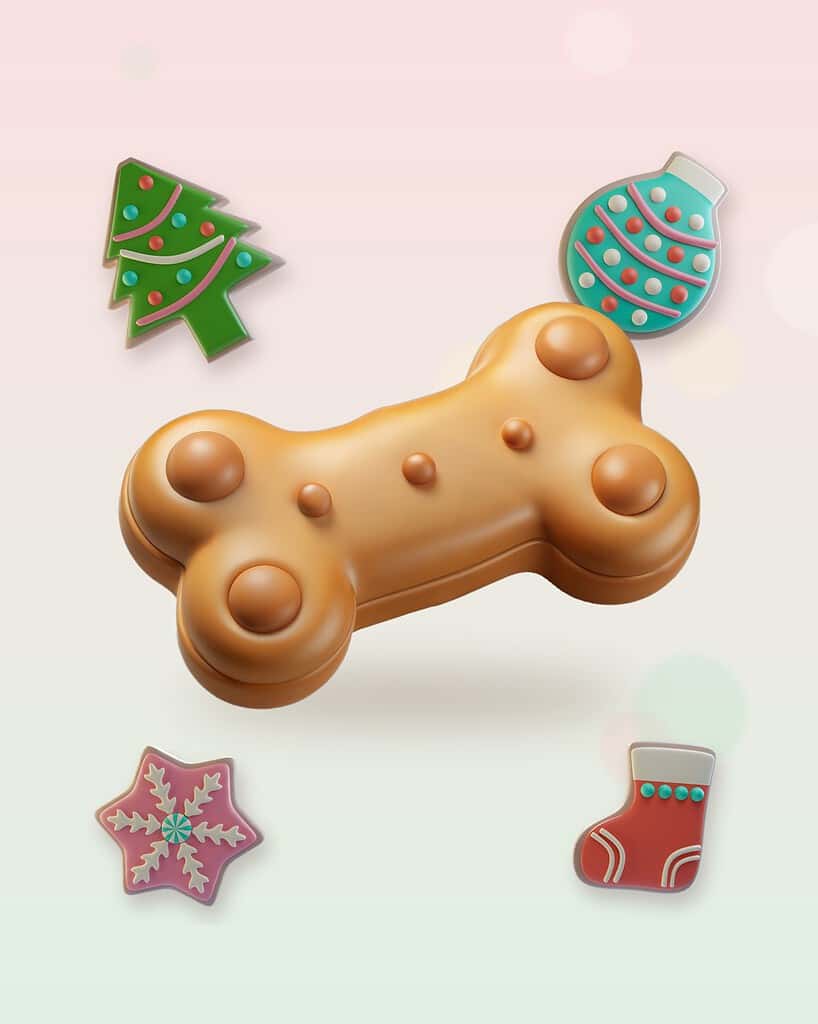
These three baked recipes use pantry staples and holiday cookie cutters. Preheat the oven first, line a baking sheet with parchment, and let everything cool completely before your dog tastes it. Baking times vary with cookie size and oven, so check early. Every recipe here skips salt, sugar and butter on purpose, and each one can be cut in half if you only have one small dog to bake for.
Recipe 1. Pumpkin-oat Christmas cookies
- 1 cup plain canned pumpkin puree (not pumpkin pie filling)
- 1 large egg
- 2 cups oat flour, plus a little extra for rolling (or blend 2 1/4 cups rolled oats until fine)
Heat the oven to 350°F. Stir the pumpkin and egg together, then add the oat flour a half cup at a time until you have a soft dough that does not stick to your hands. Roll it about 1/4 inch thick on a floured surface and cut out trees, stars and stockings. Bake 20 to 25 minutes, until firm and dry on the bottom. A batch makes about 40 small cookies. Pumpkin pie filling is not a substitute because it contains sugar and spices, often including nutmeg. Our guide to whether dogs can eat pumpkin explains which cans to buy.
Recipe 2. Peanut butter gingerbread-shaped biscuits
- 1/2 cup xylitol-free, unsalted natural peanut butter
- 1 large egg
- 1/2 cup water
- 2 cups whole wheat flour
- 1/4 teaspoon ground cinnamon (optional)
Heat the oven to 350°F. Mix the peanut butter, egg and water until smooth, then work in the flour and cinnamon until a stiff dough forms. Roll it 1/4 inch thick and cut out gingerbread people. Bake 18 to 22 minutes. For crunchier biscuits that keep longer, turn off the oven and leave them inside for another hour to dry out. These biscuits get the gingerbread look without the gingerbread spice mix. There is no nutmeg, no cloves, no molasses and no sugar. A quarter teaspoon of cinnamon spread across the whole batch is a tiny amount, but you can leave it out entirely. Because peanut butter is high in fat, this recipe is not a good fit for dogs prone to pancreatitis.
Recipe 3. Sweet potato chews
- 2 medium sweet potatoes, scrubbed
Heat the oven to 250°F. Slice the sweet potatoes lengthwise into planks about 1/4 inch thick. Thinner slices dry faster and turn out chewier. Lay them on the lined sheet without overlapping and bake 2.5 to 3 hours, flipping once halfway, until they are leathery and dry. Add nothing at all, not even oil or salt. Cooked sweet potato appears on veterinary lists of safe holiday foods, and this one-ingredient chew is a good option for dogs that do not tolerate wheat or eggs. Cut the planks into short pieces for small dogs, and always supervise chewing, because a large piece swallowed whole can be a choking risk. If your slices stay soft in the middle, treat them as a fresh food and keep them in the refrigerator.
How do you make no-bake frozen and carob Christmas treats?
These two treats need little or no oven time and look especially festive on a cookie plate. Both come with small caveats, so read the notes before you start.
Recipe 4. Frozen yogurt-cranberry bites
- 1 cup plain, unsweetened yogurt with no added sweeteners
- 2 tablespoons plain canned pumpkin
- 2 tablespoons fresh or frozen cranberries, finely chopped
Stir everything together, spoon it into a silicone mold with small star or tree shapes, and freeze for at least four hours. Pop the bites out and store them in a freezer bag. Use plain cranberries only. The AKC notes that fresh and dried cranberries are safe in small amounts, but dried mixes can include raisins, and cranberry sauce may contain sugar, alcohol, grapes or currants. Our guide to whether dogs can eat cranberries goes deeper. Because many dogs digest dairy poorly, start with one or two bites. If yogurt is new for your dog, our piece on whether dogs can eat cheese explains how dairy tolerance varies.
Recipe 5. Carob-dipped “chocolate” biscuits
- 10 to 12 cooled biscuits from Recipe 2
- 1/4 cup unsweetened carob chips
Melt the carob chips gently over a double boiler, stirring often. Dip half of each biscuit, set them on parchment and let the carob harden at room temperature or in the refrigerator. The ASPCA lists carob as non-toxic to dogs, and veterinarians often suggest it as a chocolate look-alike. Zoetis notes that carob in large amounts can have a laxative effect, so keep this a small treat.
How do you decorate dog-safe Christmas cookies?
Decorating is where most dog cookie recipes go wrong, because human icing, sprinkles and candy bring sugar and sometimes xylitol back in. You can still make cookies that look festive by using dog-friendly “frosting” and keeping decorations simple.
For a glossy finish, brush an egg wash on the cookies before they go in the oven. One beaten egg yolk with a few drops of water bakes into a shiny golden coat. Animal Humane Society uses this trick in its holiday dog cookie recipe and suggests that people who want color can tint the yolk.
For a frosting look after baking, pipe a thin line of xylitol-free peanut butter or mashed plain sweet potato with a zip-top bag with one corner snipped off. Pumpkin puree gives you orange, sweet potato gives you a deeper orange, and melted carob gives you brown for gingerbread buttons and smiles. Plain yogurt can be piped onto frozen bites, but it melts at room temperature, so keep those in the freezer.
Avoid these decorations entirely:
- Human royal icing, buttercream and store-bought frosting, which are mostly sugar and may include sugar-free sweeteners
- Sprinkles, sanding sugar and candy pieces
- Chocolate chips, raisins or currants used as eyes and buttons
- Toothpicks, string or ribbon tied directly to the cookie
Thicker decorations add calories, so keep piping thin. A line of peanut butter across a cookie is plenty. If you want a fun group activity, let kids decorate the dog cookies on a separate tray with separate tools so dog and human ingredients never mix.
How long do homemade dog treats last?
Homemade treats have no preservatives, so they spoil much faster than packaged biscuits. Moisture is the main factor. The drier the treat, the longer it lasts.
Dog nutrition writer Mary Straus advises keeping homemade or moist treats in the refrigerator for up to two weeks, and using frozen foods within about three to four months for the best taste and texture. In practice, that works out like this:
- Crunchy baked biscuits (Recipes 1, 2 and 5, fully dried): a few days in an airtight container on the counter, up to two weeks in the refrigerator, or up to three months in the freezer.
- Sweet potato chews: refrigerate in an airtight container and use within two weeks. Soft pieces should be used within a few days.
- Frozen yogurt-cranberry bites: keep frozen and serve straight from the freezer. Use within three months.
Let treats cool completely before you pack them. Warm cookies sealed in a container create condensation, and moisture leads to mold. Freeze a big batch in a single layer on a baking sheet first, then move the treats to a freezer bag so they do not stick together. Thaw biscuits overnight in the refrigerator.
Throw out any treat with fuzzy spots, a sour or musty smell, or a soft texture when it used to be crunchy. Moldy food can make dogs sick, so do not try to scrape off a spot and serve the rest.
How do you gift homemade treats to other dogs safely?
A tin of homemade cookies makes a thoughtful present for neighbors, dog walkers and dog-park friends. A few extra steps make it a safe one.
- Ask first. Some dogs have food allergies, prescription diets, diabetes or a history of pancreatitis. A quick text to the owner avoids an awkward moment, or a sick dog.
- Label the full ingredient list. Write every ingredient, including the egg, wheat flour, peanut butter, dairy and cinnamon, so owners can spot allergens at a glance.
- Add calories and a serving note. For example, “About 28 calories per cookie. Small dogs, half a cookie a day.”
- Include the bake date and storage. “Baked Dec. 10. Refrigerate and use within two weeks.”
- Mark it “For dogs only.” Dog cookies look like people cookies, and a carob biscuit can look like chocolate to a guest or a child.
Pack treats in a sealed tin or a food-safe bag rather than loose in a stocking, so the recipient’s dog cannot get into the whole batch at once. If you want ideas to round out the gift, our list of the best Christmas gifts for dogs has vet-backed options, and our Christmas pet safety guide covers the rest of the season’s hazards.
For the label itself, put the dog’s face on it. The Lohji app (App Store or Google Play) turns one photo of your pet into a 3D animated-movie-style character, then lets you make cut-out PNG stickers, including a seasonal Christmas design. Print one for each treat bag or gift tag so friends know exactly which pup baked for them. The app is free to download, and new accounts start with 10 free Lohji Coins.
Holiday visits also mean more open doors and more chances for a dog to slip out while everyone is busy at the cookie table.
A gift that brings them home
A Shiloh’s House Smart Tag opens a live profile when a finder taps it with a phone, with one-tap call or text, medical notes and allergy details you can update anytime in the Lohji app.
Frequently asked questions
What ingredients are safe in homemade Christmas dog treats?
Plain canned pumpkin, oats or oat flour, whole wheat flour, eggs, xylitol-free unsalted peanut butter, cooked sweet potato, plain unsweetened yogurt in small amounts, plain cranberries and unsweetened carob are all common dog-safe choices. Keep recipes short and simple, skip salt and sugar, and introduce any new ingredient in a small amount first so you can watch for stomach upset or an allergic reaction.
Can dogs eat gingerbread cookies made for people?
It is best not to share them. Human gingerbread usually contains sugar, molasses, butter and a spice blend that can include nutmeg, and decorated cookies may have icing, candy or raisins. A dog that steals one plain cookie will usually be fine, but make your dog a gingerbread-shaped peanut butter biscuit instead, with no nutmeg and xylitol-free peanut butter.
Is cinnamon safe in dog treats?
A small amount of ground cinnamon spread through a whole batch of dog biscuits is generally well tolerated. Pet Poison Helpline says problems usually take more than a teaspoon of the powder for most pets, and that cinnamon essential oil is far more concerning. Dogs can also inhale loose powder and cough, so mix it into the dough rather than dusting it on top.
How many homemade treats can I give my dog a day?
Keep all treats under about 10 percent of your dog’s daily calories. Based on WSAVA calorie ranges, that is roughly 28 to 35 treat calories for an 11-pound dog, 47 to 59 for a 22-pound dog and 94 to 117 for a 55-pound dog. Count chews, training treats and scraps in the same budget.
Is carob really safe for dogs?
Yes, in small amounts. The ASPCA lists carob as non-toxic to dogs, and it does not carry the chocolate risks that cocoa does. Large amounts can have a laxative effect, so use it as a thin coating or a few chips per batch. Choose unsweetened carob with no xylitol, and keep carob treats separate from real chocolate.
Can I give homemade dog treats as gifts?
Yes, and they are a popular holiday gift. Ask the owner first in case of allergies or a special diet, then label the bag with every ingredient, the calories per treat, the bake date, storage instructions and “for dogs only.” Seal treats in a tin or food-safe bag so the recipient’s dog cannot eat the whole batch at once.
Sources
- ASPCA Animal Poison Control Center — People Foods to Avoid Feeding Your Pets (n.d.)
- ASPCA — Toxic and Non-toxic Plants: Carob (n.d.)
- Pet Poison Helpline — Xylitol (n.d.)
- Pet Poison Helpline — Grapes, Raisins and Currants (n.d.)
- Pet Poison Helpline — Nutmeg and Cinnamon Toxicity (2013)
- World Small Animal Veterinary Association — Calorie Ranges for an Average Healthy Adult Dog in Ideal Body Condition (2020)
- Association for Pet Obesity Prevention — 2022 U.S. State of Pet Obesity Report (2023)
- Cornell Richard P. Riney Canine Health Center — Holiday Hazards, December 2025 (2025)
- American Kennel Club — Can Dogs Eat Cranberries? (2025)
- Zoetis Petcare — Dog Carob Treat Recipe (n.d.)
- American Animal Hospital Association — Eat, Purr, Love: Pet-Safe Holiday Treats (2024)
- DogAware.com — Food Storage, by Mary Straus for Dog World Magazine (n.d.)