Why Do Cats Purr, Knead & Sit in Boxes? The Internet’s Most-Googled Cat Questions, Answered
 Shiloh’s House Team
·
·
3 min read
Shiloh’s House Team
·
·
3 min read
Cat parents don’t Google training tips. They Google mysteries. The single most-asked “why” question about cats on the entire internet is why do cats purr — and right behind it is a parade of behaviors that make perfect sense to your cat and zero sense to you. We answered the internet’s top pet questions already; cats earned their own edition. Here it is, answered straight.
Why do cats purr?
Contentment is the headline, but purring is really a multi-tool. Cats purr when they’re happy, when they’re nursing, when they’re healing, and — counterintuitively — when they’re stressed or in pain, as a way to self-soothe. That’s why a purring cat at the vet isn’t necessarily a relaxed one. Read the rest of the body: loose and kneading means bliss, tense and crouched means the purr is a coping mechanism.
Why do cats knead (“make biscuits”)?
Kneading starts in kittenhood, when it stimulates milk flow, and carries into adulthood as pure comfort behavior. A cat kneading on your lap is telling you that you rank somewhere near “warm blanket” and “sunbeam” in their hierarchy of safe places. It’s about the highest compliment cats give.
Why do cats love boxes so much?
Boxes are ambush cover, insulation, and a stress-reducer in one. Enclosed spaces let a cat observe without being observed, which is deeply calming for an animal that’s both predator and prey. Researchers have found shelter cats given boxes adapt to new environments measurably faster. The box isn’t a quirk. It’s equipment.
Why does my cat headbutt me?
That’s bunting, and it’s affection plus ownership. Cats have scent glands on their cheeks and forehead, and when they bump you, they’re marking you as part of their colony. You’ve been claimed. Congratulations.
Why does my cat stare at me?
Information-gathering, mostly. You’re the most interesting and unpredictable thing in their territory. A long, slow blink back at you is the good kind of stare — cat people call it a “kitty kiss,” and returning a slow blink is the closest thing to speaking cat that science has validated.
Why does my cat lick me… and then bite me?
Licking is grooming behavior, and being groomed means you’re family. The sudden nip afterward is usually overstimulation: petting feels great until it very suddenly doesn’t. Watch for the tail flick and skin twitch that come first, and end the session before your cat has to.
Why does my cat follow me everywhere?
Despite the aloof reputation, cats bond hard to their people. Following you room to room is attachment, curiosity, and a hint that you are the keeper of the food. If a normally independent cat suddenly becomes velcro, though, note it — clinginess can also be how cats express anxiety or not feeling well.
Why do cats hate water?
A soaked coat is heavy, cold, and slow to dry, and most domestic cats descend from desert-dwelling ancestors who never needed to swim. Add a strong preference for controlling their own footing and you get an animal with strong opinions about baths. (Plenty of cats happily dip a paw in a running faucet — it’s immersion they object to, not water itself.)
The cat question nobody Googles in time
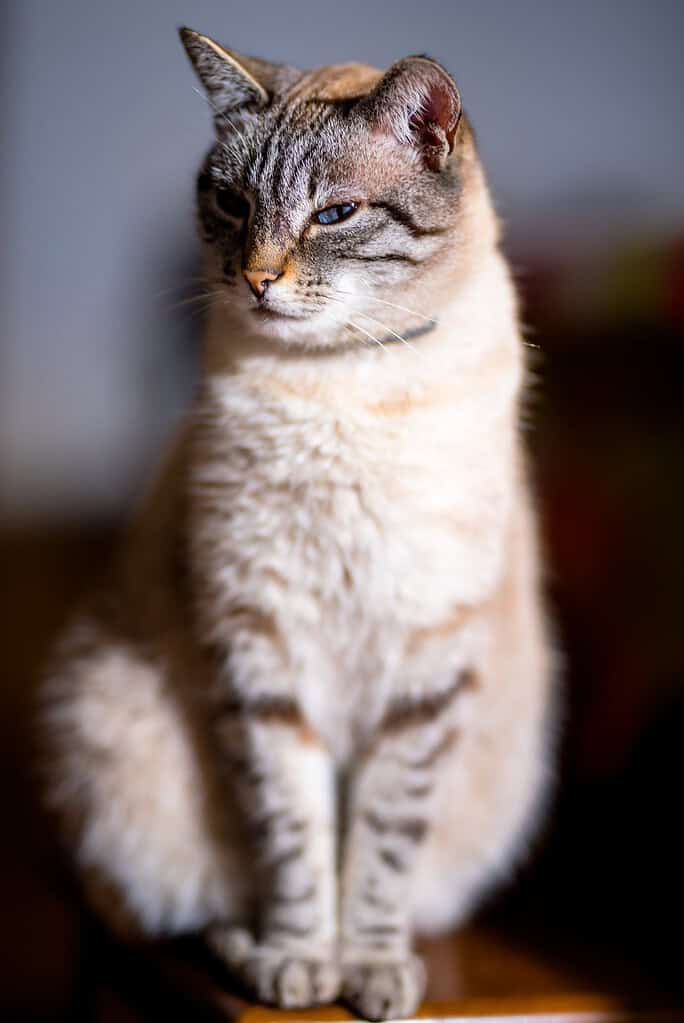
Here’s the one search we wish ranked higher: what to do if my cat gets out. The behaviors above make cats wonderful and weird — and those same instincts (curiosity, ambush spots, door-watching) are exactly why indoor cats slip outside more often than anyone expects. A Shiloh’s House smart NFC tag is feather-light acrylic your cat will forget is there, and whoever finds them just taps it with their phone to see how to reach you. No app, no scanner, no shelter hours. We wrote up what cat parents actually need in a tag if you’re curious.


And for the questions only a vet can answer — appetite changes, sudden behavior shifts, anything that feels off — ask a vet. Google’s a starting point, not a diagnosis.